
Reviewed · MUSEUMS
American Writers Museum Admission Ticket
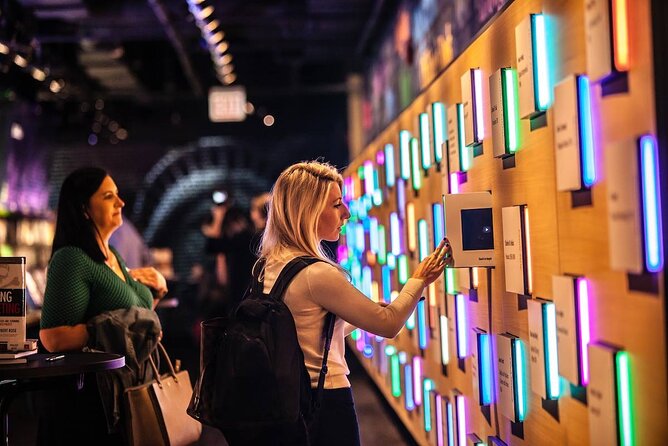
The American Writers Museum turns books, authors, and the act of writing into something you can see and touch. You can trace writers’ hometowns in Writers Hall, test vintage typewriters, and explore everything from poetry and sportswriting to immigrant literature and Chicago’s own literary tradition.
I like the hands-on exhibits, especially The Mind of a Writer and the public typewriters, because they make literary history less formal and more playful. I also like the $16 price and flexible visit length, which let you spend an hour here or stay for several without committing a full day.
The main consideration is size. This is a compact museum with a lot of material packed into it, so you could feel overloaded if you try to read every panel. Parking is not included, and the listed schedule should be checked carefully before you go.
In This Review
- Key points to know before you go
- A literary museum with something to do
- Writers Hall and America’s literary map
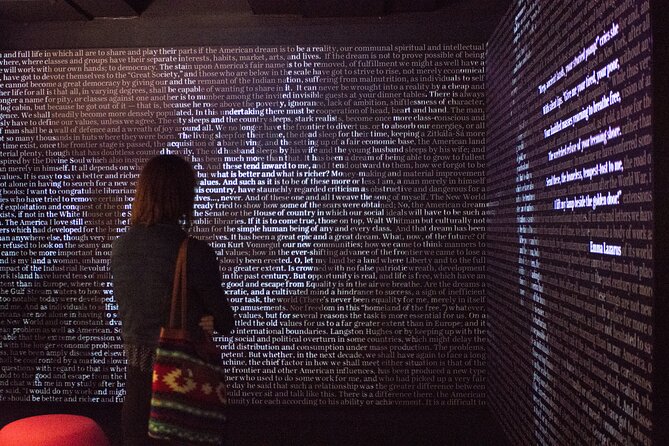
- A Nation of Writers covers more than novels
- The Mind of a Writer makes the process visible
- Chicago’s literary story in the Wintrust Gallery
- My America focuses on immigrant and refugee writers
- The Tools of the Trade and the old typewriters
- Timing your visit and using the 3pm tour
- Getting there and planning for access
- Who will get the most from this museum
- Is the $16 ticket worth it?
- FAQ
- How much does admission to the American Writers Museum cost?
- How long should I plan to spend at the museum?
- Is a guided tour included?
- Is parking included with admission?
- Is the museum accessible?
- Can I cancel for a refund?
Key points to know before you go
- Vintage typewriters invite you to write, not just look: The Tools of the Trade exhibit gives the museum a tactile edge that many literary museums lack.
- A free 3pm tour adds structure: Complimentary guided tours are offered daily when the museum is open.
- Chicago gets its own gallery: The Wintrust Chicago Gallery focuses on local writers, literary figures, characters, and groups.
- My America brings present-day voices: The Meijer Gallery features immigrant and refugee writers through several themes.
- Students receive the senior rate: Bring a valid student ID to claim the discount at arrival.
- Your ticket stays useful: Admission is valid for one year from the original date, according to the supplied booking information.
A literary museum with something to do
Many museums about writers rely on portraits, first editions, and wall text. The American Writers Museum takes a more active approach. You will still meet important American authors and learn about their work, but the galleries also ask you to think like a writer, experiment with language, and consider how stories are made.
That distinction matters if you are visiting with children, teenagers, or someone who does not usually seek out literary museums. The exhibits are not limited to a long march through dates and names. Games, interactive displays, and writing tools give you reasons to pause and take part.
I would allow at least an hour for a brisk visit. If you enjoy reading exhibit panels, trying the interactive features, and considering the different eras and genres, you could comfortably spend several hours. The stated visit range is one to five hours, so the museum works well as a focused stop between other Chicago plans.
The admission price is $16 per person, a fair amount for a museum that can occupy a short visit without requiring half a day. The free bookmark is a small extra, but it fits the theme and gives you a simple souvenir. A mobile ticket keeps entry easy, and tickets remain valid for a year from the original date, which is useful if your schedule changes or you live nearby.
More museums in Chicago:
- Medieval Torture Museum Ticket with Audio Guide and Ghost Hunting
★ 5.0 · 962 reviews - Chicago: Field Museum of Natural History Ticket or VIP Tour
★ 4.7 · 717 reviews - Field Museum of Natural History Admission Tickets
★ 4.5 · 489 reviews
Writers Hall and America’s literary map
Begin with Writers Hall, where you can learn about great writers’ hometowns and the American Writers Museum affiliate homes. This section gives you geographic context. Instead of treating literature as something that happened in only a few famous cities, it connects writers to the places that shaped them.
That setup is helpful for visitors who know individual authors but have not thought much about regional identity. A writer’s hometown can influence subject matter, speech, setting, and the kind of audience they reach. Writers Hall gives you a broad map before the museum moves into individual voices and working methods.
The affiliate homes are also a useful reminder that the museum is part of a larger network of literary sites. If you enjoy visiting historic homes and author-related places, note the locations that catch your attention. This gallery can help you plan future stops beyond Chicago.
A Nation of Writers covers more than novels
A Nation of Writers celebrates authors who represent a distinct American voice across history, genre, and medium. The range includes poets and sportswriters, not just the novelists most people expect to find in a literature museum.
That broad approach is one of the museum’s strengths. American writing includes journalism, poetry, essays, speeches, criticism, and writing tied to popular culture. A sportswriter can shape how a city remembers an athlete or a team. A poet can say more in a few lines than a novelist says in several chapters. Bringing these forms together gives you a wider idea of what literary work can be.
You should not expect a full biography of every writer included here. The goal is more selective: introduce important voices, show how they fit into American culture, and encourage you to follow up with books or writers that interest you. If you arrive with a long list of favorite authors, some may receive only brief attention. That is part of the tradeoff in a museum designed to cover a national subject.
The Mind of a Writer makes the process visible
The Mind of a Writer looks at how famous writers developed their work and removes some of the mystery around the writing process. It also invites you to create, play games, and consider your own methods.
I especially like this idea because finished books can make writing look effortless. In reality, writers revise, rearrange, discard, and test ideas. An exhibit about methods helps you see that published work is built through choices, not simply delivered in one flash of inspiration.
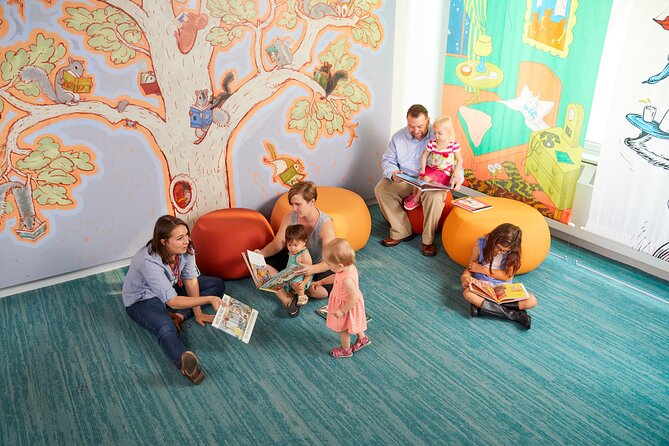
The interactive features give this section a different pace from a conventional display. You might spend a few minutes on one activity or linger longer if you enjoy wordplay and creative prompts. This is likely one of the best areas for families and school-age visitors, though adults who write, journal, or edit can also get plenty from it.
A practical tip: do not rush through the activities just to cover the museum quickly. The museum contains a lot of information, and this gallery works best when you allow yourself time to participate rather than simply read.
A few more Chicago tours worth a look before you decide
- Chicago: Willis Tower Skydeck and The Ledge Ticket
★ 4.6 · 4,350 reviews - Chicago: Architecture River Cruise Skip-the-Ticket Line
★ 4.8 · 4,325 reviews - Chicago: 360 CHICAGO Observation Deck Ticket
★ 4.5 · 3,173 reviews - Museum of Ice Cream Chicago Admission Ticket
★ 3.5 · 396 reviews
Chicago’s literary story in the Wintrust Gallery
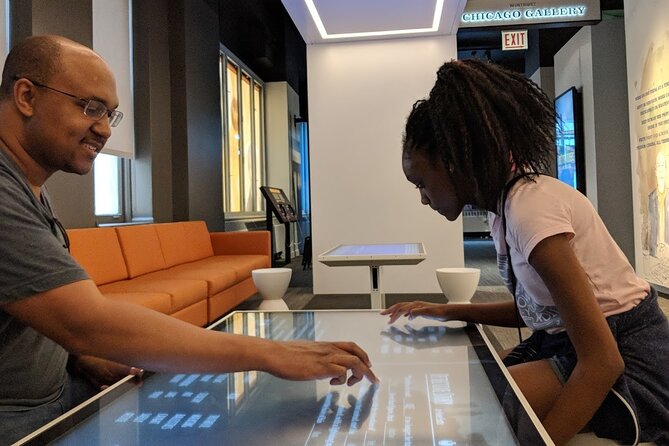
The Wintrust Chicago Gallery focuses on the writers, literary influencers, characters, and groups that shaped the city’s literary tradition. This is where the museum feels most tied to its home.
Chicago has a strong connection to American writing, and a local gallery gives the subject a sense of place. You are not only learning about authors in the abstract. You are considering how a city can influence the stories created within it, the people who publish them, and the groups that help literature reach an audience.
For a first-time Chicago visitor, this gallery can add cultural context to the rest of your trip. It offers another way to think about the city beyond architecture, food, and museums focused on visual art. If you already know Chicago writers, you may find familiar names and connections. If you do not, this section can point you toward books to read later.
The gallery is also a good reason to visit even if you are mainly interested in Chicago rather than American literature as a whole. It gives the museum a local anchor and keeps the experience from feeling like a general collection assembled anywhere.
My America focuses on immigrant and refugee writers
The temporary exhibit My America: Immigrant and Refugee Writers Today explores contemporary writing by immigrants through several themes. Since temporary displays change, check the current program if this particular exhibit is a priority for your visit.
Its subject adds a present-day dimension to the museum. American literature is not a finished story, and immigrant and refugee writers continue to shape how the country describes itself. Their work can bring questions of identity, movement, belonging, language, and memory into the museum’s larger discussion of the American voice.
This exhibit may appeal most to you if you prefer current writing and social themes over a display focused only on established historical figures. It also provides a useful contrast with the older tools and authors found elsewhere in the museum. You can move from historic writing practices to the experiences and ideas shaping contemporary literature.
Because temporary exhibitions can contain a concentrated amount of text and material, plan your energy. You do not need to read every panel to benefit from the themes. Choose the subjects that speak to you and leave room for the museum’s other galleries.
The Tools of the Trade and the old typewriters
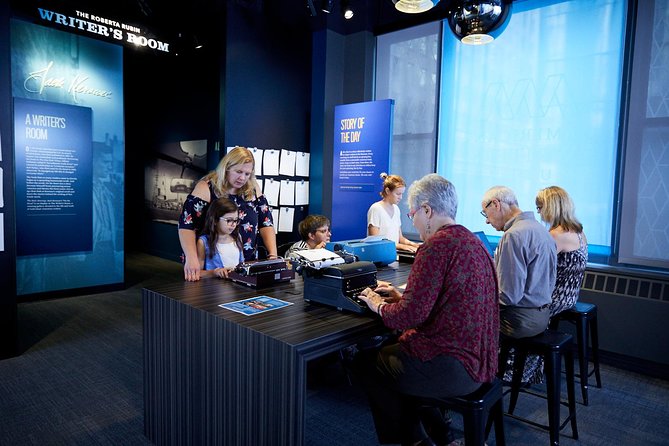
The Tools of the Trade exhibit, located in the Roberta Rubin Writer’s Room, looks at the objects used by famous American writers throughout history. The named examples include Frederick Douglass, Helen Keller, and Maya Angelou.
This section gives writing a physical presence. Pens, typewriters, and other working tools show that literature is also a product of daily habits and available technology. The tools can tell you something about speed, revision, access, and the practical conditions under which a writer worked.
The vintage typewriters are a highlight because you can use them. That small act changes the tone of the visit. Instead of seeing a typewriter behind glass, you feel the keys, hear the mechanism, and get a basic sense of the distance between older writing tools and the devices most people use now.
You might find the typewriters particularly appealing if you enjoy analog technology or want a tactile activity in the middle of a text-heavy museum. A visitor also purchased a repurposed journal during a visit and put it to use right away, so the museum shop may be worth a look if you want a practical literary souvenir.
Timing your visit and using the 3pm tour
The museum offers a complimentary guided tour at 3pm daily when it is open. No guide name is provided in the booking information, so you should not plan around a particular leader. The tour can be useful if you want a clearer path through the galleries or prefer hearing context rather than reading everything alone.
If you arrive earlier, begin with the sections that interest you most and save a few galleries for the tour. If you are visiting for only an hour, the 3pm timing may determine your whole plan. A self-guided visit gives you more control, while the guided option may help prevent the museum’s large amount of information from feeling scattered.
The listed opening information shows Monday hours from 10am to 5pm for the period March 27 through December 29, 2025. Since the supplied schedule only specifies Monday, confirm the museum’s hours for your chosen date before setting out. The admission ticket lets you choose an entry time, but the practical value depends on matching it with the museum’s actual operating hours and the 3pm tour.
Getting there and planning for access
The museum is near public transportation, which is the simplest choice for many Chicago visits. Parking is not included, so do not assume the ticket covers a garage or parking arrangement.
The building offers button-activated doors at the entrance and elevator access to the second floor. A large gender-neutral family restroom is available, along with wide restroom stalls fitted with grab bars. Service animals are allowed, and most people can participate.
These details make the museum easier to plan for families and visitors with mobility needs. If you need a specific accommodation beyond the services listed, contact the museum before arrival rather than relying on the general admission details.
The experience has a maximum group size of 50 people. That limit is moderate rather than intimate, and the museum’s quiet atmosphere can vary by date and time. A particularly quiet visit may suit you if you want to read and use the exhibits without much distraction.
Who will get the most from this museum
I would recommend the American Writers Museum to readers, writers, teachers, students, and anyone interested in the way American culture is recorded through words. It is also a smart choice for a mixed group because the interactive elements give nonreaders something to do.
Students qualify for the senior rate, but you must bring a valid student ID and show it upon arrival. Families can use the games and typewriters as entry points, while serious readers can spend more time with the writers, methods, and historical context.
The museum may be less satisfying if you want a large collection of original manuscripts or a quiet archive-style experience. It is designed around interpretation and participation. You will encounter a lot of information in a compact space, and the museum rewards selective attention more than an attempt to absorb every word.
The 4.9 rating from 70 submitted evaluations and the 97 percent recommendation rate point to strong overall satisfaction, but your experience will depend on your interests. A book lover may want several hours. Someone fitting the museum between larger attractions may feel an hour is enough.
Is the $16 ticket worth it?
At $16, the value is strongest when you treat the museum as more than a quick photo stop. The price includes access to several distinct galleries, interactive features, the Chicago-focused display, and the temporary exhibit available during your visit. The free 3pm tour adds another layer when the schedule works.
I would consider the ticket good value for a flexible itinerary. You can visit for one hour, stay up to five, or return within a year under the stated ticket validity. That flexibility is unusual for a modestly priced museum admission.
Book it if you want a thoughtful indoor activity with hands-on features and a clear focus on American writing. It is an especially good pick for a rainy Chicago day, a family group with mixed interests, or anyone who wants local literary context rather than another broad history museum.
Skip it if your schedule is already packed and you dislike reading-heavy exhibits. If you do go, give yourself enough time for the typewriters and The Mind of a Writer, then choose the galleries that match your interests instead of trying to read every display.
Free cancellation is available if you cancel at least 24 hours before the experience start time. Cancellations within 24 hours are not refunded, and changes in that period are not accepted.
FAQ
How much does admission to the American Writers Museum cost?
The admission price is $16 per person. Students qualify for the senior rate when they present a valid student ID upon arrival.
How long should I plan to spend at the museum?
The visit can take about one to five hours, depending on how much time you spend reading the displays and using the interactive exhibits.
Is a guided tour included?
Yes. Complimentary guided tours are offered at 3pm daily when the museum is open.
Is parking included with admission?
No. Parking is not included.
Is the museum accessible?
The museum offers button-activated entrance doors, elevator access to the second floor, a large gender-neutral family restroom, and wide restroom stalls with grab bars. Service animals are allowed.
Can I cancel for a refund?
Yes, if you cancel at least 24 hours before the experience start time. Cancellations within 24 hours do not receive a refund, and changes during that period are not accepted.
Just added in Chicago
- Chicago: Architecture and Engineering Marvels Walking Tour★ 5.0 · 3 reviews
- Private Downtown Chicago TV and Movie Sites Guided Walking Tour★ 4.5 · 3 reviews
- Black Heritage Tour★ 5.0 · 3 reviews
- Private SUV Transfer from Chicago Downtown to Midway airport★ 5.0 · 3 reviews
- Private Holiday City Tour★ 5.0 · 3 reviews
- BYOB Chicago River Guided History Tour★ 5.0 · 4 reviews
- Chicago 4-Hour Sightseeing Transfer by Luxury SUV★ 4.5 · 3 reviews
- Chicago, Cloud Gate, Grant Park Full-Day City Tour★ 4.0 · 4 reviews
Museums, compared.
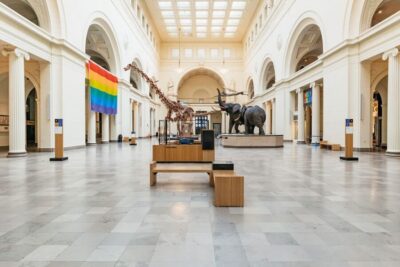
Field Museum of Natural History Ticket or VIP Tour
Read our review →
Field Museum of Natural History Admission Tickets
Read our review →

2-Hour Chicago Lakefront & Museum Campus Segway Tour
Read our review →


Chicago Landmarks & Museum Campus Small Group Segway Tour
Read our review →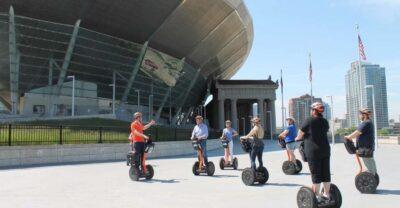
Browse the lists this tour appears in