
Reviewed · MUSEUMS
Chicago: American Writers Museum Flexible Date Entry Ticket
The American Writers Museum turns books, poems, speeches, songs, and journalism into something you can touch and play with. The best surprise is how much of the museum asks you to participate, from a word waterfall and interactive timeline to vintage typewriters waiting for your own short story or poem.
I like the wide range of writers, from Emily Dickinson and Edgar Allan Poe to Dr. Seuss and Prince. I also like the Chicago focus, which shows how the city shaped poets, novelists, journalists, and other writers. The main drawback is space: the museum fits a great deal onto one floor, so readers who want to study every display may need several hours or a return visit.
In This Review
- Key points to know before you go
- Why this small museum deserves part of your Chicago day
- Getting upstairs and getting started
- Nation of Writers Gallery: start with the big picture
- The Mind of a Writer Gallery and the work behind the words
- Typewriters, reading rooms, and your turn at the page
- Chicago Gallery: the city as a source of writing
- Children’s Gallery: a real family stop, not an afterthought
- How much time should you allow?
- Is the $16 ticket good value?
- Who should book this experience?
- Final call: book it if you like ideas with a hands-on side
- FAQ
- How much does admission to the American Writers Museum cost?
- How long is the ticket valid?
- What are the museum’s opening hours?
- Is admission free for children?
- Is this a guided tour?
- What exhibits are included?
- Is the museum wheelchair accessible?
- Where do I enter the museum?
- Can I bring food or drinks?
Key points to know before you go
- Type your own work: Use vintage typewriters to create a short story, poem, prompt, or message for future visitors.
- Five centuries of writing: Explore poetry, lyrics, speeches, drama, fiction, nonfiction, and journalism.
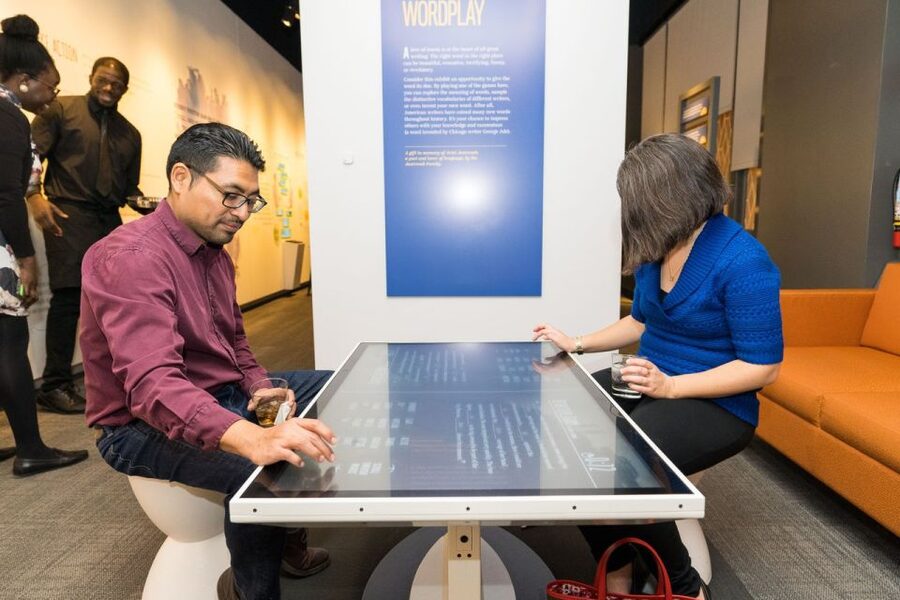
- Interactive galleries: Find timelines, videos, dioramas, language games, a surprise bookshelf, and the Word Waterfall.
- Chicago writers get their due: A dedicated gallery connects the city to the work of poets, novelists, journalists, and other authors.
- Good for families: The Children’s Gallery, reading corners, and hands-on activities work well for children and teenagers.
- Flexible $16 admission: Enter on your chosen date or on any day during the following 14 days, with free admission for children 12 and under when you reserve their ticket.
Why this small museum deserves part of your Chicago day
The American Writers Museum is easy to overlook because it occupies one floor inside a multi-use building. That modest footprint is both its strength and its limitation. You can see the main galleries in about an hour if you move briskly, but readers and writers can spend much longer with the displays.
I would set aside 90 minutes for a first visit. Families may move faster through the reading-heavy sections and linger at the typewriters and digital activities. A serious reader could stay for several hours, especially if a temporary exhibit is open.
The museum treats writing as more than printed words on a page. It shows how writing shapes public debate, preserves personal experience, builds fictional worlds, and gives people a way to challenge unfair systems. That makes the visit useful even if you do not think of yourself as a book person.
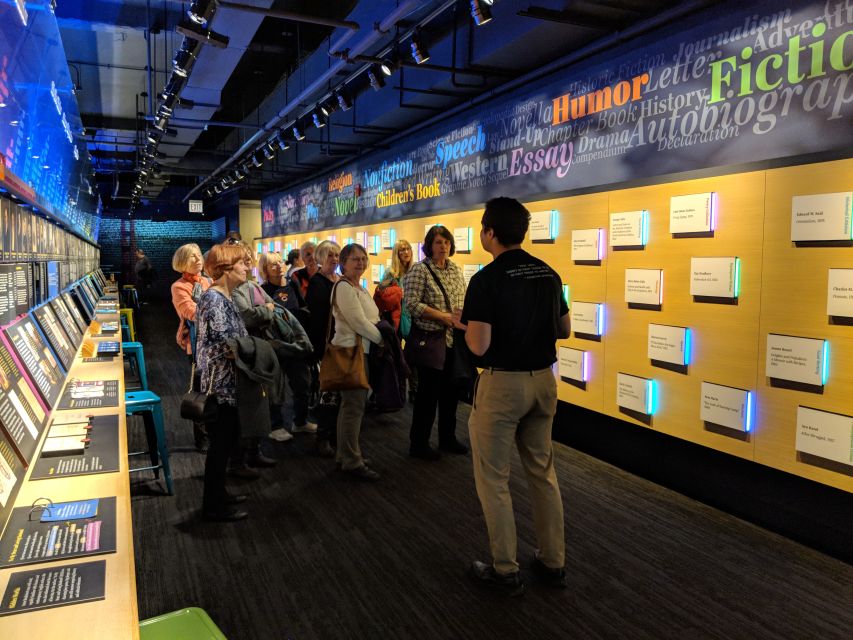
You will find writing in many forms here. Poetry sits beside speeches. Lyrics share space with journalism. Fiction and nonfiction appear as part of the same larger American story. This broad approach is one of the museum’s best choices because it avoids treating literature as a narrow subject reserved for English majors.
More museums in Chicago:
- Medieval Torture Museum Ticket with Audio Guide and Ghost Hunting
★ 5.0 · 962 reviews - Chicago: Field Museum of Natural History Ticket or VIP Tour
★ 4.7 · 717 reviews - Field Museum of Natural History Admission Tickets
★ 4.5 · 489 reviews
Getting upstairs and getting started
The museum is on the second floor. Enter the building, pass the security desk, then take the elevator or stairs. At the museum front desk, present your ticket and begin the self-guided visit.
There is no guide included, so you set the pace. That works well here because the exhibits are designed for independent exploration. You can stop for a video, read a panel closely, move straight to a favorite author, or let a child spend time with an activity without holding up a group.
The building entrance and museum itself are wheelchair accessible. Food and drinks are not allowed, so plan to finish snacks before entering.
The museum is open from 10:00 a.m. to 5:00 p.m., Thursday through Monday. It is closed Tuesday and Wednesday according to the supplied schedule, so check the current calendar before setting out.
The flexible ticket helps if your Chicago plans are loose. You may enter on the selected date or on any day up to 14 days afterward. That is useful when weather changes, a museum visit gets pushed back, or you want to fit this stop around another downtown activity.
Nation of Writers Gallery: start with the big picture
The Nation of Writers Gallery gives you the museum’s broadest view of American writing. Begin with the interactive timeline, which connects writers and works to changes in American society.
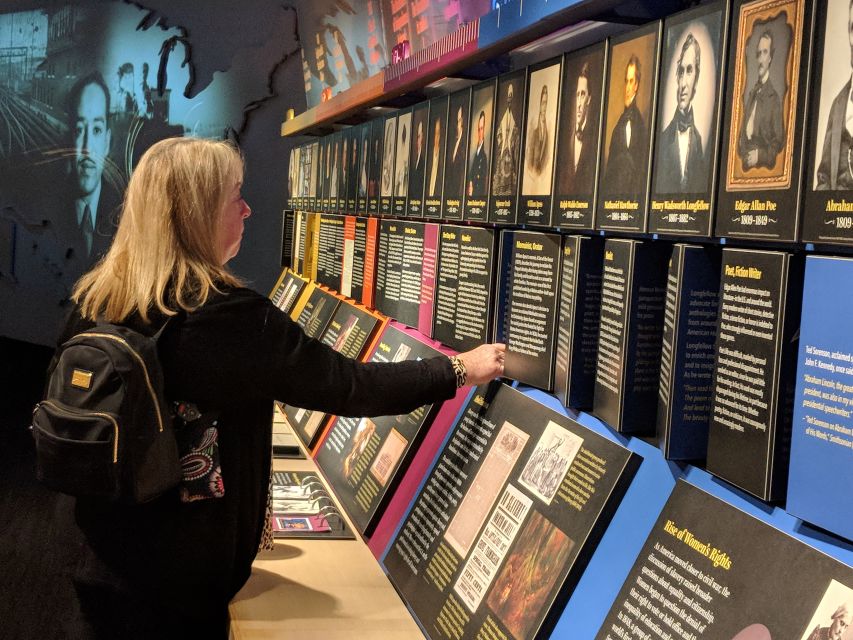
This is more useful than a simple row of author portraits. The timeline helps you see writing as part of public life. A writer’s work does not appear in isolation. It responds to political events, social movements, technology, popular culture, and the changing ways Americans communicate.
The museum reaches across more than five centuries. You may encounter familiar names such as Emily Dickinson, Edgar Allan Poe, and Dr. Seuss, but the range extends beyond standard school reading lists. Prince’s inclusion also makes the point that lyrics and popular music belong in the story of American writing.
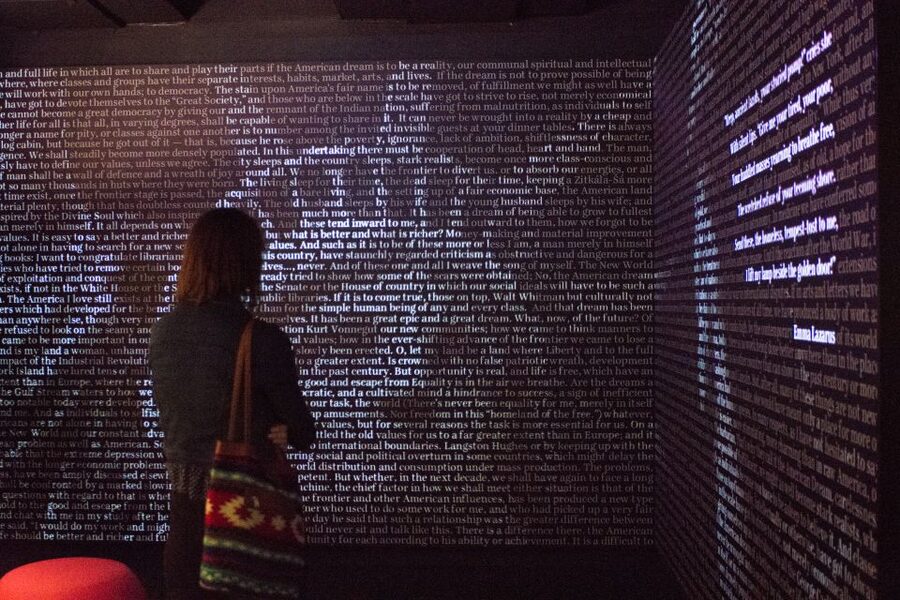
The displays appeal to more than one sense. You can watch videos, examine dioramas, interact with displays, and listen or read depending on the exhibit. The surprise bookshelf adds a playful moment, while the Word Waterfall gives the gallery a visual way to show language in motion.
I would not rush this section. It provides the context that makes the later galleries easier to understand. If you are visiting with children, let them choose a few sections rather than expecting them to read every panel.
The Mind of a Writer Gallery and the work behind the words
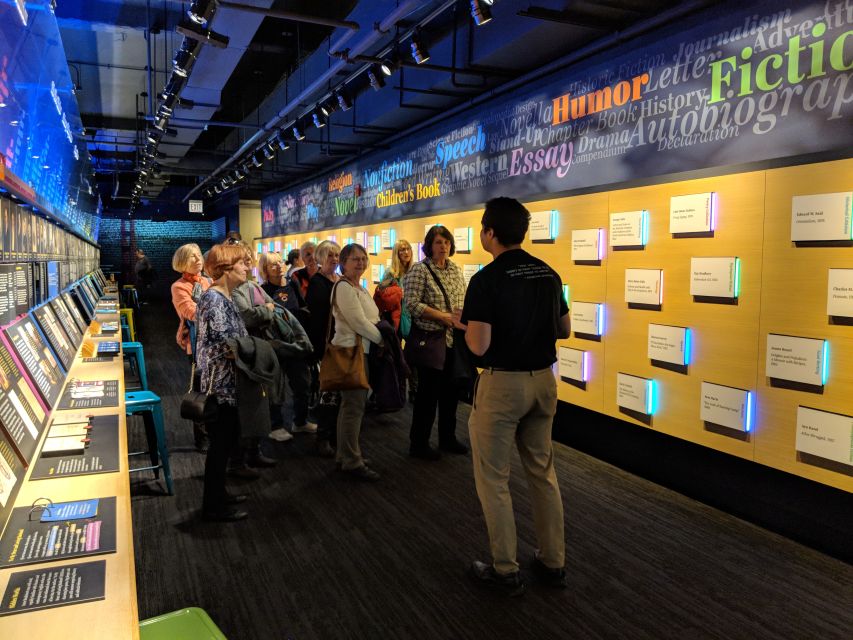
The Mind of a Writer Gallery changes the question from who wrote to how writing happens. It looks at the habits, discipline, thought process, and language skills that shape a finished work.
This is a valuable stop for anyone who has tried to write and then abandoned the project halfway through. The gallery presents writing as daily work, not just sudden inspiration. You learn about the persistence needed to keep going and the close attention required to make language precise.
For young writers, this section can make authors seem less distant. A famous book may feel polished and inevitable once it reaches print. The gallery helps you consider the drafts, routines, choices, and effort behind it.
The drawback is that this section requires reading and patience. It is not as immediately playful as the typewriters or word games. I would let children explore the hands-on displays first, then return here if they are willing to slow down.
The museum’s mix of serious ideas and simple activities keeps this from becoming an information dump. Interactive tiles and digital features break up the text. You get enough material to think about without having to stand in front of one long wall of small print.
A few more Chicago tours worth a look before you decide
- Chicago: Willis Tower Skydeck and The Ledge Ticket
★ 4.6 · 4,350 reviews - Chicago: Architecture River Cruise Skip-the-Ticket Line
★ 4.8 · 4,325 reviews - Chicago: 360 CHICAGO Observation Deck Ticket
★ 4.5 · 3,173 reviews - Museum of Ice Cream Chicago Admission Ticket
★ 3.5 · 396 reviews
Typewriters, reading rooms, and your turn at the page
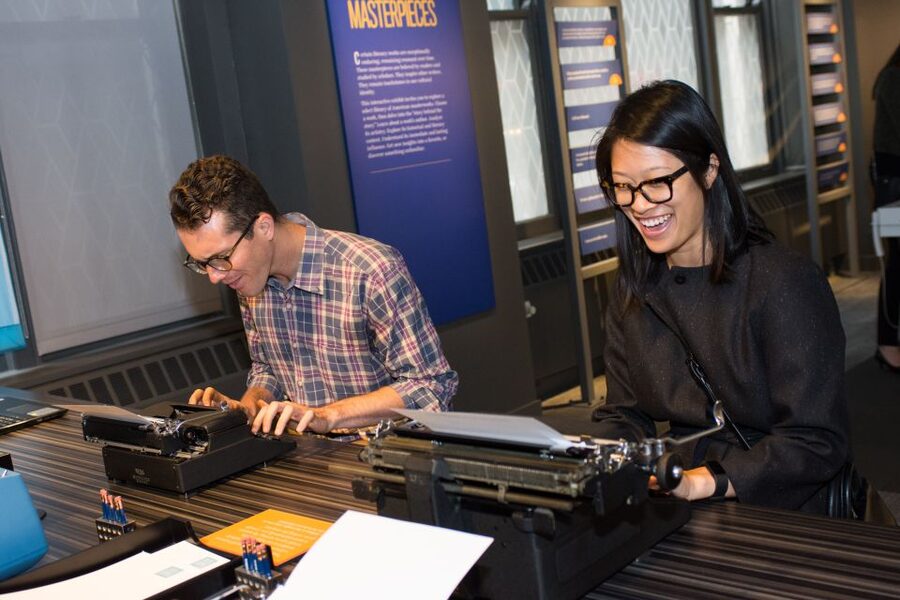
The vintage typewriters are among the museum’s most memorable features. Sit down, choose a prompt, and type a short story, poem, or message. The mechanical feel changes the task: you cannot casually delete every sentence, and each line feels more deliberate.
For adults, the typewriters offer a quick return to an older form of writing. For children and teenagers, they turn writing from a school assignment into a physical activity. The machines also make a good break between reading-heavy exhibits.
You may be able to leave a prompt or message for someone who visits later. That small act connects your visit to the next person’s experience and gives reluctant writers a reason to put words on the page.
The Reading and Writing Rooms add quieter places to pause. Use the reading areas when you need a rest, or settle into the interactive reading space with children. These rooms help the museum work for different ages and energy levels.
Space around the typewriters may be limited when several people want a turn. If you see an open machine, use it, then give someone else a chance. The museum is compact, so a little courtesy matters.
Chicago Gallery: the city as a source of writing
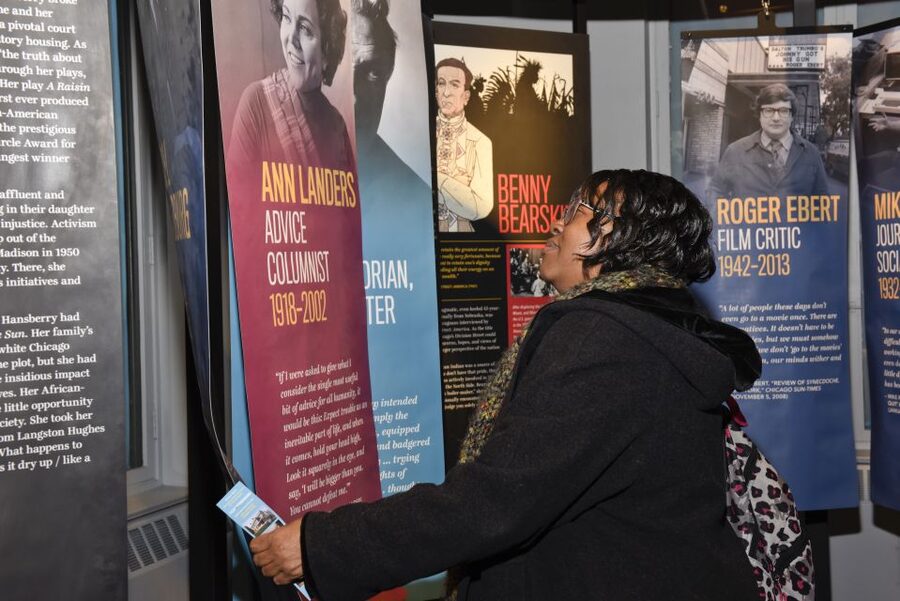
The Chicago Gallery focuses on poets, novelists, journalists, and other writers who drew inspiration from the city. This section gives the museum a local identity rather than presenting only a national collection.
Chicago is a particularly fitting subject because the city has long supplied writers with strong material: neighborhoods, migration, work, politics, architecture, music, and sharp contrasts between wealth and hardship. The gallery helps you connect writers to place instead of treating their work as detached from daily life.
I would spend time here even if you came mainly for a favorite national author. The Chicago section may introduce you to writers you do not know, and it shows how a city can shape tone, subject, and point of view.
The museum’s approach is inclusive in the types of writing it presents and in the people it recognizes. The displays include women and writers of color, along with different forms of public and creative expression. Coverage of LGBTQ+ writers may feel less obvious in some parts, so visitors seeking that specific focus should check current programming and temporary exhibits.
Past special exhibits have included Level Up, about narrative writing in video games, and Dark Testament, focused on Black writers and their fight against racial injustice during the 1800s and 1900s. Temporary exhibits change, but they show how the museum can expand beyond traditional books into games, race, politics, and popular culture.
Children’s Gallery: a real family stop, not an afterthought
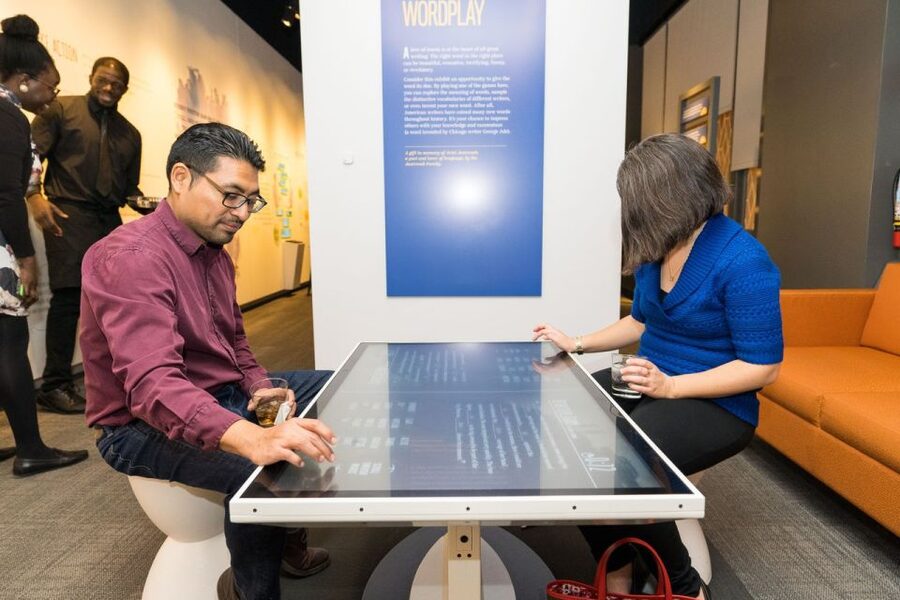
The Children’s Gallery makes the museum a practical choice for families. Children can use interactive features, browse reading areas, and take a break from the adult-focused displays.
The museum is not only for very young children. Activities involving storytelling, character creation, typewriters, and digital interaction can work especially well for children from about 8 to 18, although the museum’s supplied information does not set an age range for each activity.
Ages 10 and 12 should find enough to do without needing constant entertainment from an adult. Younger children may enjoy the movement and visuals but may not follow every historical section. I would give them a simple mission: find a favorite word, choose an author, try a typewriter, and create a short message.
Children 12 and under enter free, but you still need to reserve a free ticket for each child. That makes the $16 adult admission easier to justify for a family outing.
How much time should you allow?
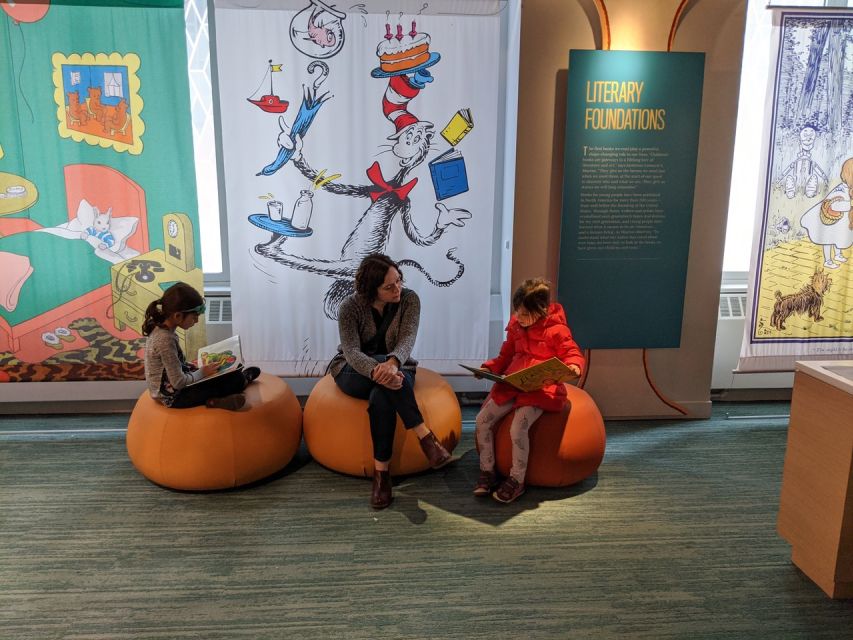
An hour is enough for a quick tour of the main displays. You can stretch that to 90 minutes by reading more of the timeline, using the typewriters, and spending time in the Chicago Gallery.
Plan on two hours or more if you enjoy reading every screen, watching videos, trying the language games, and visiting a special exhibit. A repeat visit is reasonable because the museum contains a lot of text in a small space, and your attention will naturally go to different authors each time.
The museum works well on a rainy day or as a quieter break from Chicago’s larger attractions. It does not require a full day, which makes it easy to add between other downtown plans. The flexible 14-day entry period also means you do not have to force the visit into one precise time.
Is the $16 ticket good value?
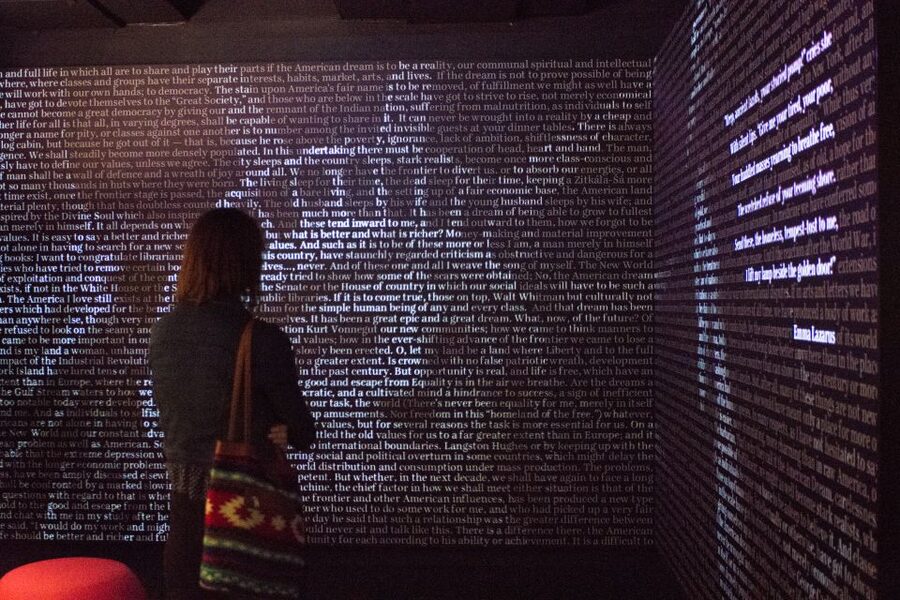
At $16 per person, admission is fair for the amount of material and the range of activities. The value is strongest if you read, write, enjoy history, or visit with children who like hands-on exhibits.
You are paying for entry to all permanent exhibits and special exhibits, not a guided tour. That means the experience depends on your willingness to explore and read. If you want a large museum with grand rooms and rare physical artifacts, this may feel small for the price.
If you use the typewriters, follow the timeline, watch several videos, explore the Chicago Gallery, and spend time in the Children’s Gallery, the ticket gives you a solid half-day activity. Teachers and students may qualify for a reduced rate with a valid academic ID presented on arrival.
Free cancellation is available up to 24 hours before the visit, and you can reserve now while paying later if that option appears during booking. These policies matter most when your Chicago schedule is still changing.
Who should book this experience?
I would recommend the museum to readers, writers, history fans, English students, teachers, families, and anyone looking for an indoor Chicago activity that feels different from a standard art or science museum.
It is especially good for people who enjoy discovering lesser-known authors and seeing how writing connects with American life. The Chicago Gallery makes it more relevant to a city visit, while the typewriters and Children’s Gallery give nonreaders a way into the subject.
I would be more cautious if you dislike reading or interactive displays. There are videos, games, and physical activities, but much of the visit still depends on text. The small size may also disappoint anyone expecting a large national museum.
Final call: book it if you like ideas with a hands-on side
Book the American Writers Museum if you want a reasonably priced, self-guided stop where you can read, think, play with language, and write something yourself. The typewriters, interactive timeline, Word Waterfall, Chicago writers gallery, and children’s spaces give the visit more variety than the name alone suggests.
Skip it only if your schedule is packed with major Chicago attractions or if reading-heavy museums are not your style. For most families and book lovers, $16 buys a thoughtful 60 to 120 minute visit, with enough material to justify staying longer or returning within the 14-day validity period.
FAQ
How much does admission to the American Writers Museum cost?
Adult admission is $16 per person. Active teachers and students may book a reduced rate and must show a valid academic ID on arrival.
How long is the ticket valid?
You may enter on your selected date or on any day up to 14 days after that date.
What are the museum’s opening hours?
The museum is open from 10:00 a.m. to 5:00 p.m., Thursday through Monday.
Is admission free for children?
Children 12 and under enter free, but you must reserve a free ticket for each child.
Is this a guided tour?
No. Admission includes a self-guided visit, and no guide is included.
What exhibits are included?
Your ticket includes all permanent exhibits and special exhibits that are open during your visit.
Is the museum wheelchair accessible?
Yes, the experience is wheelchair accessible.
Where do I enter the museum?
Enter the building, proceed past the security desk, and take the elevator or stairs to the second floor. Present your ticket at the American Writers Museum front desk.
Can I bring food or drinks?
No. Food and drinks are not allowed inside the museum.
Just added in Chicago
- Chicago: Architecture and Engineering Marvels Walking Tour★ 5.0 · 3 reviews
- Private Downtown Chicago TV and Movie Sites Guided Walking Tour★ 4.5 · 3 reviews
- Black Heritage Tour★ 5.0 · 3 reviews
- Private SUV Transfer from Chicago Downtown to Midway airport★ 5.0 · 3 reviews
- Private Holiday City Tour★ 5.0 · 3 reviews
- BYOB Chicago River Guided History Tour★ 5.0 · 4 reviews
- Chicago 4-Hour Sightseeing Transfer by Luxury SUV★ 4.5 · 3 reviews
- Chicago, Cloud Gate, Grant Park Full-Day City Tour★ 4.0 · 4 reviews
Museums, compared.
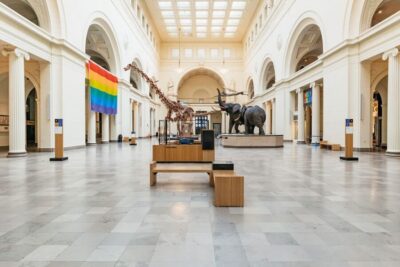
Field Museum of Natural History Ticket or VIP Tour
Read our review →
Field Museum of Natural History Admission Tickets
Read our review →
2-Hour Chicago Lakefront & Museum Campus Segway Tour
Read our review →

Chicago Landmarks & Museum Campus Small Group Segway Tour
Read our review →
Browse the lists this tour appears in