

Reviewed · MUSEUMS
Chicago: Museum of Contemporary Art (MCA) Entry Ticket
The Museum of Contemporary Art Chicago is less a march through art history than a meeting with what artists are testing right now. Its changing exhibitions can move from painting and sculpture to photography, performance, social issues, and large-scale installations, so you never quite know what kind of museum day you are getting.
I like the ever-changing exhibitions, which give this museum a fresh reason to return. I also like the chance to see work connected with artists such as Cindy Sherman, Kerry James Marshall, Rashid Johnson, and Takashi Murakami, then step outside to the sculpture garden. The main drawback is that the galleries can be hard to follow, and one recent visit included long lines at the coat check.
In This Review
- Key points to know before you go
- Why the MCA feels different from a standard art museum
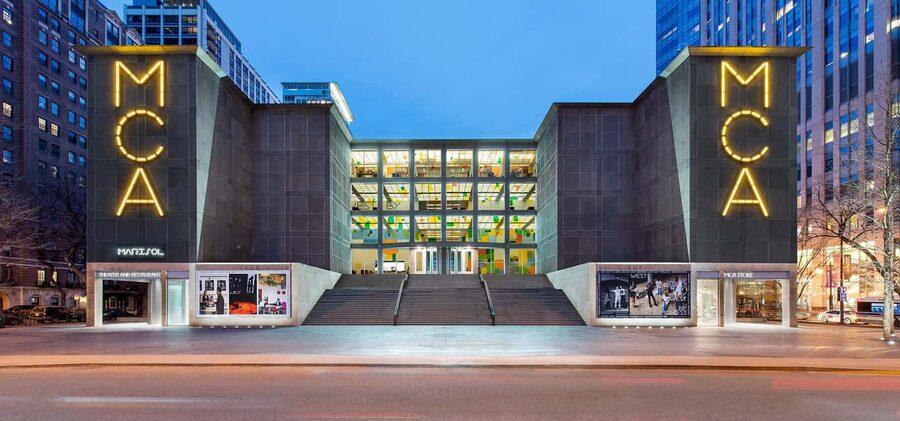
- Arriving in downtown Chicago
- What you will find in the galleries
- Art as action, participation, and social responsibility
- Making sense of a visit that may not have a clear route
- The outdoor sculpture garden
- The MCA Store and the final stop
- Is the $22 ticket good value?
- Who will enjoy the MCA most?
- Should you book the MCA?
- FAQ
- How much does admission to the MCA cost?
- How long is the ticket valid?
- What does the ticket include?
- Is a guided tour included?
- Is the museum wheelchair accessible?
- Can I cancel for a refund?
Key points to know before you go

- Changing exhibitions: The art on display shifts often, so check the museum’s current exhibition list before booking.
- Many forms of art: Expect painting, sculpture, photography, multimedia work, installations, and art based on audience participation.
- Outdoor sculpture garden: Your ticket includes this quieter change of pace outside the galleries.
- $22 admission: The price is strongest when several exhibitions are open and you plan to stay for much of the day.
- Mostly self-guided: An English-speaking host or greeter is listed, but no guided tour is included.
- Practical caution: The route and map may not be immediately clear, and coat-check lines can become lengthy.
Why the MCA feels different from a standard art museum
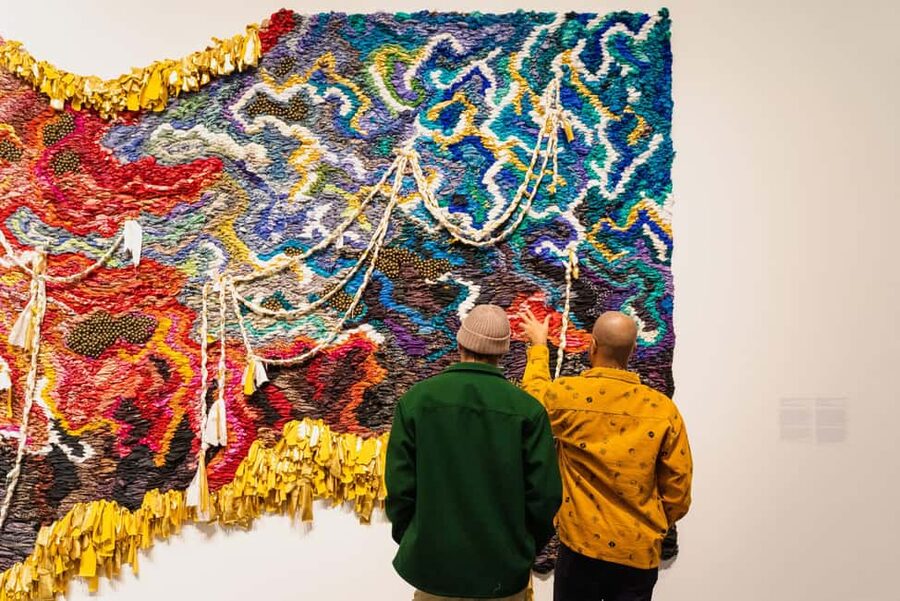
The MCA was created as a Kunsthalle, a type of art center built around temporary exhibitions rather than a large permanent collection. That matters because the museum’s main purpose is to show new ideas, fresh work, and experiments that may not fit neatly into a traditional art timeline.
I find this approach useful when you want to see how contemporary artists respond to current life. You will not be led from ancient objects to modern masterpieces in a fixed march. Instead, you move through displays that ask you to consider how art is made, what it can do, and how an audience takes part in its meaning.
The museum’s early program included avant-garde Happenings, Fluxus artists such as Alison Knowles, performance art, and work by Dan Flavin. These choices point to the MCA’s basic character: art can be an action, an event, a social question, or a physical experience, not only something framed on a wall.
That freedom is also the source of the museum’s risk. Contemporary art can be funny, moving, political, confusing, or deliberately unfinished. If you prefer clear labels and familiar subjects, parts of the visit may feel demanding. If you enjoy making your own connections, the uncertainty is part of the appeal.
More museums in Chicago:
- Medieval Torture Museum Ticket with Audio Guide and Ghost Hunting
★ 5.0 · 962 reviews - Chicago: Field Museum of Natural History Ticket or VIP Tour
★ 4.7 · 717 reviews - Field Museum of Natural History Admission Tickets
★ 4.5 · 489 reviews
Arriving in downtown Chicago
The museum sits in the heart of downtown, making it an easy cultural stop during a day in central Chicago. Transportation is not included, so you arrange your own way to the building. The ticket is valid for one day, and availability should be checked for the starting time offered when you book.
The activity information lists an English-speaking host or greeter and a small group limited to nine participants. Still, you should think of this as an admission ticket rather than a scheduled museum tour. No guide-led walk is included, so your experience depends mainly on the exhibitions open that day and the pace you choose.
At the entrance, allow a little time to get oriented. The museum’s galleries are not always intuitive to follow, and the map may take a moment to understand. I would look at the floor plan before heading into the first room, then note where the temporary exhibitions and outdoor sculpture garden fit into your visit.
If you plan to use the coat check, avoid arriving at the busiest moment if possible. A long wait there can eat into your museum time, especially if you have a restaurant booking or another downtown activity afterward.
What you will find in the galleries
The exhibitions are the heart of the visit. Because they change, no fixed list can fully describe what you will see on a particular date. The museum presents work across painting, sculpture, photography, multimedia art, installations, and other forms that may not fit one category.
This variety helps the MCA work for different kinds of art lovers. You might spend time with a photograph that rewards close looking, then enter a room where scale, sound, light, or movement matters more than a single object. Another exhibition may focus on a social subject and ask you to think about politics, identity, health, or community.
The museum’s program has included artists connected with major questions in contemporary culture. Cindy Sherman is known for examining identity and representation through constructed photographic roles. Kerry James Marshall is associated with powerful paintings about Black life and visibility. Rashid Johnson works across media and often links personal experience with larger cultural questions. Takashi Murakami is known for a highly recognizable visual language that joins popular culture, commercial imagery, and fine art.
The point is not to expect a permanent room devoted to each artist. Instead, the MCA’s program may include major figures alongside newer voices in exhibitions that change over time. Check the official exhibition details before you go so you know what is actually scheduled during your visit.
You will get more from the museum if you resist the urge to judge every work quickly. Contemporary pieces sometimes need a minute before their purpose becomes clear. Read the wall text when it helps, but also notice your first reaction. Did the work make you curious, uncomfortable, amused, or impatient? That response is often part of the experience the artist is building.
Art as action, participation, and social responsibility
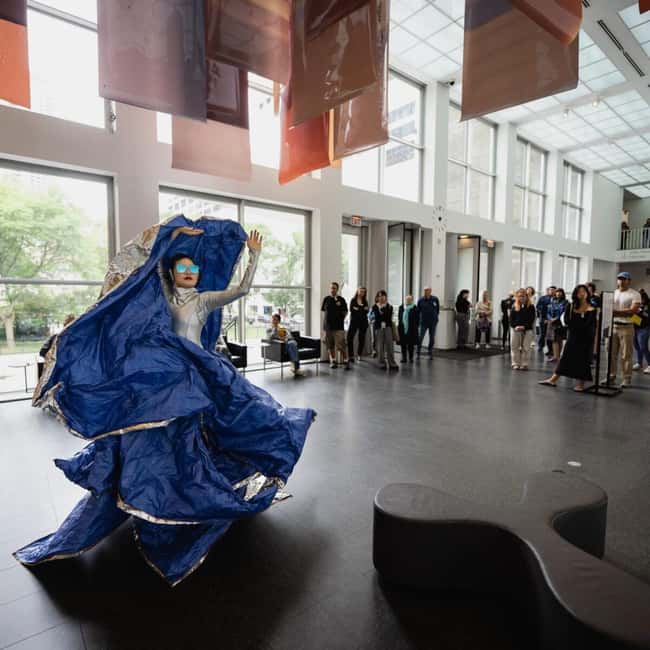
The MCA’s history of performance and experimental programming gives the visit a different tone from a museum built around famous objects. Early Happenings and Fluxus projects treated art as something that could unfold through an event or an instruction. Work by Dan Flavin showed how light itself could change the way you experience a room.
That background explains why audience engagement matters here. You may encounter an installation that requires you to move through it, a display that raises a social issue, or a work whose meaning changes depending on how you respond. The museum’s interest in social responsibility also means that exhibitions can deal with difficult subjects rather than offering only decoration.
One recent exhibition theme listed in visitor feedback connected queerness, AIDS, Iran, and Iraq. That combination suggests the range of subjects the museum may address, from personal identity to public health and international politics. It also tells you to expect serious material alongside visual experimentation.
I appreciate this directness, but it may not suit everyone looking for a light afternoon of pretty pictures. Read the exhibition descriptions before booking if you are traveling with children or prefer to avoid difficult themes. The available information does not specify age recommendations for individual exhibitions, so the current museum program is the best place to check.
A few more Chicago tours worth a look before you decide
- Chicago: Willis Tower Skydeck and The Ledge Ticket
★ 4.6 · 4,350 reviews - Chicago: Architecture River Cruise Skip-the-Ticket Line
★ 4.8 · 4,325 reviews - Chicago: 360 CHICAGO Observation Deck Ticket
★ 4.5 · 3,173 reviews - Museum of Ice Cream Chicago Admission Ticket
★ 3.5 · 396 reviews
Making sense of a visit that may not have a clear route

A self-guided contemporary art museum visit rewards flexibility. Start with the exhibitions that interest you most, then return to rooms you passed quickly. If a gallery feels unclear, do not assume you have missed the correct route. The museum experience may simply be less linear than a conventional collection.
I would set aside enough time to avoid rushing, especially because the ticket covers all exhibitions for the day. The stated duration is one day, not a short timed viewing, so you can shape the visit around your energy and interest. A quick stop can work if you are nearby, but the admission offers better value when you see more than one exhibition and include the sculpture garden.
The map issue is worth taking seriously. A recent Italian-language visitor comment described the artworks as beautiful but found the route and map unclear. That is useful practical advice, not a reason to skip the museum. Pick up the map, ask the English-speaking host or greeter for basic orientation, and give yourself permission to revisit a room instead of trying to follow a perfect circuit.
You should also plan around the coat check. Another part of that same feedback noted very long lines. If you can travel light, do so. The supplied information does not state the coat-check rules or capacity, so do not build your schedule around a quick drop-off.
The outdoor sculpture garden
The sculpture garden is included with admission and gives your eyes a break from the indoor galleries. After rooms filled with images, text, sound, or unfamiliar materials, an outdoor setting can help you think about scale and space in a different way.
Treat it as part of the museum rather than an optional extra. A sculpture changes when you walk around it, see it against open air, or notice how its position affects your view. The garden also creates a natural pause between exhibitions, which is useful if the indoor work begins to feel intense.
The available details do not identify the individual sculptures or promise a particular layout, so check the current displays on the day of your visit. Weather may also affect how long you want to stay outside. Still, because access is included, you have little reason to skip it unless time is tight.
The MCA Store and the final stop
The MCA Store is a good last stop if you want something more thoughtful than a standard souvenir. It carries art books, prints, and other items connected with contemporary art. A book can help you continue with an exhibition after leaving, while a print may serve as a more lasting reminder than a generic Chicago keepsake.
I would save the store for the end. Contemporary exhibitions can fill your head with ideas, and browsing afterward gives you a chance to connect what you saw with artists, subjects, and design. Prices for individual store items are not provided, so consider the store a browsing stop rather than part of the $22 admission value.
Is the $22 ticket good value?
At $22 per person, the ticket is reasonably priced for a full day of access to all exhibitions and the outdoor sculpture garden. The value depends on how much of the museum’s program is open and how long you stay. If you see several exhibitions, take time with the work, and use the garden, the price compares well with a brief attraction visit.
The ticket is less compelling if you only have time to rush through one small display. Since exhibitions change, their size and appeal may vary from one date to another. Check the current exhibition schedule first, then decide if the available program matches your interests.
The flexible booking terms improve the practical value. You can reserve now and pay later, and cancellation is free up to 24 hours in advance for a full refund. That helps if your Chicago schedule depends on weather, dining reservations, or other downtown plans.
Accessibility is another positive. The museum is wheelchair accessible. Transportation is not included, and no guided tour is included, so budget for your own arrival and plan to explore independently.
Who will enjoy the MCA most?

I would recommend this museum to you if you like art that asks questions instead of giving quick answers. It suits repeat Chicago visitors who want something different from the city’s history museums, as well as first-time visitors curious about current artists and experimental forms.
It is also a good choice if you enjoy mixing serious exhibitions with a flexible schedule. You can look closely at one display, move quickly through another, take a pause in the sculpture garden, and finish with the store without being tied to a guide’s timetable.
You may want to choose another activity if you need a fixed route, a detailed explanation of every room, or a permanent collection of familiar masterpieces. The museum’s changing program is its strength, but it also means the exact experience cannot be guaranteed from one visit to the next.
The 4.4 rating from seven verified bookings suggests a generally positive experience, with especially strong appreciation for the artwork and the exhibition subjects. The practical complaints are clear too: orientation can be weak, and coat-check lines may be long. Go for the art, not for a perfectly simple route.
Should you book the MCA?
Book it if the current exhibitions interest you and you can give the museum more than a rushed hour. The $22 price includes every exhibition open that day and the outdoor sculpture garden, making it a sensible downtown choice for a curious, self-directed art lover.
Before paying, check the MCA website for the latest exhibition details. Travel light, allow time to understand the map, and ask the English-speaking host or greeter for help getting oriented. With those small preparations, the museum’s open-ended style becomes much easier to enjoy.
FAQ
How much does admission to the MCA cost?
Admission costs $22 per person.
How long is the ticket valid?
The ticket is valid for one day.
What does the ticket include?
It includes access to the Museum of Contemporary Art, all exhibitions, and the outdoor sculpture garden.
Is a guided tour included?
No. A guided tour is not included. An English-speaking host or greeter is listed, but the visit is mainly self-guided.
Is the museum wheelchair accessible?
Yes. The Museum of Contemporary Art is wheelchair accessible.
Can I cancel for a refund?
Yes. You can cancel up to 24 hours in advance for a full refund. You can also reserve now and pay later.
Just added in Chicago
- Chicago: Architecture and Engineering Marvels Walking Tour★ 5.0 · 3 reviews
- Private Downtown Chicago TV and Movie Sites Guided Walking Tour★ 4.5 · 3 reviews
- Black Heritage Tour★ 5.0 · 3 reviews
- Private SUV Transfer from Chicago Downtown to Midway airport★ 5.0 · 3 reviews
- Private Holiday City Tour★ 5.0 · 3 reviews
- BYOB Chicago River Guided History Tour★ 5.0 · 4 reviews
- Chicago 4-Hour Sightseeing Transfer by Luxury SUV★ 4.5 · 3 reviews
- Chicago, Cloud Gate, Grant Park Full-Day City Tour★ 4.0 · 4 reviews
Museums, compared.

Field Museum of Natural History Ticket or VIP Tour
Read our review →
Field Museum of Natural History Admission Tickets
Read our review →

2-Hour Chicago Lakefront & Museum Campus Segway Tour
Read our review →

Chicago Landmarks & Museum Campus Small Group Segway Tour
Read our review →
Browse the lists this tour appears in