
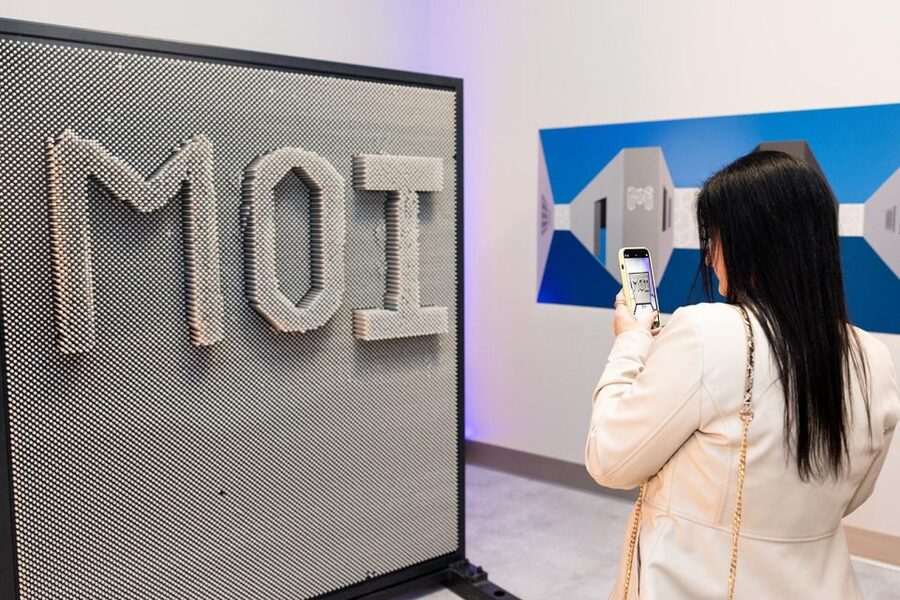
Reviewed · MUSEUMS
Chicago: Museum of Illusions Timed Entrance Ticket
Chicago’s Museum of Illusions turns the human brain into the main attraction. In one room, gravity appears to tilt. In another, your body seems to grow or shrink. The best part is that you do not just look at the exhibits. You step into them, test them, and take photos that make your friends question what really happened.
I like the hands-on design, especially the Tilted Room, Rotated Room, and Ames Room. I also like the Smart Playroom, where the visit shifts from funny photo tricks to memory, logic, and problem-solving games. The main drawback is time: at about 45 to 60 minutes, this is a short stop for a $40 ticket, particularly if you have a large family.
- 60-plus exhibits: See holograms, stereograms, optical illusions, and rooms built to fool your eyes.
- Photo-friendly rooms: Use the Tilted Room, Rotated Room, Beuchet Chair, and Clone Table for memorable pictures.
- Smart Playroom: Finish with puzzles that test memory, cognition, and problem-solving.
- Central Chicago location: Find the museum in the Loop, near Washington and Wabash.
- Family-friendly format: Children age 4 and under enter free, and the museum is wheelchair accessible.
- Flexible booking: Choose a morning, afternoon, or evening time, with free cancellation up to 24 hours before your visit.
In This Review
- What the Museum of Illusions Does Well
- Starting in Chicago’s Loop
- The First Illusions: When Your Eyes Lose the Argument
- Tilted, Rotated, and Upside Down
- Growing and Shrinking in the Ames Room
- Infinity Room and Vortex Tunnel
- Beuchet Chair and Clone Table
- The Smart Playroom Changes the Pace
- How Long Should You Plan?
- Is the $40 Ticket Worth It?
- Who Should Book This Chicago Attraction?
- My Booking Advice
- FAQ
- Where is the Museum of Illusions Chicago located?
- How long does a visit take?
- How many exhibits are there?
- What are some of the main illusions?
- Is the museum suitable for children?
- Is the Museum of Illusions wheelchair accessible?
- Can I buy food or drinks inside?
- Can I cancel my ticket?
What the Museum of Illusions Does Well

This is not a traditional museum with glass cases and long labels. It is a compact, active attraction built around one question: can you trust what you see?
The answer, room by room, is usually no. A clever angle, a patterned wall, a mirror, or a change in scale can make your brain invent a reality that is not there. Explanations help connect the trick to vision and perception, so the visit has more going for it than a string of silly photographs.
I especially like that the exhibits invite you to participate. You are not standing several feet away from an object while reading a panel. You are often the object. That makes this a good choice for families, couples, friends, and solo visitors who want an activity with a social element.
The museum has more than 60 visual and educational exhibits, including more than 20 new illusions in an expanded space. That sounds substantial, but the entire visit still usually takes less than an hour. You should treat it as a lively add-on to a day in the Loop, not as a replacement for a half-day art or science museum.
Starting in Chicago’s Loop
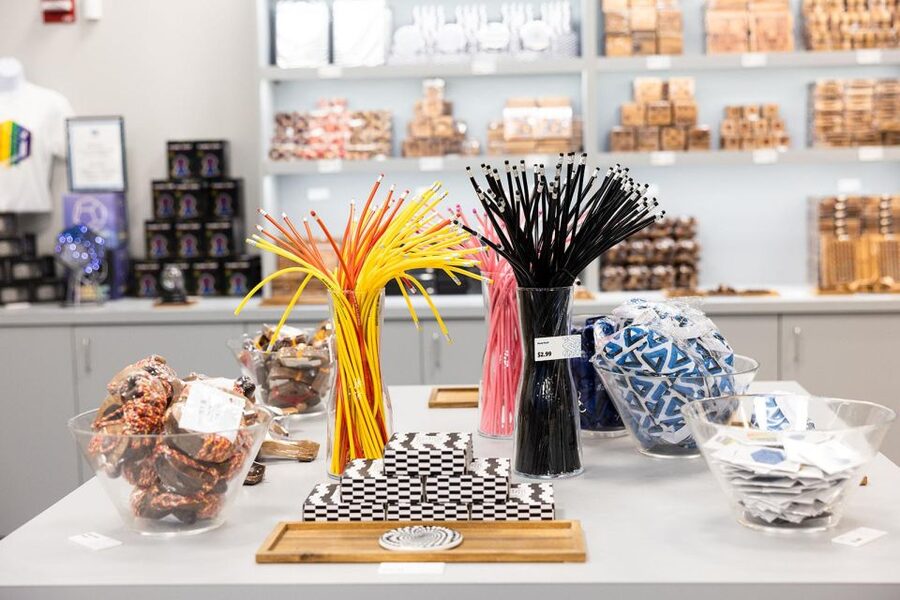
The museum is in the heart of downtown Chicago, in the Loop, with the Washington and Wabash area serving as a useful reference point. You check in at the front desk by giving the staff the name on your booking.
The central location makes this easy to pair with other downtown plans. You might fit it between a river cruise, an observation deck visit, shopping, or a meal. Since your ticket is valid only for the date and time you booked, allow enough time to reach the museum without cutting it close.
At the front desk, an English-speaking host or greeter is available. Staff assistance matters here because some rooms work best when someone takes your picture or explains where to stand. Solo visitors are not left out. If you arrive alone, you can ask the staff to help with photos, a small service that makes the photo-based exhibits much more useful.
Food and drinks are not allowed inside. Plan to eat before or after your visit rather than expecting a café stop within the museum.
More museums in Chicago:
- Medieval Torture Museum Ticket with Audio Guide and Ghost Hunting
★ 5.0 · 962 reviews - Chicago: Field Museum of Natural History Ticket or VIP Tour
★ 4.7 · 717 reviews - Field Museum of Natural History Admission Tickets
★ 4.5 · 489 reviews
The First Illusions: When Your Eyes Lose the Argument
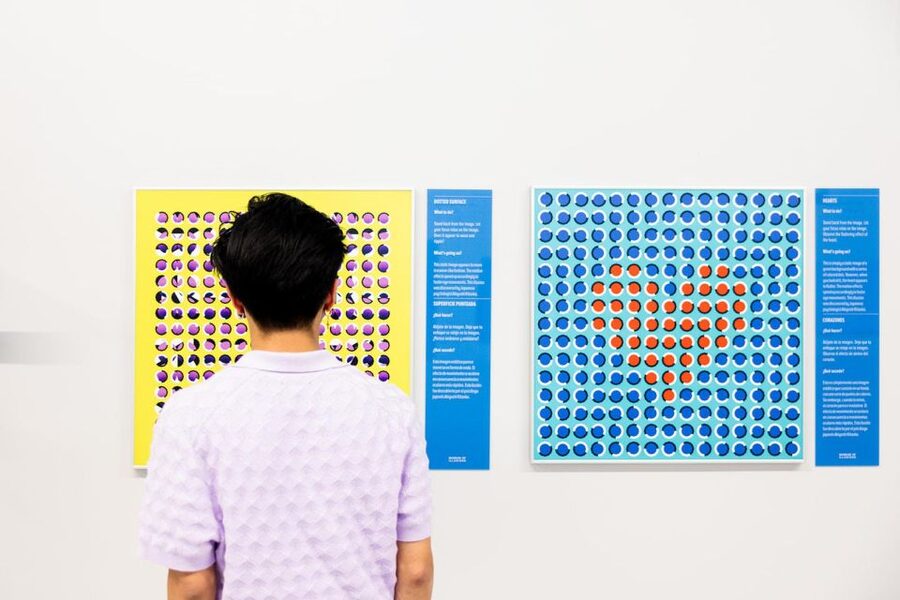
The early exhibits introduce the basic idea behind the museum: your eyes collect information, but your brain decides what that information means. Lighting, perspective, repetition, and visual cues can push that decision in the wrong direction.
You might encounter holograms and stereograms that change as you look at them from different angles. These are less physical than the room-sized attractions, but they help explain why the museum calls itself educational as well as entertaining.
The explanations are valuable for children. Instead of simply saying that an image is a trick, the museum encourages you to think about how your vision works. Adults may already know the basic concept, but the fun comes from seeing the lesson play out with your own body and camera.
Give yourself time to read at least some of the explanations. If you rush from one photo spot to the next, you will get the pictures but miss the reason the illusion works.
Tilted, Rotated, and Upside Down

The Tilted Room is one of the most physical stops. The room appears to defy gravity, even though the floor and walls are arranged to fool your sense of balance and perspective. The result is a photo in which ordinary standing can look strangely difficult.
The Rotated Room takes the idea further by making it seem as if you can walk on walls. This is a good place for playful group photos, since one person can pose while another frames the shot. The image works best when you follow the suggested positioning, so do not be shy about asking staff for help.
These rooms are also why comfortable clothing and practical shoes are a good idea. Nothing in the provided information suggests a strenuous activity, but you will move around, pose, and adjust your position. The museum is wheelchair accessible, though the most useful photo angle for each exhibit may vary.
For children, these rooms are often more exciting than the explanation panels. For adults, they offer a quick reminder that a camera can preserve a visual lie better than your memory can.
Growing and Shrinking in the Ames Room

The Ames Room is the museum’s classic scale trick. One person can appear much larger or smaller than another, even though both are standing in the same room.
This exhibit works particularly well for families. A parent and child can create a dramatic size difference, and groups can take turns trying different positions. It is also one of the clearest examples of how perspective shapes what your brain thinks it sees.
The room is worth more than a quick photograph. Look at the shape and angles around you, then compare what your eyes report with what you know about ordinary rooms. That small moment of doubt is the real point.
If you are visiting with several people, expect to spend a little time taking turns. The attraction is not difficult to understand, but the photo line can slow your progress if everyone wants several poses.
A few more Chicago tours worth a look before you decide
- Chicago: Willis Tower Skydeck and The Ledge Ticket
★ 4.6 · 4,350 reviews - Chicago: Architecture River Cruise Skip-the-Ticket Line
★ 4.8 · 4,325 reviews - Chicago: 360 CHICAGO Observation Deck Ticket
★ 4.5 · 3,173 reviews - Museum of Ice Cream Chicago Admission Ticket
★ 3.5 · 396 reviews
Infinity Room and Vortex Tunnel
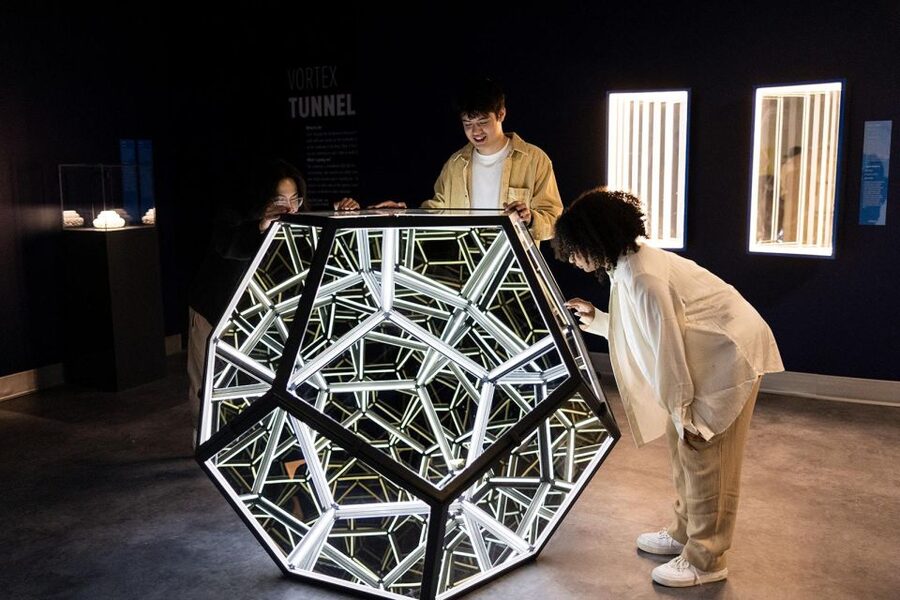
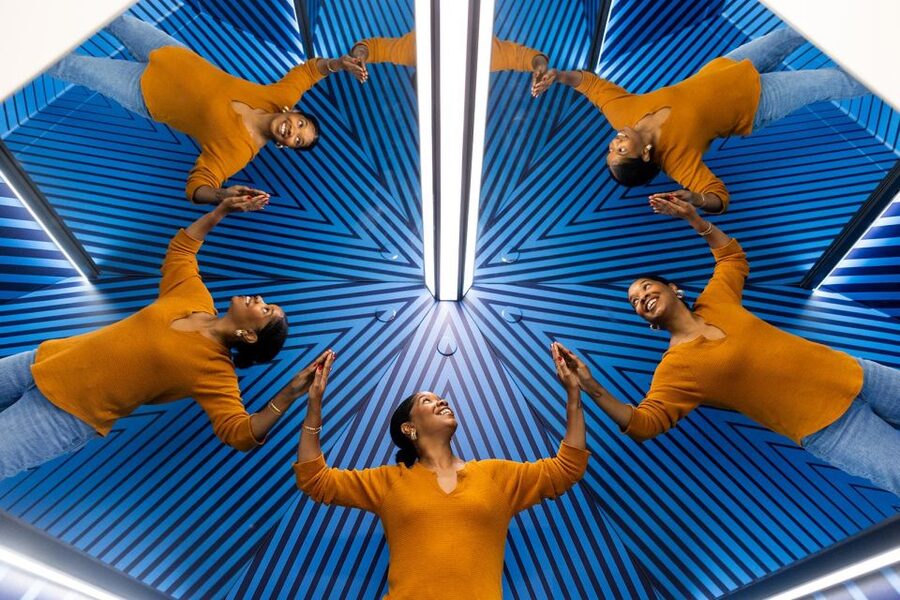
The Infinity Room uses mirrors and repeated reflections to create the feeling of endless space. It is one of the more atmospheric exhibits, but the effect depends on how you position yourself and how your camera handles the reflections.
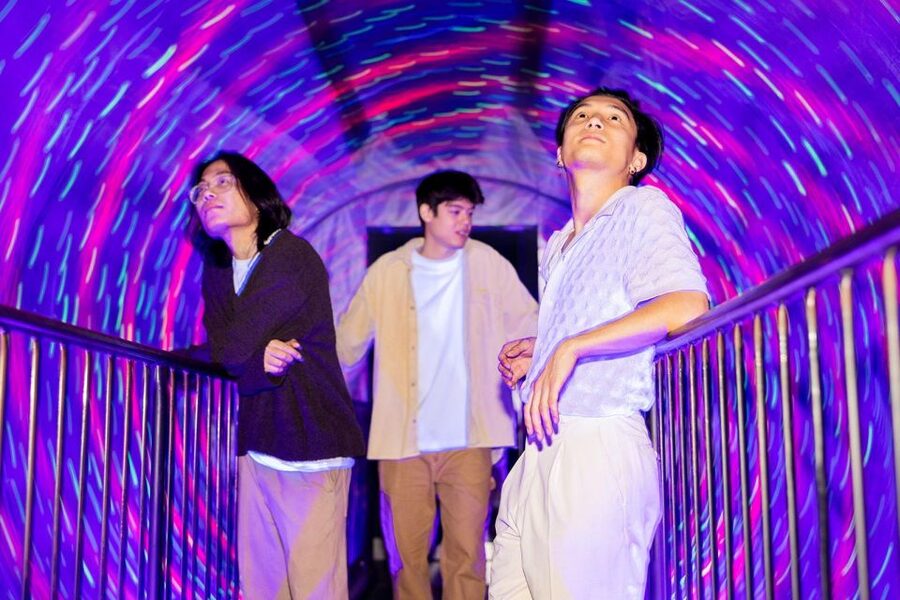
The Vortex Tunnel attacks your sense of balance. The floor is stable, yet the moving visual pattern can make it feel as if the room is spinning or shifting. Some people find this thrilling, while others may want to move through it slowly.
You do not need to spend a long time in either room. A few careful seconds can be enough to understand the illusion, but you may want another attempt for a better photograph. If anyone in your group is sensitive to motion-based visual effects, take it at a comfortable pace.
These rooms show the range of the museum. Some exhibits make you look funny in a picture, while others make your body question whether the floor is actually level.
Beuchet Chair and Clone Table
The Beuchet Chair plays with scale and perspective. It can make a person appear unusually large or small beside an oversized chair, creating one of those photographs that looks impossible until you see the setup.
At the Clone Table, mirrors produce multiple versions of the same person. This is a simple idea, but it works well in a group because everyone can arrange themselves in the frame.
These exhibits reward cooperation. Someone has to pose, someone has to take the picture, and everyone may need to adjust slightly to get the full effect. Staff can help with photography, a useful advantage for solo visitors and families who want one picture with everyone in it.
The photo opportunities are not a minor extra. They are a large part of the appeal, so bring a charged phone and enough storage space for several attempts. The museum does not provide food or drinks, but it does have an onsite Smart Shop for puzzles, games, and Museum of Illusions merchandise.
The Smart Playroom Changes the Pace
The Smart Playroom gives the visit a different ending. Instead of rooms that mainly fool your eyes, you get games designed to test memory, cognition, and problem-solving.
I like this section because it gives older children and adults something to do after the photo rooms. It can also turn the visit into friendly competition. You may find yourself spending longer on a puzzle than expected because you want to solve it before someone else in your group does.
The Smart Playroom has educational value without feeling like a classroom. The games ask you to notice patterns, remember information, and work through a challenge. That makes it a useful part of the visit for families with children who enjoy puzzles more than posing for pictures.
You can also buy many of the same games in the Smart Shop. This is a practical souvenir option. Instead of taking home another generic Chicago item, you can choose a puzzle connected to something you tried inside.
How Long Should You Plan?

The stated visit time is about 45 to 60 minutes. That estimate is realistic for a steady visit through the exhibits, but your pace will depend on how many photos you take and whether you spend time with the Smart Playroom.
A solo visitor arriving at a quiet time may move quickly. A family or group of friends can easily use the full hour, especially at the most popular photo rooms. One person may want a picture from several angles, while another wants to read every explanation.
I would not build an entire day around this museum. Instead, reserve one hour and combine it with another Chicago activity nearby. That approach also makes the $40 price easier to assess. The ticket is expensive for a short visit, but the value improves if you treat it as an interactive downtown stop with multiple photo opportunities rather than a conventional museum admission.
Children age 4 and under enter free and do not need a ticket. That helps families with very young children, though older children are likely to get the most from the puzzles and explanations.
Is the $40 Ticket Worth It?
At $40 per person, this is not a bargain attraction if you measure value by hours inside. A 45 to 60-minute visit costs more than many standard museum admissions that offer several hours of galleries.
The case for the ticket is the type of activity. You get more than 60 exhibits, many of them interactive, and the photographs give the visit a lasting payoff. The museum also works across age groups. A child can enjoy the scale tricks, a teenager can create funny pictures, and an adult can appreciate the lessons about perception.
I would call it good value for a family that wants a short, active break from sightseeing. It is less compelling for a solo visitor who dislikes taking photos or for anyone seeking a large collection of art, artifacts, or detailed displays.
The $40 price also makes the flexible booking terms useful. You can reserve now and pay later, and cancellation is free up to 24 hours before the booked time. That helps if your Chicago schedule includes weather-sensitive plans or several timed attractions.
Who Should Book This Chicago Attraction?
I would recommend the museum most strongly to:
- Families with school-age children
- Groups of friends who enjoy taking photos together
- Couples looking for a playful downtown stop
- Solo visitors willing to ask staff for photo help
- Anyone curious about vision, perception, and the way the brain interprets reality
It is a weaker choice for visitors who want a quiet, traditional museum or a long cultural program. It is also not the best use of your time if you only have a few hours in Chicago and prefer major city sights such as architecture cruises or observation decks.
The museum is wheelchair accessible, and an English-speaking host or greeter is available. Since there is no food or drink access inside, plan your visit around a meal.
My Booking Advice
Book this if you want a compact attraction where you can laugh, test your senses, and leave with unusual photographs. The staff’s help with pictures is especially useful if you are visiting solo or want a group shot.
Skip it if the $40 ticket feels high for an hour or if your priority is a large museum with extensive collections. For most families and social groups, the best plan is to schedule it in the morning, afternoon, or evening as one part of a Loop itinerary.
The Museum of Illusions succeeds because it lets you become part of the exhibit. Just keep your expectations clear: this is a lively, photo-friendly hour of optical tricks and brain games, not an all-day museum visit.
FAQ
Where is the Museum of Illusions Chicago located?
It is located in the heart of Chicago’s Loop, near Washington and Wabash.
How long does a visit take?
Plan for about 45 to 60 minutes inside the museum.
How many exhibits are there?
The museum features more than 60 visual and educational exhibits, including holograms, stereograms, optical illusions, and special rooms.
What are some of the main illusions?
Featured exhibits include the Tilted Room, Ames Room, Rotated Room, Infinity Room, Vortex Tunnel, Beuchet Chair, and Clone Table.
Is the museum suitable for children?
Yes. The museum is designed for all ages, with interactive rooms, photo opportunities, and puzzles in the Smart Playroom. Children age 4 and under enter free and do not need a ticket.
Is the Museum of Illusions wheelchair accessible?
Yes, the museum is wheelchair accessible.
Can I buy food or drinks inside?
No. Food and drinks are not allowed inside the museum. A Smart Shop is available for puzzles, games, and Museum of Illusions merchandise.
Can I cancel my ticket?
Yes. You can cancel up to 24 hours in advance for a full refund. You can also reserve your spot and pay later.
Just added in Chicago
- Chicago: Architecture and Engineering Marvels Walking Tour★ 5.0 · 3 reviews
- Private Downtown Chicago TV and Movie Sites Guided Walking Tour★ 4.5 · 3 reviews
- Black Heritage Tour★ 5.0 · 3 reviews
- Private SUV Transfer from Chicago Downtown to Midway airport★ 5.0 · 3 reviews
- Private Holiday City Tour★ 5.0 · 3 reviews
- BYOB Chicago River Guided History Tour★ 5.0 · 4 reviews
- Chicago 4-Hour Sightseeing Transfer by Luxury SUV★ 4.5 · 3 reviews
- Chicago, Cloud Gate, Grant Park Full-Day City Tour★ 4.0 · 4 reviews
Museums, compared.

Field Museum of Natural History Ticket or VIP Tour
Read our review →
Field Museum of Natural History Admission Tickets
Read our review →

2-Hour Chicago Lakefront & Museum Campus Segway Tour
Read our review →

Chicago Landmarks & Museum Campus Small Group Segway Tour
Read our review →
Browse the lists this tour appears in