
Reviewed · CHICAGO RIVER CRUISES
BYOB Chicago River Guided History Tour
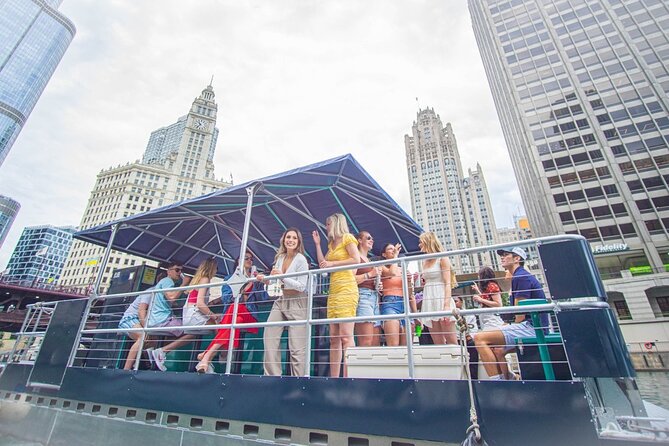
Chicago’s story makes more sense from the water, especially on a small BYOB party barge that lets you bring your own drinks and snacks. I like the relaxed U-shaped bar and the personal attention that comes with a maximum of 18 people. I also like the way guides such as Monica, Avril, Maria, and Kelli mix city facts with jokes instead of delivering a dry lecture.
The main drawback is simple: this is an outdoor boat ride, so weather matters. One recent outing was enjoyed even in the cold, but you should dress for the conditions and remember that the experience may be canceled if the weather turns poor.
In This Review
- Key points to know before you book
- Why this small boat gives Chicago’s history more meaning
- Getting aboard at the Riverwalk
- The party barge setup, and what to bring
- Fort Dearborn and Chicago’s earliest chapter
- The corner linked to the Great Chicago Fire
- The 1992 flood and the bridge with a remarkable story
- The 1964 buildings and Chicago’s change of direction
- The river reversal and Chicago’s bold engineering choice
- The 1893 World’s Fair and inventions that stayed with us
- Captain Santa and the Rouse Simmons
- What the $65 price really covers
- Weather, comfort, and the right kind of passenger
- What the crew adds to the ride
- Should you book the Chicago BYOB River Tour?
- FAQ
- How long is the BYOB Chicago River Guided History Tour?
- Where does the tour begin?
- What time does the tour start?
- Can I bring my own drinks and food?
- How many people can join the boat?
- What happens if bad weather cancels the cruise?
Key points to know before you book
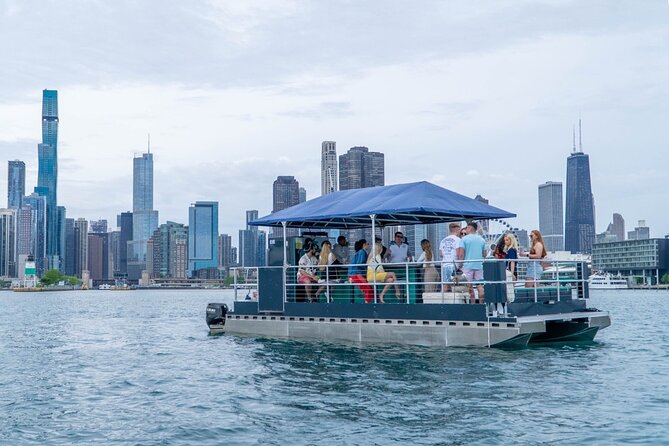
- Two hours on the Chicago River: The route connects Fort Dearborn, the Great Fire, the 1992 flood, the river reversal, the 1893 World’s Fair, and Chicago’s Christmas tree boat tradition.
- Bring your own refreshments: Coolers and ice are supplied, but drinks and food are not. Glass containers are not allowed.
- Small group setting: The boat holds no more than 18 people, making the tour more personal than a large sightseeing vessel.
- A real social setup: The U-shaped bar, bar stools, bow seating, charging ports, and bathroom make this more like a floating gathering place than a formal cruise boat.
- A 10:30 a.m. start: Meet at Sweet Home Gelato on the Riverwalk, between the LaSalle Street and Wells Street bridges.
- Best for history with a casual mood: You get a guided look at Chicago’s past, but the party-barge design puts equal weight on conversation and fun.
Why this small boat gives Chicago’s history more meaning
The Chicago River is not just a pretty channel between tall buildings. It helped decide where the city grew, how it handled industry, and even which way its water flowed. From a boat, you can look up at the buildings while hearing the events that shaped the streets around you.
That combination is the real appeal here. You are not simply passing photo stops. You are linking the city’s beginnings at Fort Dearborn with the Great Chicago Fire, the shift from factories to homes, and the engineering work that reversed the river.
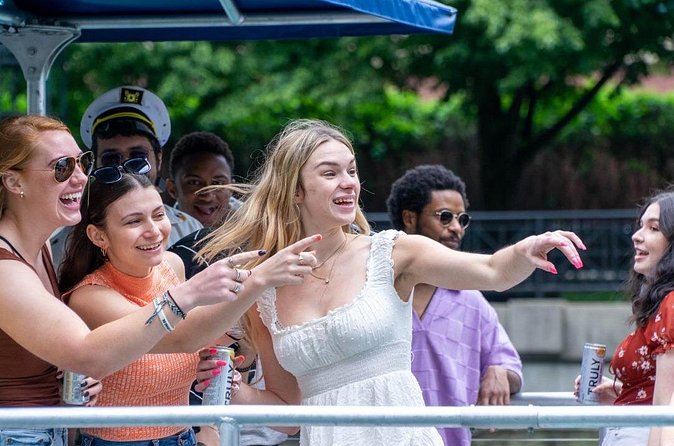
I like the format because it avoids the stiffness of a formal lecture. You can sit at the bar, take photos from the bow, or bring a drink and let the guide’s stories carry the ride. The guides named in the available feedback include Monica, Avril, Maria, and Kelli. Their approach appears to be warm and personal, with facts, humor, and attention to the people on board.
The group limit of 18 matters. A small boat gives you a better chance of hearing the guide and asking a question without shouting across a packed deck. It also means the mood can feel more like a shared outing with a captain and crew than a standard sightseeing operation.
More cruises along the Chicago River:
- Chicago Architecture River Cruise
★ 5.0 · 15,756 reviews - Chicago River 90-Minute Architecture Tour
★ 4.5 · 9,629 reviews - Chicago River: 1.5-Hour Guided Architecture Cruise
★ 4.8 · 8,046 reviews
Getting aboard at the Riverwalk
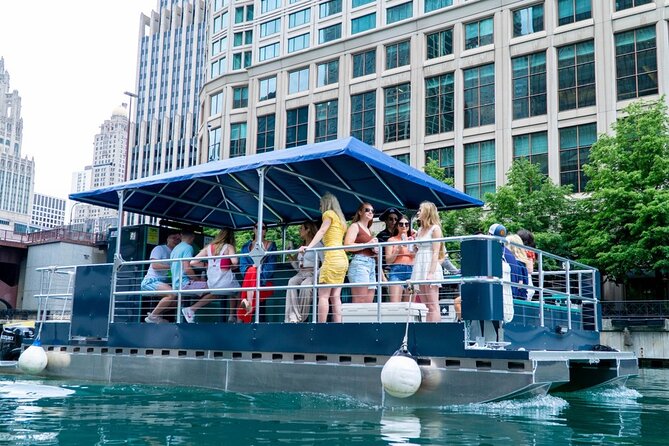
The meeting point is Sweet Home Gelato, 151 W Riverwalk, Chicago, Illinois 60601. The boat departs from the Chicago Riverwalk between the LaSalle Street and Wells Street bridges, and the listed start time is 10:30 a.m.
Give yourself enough time to locate the correct section of the Riverwalk. The departure area is central and near public transportation, but the Riverwalk can require a little orientation once you are below street level. Your mobile ticket is useful here, since confirmation is sent within 48 hours of booking, subject to availability.
The cruise lasts about 120 minutes and returns to the meeting point. That makes it easy to fit into a morning or early afternoon, though you should avoid booking another activity with a tight connection immediately afterward.
The boat includes a bathroom, called a head in boating terms, which is a practical benefit on a two-hour ride. You also get charging ports, extra seats at the bow, and coolers filled with ice. Those details may sound minor, but they make a difference when you are carrying phones, drinks, and snacks.
The party barge setup, and what to bring
The central feature is a U-shaped bar surrounded by bar stools. This arrangement encourages conversation and gives you a clear place to settle in, but it also shapes the experience. You are not signing up for a quiet, formal cruise with everyone facing forward.
Bring whatever drinks you want, as long as they are not in glass containers. Food and snacks are also welcome, but you need to supply them yourself. The coolers and ice are included, so you do not have to carry a separate cooler onto the boat.
I would pack simple food that is easy to handle while seated. You may want a drink for the social side of the trip, but you do not need alcohol to enjoy the history. The tour is still a guided city outing first, with the BYOB setup adding a relaxed layer.
The bow seating is useful if you want clearer views for photographs. The bar is likely the better choice if you want to chat with the group or crew. Since the boat carries no more than 18 people, you can shift your attention between the guide, the skyline, and the river itself.
Fort Dearborn and Chicago’s earliest chapter
One of the first major stops is the area on the south side of the river where Fort Dearborn once stood. The fort marked the site of the first American settlement in Chicago, making this a useful starting point for understanding how the city began.
From the water, you get a different sense of the location than you would from a street address or a museum display. The river was a reason for the settlement’s existence, and it later became the working spine of the growing city.
The guide’s job here is to connect a modest early outpost with the enormous city around you. Look at the scale of the buildings and then picture the small settlement that preceded them. That contrast gives the stop its force.
This is also where the boat’s slower pace helps. You have time to listen, look toward the south side of the river, and place the story in the city’s physical setting rather than treating it as a list of dates.
More history walks in Chicago:
- Chicago in a Day: Food, History & Architecture Walking Tour
★ 5.0 · 1,153 reviews - Chicago: Field Museum of Natural History Ticket or VIP Tour
★ 4.7 · 717 reviews - Field Museum of Natural History Admission Tickets
★ 4.5 · 489 reviews - Chicago Walking Tour: Historic Treasures of Chicago
★ 5.0 · 362 reviews
The corner linked to the Great Chicago Fire
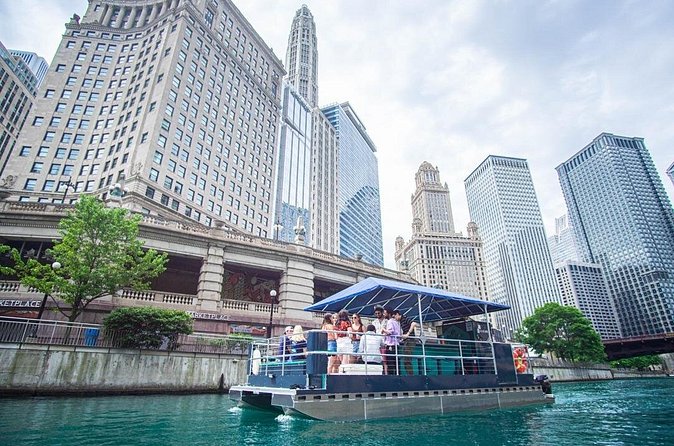
The route also points out the site where the Great Chicago Fire began in 1871. The event is often reduced to a familiar story, but seeing the location from the river helps you think about the city’s tightly packed early development and its dependence on the waterfront.
The stop does not require a major building or preserved ruin to be worthwhile. The interest comes from knowing that an event which reshaped Chicago began at a specific place now surrounded by a modern metropolis.
This is a good example of the tour’s method. It uses the river as a moving platform for stories that might otherwise feel scattered across downtown. You see the site, hear the context, and then continue along the same waterway that helped Chicago rebuild and expand.
If your main goal is architecture photography, this stop may feel less visually dramatic than the skyline views. If you enjoy connecting ordinary-looking places with major events, it is more rewarding.
The 1992 flood and the bridge with a remarkable story
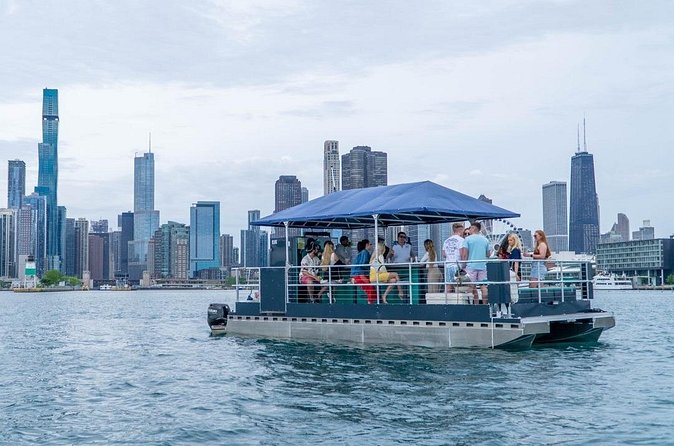
At another point, the guide explains how a hole formed under a bridge in 1992, leading to the Great Flood. The flooding shut Chicago down for an entire week.
This is one of the most unusual stories on the route because it shows how vulnerable a major city can be beneath its polished surface. A small failure below the river produced a large civic crisis above it.
The story also gives you a reason to pay attention to the infrastructure around the boat. Bridges can look like background scenery during a cruise, but here one becomes the setting for a major disruption in modern Chicago.
I appreciate stops like this because they add recent history to the tour. The experience is not limited to forts, fires, and nineteenth-century events. It also explains how the city functions in the present day, and how damage to an unseen part of the system can affect the whole center.
The 1964 buildings and Chicago’s change of direction
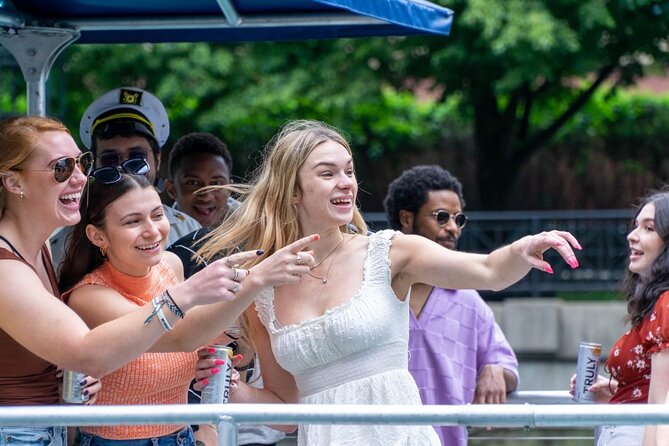
The boat passes buildings constructed in 1964 that mark a shift from Chicago’s Industrial Age toward the residential metropolitan city it is today. This is an important part of the route because it shows that Chicago’s transformation did not happen all at once.
The river once carried the practical work of a manufacturing city. Over time, the surrounding buildings and uses changed. The 1964 structures represent that turning point, when the riverfront and downtown began moving toward the mix of homes, offices, and recreation you see now.
You may find this stop more useful if you pay attention to the contrast between the older working river and the newer residential city. The guide helps make that change visible, but the buildings themselves also provide a useful reference point.
This part of the tour adds depth to the skyline. Instead of treating every tall building as simply attractive, you learn to ask what kind of city it represents and why the riverfront developed in that direction.
The river reversal and Chicago’s bold engineering choice
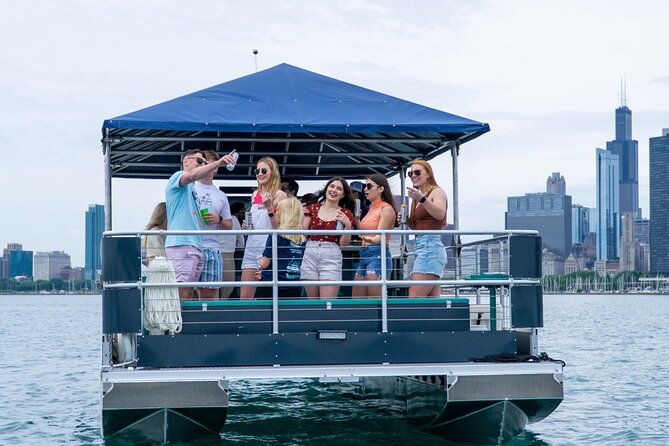
The Chicago River is famous for having its flow reversed. The tour explains how that decision shaped the city over the past century.
That may sound like a technical subject, but it is one of the most important facts about Chicago’s growth. The river’s direction affected sanitation, industry, and the city’s relationship with Lake Michigan. You will better understand why water engineering was not a side issue here. It was central to urban survival and expansion.
This is another place where a boat is the right classroom. You are sitting on the river while learning that its course was deliberately changed. The fact feels more immediate when the water is moving beside you instead of appearing in a diagram.
The guide’s explanation matters. A short cruise cannot cover every engineering detail, but a clear account gives you a framework for seeing the river during the rest of your Chicago visit.
The 1893 World’s Fair and inventions that stayed with us
The cruise also covers the World’s Fair of 1893 and inventions introduced there that remain part of daily life. The fair helped present Chicago as a modern city with national and international importance.
This portion broadens the tour beyond the river’s immediate banks. The fair is a reminder that Chicago was not only a center of industry and transport. It was also a place where new ideas, products, and forms of city life were displayed to a large public.
You may already know some of the fair’s most famous associations, but the value here is seeing it as part of Chicago’s larger story. The river, downtown construction, transportation, and civic ambition all fit together.
The stop should appeal to you if you like history that reaches into ordinary life. The guide focuses on inventions that are still used today, giving the fair a practical connection rather than leaving it as a long-ago exhibition.
Captain Santa and the Rouse Simmons
Near a corner of the river, you hear about Captain Santa and the Rouse Simmons, the sailboat used to sell Christmas trees every winter in the late 1800s.
It is a small story compared with a city fire or a river reversal, but that is exactly why it works. Chicago’s past was also made up of seasonal businesses, working boats, and local traditions. The Rouse Simmons story adds a human scale to the larger history.
This stop is likely to appeal to anyone who enjoys the odd, memorable details that make a city easier to remember. The image of a sailboat selling Christmas trees gives the river a seasonal character and reminds you that it was once a place of daily commerce, not just a route for sightseeing.
The tour benefits from this variety. You move from settlement and engineering to fire, architecture, a world’s fair, and holiday trade. The subjects do not all have the same weight, but together they give you a fuller picture of the river.
What the $65 price really covers
At $65 per person, this is not the cheapest way to see the Chicago River. You can find larger boat rides and other sightseeing options, so the value depends on what kind of outing you want.
Here, you are paying for a two-hour guided experience in a boat limited to 18 people, with a bathroom, ice, coolers, charging ports, and a social bar layout. The local guide is the main value. A self-guided walk can show you the buildings, but it will not automatically connect Fort Dearborn, the Great Fire, the 1992 flood, the river reversal, and the World’s Fair.
The BYOB policy also changes the calculation. You supply your own drinks and food, which keeps the setup flexible but means the $65 does not include refreshments. If you want a catered cruise, this is not that product.
I think the price is fair for a small-group, guided boat ride if you care about the stories as much as the views. It is less compelling if you only want a quick photo cruise or if you prefer a quiet vessel without a party atmosphere.
Weather, comfort, and the right kind of passenger
The experience requires good weather. If poor conditions cancel the trip, you are offered another date or a full refund. That policy gives you some protection, but the practical issue remains: you are spending two hours outdoors on the river.
Dress with the forecast in mind, and bring an extra layer if conditions look cool. One outing was still enjoyed in cold weather, but that does not mean you should count on feeling warm. Your comfort will affect how much attention you can give the guide.
The tour is suitable for most people, and service animals are allowed. It is near public transportation, and the activity ends where it begins. Specific accessibility details beyond those points are not provided, so you should confirm any special requirements before booking.
I would choose this for a birthday, a casual afternoon with friends, or a first visit to Chicago when you want an overview with personality. The small group and BYOB format also suit people who prefer social outings to large, formal cruises.
What the crew adds to the ride
The crew is a major part of the experience. Monica is specifically praised for making a two-hour trip fun and for sharing many Chicago facts. Monica and Avril are also noted for being highly informed about the city, while Monica, Maria, and Kelli are associated with a friendly captain and co-captain team.
The common thread is clear: expect a conversational style with humor mixed into the history. That is useful because two hours can feel long if the guide simply recites information. Jokes and personal attention help keep the ride moving.
Of course, the exact crew may vary by departure. You should not book on the assumption that one particular guide will always be aboard. Still, the guide-led format is central to the experience, and the available feedback gives you a good idea of the tone to expect.
Should you book the Chicago BYOB River Tour?
Book it if you want Chicago history delivered from the river, in a small group, with room for your own drinks and snacks. The best parts are the unusual stories, the personal crew style, and the chance to connect modern buildings with the city’s early settlement, fire, engineering, and industrial past.
Skip it if you want a purely architectural cruise, included food and drinks, or a fully enclosed boat that removes weather concerns. At $65, the tour earns its price through the guide and the small-group format, not through luxury extras.
For a first Chicago visit, I would place it early in your stay. Afterward, you will look at the river, bridges, and downtown buildings with more context, which makes later walks through the city more rewarding.
FAQ
How long is the BYOB Chicago River Guided History Tour?
The cruise lasts approximately two hours, or 120 minutes.
Where does the tour begin?
Meet at Sweet Home Gelato, 151 W Riverwalk, Chicago, Illinois 60601. The boat departs from the Chicago Riverwalk between the LaSalle Street and Wells Street bridges.
What time does the tour start?
The listed start time is 10:30 a.m.
Can I bring my own drinks and food?
Yes. You may bring any drinks you want, but glass containers are not allowed. You may also bring snacks or food. Drinks and food are not included, while coolers and ice are provided.
How many people can join the boat?
The activity has a maximum of 18 participants.
What happens if bad weather cancels the cruise?
If poor weather causes a cancellation, you will be offered a different date or a full refund. You can also cancel for a full refund if you cancel at least 24 hours before the experience start time.
Just added in Chicago
- Chicago: Architecture and Engineering Marvels Walking Tour★ 5.0 · 3 reviews
- Private Downtown Chicago TV and Movie Sites Guided Walking Tour★ 4.5 · 3 reviews
- Private Holiday City Tour★ 5.0 · 3 reviews
- Black Heritage Tour★ 5.0 · 3 reviews
- Private SUV Transfer from Chicago Downtown to Midway airport★ 5.0 · 3 reviews
- Chicago 4-Hour Sightseeing Transfer by Luxury SUV★ 4.5 · 3 reviews
- Chicago, Cloud Gate, Grant Park Full-Day City Tour★ 4.0 · 4 reviews
- Explore Black History on the Southside of Chicago★ 4.0 · 4 reviews
Chicago River Cruises, compared.
Chicago Architecture Center River Cruise aboard First Lady
Read our review →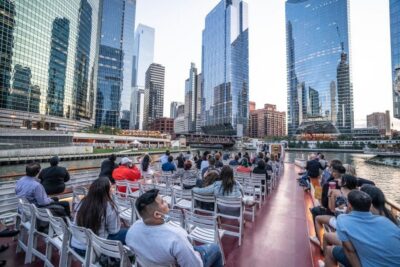
Architecture River Cruise Skip-the-Ticket Line
Read our review →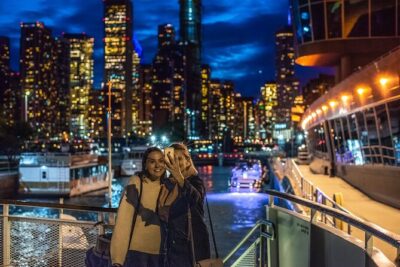
Chicago River 45-Minute Architecture Tour from Magnificent Mile
Read our review →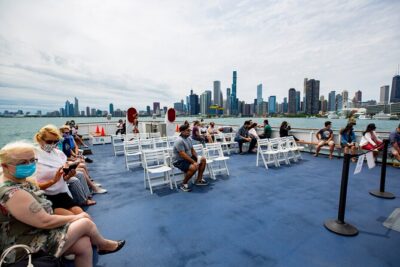
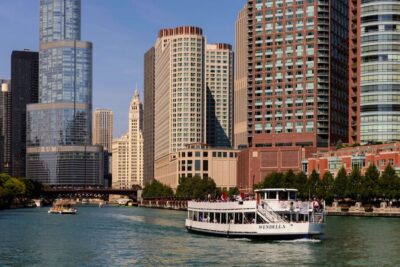
45-Minute Family-Friendly Architecture River Cruise
Read our review →Browse the lists this tour appears in