
Reviewed · HISTORICAL TOURS
Chicago Walking Tour: Historic Treasures of Chicago
Chicago’s architectural story comes alive in the places many people walk past without looking up. This two-hour tour links Michigan Avenue, State Street, and the Loop, pairing famous facades with grand interiors such as the Palmer House lobby and Chicago Cultural Center. The guide fills in the human story behind the buildings, not just their dates and names.
I especially like the small maximum of 15 people, which gives you a fair chance to hear and ask questions. I also like the included Chicago Architecture Center admission, a useful bonus for anyone who wants more context after the walk.
The main catch is that the tour covers only a handful of buildings, and interior access can change because of weekend schedules, holidays, or unexpected closures. You should also be ready to walk outdoors for two hours, and proof of COVID-19 vaccination is required to enter the Palmer House location under the stated conditions.
In This Review
- Key points at a glance
- Why this short walk works so well
- Starting inside the Chicago Architecture Center
- The Wrigley Building and Michigan Avenue
- The Palmer House lobby and the pleasure of looking up
- The Carbide and Carbon Building
- The Reliance Building and early Chicago architecture
- Inside the Chicago Cultural Center
- What the guides add to the buildings
- A realistic look at the pace and group size
- Is $35 a good value?
- Who should book this Chicago architecture walk?
- Practical details before you go
- Should you book it?
- FAQ
- How long does the Chicago Walking Tour: Historic Treasures of Chicago last?
- Where does the tour begin?
- Where does the tour end?
- What is included in the price?
- Is entry to the Palmer House available to everyone?
- What happens if I need to cancel?
Key points at a glance
- Grand interiors, not just street views: Enter the Palmer House and Chicago Cultural Center when access permits.
- A compact Loop route: See major buildings across Michigan Avenue and State Street in about two hours.
- Guides who make room for questions: Bob, Jim, John, Maureen, Laurel, Margaret, Paul, Beth, and others have led tours praised for clear explanations and good pacing.
- Small-group format: The tour accepts no more than 15 people, making conversation easier than on a large coach outing.
- Useful architectural context: Learn about Chicago’s skyscraper era, retail history, the Seven Sisters, and the city’s early architecture.
- Good value at $35: The price includes the walking tour, a certified guide, and admission to the Chicago Architecture Center galleries.
Why this short walk works so well
Chicago can make architecture feel like a full-time job. There are landmark towers, old department stores, hotel lobbies, civic buildings, and layers of architectural styles packed into a relatively small part of the Loop. Without some direction, you may photograph the Wrigley Building and walk right past the details that make it worth seeing.
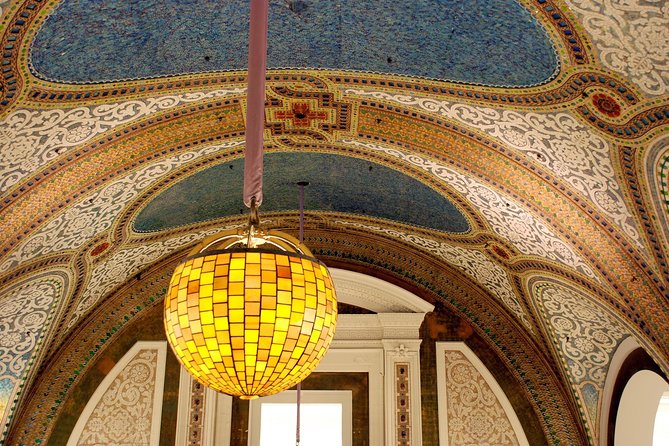
This tour gives you a clear route and a story to follow. The focus is the city’s building boom and the heyday of the skyscraper, with attention to both exteriors and interiors. That matters because Chicago’s best architectural surprises are often overhead: a ceiling, dome, lobby decoration, or trim detail that disappears when you hurry through a building.
The format is intimate without being private. With a maximum of 15 people, you are not lost in a crowd, and the guide can respond to questions. Past guides named in the feedback include Bob, Russell, John, Paul, Maureen, Laurel, Margaret, Jean, Beth, and Jim. The strongest common thread is their ability to explain buildings in a friendly, lively way while keeping the walk moving.
This is not a tour for someone who wants to spend twenty minutes inside every building. Stops are brief, usually five to ten minutes, and the group keeps progressing. I see that as a strength for a first look at downtown, but architecture fans who want long sketching or photography sessions may want a longer specialist tour afterward.
More walking tours in Chicago:
- Chicago: Gangsters and Ghosts Walking Tour
★ 5.0 · 7,155 reviews - Chicago Favorites Ultimate Food and Walking Tour
★ 5.0 · 1,962 reviews - Chicago: Gangsters and Ghosts Guided Walking Tour
★ 4.7 · 1,697 reviews
Starting inside the Chicago Architecture Center
The meeting point is the Chicago Architecture Center at 111 East Wacker Drive. The tour begins with about five minutes of introductory remarks from the docent, followed by admission to the center’s galleries.
That opening is useful. You get your bearings before heading outside, and the center gives the guide a place to set up the larger story of Chicago architecture. Admission to the galleries is included, so you can spend additional time there if your schedule allows. The tour itself does not provide hotel pickup, luggage storage, stroller storage, or coat check, so arrive ready to walk with only what you need.
The center is near public transportation, which makes it a practical starting point from other parts of Chicago. Confirmation is provided when you book, and most people can take part, though you should still consider your comfort with a two-hour urban walk.
The Wrigley Building and Michigan Avenue
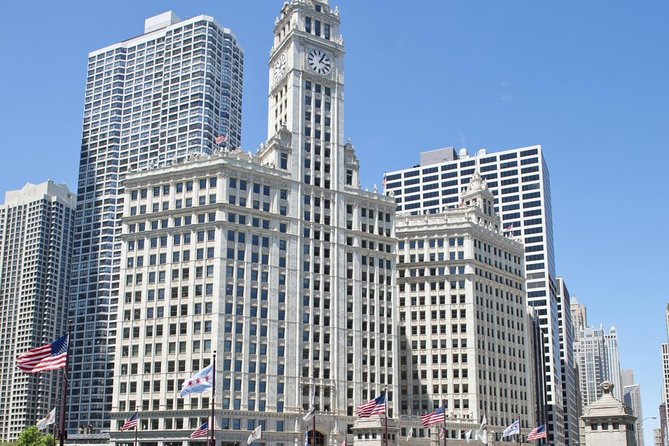
The Wrigley Building is the first major exterior stop. You get about five minutes to view it, with the guide explaining its place in the city’s architectural story.
A short stop can sound modest, but it helps keep the route balanced. The Wrigley Building is a familiar Chicago landmark, and seeing it as part of a sequence is more useful than treating it as an isolated photo stop. You begin to notice how the city presents buildings to the street, how grand commercial architecture announces itself, and how Michigan Avenue connects different periods of downtown design.
Because this is an outdoor viewing stop, weather matters. Chicago wind, rain, or heat can affect your comfort, so wear sensible shoes and bring a weather-appropriate layer. The tour does not provide transportation between stops, and the route is meant to be covered on foot.
The Palmer House lobby and the pleasure of looking up
The Palmer House is one of the tour’s most appealing stops because you see both the exterior and interior. The visit lasts about ten minutes, and the lobby gives you a chance to experience the scale and decoration of a historic hotel rather than simply hearing about it from the sidewalk.
This is also where the tour’s advice to look up becomes especially valuable. One person specifically noted how often they had been inside Macy’s without noticing the ceiling. That is a good lesson for the entire walk: keep your eyes moving above storefront level, because the most memorable details may be overhead.
The Palmer House stop can be affected by entry rules. Proof of COVID-19 vaccination is required to enter this location under the stated tour conditions. Building interiors may also change because of schedules, holidays, or closures, so you should treat interior access as an important possibility, not an absolute guarantee.
More history walks in Chicago:
- Chicago in a Day: Food, History & Architecture Walking Tour
★ 5.0 · 1,153 reviews - Chicago: Field Museum of Natural History Ticket or VIP Tour
★ 4.7 · 717 reviews - Field Museum of Natural History Admission Tickets
★ 4.5 · 489 reviews - Historical and Architectural Chicago Fireboat River & Lake Cruise
★ 5.0 · 246 reviews
The Carbide and Carbon Building
The Carbide and Carbon Building is another five-minute exterior stop. The guide places it within the larger progression of Chicago’s architectural styles, giving you a chance to compare it with the buildings seen earlier.
The value here is the comparison. A building can look impressive on its own, but the differences become clearer when you see several landmarks in one walk. You move from a celebrated hotel interior to a distinctive tower exterior, then continue toward older commercial buildings and civic spaces. A good guide helps you notice those shifts without turning the tour into a lecture filled with technical terms.
The stop is brief, so you will not get a full interior visit here. If your main goal is to enter every building, this tour may feel too quick. If you want a well-paced introduction with several strong photo stops, the short timing keeps the afternoon from dragging.
The Reliance Building and early Chicago architecture
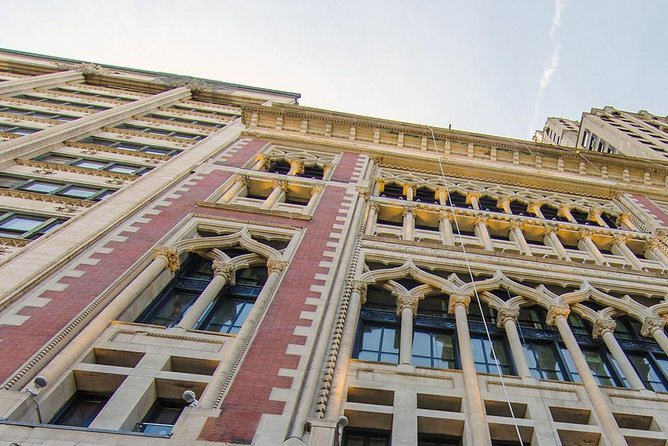
The Reliance Building receives another five-minute viewing stop. This part of the route is especially useful for anyone interested in how Chicago’s early architecture developed.
The guide’s job is to connect the building to the city’s early design and construction story. One tour participant found the discussion of early Chicago architecture particularly rewarding, while another appreciated learning about the Seven Sisters and the city’s retail past. Those subjects broaden the experience beyond famous facades. You are not only looking at buildings; you are considering how downtown functioned as a place to shop, work, stay, and gather.
The Reliance Building is viewed from outside, so expect explanation rather than a long interior exploration. Still, it adds an important layer to the route and helps you understand why the Loop contains so many distinct architectural chapters within a short distance.
Inside the Chicago Cultural Center
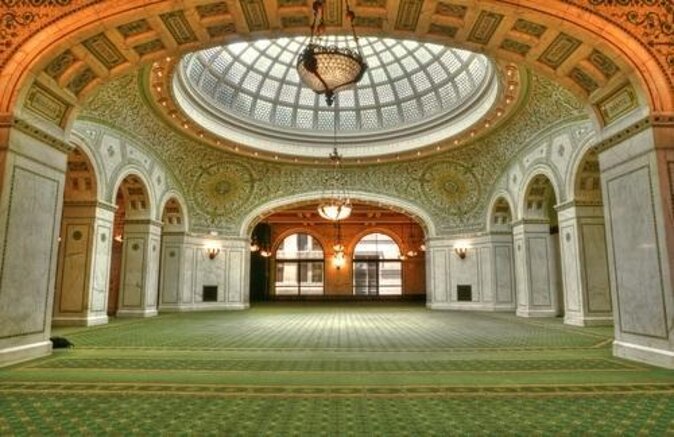
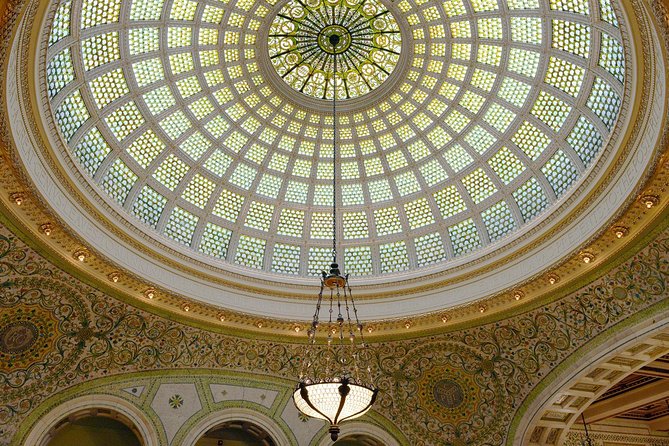
The tour ends at the Chicago Cultural Center, located at 78 East Washington Street. You see both the exterior and interior, with about ten minutes devoted to the stop.
This is likely to be one of the most satisfying parts of the walk because the interior gives the route a strong finish. The building offers the kind of public space that rewards a slower look, especially when the guide points out details you might otherwise miss. A rainy-day tour participant was glad to continue because the indoor portions made the experience worthwhile even in poor weather.
The official endpoint is inside the Cultural Center. If you want to return to the Chicago Architecture Center, the docent goes back there and you may accompany them. That is a thoughtful detail if you left something nearby or need to reconnect with the starting area, though the tour formally ends at the Cultural Center.
What the guides add to the buildings
The strongest part of this experience is the human explanation. The buildings are already impressive, but a guide gives you a reason to care about each one and helps you connect separate stops into one story.
The guides named in the feedback receive praise for several specific qualities:
- Clear explanations: Paul and Jean are noted for making early architecture easy to follow.
- Good pacing: Paul’s two-hour walk was described as comfortable rather than rushed.
- Humor and warmth: Bob, Jim, Laurel, and others are praised for being friendly and approachable.
- Questions welcome: John, Maureen, Beth, Margaret, and others made time for questions and adjusted to the group.
- Calm improvisation: One guide changed the route when a Memorial Day parade disrupted the planned path and kept the tour moving smoothly.
Do not expect every tour to have the same guide or the same storytelling style. That is normal with a docent-led program. The consistent advantage is the small group, which makes it easier for a strong guide to tailor the talk to the people in front of them.
A realistic look at the pace and group size
Two hours is enough time to sample the area without exhausting yourself. The listed stops add up to roughly forty minutes, leaving the rest for walking and commentary. That gives you a sense of the rhythm: short stops, steady movement, and frequent transitions between indoor and outdoor spaces.
The route is not a museum visit with long periods of sitting. You will be on city sidewalks, entering public buildings when access is available, and keeping track of the guide as the group moves. Comfortable shoes are essential. You should also avoid bringing bulky luggage or a stroller, since no storage is provided and the tour does not include a coat check.
A maximum of 15 people is a meaningful advantage at $35. On a large tour, you might hear the main speech but struggle to ask a follow-up question. Here, the guide can usually keep the group together while responding to individual interests. That works particularly well for people who want a first introduction rather than a highly academic seminar.
Is $35 a good value?
At $35 per person, this tour is reasonably priced for a two-hour guided walk in central Chicago. The fee includes a professional certified guide and admission to the Chicago Architecture Center galleries, not just the outdoor walk.
The value improves if you use the center before or after the tour. The galleries give you a chance to continue learning at your own pace, and the introductory remarks help place the walk in context. If you only attend the walk and leave immediately, you still receive a guided route through several important buildings, but you are not using the full included benefit.
I would compare this tour with a river architecture cruise before booking. A boat gives you broad views and a different sense of the skyline. This walk is better if you want to enter interiors, examine street-level details, and hear about retail and civic spaces. It also suits a rainy day better than a boat, thanks to the indoor stops, though you still spend a good part of the time outside.
Who should book this Chicago architecture walk?
I would recommend it to a first-time Chicago visitor who wants an efficient introduction to downtown architecture. It is also a good choice for a repeat visitor who has seen the major buildings but never stopped to study their interiors.
History fans, architecture students, curious shoppers, and people who enjoy guided walks should get plenty from it. The discussion of the Seven Sisters, retail history, and early architecture adds substance for anyone who wants more than a list of building names.
Families can take part if everyone is comfortable walking and listening for two hours. Service animals are allowed, but pets are not. Most people can participate, and the tour is near public transportation.
I would think twice if you dislike group tours, need a long rest break, or want guaranteed access to every interior. The route depends on building schedules and unforeseen closures. You should also confirm that the Palmer House entry requirement works for you.
Practical details before you go
The tour is offered in Chicago and lasts about two hours. It starts at the Chicago Architecture Center, 111 East Wacker Drive, and ends at the Chicago Cultural Center, 78 East Washington Street.
The group can include up to 15 people. Hotel pickup and drop-off are not included. Neither is storage for luggage or strollers, and there is no coat check.
Free cancellation is available if you cancel at least 24 hours before the local start time. Cancellations or changes made less than 24 hours ahead are not accepted for a refund.
Building interiors may change because of weekend or holiday schedules and unexpected closures. If a particular interior matters most to you, keep your plans flexible and enjoy the exterior explanations as part of the experience.
Should you book it?
Book this tour if you want a friendly, focused introduction to Chicago’s architectural core, with several famous buildings, two worthwhile interiors, and a guide who can explain why the city looks the way it does. The combination of a 15-person limit, a two-hour route, and Chicago Architecture Center admission makes $35 a fair price.
Skip it if you want a long, technical architecture course or guaranteed entry into every stop. For most people, though, this is a smart first walk through the Loop. It teaches you to slow down, look up, and notice the city’s best details before you continue exploring on your own.
FAQ
How long does the Chicago Walking Tour: Historic Treasures of Chicago last?
The tour lasts approximately two hours.
Where does the tour begin?
It begins at the Chicago Architecture Center at 111 East Wacker Drive, Chicago.
Where does the tour end?
The tour ends inside the Chicago Cultural Center at 78 East Washington Street. The docent returns to the Chicago Architecture Center, and you may accompany the docent back.
What is included in the price?
The price includes the walking tour, narration by a professional certified guide, and admission to the galleries of the Chicago Architecture Center.
Is entry to the Palmer House available to everyone?
Proof of COVID-19 vaccination is required to enter the Palmer House location under the stated conditions. Interior access can also change because of schedules, holidays, or unexpected closures.
What happens if I need to cancel?
You can receive a full refund if you cancel at least 24 hours before the experience start time. Cancellations and changes made less than 24 hours before the start time are not accepted for a refund.
Just added in Chicago
- Chicago: Architecture and Engineering Marvels Walking Tour★ 5.0 · 3 reviews
- Private Downtown Chicago TV and Movie Sites Guided Walking Tour★ 4.5 · 3 reviews
- Black Heritage Tour★ 5.0 · 3 reviews
- Private SUV Transfer from Chicago Downtown to Midway airport★ 5.0 · 3 reviews
- Private Holiday City Tour★ 5.0 · 3 reviews
- BYOB Chicago River Guided History Tour★ 5.0 · 4 reviews
- Chicago 4-Hour Sightseeing Transfer by Luxury SUV★ 4.5 · 3 reviews
- Chicago, Cloud Gate, Grant Park Full-Day City Tour★ 4.0 · 4 reviews
Historical Tours, compared.
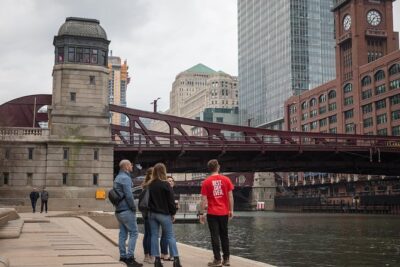
Chicago in a Day: Food, History & Architecture Walking Tour
Read our review →
Field Museum of Natural History Ticket or VIP Tour
Read our review →
Field Museum of Natural History Admission Tickets
Read our review →
Historical and Architectural Chicago Fireboat River & Lake Cruise
Read our review →
Walkin’ with Colin: Chicago History-Mystery-Comedy-Tragedy Tour
Read our review →
Field Museum of Natural History All-Access Pass
Read our review →

Browse the lists this tour appears in