
Reviewed · CHICAGO GANGSTER & PROHIBITION TOURS
Chicago: Gangsters and Ghosts Guided Walking Tour
Chicago’s dark side comes into focus on this 1.5-mile walk through the South Loop. You’ll hear how vice districts, speakeasies, bootleggers, and Al Capone’s crew shaped the city, then switch gears to ghost stories tied to Death Alley, the Chicago Riverwalk, the Palmer House, and the Congress Hotel.
I like the strong storytelling and the chance to enter both the Palmer House and Congress Hotel rather than simply viewing them from the sidewalk. I also like the relaxed pace and 20-minute break, which make this easier than many city walks. The main consideration is that the tour is advertised as two hours, while some outings run closer to an hour and a half, and the mobility information is mixed.
In This Review
- Key points at a glance
- Starting beside Hoyt’s Tavern
- The South Loop when Chicago played rough
- Chicago Riverwalk and the city’s darker stories
- Death Alley and the architecture of fear
- The Chicago Theatre and Palmer House
- Cloud Gate and the Art Institute in the wider route
- Inside Congress Hotel and the eerie 12th floor
- What the guides do best
- Price, pace, and practical value
- Who will enjoy this Chicago walking tour?
- Should you book the Gangsters and Ghosts tour?
- FAQ
- How long is the Chicago Gangsters and Ghosts Guided Walking Tour?
- How much walking is involved?
- Where does the tour meet?
- Where does the tour finish?
- Is the Congress Hotel visit included?
- Is the Palmer House visit included?
- Is the tour suitable for children?
- What language is the tour offered in?
- Can I cancel the booking?
Key points at a glance
- Al Capone’s Chicago: Learn where gangsters partied, made deals, and carried out business during the city’s vice-era years.
- Death Alley and the Riverwalk: Pair true crime tales with ghost legends in some of downtown’s most atmospheric spots.
- Two hotel interiors: Visit the Palmer House and Congress Hotel, including stories linked to the Congress’s 12th floor.
- A manageable route: Walk about 1.5 miles, with a 20-minute stop at a former gangster hangout.
- Guide-led atmosphere: Guides such as Max, Baylor, Tanner, Sophia, Chris, and Willis are praised for humor, clear speaking, and dramatic storytelling.
- Flexible booking: You can cancel up to 24 hours ahead for a full refund and reserve without paying at once.
Starting beside Hoyt’s Tavern
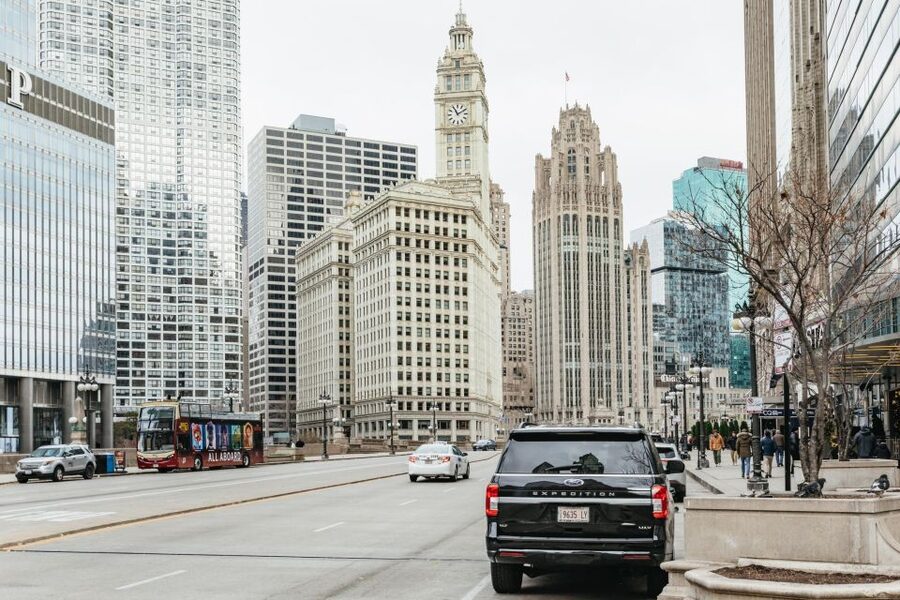
The meeting point is outside Hoyt’s Tavern, next to the Royal Sonesta hotel. Arrive ready to walk, since the experience begins on foot and moves through several downtown locations before ending at the Congress Plaza Hotel and Convention Center.
The setting is useful. You are not starting in a museum classroom or on a bus with the city passing by outside the windows. You begin among the streets of the Loop, where your guide can point out buildings and routes as the stories unfold. That helps connect the past to the modern city around you.
The provider describes the experience as a guided walking tour, with a bus option also mentioned in the general description. Check the departure details when booking if the bus format matters to you. The supplied tour information clearly identifies the walking route, the 1.5-mile distance, and the stop for a break.
A historian guide leads the outing in English. The guide matters a great deal here. This is a story-first tour, and guides including Max, Baylor, Tanner, Sophia, Chris, Alan, Willis, Lillie, and Thalia have been praised for keeping groups together, speaking clearly, answering questions, and adding humor without losing the historical thread.
More gangster and Prohibition history:
- Chicago: Gangsters and Ghosts Walking Tour
★ 5.0 · 7,155 reviews - Chicago Crime and Mob Bus Tour
★ 4.5 · 3,186 reviews - Chicago: Mob and Crime Bus Tour
★ 4.4 · 859 reviews
The South Loop when Chicago played rough
The South Loop today is an upmarket part of the city, but the tour presents it as a former vice district of the 1920s and 1930s. That contrast gives the walk its first jolt. You see ordinary modern streets while hearing about underground speakeasies, secret tunnels, bootleggers, and the people who made money in the gaps between law and demand.
I find this more useful than a tour that treats gangsters as movie characters. The point is not only that Capone was notorious. You learn how his empire operated and where figures connected with him spent time, made arrangements, and conducted their business.
The strongest part of this section is the guide’s delivery. The subject involves names, rivalries, violence, and a lot of context. A flat recitation would make it hard to follow. Guides praised for dramatic flair and humor, especially Willis and Chris, appear to understand that a good crime story needs clear structure as much as suspense.
Still, you should know the balance of fact and legend varies by subject. The tour promises true tales of Chicago’s gangster past alongside ghost stories. Gangster material is presented as history, while the supernatural section deals with reports and legends. A good guide should make that distinction clear, and you should enjoy the ghost material as folklore rather than documented fact.
Chicago Riverwalk and the city’s darker stories
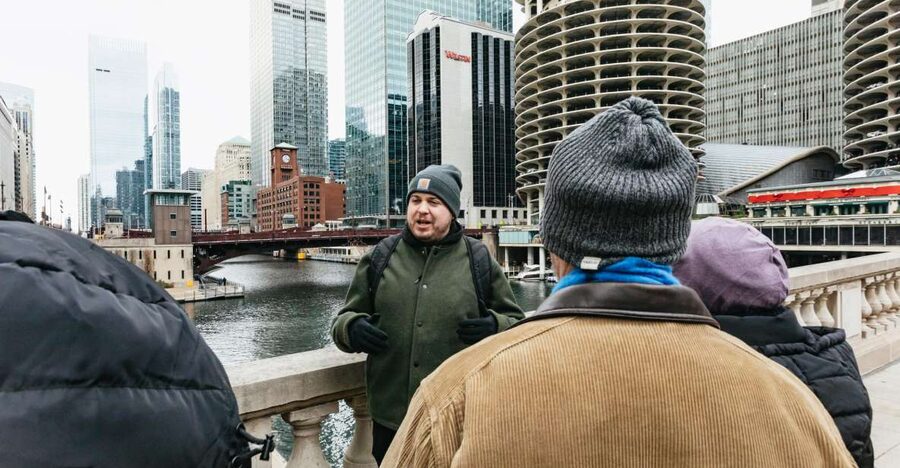
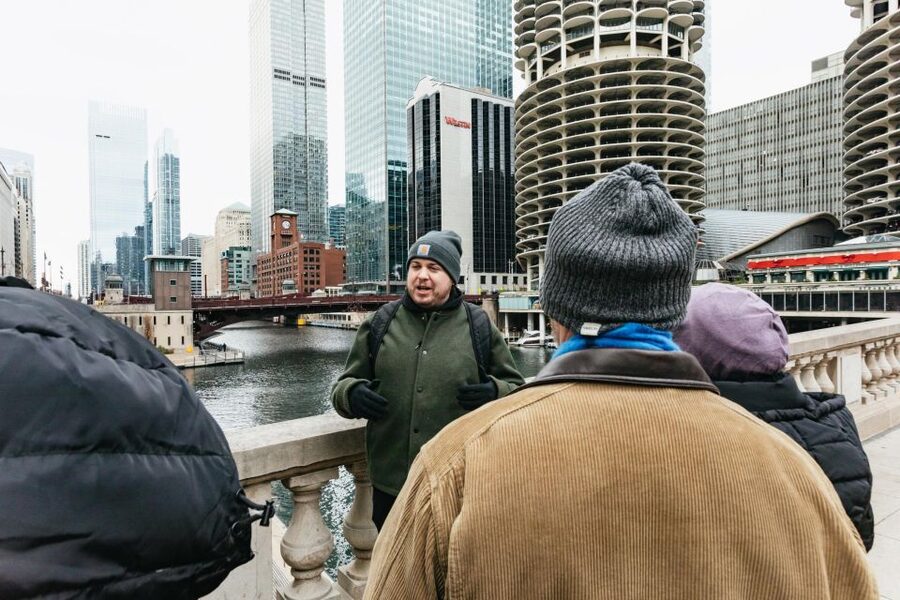
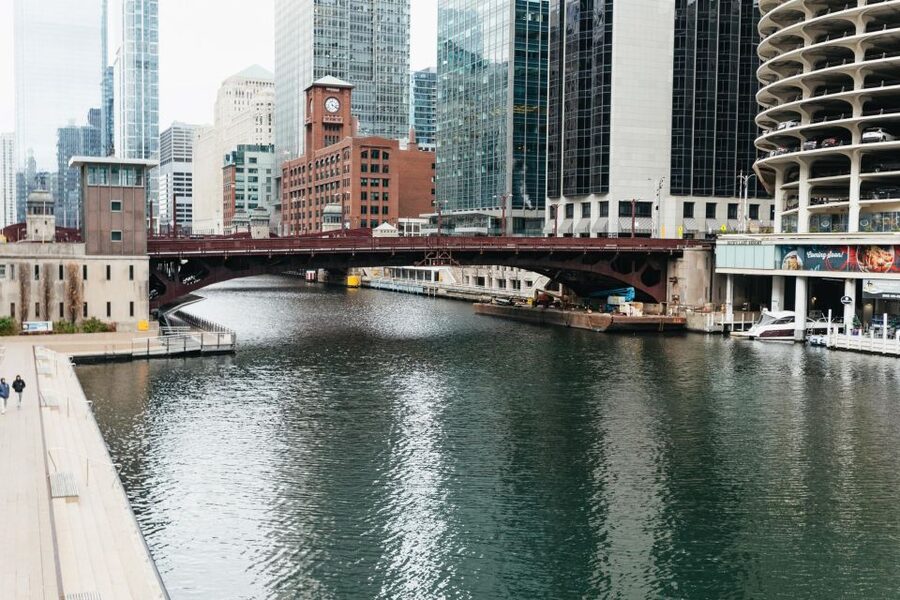
The route reaches the Chicago Riverwalk, where the tour shifts from gangster history to eerie tales. The river gives the stories a natural mood, especially when your guide talks about spirits said to linger around historic places.
This is also a good point for seeing downtown as more than a set of famous buildings. The river is part of Chicago’s identity, and the tour uses it as a link between the city’s public face and its more unsettling stories. You get local context while moving through a major central district.
Do not expect a paranormal investigation with equipment or a promise of supernatural proof. The appeal is the storytelling: what is said to have happened, why a place earned its reputation, and how those tales became part of Chicago’s public memory.
The pace is one of the tour’s practical strengths. A large-group outing led by Max was described as careful about making sure everyone arrived before the next story began. That detail matters downtown, where crossings, crowds, and tall buildings can split a group. You will want to stay close and keep your ears open at each stop.
Death Alley and the architecture of fear
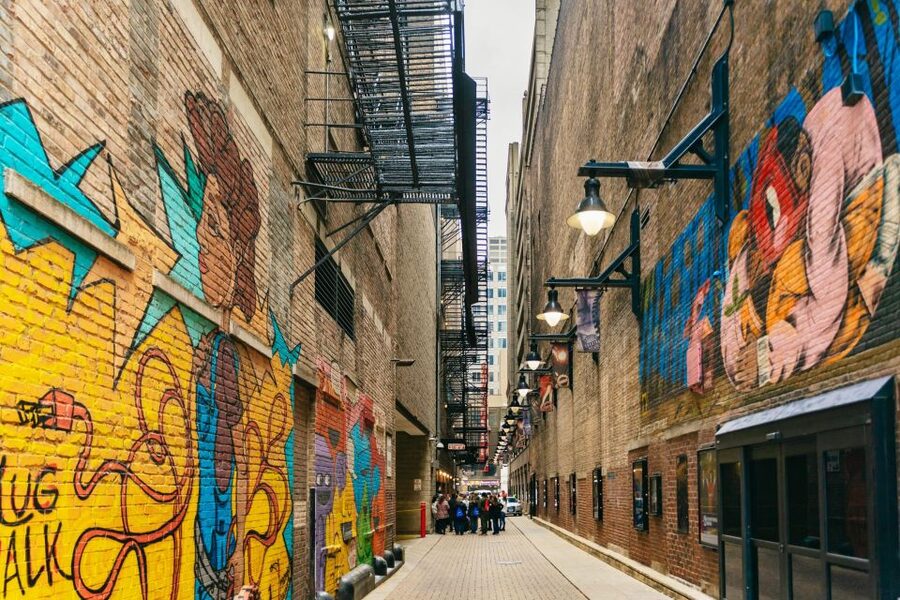
Death Alley is one of the tour’s most memorable names, and the stop works because the setting itself sounds like a warning. Here the guide brings together Chicago’s violent past and the ghost stories attached to the area.
The experience is not simply a march from one address to another. Your guide interprets the places, then uses the name, reputation, and past events to build a sense of place. That approach suits people who like true crime, local lore, and city architecture in equal measure.
The walk is family-friendly, but the subject matter is still dark. Children six and under can join free, yet the stories involve gangsters, violence, death, and ghosts. Use your judgment with younger children, especially since the tour is not recommended for people with infants.
For adults and older children, the family-friendly label means you can expect an entertaining public tour rather than an extreme horror experience. The tone, based on the supplied details, leans toward history, humor, and spooky lore. It is not described as graphic or designed to frighten you with theatrical effects.
More ghost walks after dark in Chicago:
- Medieval Torture Museum Ticket with Audio Guide and Ghost Hunting
★ 5.0 · 962 reviews - Haunted Chicago Booze and Boos Ghost Walking Tour
★ 5.0 · 266 reviews - Chicago Hauntings Original Ghost Bus Tour
★ 4.0 · 147 reviews - Embers of the Windy City: Chilling Chicago Ghost Tours
★ 4.5 · 121 reviews
The Chicago Theatre and Palmer House
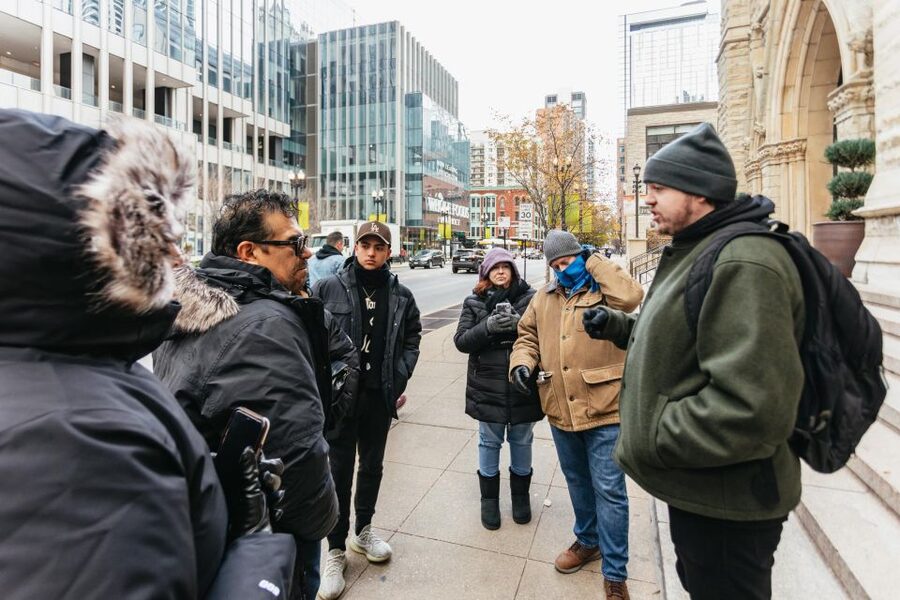
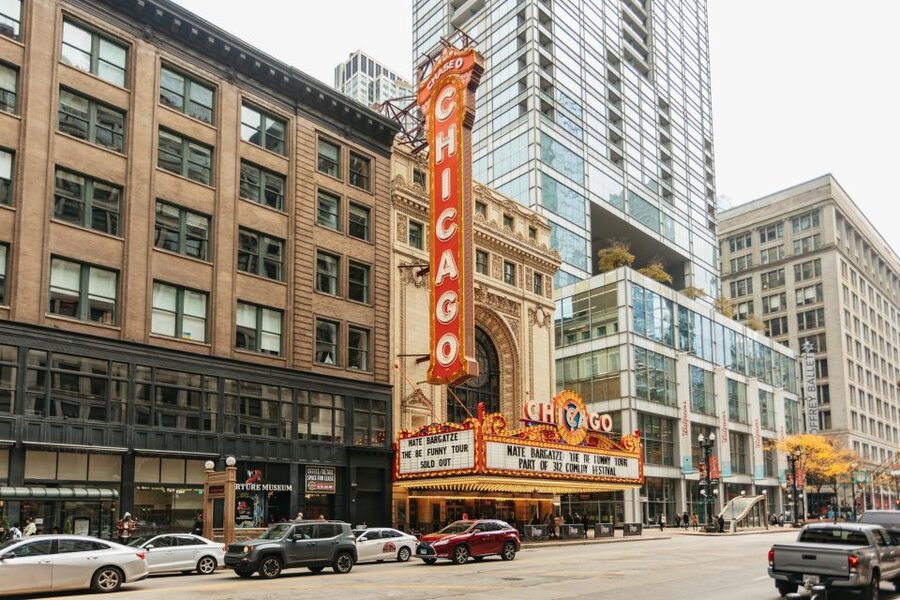
The Chicago Theatre adds a famous downtown landmark to the route. You will hear about its place in the city’s past and its connection to the ghost stories woven through the tour.
The stop is useful even if you are not a theater fan. It gives the guide another grand setting in which to explain how old buildings gather stories over time. The nearby architecture also makes the walk feel broader than a narrow gangster tour.
The Palmer House is one of the more substantial stops because entry inside is included. The hotel is treated as a haunted location, and the tour combines its polished public image with tales of eerie incidents.
A small practical bonus is the chance to sample a Palmer brownie during the break, if available as part of the stop. One account singled out the Palmer brownie, while another described the break as a chance to use the bathroom or try the original-recipe treat. Do not book solely for the brownie, but it is a pleasant pause in a story-heavy walk.
The 20-minute break is well judged. Two hours of standing and listening can wear you down, especially in cold weather or with older family members. A pause gives you time to regroup, get water, and absorb what you have heard before the final hotel section.
Cloud Gate and the Art Institute in the wider route
Cloud Gate and the Art Institute of Chicago appear among the tour’s itinerary points. These are familiar Chicago landmarks, so they provide a useful visual reset between the darker tales.
Cloud Gate, the polished public sculpture often known by its nickname, gives you a chance to orient yourself in the Loop and take in the surrounding skyline. The Art Institute adds a major cultural landmark to the route, even though the tour is not an art-focused visit and does not include an art museum tour.
This is part of the value of the experience. You are not only hearing about gangsters and ghosts in isolation. You are walking through a central section of Chicago that includes major architecture, public art, theaters, hotels, restaurants, and the river.
At the same time, the exact emphasis at each point can depend on your guide and group pace. The tour is built around narration, not lengthy visits inside every landmark. If you want detailed architectural commentary or museum time, pair this with a dedicated architecture cruise, architecture walk, or Art Institute visit.
Inside Congress Hotel and the eerie 12th floor
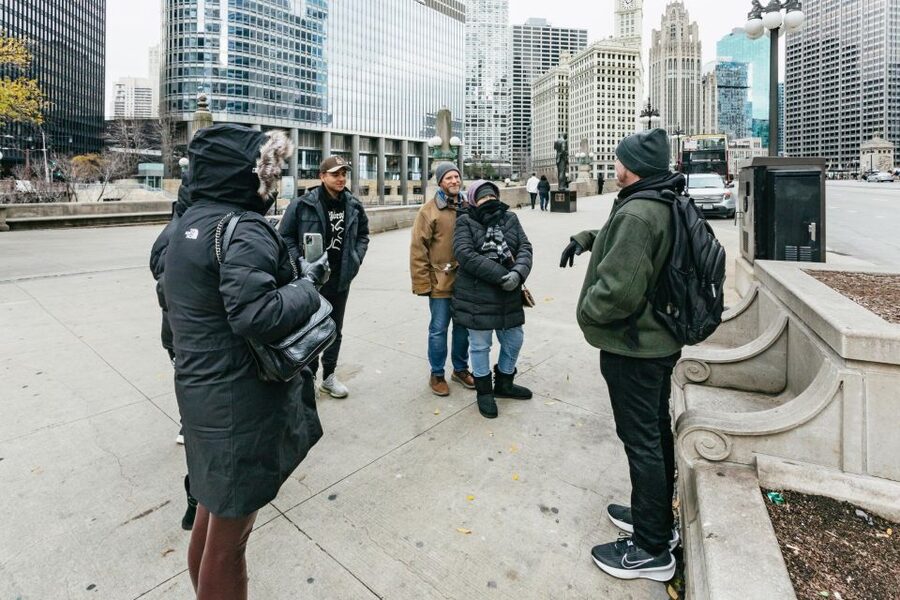
The final major stop is the Congress Plaza Hotel and Convention Center, where the tour ends. The hotel is presented as one of Illinois’ most haunted places, with special attention to creepy incidents associated with the 12th floor.
This ending works well because the tour has already established the gangster era and the city’s ghost lore. The Congress brings those themes together in a historic hotel setting, and going inside gives the final stories more weight than simply pointing at a facade.
The tour information specifically includes a visit inside the Congress Hotel. That is important when comparing this experience with ordinary exterior-only walks. You get to step into the building and hear the stories in the place where they are set.
The route finishes at the Congress Plaza Hotel rather than returning to Hoyt’s Tavern. Plan your next move from there. The endpoint can be convenient if you are continuing through the South Loop, but it is worth knowing in advance that this is not a loop back to the starting point.
What the guides do best
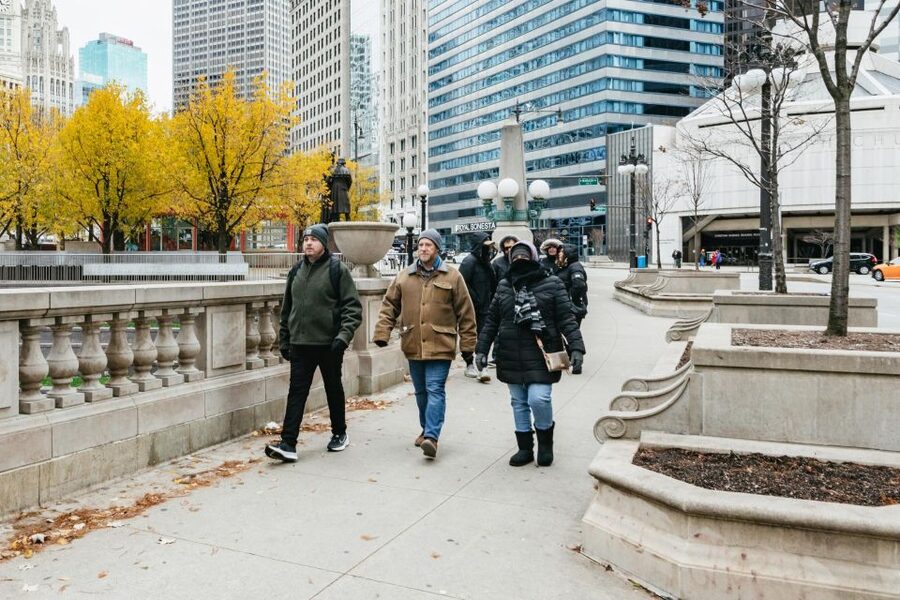
The guide can make or break a storytelling walk, and this experience has several strong names attached to it. Max is repeatedly praised for energy, clear speech, humor, and making sure large groups stayed together. Baylor is described as engaging, funny, and comfortable at a steady pace. Tanner receives praise for making the tour personable and easy to follow.
Sophia is noted for an upbeat delivery and local suggestions, while Chris is praised for descriptive storytelling, good public speaking, and making sure people could hear before beginning. Willis is described as especially dramatic and willing to answer questions at length.
You should not assume you can request a specific guide, but these names give you a useful sense of the tour’s style. It favors lively narration over a dry lecture. Some guides have an actor’s sense of timing, and that suits tales about gangsters, haunted rooms, and mysterious incidents.
Clear delivery is another plus. One outing worked well for someone with a hearing issue because the guide spoke clearly and communicated well. That does not remove the challenges of an outdoor group tour, but it suggests that guides make an effort to keep the narration accessible.
Price, pace, and practical value
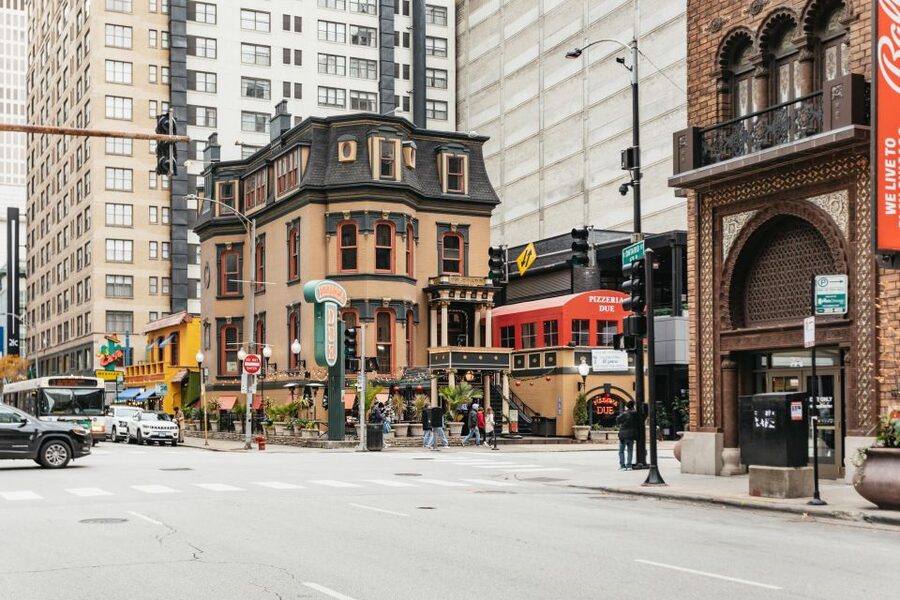
At $36 per person, the tour offers two hours of guided interpretation, a walk through several central landmarks, entry inside the Palmer House and Congress Hotel, and a mid-route break. I consider that fair value if you want a focused introduction to Chicago’s darker past and prefer a guide to connect the sites for you.
The value drops if you mainly want access to attractions. This is not an admission package for the Art Institute or Chicago Theatre, and it is not a full city sightseeing tour. You are paying for the route, the stories, the guide’s presentation, and the chance to enter the two hotels.
The advertised duration is two hours, but some outings have taken about 1.5 hours. That can be a plus if you have a packed schedule, but it may disappoint you if you expect a full two-hour program. The route covers about 1.5 miles and includes a 20-minute rest stop, making it a moderate urban walk rather than a strenuous hike.
Wear comfortable shoes and clothes suited to the weather. Bring water, but leave luggage and large bags behind. The tour is not recommended for people with infants.
The accessibility information needs care. The activity is marked wheelchair accessible, yet it is also listed as not suitable for people with mobility impairments. Because a walking route through city streets and hotel interiors may present practical limits, contact the provider before booking if you use a wheelchair, walker, or have difficulty walking.
Free cancellation up to 24 hours before departure and the reserve-now, pay-later option add useful flexibility. Children six and under can join free, which makes the price easier for families, although parents should consider the darker subject matter.
Who will enjoy this Chicago walking tour?
I would choose this for a first visit if you want a strong orientation to the Loop with a twist. It is also a good pick for repeat visitors, as two Chicago residents found themselves learning new stories about familiar streets and landmarks.
True-crime fans get the gangster material. People who enjoy folklore get the ghost stories. Architecture fans get a moving introduction to hotels, theaters, public art, and downtown streets, though the guide’s main focus remains stories rather than building design.
The tour also suits couples looking for an unusual evening or afternoon activity, families with older children, and solo visitors who want a structured walk. The relaxed pace and break help older walkers, but the lack of a guaranteed full two hours means you may want another activity nearby.
You may want a different tour if you dislike ghost legends, want graphic historical detail, need a fully step-free route, or prefer a quiet museum-style experience. You should also choose a dedicated architecture tour if buildings are your main interest.
Should you book the Gangsters and Ghosts tour?
Book it if you want Chicago history with a spooky edge, a manageable walk, and a guide who brings the material to life. The best reasons are the mix of true gangster stories and local legends, the interior visits to the Palmer House and Congress Hotel, and the strong record of guides such as Max, Baylor, Tanner, Sophia, Chris, and Willis.
Skip it if your priority is a long, detailed architectural survey or a firm two-hour itinerary. Before booking, check the departure format, confirm accessibility for your needs, and remember that the Congress Plaza Hotel is the finish point.
For $36, I find it a sensible choice for an entertaining introduction to Chicago’s darker stories, especially early in your visit when you can use the route to decide which downtown places deserve a return visit.
FAQ
How long is the Chicago Gangsters and Ghosts Guided Walking Tour?
The advertised duration is two hours. The walking distance is about 1.5 miles, and some outings have lasted around an hour and a half.
How much walking is involved?
The route covers approximately 1.5 miles on foot. It includes a 20-minute break at a famous former gangster hangout.
Where does the tour meet?
Meet your guide outside Hoyt’s Tavern, adjacent to the Royal Sonesta hotel.
Where does the tour finish?
The tour finishes at the Congress Plaza Hotel and Convention Center.
Is the Congress Hotel visit included?
Yes. The experience includes a visit inside the Congress Hotel, including stories about incidents connected with its 12th floor.
Is the Palmer House visit included?
Yes. Entry inside the Palmer House is included in the guided experience.
Is the tour suitable for children?
Children six and under can join free. The tour is family-friendly, but its subject matter includes gangsters, violence, death, and ghost stories. It is not recommended for people with infants.
What language is the tour offered in?
The live guided tour is offered in English.
Can I cancel the booking?
Yes. You can cancel up to 24 hours in advance for a full refund. You can also reserve now and pay later.
More Walking Tours in Chicago
- Chicago Favorites Ultimate Food and Walking Tour
★ 5.0 · 1,962 reviews - Chicago in a Day: Food, History & Architecture Walking Tour
★ 5.0 · 1,153 reviews - Chicago’s Secret Interiors Architectural Walking Tour
★ 5.0 · 635 reviews - Chicago’s Chinatown Food and Walking Tour
★ 5.0 · 600 reviews
Just added in Chicago
- Chicago: Architecture and Engineering Marvels Walking Tour★ 5.0 · 3 reviews
- Private Downtown Chicago TV and Movie Sites Guided Walking Tour★ 4.5 · 3 reviews
- Black Heritage Tour★ 5.0 · 3 reviews
- Private SUV Transfer from Chicago Downtown to Midway airport★ 5.0 · 3 reviews
- Private Holiday City Tour★ 5.0 · 3 reviews
- BYOB Chicago River Guided History Tour★ 5.0 · 4 reviews
- Chicago 4-Hour Sightseeing Transfer by Luxury SUV★ 4.5 · 3 reviews
- Chicago, Cloud Gate, Grant Park Full-Day City Tour★ 4.0 · 4 reviews
Chicago Gangster & Prohibition Tours, compared.


Prohibition Speakeasies Bus Tour or Walking Tour
Read our review →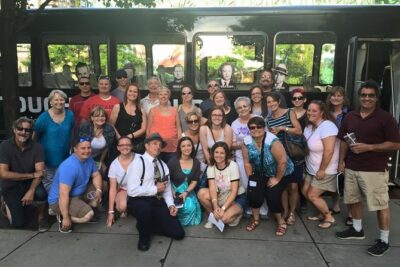
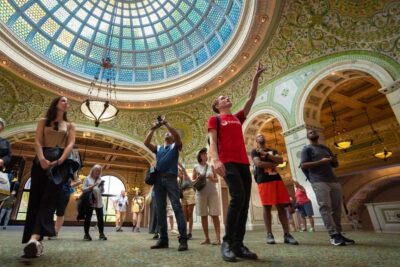
Prohibition-Era Culture & Architectural Treasures
Read our review →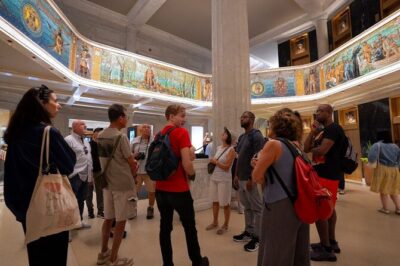
Explore Chicago’s Hidden Past: Prohibition Culture & Architecture
Read our review →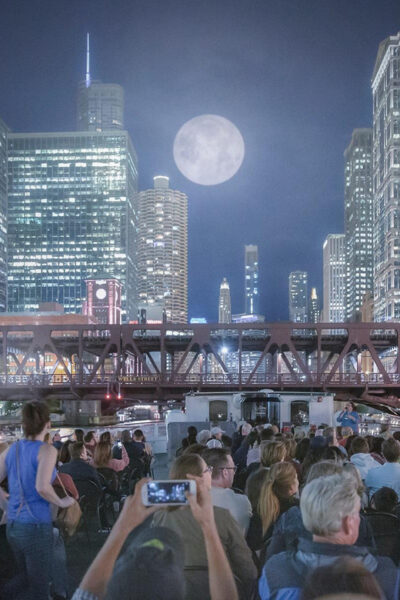
Historic Gangsters & Twilight Tales Night Cruise
Read our review →Browse the lists this tour appears in