
Reviewed · CHICAGO GANGSTER & PROHIBITION TOURS
Explore Chicago’s Hidden Past: Prohibition Culture & Architecture
Chicago’s Prohibition story is only part of the appeal here. The real prize is a lively walk through the Loop, where you move from the Chicago Theatre and underground Pedway to the river, the Cultural Center, Millennium Park, and the Bean. Along the way, the city’s buildings become storybooks rather than backdrops.
I like the small-group format, which makes it easier to ask questions and hear a guide such as Rich, Dave, Dash, or Kevin without shouting across a crowd. I also like the mix of grand landmarks, lesser-noticed interiors, skyline views, and Chicago-style popcorn. The main consideration is that the Prohibition theme can feel lighter than the title suggests, and some guests may want more serious architectural analysis.
In This Review
- Key points at a glance
- Why this Chicago walk works best early in your stay
- Starting beneath the Chicago Theatre marquee
- Going underground in the Chicago Pedway
- Civic power, public art, and the Chicago Picasso
- Walking beside the Chicago River
- The Riverwalk and the landmark facades
- Stepping inside the Chicago Cultural Center
- Finishing at Millennium Park and Cloud Gate
- How much Prohibition history will you really get?
- The guides and the small-group feel
- Food stops that add a Chicago flavor
- Cost, comfort, and who should book
- Should you book Explore Chicago’s Hidden Past?
- FAQ
- Where does the tour begin?
- Where does the tour end?
- How long is the experience?
- Is the tour suitable for children?
- Does the tour operate in bad weather?
- What is included in the price?
Key points at a glance
- A strong first-day walk: The route connects many central sights and ends with useful suggestions for food, drinks, and further exploring.
- Three miles on foot: You cover about 4.8 kilometers in roughly two and a half hours, with time outside and possible stairs or underground passages.
- Architecture with local color: See the Chicago Theatre, Picasso, Wrigley Building, Tribune Tower, Cultural Center, Marina Towers, Jewelers Building, and London House.
- The Pedway adds variety: Weather permitting, you enter Chicago’s underground tunnel network, a practical part of daily city life.
- Food is part of the fun: Chicago-style popcorn and surprise local samples break up the walking.
- The Prohibition angle is uneven: Expect stories and context from the 1920s, but choose another tour if you want a tightly focused alcohol-and-speakeasy history lesson.
Why this Chicago walk works best early in your stay
This is a useful orientation tour because it links major sights that can otherwise feel scattered. You begin downtown at the Chicago Theatre, cross through the civic center, follow the Chicago River, move up toward Michigan Avenue, and finish at Millennium Park. By the end, you have a mental map of the central city.
I would book it on your first or second day in Chicago. The guide finishes at Cloud Gate with suggestions for nearby sights, lunch spots, and drinks, so you can turn the walk into a planning session for the rest of your visit.
The advertised price is $49.96 per person. That is fair if you value a live guide, a small group, and an introduction that combines architecture, local stories, and food. It is less compelling if you mainly want a quick checklist of famous buildings, since you can pass many of them on your own.
The experience is generally rated 4.8 out of 5, with 93 percent recommending it. The strongest praise centers on the guides’ warmth, clear explanations, humor, and ability to point out details you could easily miss. Still, the route and pacing matter, and the depth of the commentary may vary with the guide and group.
More gangster and Prohibition history:
- Chicago: Gangsters and Ghosts Walking Tour
★ 5.0 · 7,155 reviews - Chicago Crime and Mob Bus Tour
★ 4.5 · 3,186 reviews - Chicago: Gangsters and Ghosts Guided Walking Tour
★ 4.7 · 1,697 reviews
Starting beneath the Chicago Theatre marquee
Meet at the Chicago Theatre, 175 North State Street. The famous marquee gives you an easy landmark and a good opening photograph before the walk begins.
The first stop is brief, about 10 minutes, but it sets the tone. This is not a museum visit with a long indoor presentation. You are moving through the city, using buildings, plazas, streets, and public art as the material for the tour.
The guide may frame Chicago’s growth through its architecture and the social changes of the 1920s. That approach works well because Prohibition was not an isolated event. It was part of a larger period when Chicago was changing fast, with new buildings, new forms of public entertainment, and new ways for people to move through the city.
Going underground in the Chicago Pedway
Weather permitting, the route heads into the Chicago Pedway for about 20 minutes. This network of underground tunnels is used by commuters and office workers, so it offers a look at everyday Chicago that most sightseeing routes skip.
The Pedway is valuable because it changes your view of downtown. Above ground, you see monumental facades and busy streets. Below ground, you get a sense of how people navigate the Loop during bad weather and busy workdays.
The weather note matters. This portion is not guaranteed, and the tour operates in rain, snow, or sunshine. Dress for the forecast, and wear shoes you can comfortably use for three miles. If you dislike stairs or find long walks tiring, ask the guide to pace the route carefully. The experience is described as suitable for all fitness levels, but that does not make the distance disappear.
Civic power, public art, and the Chicago Picasso
The route passes the City Hall and County Building, home to Chicago’s municipal government and Cook County offices. This is a quick exterior passage, but it helps connect the city’s architecture to its public life.
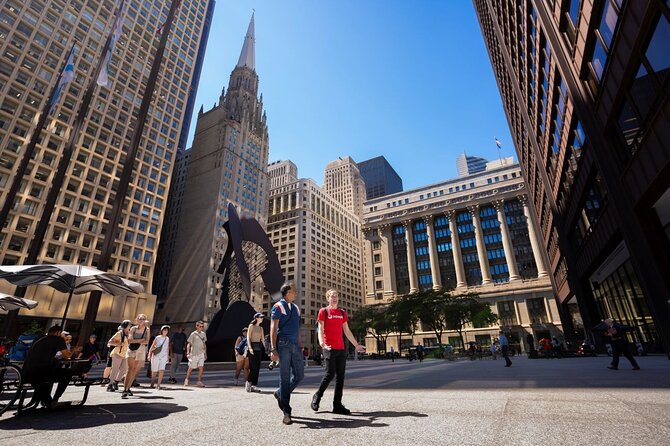
At Daley Plaza, the group pauses for about 10 minutes at the Chicago Picasso. Installed in 1967, the sculpture helped reshape ideas about public art and urban planning in the city.
This is one of the more interesting stops for anyone who wants more than dates and building names. The Picasso gives the guide a chance to explain how a public square can become a place for art, political activity, daily lunch breaks, and city gatherings. The stop is short, so you should not expect a full lecture on the sculpture.
More architecture tours in Chicago:
- Chicago Architecture River Cruise
★ 5.0 · 15,756 reviews - Chicago River 90-Minute Architecture Tour
★ 4.5 · 9,629 reviews - Chicago River: 1.5-Hour Guided Architecture Cruise
★ 4.8 · 8,046 reviews - Chicago Architecture Center River Cruise aboard First Lady
★ 5.0 · 5,536 reviews
Walking beside the Chicago River
The Chicago River section lasts about 20 minutes and is one of the route’s best transitions. You leave the civic core and get open views between the buildings, with the river acting as the city’s main visual corridor.
You will pass iconic architecture and share the route with people commuting through downtown. That daily setting is part of the appeal. This is not a sealed-off sightseeing circuit. You are seeing Chicago as a working city, with offices, pedestrians, bridges, river traffic, and landmark buildings all close together.
The guide’s stories are especially useful here because the skyline can be hard to read on your own. A good explanation helps you connect the height, age, style, and location of the buildings instead of simply taking another photograph.
The Riverwalk and the landmark facades
Weather permitting, you spend about 20 minutes on the Chicago Riverwalk. The award-winning walkway offers strong views of Marina Towers, the Wrigley Building, and Tribune Tower.
The Wrigley Building, at 400 North Michigan Avenue, is one of the route’s most recognizable sights. Tribune Tower, a 463-foot, 36-story neo-Gothic skyscraper at 435 North Michigan Avenue, gives the walk a different mood, with its vertical lines and historic-looking exterior.
You also pass the Magnificent Mile, the busy shopping and dining district along North Michigan Avenue. Its development was tied to the 1909 Burnham Plan, an important piece of Chicago’s city planning story.
This section is excellent for photographs, but it is also where expectations need managing. The tour passes these buildings rather than offering extended interior visits to each one. If your main goal is to study architects, floor plans, construction methods, or decorative programs, you may want a dedicated architecture cruise or specialist architecture tour as well.
The route includes architectural details connected with places such as the Jewelers Building and London House. These additions help the walk feel broader than a simple parade of the most famous names, although the amount of time spent on each building can depend on the guide and the pace of the group.
Stepping inside the Chicago Cultural Center
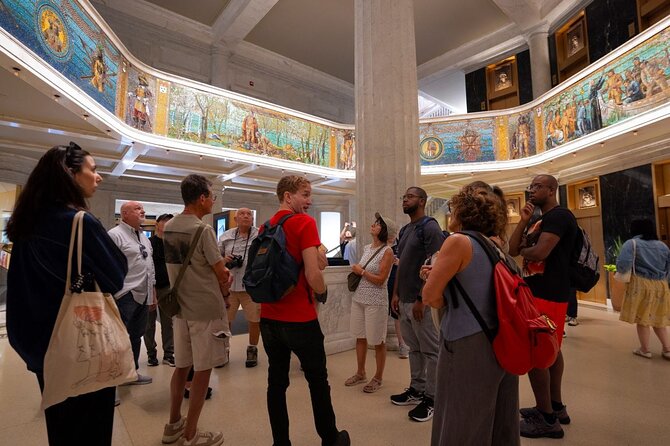
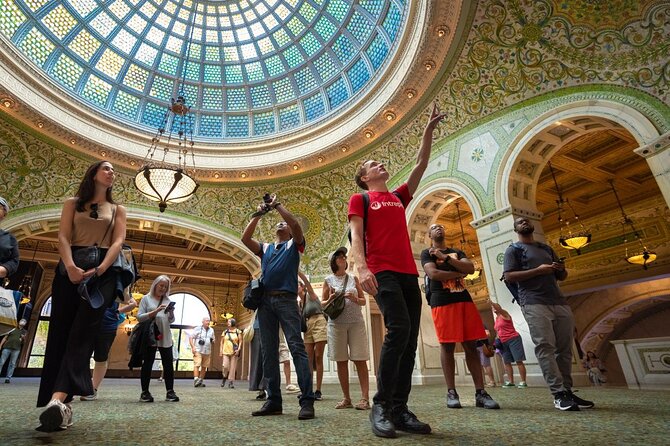
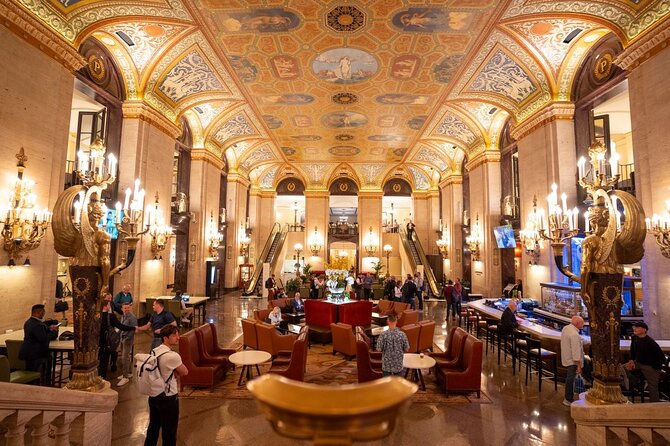
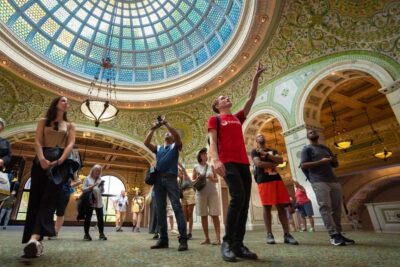
The Chicago Cultural Center is one of the tour’s most worthwhile indoor stops. You spend about 15 minutes inside this Chicago Landmark, a former library where mayors have welcomed presidents, royalty, and other dignitaries.
The interior gives you a needed break from the sidewalks and a chance to look up. The building’s decorative spaces are a reminder that Chicago architecture is not only about tall towers viewed from the street. Public buildings can be just as rewarding, especially when you take time to notice ceilings, stonework, mosaics, and grand rooms.
Several people who praised this experience singled out the Cultural Center as a highlight. That makes sense. It offers a clear sense of place, it is free to enter as part of the route, and it provides more than a quick exterior photograph.
The stop may also explain why some people find this walk more satisfying than a standard sightseeing loop. You are not only told what a building was used for. You get at least a glimpse of the interior spaces that made Chicago’s civic architecture so impressive.
Finishing at Millennium Park and Cloud Gate
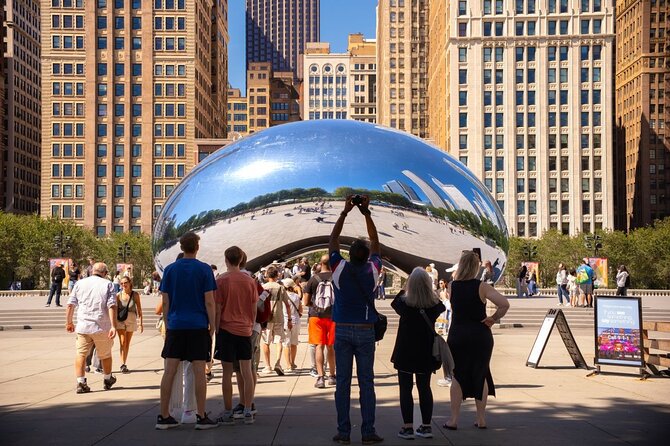
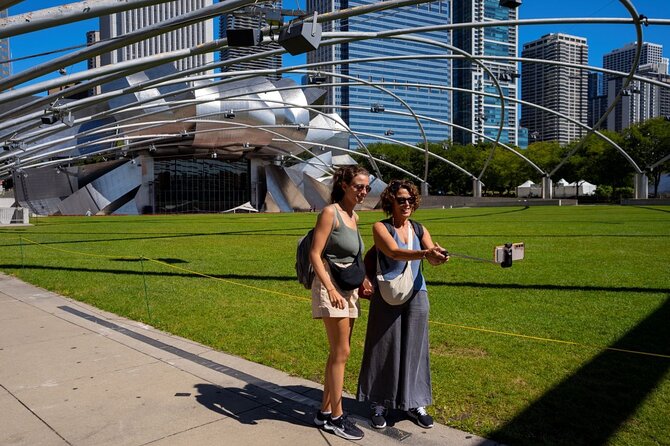
The final stretch leads to Millennium Park, followed by Cloud Gate, better known as the Bean. You spend about 20 minutes in the park and roughly 10 minutes at the sculpture.
Cloud Gate is the obvious photo stop, but the ending works for another reason. The guide can point you toward nearby sights, restaurants, lunch, or drinks, giving you immediate options once the tour ends. You are not left at a random street corner with no idea where to go next.
Millennium Park also makes a practical finish because it places you near several central attractions. If you have limited time, this is a good point to continue exploring on foot. If you are tired, you can end the sightseeing portion here and make your own plans.
The Bean can be crowded, and your time there is limited. Think of it as a final landmark stop, not an extended photography session. You will likely have enough time for the classic reflected skyline image, but not unlimited time to wait for a perfectly empty frame.
How much Prohibition history will you really get?
The tour connects Chicago’s 1920s culture to the city’s architecture and public life. That broad approach can be entertaining and useful, especially if you like stories about how a city changes.
However, the Prohibition subject is not always the main event. The walk also covers public art, civic buildings, the Pedway, the river, famous facades, city planning, local food, and general Chicago anecdotes. Some guides may spend more time on the 1920s, while others may lean harder into architecture or neighborhood orientation.
If you want a focused account of bootlegging, speakeasies, organized crime, or the legal battles around Prohibition, this may not go far enough. I would choose it for a general Chicago history walk with a Prohibition thread, not as a specialist crime-history experience.
That broad format is also why the tour appeals to first-time visitors. You see a lot in one outing, and you can ask the guide to expand on the subjects that catch your attention.
The guides and the small-group feel
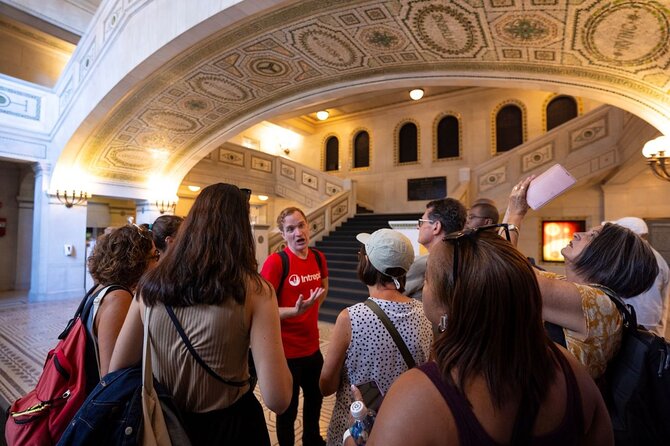
The experience uses local English-speaking guides, and individual guides named in the feedback include Rich, Dave, Dash, and Kevin. The most consistent strength is the personal feel. Rich was described as friendly and easy to spend time with, while Dave was praised for clear explanations, enthusiasm, and willingness to answer questions.
Dash received particular credit for keeping a group together during a hectic parade. That detail matters in central Chicago, where crowds and street activity can break up a walking group. Kevin adapted a private outing to the group’s interests and moved at a slower pace for a guest with a sore knee.
The group is limited to about 15 people. That is small enough for questions and direct conversation, though the exact feel will depend on how many people book that day. Private tours may allow more adjustment, particularly if you have strong interests in art, architecture, or local history.
One practical note: the quality of a walking tour depends partly on pacing. A few people found the walk rushed, while others felt the timing was just right. Tell your guide early if you want more time at a particular building or need a steadier pace.
Food stops that add a Chicago flavor
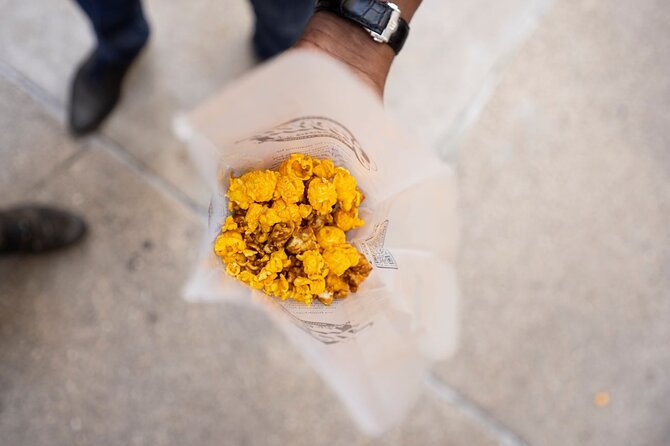
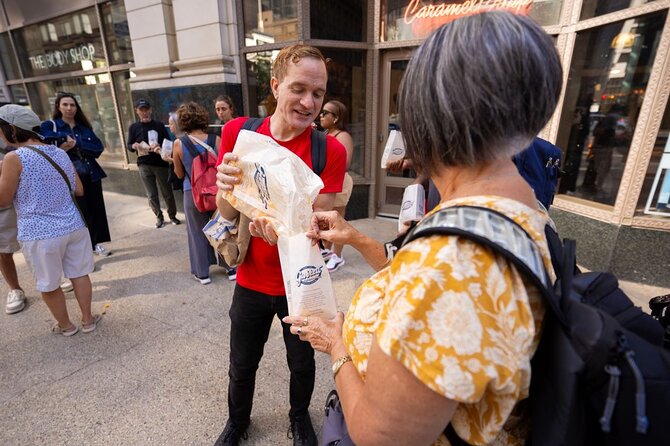
Chicago-style popcorn is included, along with surprise local treats. Some outings have included chocolate or other food samples recommended by the guide.
These tastings are small additions, not a full meal. You should still plan lunch or dinner separately, especially because the tour ends with suggestions for nearby places to eat and drink.
I like the food element because it keeps the walk from becoming a nonstop stream of facades and dates. It also gives you a local taste without adding a large food-tour price. The caution is simple: if you would rather spend the time examining architecture, you may find a popcorn stop longer than necessary.
Cost, comfort, and who should book
At $49.96, this is good value for a guided introduction to downtown Chicago if you are new to the city or short on time. You get about two and a half hours, a route covering roughly three miles, a small group, local commentary, public interiors, river views, and food samples.
Children under six join free. Children ages six to 11 are charged the adult rate, and you should note children in your booking. Service animals are allowed, public transportation is nearby, and most people can take part.
Wear comfortable shoes and clothing suited to rain, snow, or sun. The tour runs in all weather, and the Riverwalk or Pedway portions may change with conditions. A mobile ticket makes entry simple, but the important preparation is physical: this is a real walking tour, not a bus ride with short stops.
I recommend booking at least a few weeks ahead if your schedule is fixed. The experience averages about 20 days of advance booking, which suggests that popular dates can fill. You can cancel for a full refund up to 24 hours before the start time, but cancellations inside that window are not refunded.
Should you book Explore Chicago’s Hidden Past?
Book this walk if you want an energetic first look at Chicago’s central sights, enjoy learning through stories, and like moving between famous landmarks and less obvious city spaces. It is especially useful for first-time visitors, families, couples, and anyone who wants practical ideas for the rest of a short stay.
Do not book it as your only architecture experience if you want detailed discussion of individual architects or design choices. Also think twice if the Prohibition theme is your main reason for booking, since that subject shares the route with a much wider introduction to Chicago.
For most people, I would choose it early in a Chicago visit. The route is well planned, the guides can make the city easier to read, the Cultural Center and Riverwalk add real variety, and ending at the Bean gives you a useful place to continue your day.
FAQ
Where does the tour begin?
The tour begins at the Chicago Theatre, 175 North State Street, Chicago, Illinois 60601.
Where does the tour end?
The walk ends at Millennium Park, near Michigan Avenue, at Cloud Gate, also called the Bean.
How long is the experience?
The tour lasts approximately two hours and 30 minutes and covers about 4.8 kilometers, or three miles, on foot.
Is the tour suitable for children?
Yes. Children under six join free, while children ages six to 11 join at the adult rate. You should mention any children in your party when booking.
Does the tour operate in bad weather?
Yes. The experience takes place in rain, shine, or snow, so you should dress for the local conditions. The Pedway and Riverwalk portions are weather permitting.
What is included in the price?
The price includes a local English-speaking guide, the walking tour, Chicago-style popcorn, surprise local treats, and the listed sightseeing stops. Additional food and drinks, along with guide gratuities, are not included.
Just added in Chicago
- Chicago: Architecture and Engineering Marvels Walking Tour★ 5.0 · 3 reviews
- Private Downtown Chicago TV and Movie Sites Guided Walking Tour★ 4.5 · 3 reviews
- Black Heritage Tour★ 5.0 · 3 reviews
- Private SUV Transfer from Chicago Downtown to Midway airport★ 5.0 · 3 reviews
- Private Holiday City Tour★ 5.0 · 3 reviews
- Chicago 4-Hour Sightseeing Transfer by Luxury SUV★ 4.5 · 3 reviews
- BYOB Chicago River Guided History Tour★ 5.0 · 4 reviews
- Chicago, Cloud Gate, Grant Park Full-Day City Tour★ 4.0 · 4 reviews
Chicago Gangster & Prohibition Tours, compared.


Prohibition Speakeasies Bus Tour or Walking Tour
Read our review →
Prohibition-Era Culture & Architectural Treasures
Read our review →
Historic Gangsters & Twilight Tales Night Cruise
Read our review →Browse the lists this tour appears in