
Reviewed · CHICAGO GANGSTER & PROHIBITION TOURS
Chicago: Gangsters and Ghosts Walking Tour
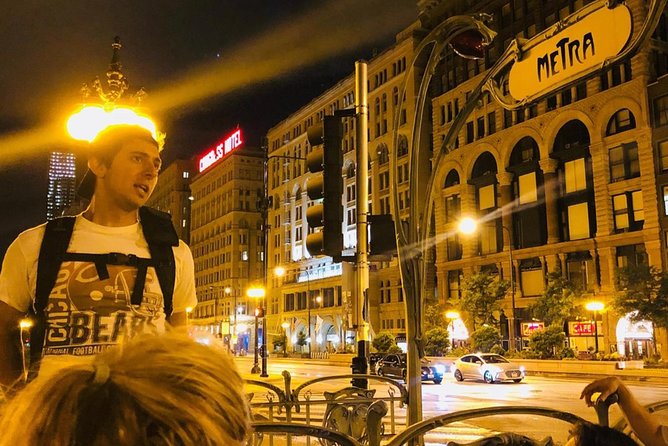
Chicago’s Loop once hid speakeasies, bootlegger tunnels, mob headquarters, and grim secrets behind polished hotel doors. This two-hour gangsters and ghosts walking tour puts those stories beside major sights such as Millennium Park, the Chicago Riverwalk, the Chicago Theatre, and the Palmer House.
I like the mix of documented Chicago crime and old ghost lore. I also like the guides’ clear, story-first approach. Taka, Sophia, Tanner, Avery, and Willis have all been praised for strong voices, good pacing, and an ability to make the history work for both adults and teenagers.
The trade-off is simple: you spend most of the tour outdoors, and you generally view buildings from the street rather than entering them. The walk covers about 1.5 miles, so cold, rain, and crowded sidewalks can affect the experience.
In This Review
- Key points to know before you book
- Chicago’s Loop after dark, with a darker past
- The first 35 minutes: the Loop’s vice district
- Millennium Park and the Bean with a new set of stories
- Palmer House: grand hotel, old stories, and a welcome break
- The Riverwalk and stories of tragedy
- The Chicago Theatre: a quick landmark stop
- Congress Plaza Hotel: the final haunted setting
- Walking or minibus: which format fits you?
- What makes the guides effective
- Is $52 a fair price?
- Who will enjoy this Chicago tour?
- Should you book the Gangsters and Ghosts Walking Tour?
- FAQ
- Where does the Chicago Gangsters and Ghosts Walking Tour begin?
- Where does the walking tour end?
- How long is the tour?
- What landmarks are included?
- Is this a theatrical ghost tour?
- Is there a bus option?
- What happens if I need to cancel?
Key points to know before you book
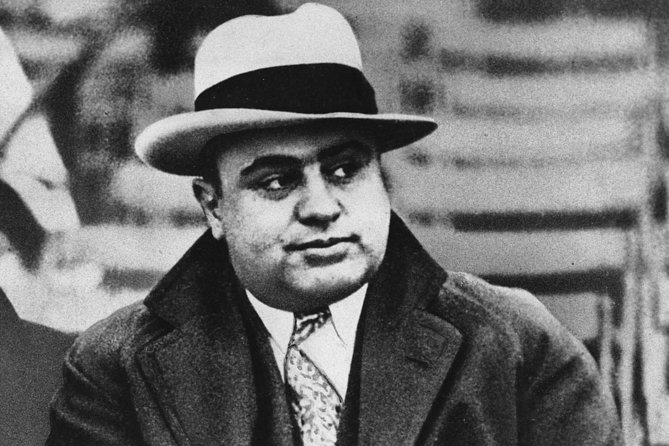
- Al Capone’s Chicago: Hear how the famous gangster used the Loop and learn about his connection to the Congress Plaza Hotel.
- Haunted landmarks: Visit the Palmer House and Congress Plaza Hotel, both tied to reported ghost stories.
- A real city walk: Cover roughly 1.5 miles with frequent stops, plus a refreshment and restroom break.
- Strong storytelling: Guides such as Taka and Sophia are known for projecting well over city noise and keeping groups together.
- Two tour formats: Choose the standard walking experience or upgrade to a minibus tour with a stop at Harry Caray’s Italian Steakhouse.
- Small-group size: The walking tour is limited to a maximum of 20 people, which helps you hear the guide.
Chicago’s Loop after dark, with a darker past
The Loop is an easy place to look at without really seeing it. You pass grand hotels, theaters, river bridges, and office towers, but the tour asks you to picture the same streets during Prohibition, when illegal liquor, gambling, and organized crime shaped Chicago’s public life.
Your historian guide supplies the thread. This is not presented as a costume show or a haunted-house production. The tone is closer to a campfire story told in the middle of downtown, with the guide shifting between documented events, gangster folklore, and ghost accounts.
That balance matters. If you want a serious academic lecture, this tour may feel light. If you want a fun way to connect Chicago’s landmarks with crime, tragedy, and rumor, the format works well. You get enough historical context to understand the city, but the stories keep moving.
The walk begins at 71 East Wacker Drive and ends near the Congress Plaza Hotel at 520 South Michigan Avenue. Those locations are useful for planning. You start near the river and finish south of the main Loop, so you can build the tour into a day of central Chicago sightseeing rather than treating it as an isolated activity.
More gangster and Prohibition history:
- Chicago Crime and Mob Bus Tour
★ 4.5 · 3,186 reviews - Chicago: Gangsters and Ghosts Guided Walking Tour
★ 4.7 · 1,697 reviews - Chicago: Mob and Crime Bus Tour
★ 4.4 · 859 reviews
The first 35 minutes: the Loop’s vice district
The opening section covers the part of downtown most closely tied to the gangster era. During the 1920s and 1930s, this area was associated with speakeasies, saloons, bootlegging routes, and secret tunnels.
The tour describes the old vice district and points out places connected with gangsters, including Al Capone. You will not simply hear a list of names. The value comes from standing in the streets where the stories are set, then seeing how close the old crime sites are to Chicago’s ordinary tourist routes.
Frequent stops keep the pace manageable. The tour covers only about 1.5 miles, but city walking is not the same as walking on a quiet trail. You will cross busy areas, pause while other pedestrians move around you, and listen with traffic and street noise in the background.
This is where the guide makes or breaks the outing. Taka has received especially strong praise for speaking fast and clearly, projecting over loud streets, and keeping a large group on schedule. That is a practical advantage, not a minor detail. A fascinating story is useless if you cannot hear the final half of it.
The group maximum is 20 people. That is not a private tour, but it is small enough for the guide to keep an eye on the group and answer questions. You should still stay close, particularly at crowded corners.
Millennium Park and the Bean with a new set of stories
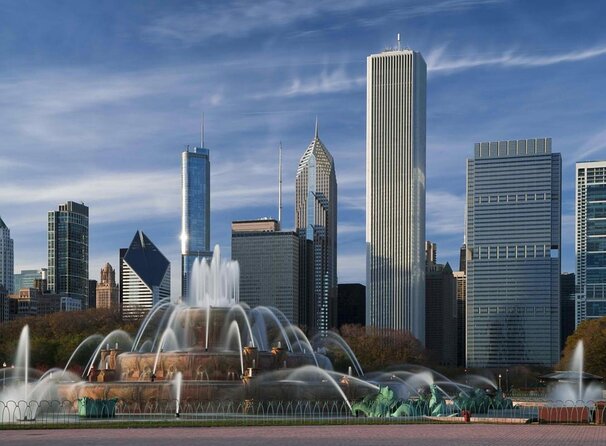
The route includes Millennium Park, where you will see Cloud Gate, the polished sculpture commonly called the Bean. This stop gives the tour a useful change of mood. You get one of Chicago’s most familiar modern sights, then hear how the surrounding downtown fits into the city’s older story.
The park stop lasts about 15 minutes and is listed as a photo opportunity rather than a long guided visit. If you already plan to see Cloud Gate, the tour saves you from fitting it into a separate downtown loop. If you want extended time for photos, you may need to return on your own.
I like this kind of stop because it prevents the outing from becoming a string of obscure addresses. You still see the Chicago everyone comes to photograph, but the guide adds a less polished layer to the city around it.
Palmer House: grand hotel, old stories, and a welcome break
The Palmer House Hilton is one of the tour’s strongest stops. The historic lobby offers a chance to pause indoors, use the restroom, and take a break from the street. The hotel is described as the oldest hotel in Chicago and the oldest continuously operating hotel in the United States.
The ghost stories tied to the Palmer House are part of the appeal, though the tour’s broader approach is worth remembering. You hear reported and verified ghost stories as stories, not as proof that the supernatural exists. That leaves room for atmosphere without asking you to accept every tale literally.
A stop in a grand hotel also gives the tour more texture than a sidewalk lecture. You can connect the building’s old-world setting with the people and events that shaped downtown Chicago. The break is especially useful during a cold evening or after a day spent walking the city.
The tour does not promise access to private rooms or behind-the-scenes areas. The stop centers on the lobby and the stories connected with the hotel. If you are hoping to explore the building at length, you may find this portion brief.
More ghost walks after dark in Chicago:
- Medieval Torture Museum Ticket with Audio Guide and Ghost Hunting
★ 5.0 · 962 reviews - Haunted Chicago Booze and Boos Ghost Walking Tour
★ 5.0 · 266 reviews - Chicago Hauntings Original Ghost Bus Tour
★ 4.0 · 147 reviews - Embers of the Windy City: Chilling Chicago Ghost Tours
★ 4.5 · 121 reviews
The Riverwalk and stories of tragedy
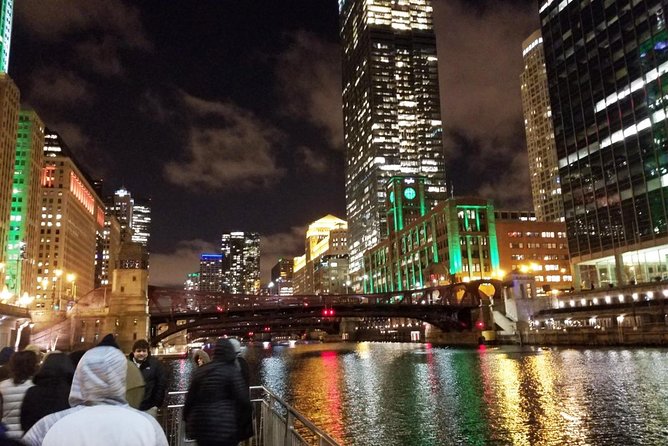
The route reaches the Chicago Riverwalk for roughly 15 minutes. Here, the subject matter broadens beyond mobsters. Guides may move from Al Capone and gang warfare to tragic events such as the SS Eastland disaster, which appears to be one of the stories that can make the strongest impression.
This is an important part of the experience. Chicago’s past is not only about glamorous gangsters in tailored suits. The city’s waterways, hotels, theaters, and public streets also hold stories of sudden loss and human mistakes. The Riverwalk gives those accounts a fitting setting without turning the tour into a grim history lesson.
The guide tells the stories in a conversational, around-the-campfire manner. You should expect atmosphere and narrative rather than actors jumping out at you. That makes the tour suitable for people who enjoy ghost stories but do not want a theatrical scare attraction.
The Riverwalk can be windy, and Chicago weather can change quickly. Bring a layer even on a mild day, especially if your tour runs in the evening. The tour requires good weather, so poor conditions can lead to a different date or a full refund.
The Chicago Theatre: a quick landmark stop
The Chicago Theatre is another short stop, lasting about 15 minutes. You will have time for photographs and a story from the guide, but this is not a full theater tour.
That distinction helps set expectations. The theater is one of downtown’s most recognizable façades, and the stop gives you a chance to add a strong architectural image to a tour otherwise focused on crime and spirits. You will learn more about Chicago’s theater district through the guide’s wider city history, but the main purpose here is seeing the landmark and hearing its connection to the route.
The guide’s pacing is important again. The stops are short enough to keep the two-hour schedule, but they also mean you should not expect a long pause at every building. This experience works best if you like moving through the city while collecting stories, not if you want to stand in one place for a detailed architectural analysis.
Congress Plaza Hotel: the final haunted setting
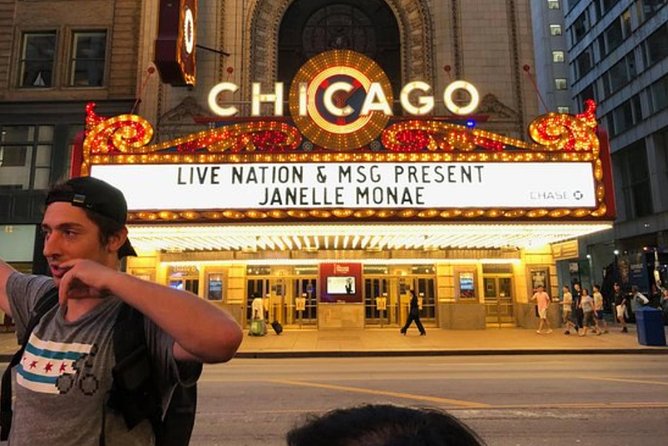
The tour ends at the Congress Plaza Hotel and Convention Center, at 520 South Michigan Avenue. The building is named among the most haunted places in Illinois, and its gangster connection centers on Al Capone, who reportedly used the hotel as a headquarters.
The story most associated with Capone’s ghost places him near his former eighth-floor suite. You hear that account at the end of the walk, when the hotel provides a natural closing scene.
Because the tour ends here, you can decide what to do next without retracing the route. The hotel is on South Michigan Avenue, close to other central attractions and public transportation. The ending also gives the experience a clear shape: you begin with the Loop’s old vice district and finish at a hotel linked to both Capone and ghost lore.
Again, you should expect to see the exterior and public areas rather than tour Capone’s old suite. That is one of the tour’s limits. The value is in the guide’s explanation and the setting, not in access to a private gangster museum.
Walking or minibus: which format fits you?
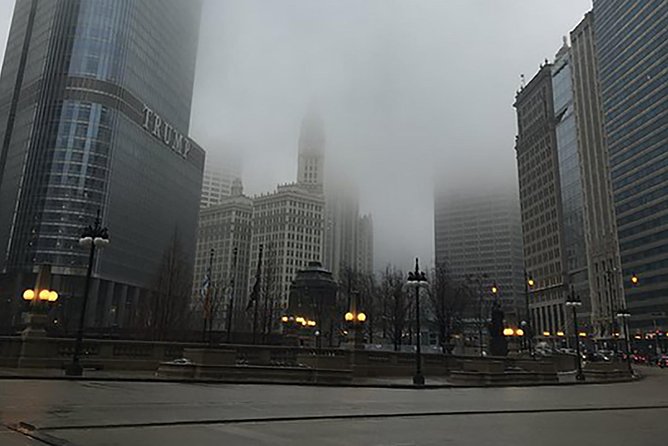
The standard tour is the better choice if you want to feel the city under your feet. Walking lets you notice the distance between sites, see how modern Chicago sits on top of its older stories, and pause at several landmarks.
The walk is described as light to moderate, but you should still be comfortable being outside for two hours. A refreshment and restroom break helps, and frequent stops mean you are not walking nonstop. Wear shoes suited to city pavement and check the weather before leaving.
The minibus upgrade covers the same general material by bus and includes one stop at Harry Caray’s Italian Steakhouse for an immersive experience. This option may suit you if weather looks poor, if you prefer sitting between stops, or if the walking route sounds tiring.
The supplied details do not state the minibus upgrade price, vehicle capacity, or exact departure arrangements. Check those points when booking. The standard walking tour begins at East Wacker Drive, while Harry Caray’s is identified as the bus tour stop, so confirm the format and meeting instructions carefully.
What makes the guides effective
The guide is the heart of this experience. Taka is repeatedly praised for a loud, clear voice, firm time management, and a passionate approach to Chicago history. Sophia is described as personable and theatrical, with a style that works for teenagers as well as adults. Tanner is noted for mixing funny and spooky stories, while Avery is praised for making the route pleasant and easy to follow.
Those details suggest a consistent strength: clear delivery. In downtown Chicago, a guide needs to project over traffic and keep a group together. The best guides also know when to move from a gangster story to a ghost tale without losing the thread.
The style is not purely factual. You will get verified history, reported hauntings, famous names, and colorful storytelling. That is part of the fun, but I would keep a sensible line between documented events and legends. The tour itself presents both, and you can enjoy the atmosphere without treating every ghost sighting as historical fact.
Is $52 a fair price?
At $52, this is not the cheapest way to walk through the Loop. You can see Millennium Park, the Chicago Theatre, the Riverwalk, and the outside of major hotels for free.
The price pays for the guide’s time, route planning, historical context, and the way the separate sights are connected. If you explored the same streets alone, you would see the buildings but miss much of the story. For a first visit, that added context can justify the cost.
The value is strongest if you enjoy guided storytelling and want one activity that combines several interests. It is weaker if you already know Chicago’s Prohibition history, dislike group walks, or prefer spending time inside attractions.
The tour has a 4.8 rating from 7,155 reviews and a 95 percent recommendation rate. Those figures point to a dependable experience, especially when the guide is engaging and audible. They do not change the basic limits: most of the tour is outdoors, many stops are brief, and the buildings are generally viewed rather than entered.
Who will enjoy this Chicago tour?
I would choose this tour for a first-time Chicago visit, a return visit that needs a fresh angle, or an evening when you want more than standard sightseeing. It also suits families with older children and teenagers, since the stories give familiar landmarks a sharper edge.
History fans will appreciate the movement between Prohibition crime, city development, tragic events, and ghost reports. People who live in Chicago may also find something new, since the route includes stories that are easy to miss while walking the same streets every day.
You may want to skip it if you need a fully indoor activity, have difficulty walking 1.5 miles on city streets, or want long visits inside each hotel and landmark. The maximum group size of 20 is reasonable, but it is still a shared tour with a set pace.
Book at least 24 hours before the start time if you want cancellation protection. You can receive a full refund when you cancel at least 24 hours in advance. Cancellations or changes within 24 hours are not refunded, and bad weather can cause the operator to offer another date or a full refund.
Should you book the Gangsters and Ghosts Walking Tour?
Book it if you like true crime, old hotels, city legends, and walking tours that connect famous sights with less comfortable chapters of the past. The strongest reason to go is the guide-led storytelling, particularly if you are matched with a clear speaker such as Taka, Sophia, Tanner, or Avery.
I would treat it as a lively introduction to Chicago rather than a definitive study of the mob. You will walk outside, hear a mix of documented history and ghost accounts, stop for photos, and finish at the Congress Plaza Hotel. For $52, that is a fair deal if you value context and atmosphere more than admission to interiors.
If the forecast is cold or wet, consider the minibus option, confirm its details, and dress for the weather. Otherwise, the standard walk is the more rewarding format because Chicago’s streets are part of the story.
FAQ
Where does the Chicago Gangsters and Ghosts Walking Tour begin?
The tour begins at 71 E Wacker Dr, Chicago, IL 60601, USA.
Where does the walking tour end?
The walking tour ends at the Congress Plaza Hotel and Convention Center, 520 S Michigan Ave, Chicago, IL 60605, USA.
How long is the tour?
The experience lasts approximately two hours. The walking route is about 1.5 miles and includes frequent stops, plus a refreshment and restroom break.
What landmarks are included?
The route includes the Loop, Millennium Park, Cloud Gate, the Palmer House historic lobby, the Chicago Riverwalk, the Chicago Theatre, and the Congress Plaza Hotel. The tour also visits or discusses former gangster hangouts and haunted sites.
Is this a theatrical ghost tour?
No. The ghost stories are told in an around-the-campfire style by a historian guide. The experience is not presented as a theatrical production.
Is there a bus option?
Yes. You can upgrade to a minibus tour that covers the same spine-chilling stories and includes one stop at Harry Caray’s Italian Steakhouse.
What happens if I need to cancel?
You receive a full refund if you cancel at least 24 hours before the start time. Cancellations and changes made within 24 hours are not refunded. If poor weather cancels the experience, you are offered a different date or a full refund.
More Walking Tours in Chicago
- Chicago Favorites Ultimate Food and Walking Tour
★ 5.0 · 1,962 reviews - Chicago in a Day: Food, History & Architecture Walking Tour
★ 5.0 · 1,153 reviews - Chicago’s Secret Interiors Architectural Walking Tour
★ 5.0 · 635 reviews - Chicago’s Chinatown Food and Walking Tour
★ 5.0 · 600 reviews
Just added in Chicago
- Chicago: Architecture and Engineering Marvels Walking Tour★ 5.0 · 3 reviews
- Private Downtown Chicago TV and Movie Sites Guided Walking Tour★ 4.5 · 3 reviews
- Black Heritage Tour★ 5.0 · 3 reviews
- Private SUV Transfer from Chicago Downtown to Midway airport★ 5.0 · 3 reviews
- Private Holiday City Tour★ 5.0 · 3 reviews
- BYOB Chicago River Guided History Tour★ 5.0 · 4 reviews
- Chicago 4-Hour Sightseeing Transfer by Luxury SUV★ 4.5 · 3 reviews
- Chicago, Cloud Gate, Grant Park Full-Day City Tour★ 4.0 · 4 reviews
Chicago Gangster & Prohibition Tours, compared.


Prohibition Speakeasies Bus Tour or Walking Tour
Read our review →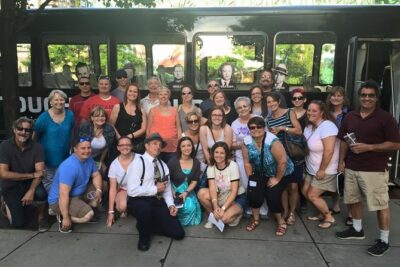
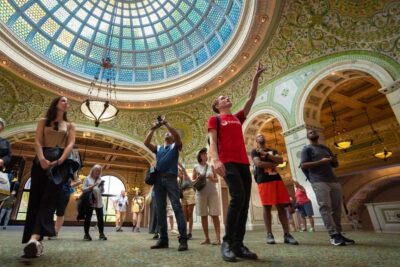
Prohibition-Era Culture & Architectural Treasures
Read our review →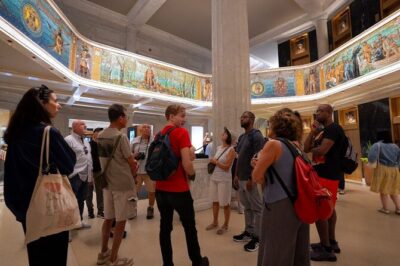
Explore Chicago’s Hidden Past: Prohibition Culture & Architecture
Read our review →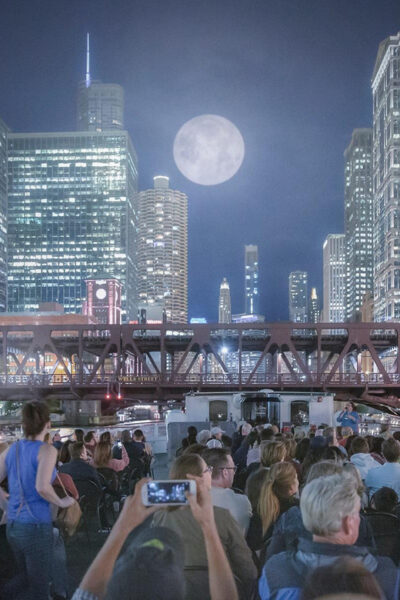
Historic Gangsters & Twilight Tales Night Cruise
Read our review →Browse the lists this tour appears in