
Reviewed · CHICAGO GANGSTER & PROHIBITION TOURS
Chicago: Prohibition-Era Culture & Architectural Treasures
Chicago’s Prohibition story is best understood on foot, where old theaters, river bridges, newspaper towers, and Art Deco façades sit within a few city blocks. This 2.5-hour walk connects crime, business, design, and civic pride without turning Chicago into a simple gangster tale.
I like the route for two clear reasons: it includes beautiful interior architecture at the Chicago Cultural Center, and it finishes at Millennium Park, where you can see the Bean and get useful ideas for lunch and more sightseeing. The local popcorn tasting adds a small but welcome Chicago touch.
The main drawback is the distance. You will walk about 4.8 kilometers, or 3 miles, in rain, snow, or shine, and one past participant felt the tour ran about 30 minutes too long. Wear shoes made for city pavement, not just for looking good in vacation photos.
In This Review
- Key points to know before you book
- Starting beneath the Chicago Theatre marquee
- The Riverwalk and Chicago’s vertical ambition
- Art Deco details at London House and DuSable Bridge
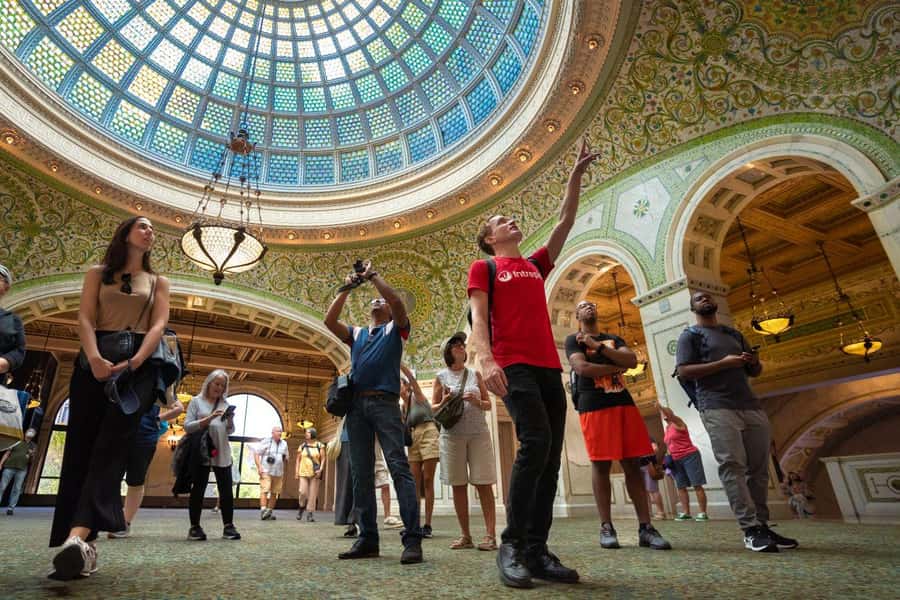
- The Chicago Cultural Center, where the story moves indoors
- The Wrigley Building, Tribune Tower, and the power of newspapers
- Ending at Millennium Park and the Bean
- How the $49 price measures up
- Walking comfort, weather, and family fit
- Who will get the most from this walk
- Simple ways to prepare
- Should you book it?
- FAQ
- How long is the Chicago Prohibition and architecture walking tour?
- Where does the tour start?
- Where does the tour finish?
- Is the tour conducted in English?
- What is included in the price?
- How many people are in the group?
- Is the tour suitable for children?
- What should I bring?
- Can dietary requests be accommodated?
Key points to know before you book
- Chicago history with a wider lens: Prohibition, crime, journalism, architecture, and city growth all fit into the story.
- A useful downtown route: Start at the Chicago Theatre and finish at Millennium Park, with no transport needed between stops.
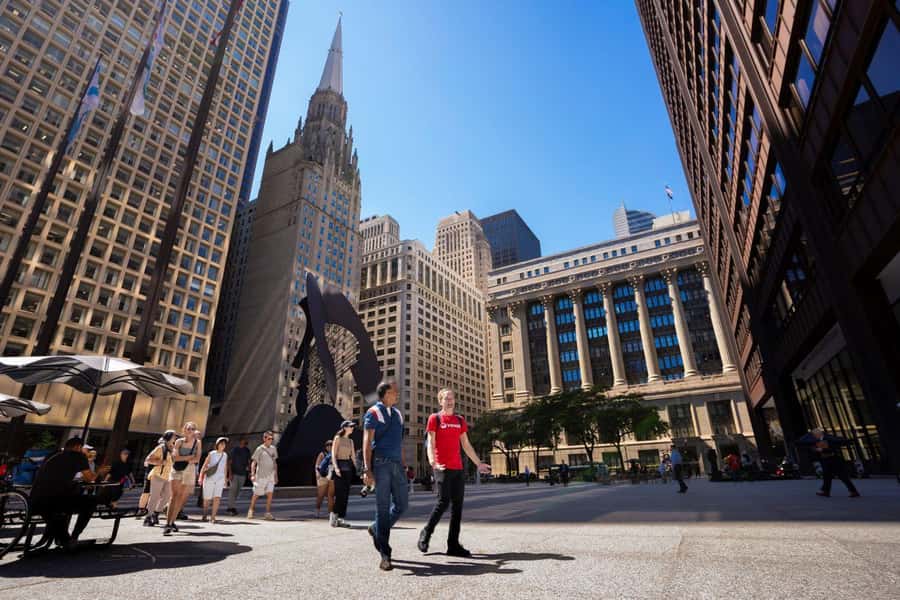
- Important buildings along the Riverwalk: Look for Marina Towers, Willis Tower, the Jewelers Building, London House, and DuSable Bridge.
- A real interior stop: The Chicago Cultural Center gives you a chance to see Chicago design from the inside.
- Small-group attention: The experience is promoted for a small group of about 12, with a stated maximum of 16 people.
- A snack with local flavor: Popcorn tasting is included, with vegetarian options available if arranged ahead of time.
Starting beneath the Chicago Theatre marquee
Meet your guide beneath the marquee of the Chicago Theatre at 175 North State Street. This is a smart starting point because the theater immediately puts you in the city’s entertainment and nightlife story, rather than beginning with a dry roll call of buildings.
From here, your guide sets up the larger theme: Prohibition did not just involve hidden bars and criminal networks. It affected how Chicago grew, how businesses presented themselves, and how the city’s public image took shape. You will hear about the era while looking at the streets and buildings that give those stories a physical setting.
The quality of this opening depends heavily on your guide. Dash, Kevin, Rich, Bash, Wallach, and other guides have led this experience at different times. Dash receives especially strong praise for turning facts into easy-to-follow stories and for noticing when the group needs a break, restroom stop, or snack. That sort of care matters on a walking tour with several stops.
The tour is in English, and a private group option is available. The regular format is designed to feel personal, but the exact group size can vary. The information describes a group of 12 participants and gives a maximum of 16, so ask at booking if the size of your departure matters to you.
More gangster and Prohibition history:
- Chicago: Gangsters and Ghosts Walking Tour
★ 5.0 · 7,155 reviews - Chicago Crime and Mob Bus Tour
★ 4.5 · 3,186 reviews - Chicago: Gangsters and Ghosts Guided Walking Tour
★ 4.7 · 1,697 reviews
The Riverwalk and Chicago’s vertical ambition
The route continues toward the Chicago Riverwalk, where the city’s famous architecture becomes easier to read as a group rather than as a row of isolated photo stops. Chicago’s buildings tell a story of pressure, ambition, commerce, and new construction. Your guide points out how the city’s future-facing identity took shape around the river and the central business district.
You will learn about Marina Towers, Willis Tower, and the Jewelers Building. Each gives the tour a different angle. Marina Towers brings a distinctive residential form into the conversation. Willis Tower represents Chicago’s push toward height and scale. The Jewelers Building links architecture with the city’s commercial past.
This section should suit you if you like seeing famous buildings while learning why they matter. It is not an observation deck visit, so you will not go up Willis Tower as part of the $49 price. You see and discuss the building from the walking route. If a skyline view from above is your main goal, pair this tour with a separate observation deck ticket.
The Riverwalk also changes the pace. You get an open stretch after the denser downtown streets, but the surface and weather still call for sensible footwear. Since the route covers roughly three miles, you should not treat this as a short stroll between attractions.
Art Deco details at London House and DuSable Bridge
The London House and DuSable Bridge bring the design side of the tour into sharper focus. Here, look up and slow down. Decorative details can disappear when you hurry through downtown, especially when traffic, crowds, and tall buildings compete for your attention.
The bridge is also a useful place to connect the river with Chicago’s growth. The tour does not treat architecture as decoration alone. It links the buildings to trade, business, movement, and the city’s changing ambitions.
The Prohibition theme works best in this part of the walk because it gives the buildings a social setting. Chicago’s nightlife, business interests, public image, and criminal activity overlapped in complicated ways. You get a sense of that overlap without needing a separate mob-themed bus tour.
That distinction is worth noting. If you want famous crime figures, violent incidents, and a strong focus on gangsters, a dedicated mob and crime tour will go further. This experience uses Prohibition as one thread in a broader story about architecture and city life.
The Chicago Cultural Center, where the story moves indoors
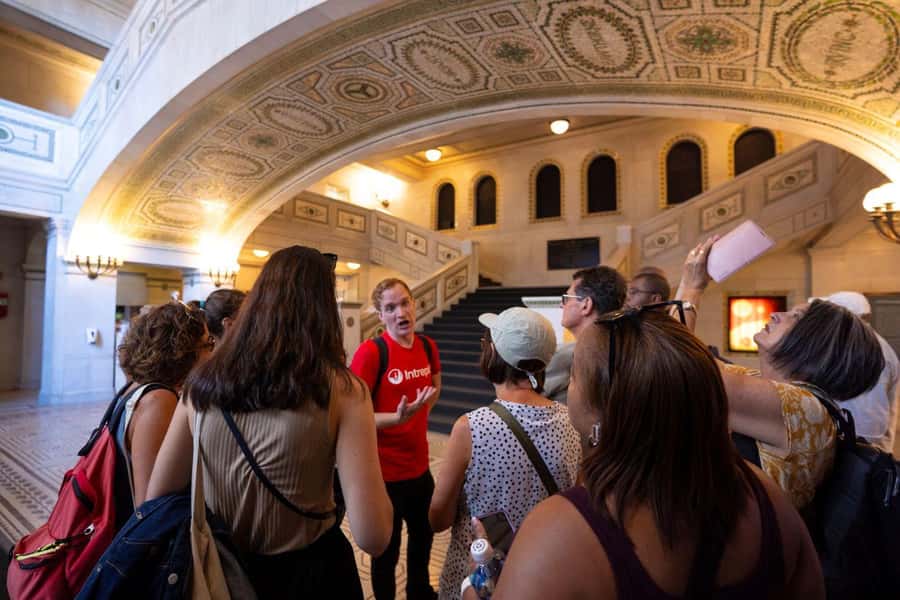
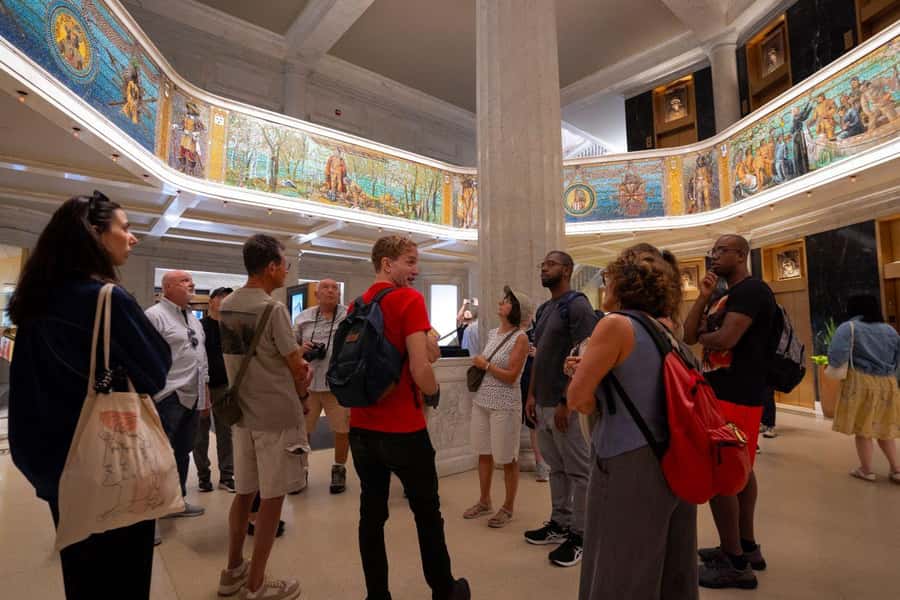
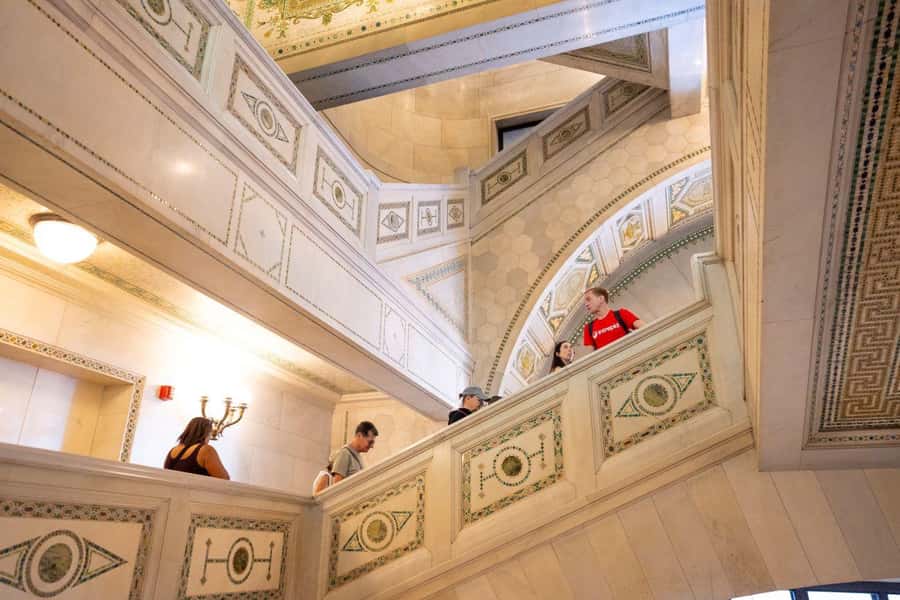
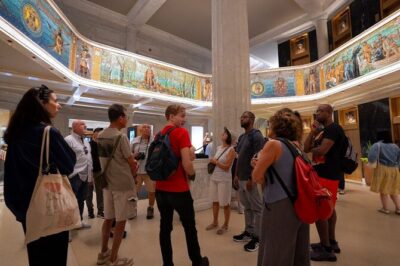
The Chicago Cultural Center is one of the strongest stops because you get a chance to enjoy an important building from inside. After several outdoor views, an interior visit gives your eyes a break and lets you see how Chicago’s civic design works at a human scale.
The stop also adds variety. You are not simply walking past towers for two and a half hours. You move between streets, the river, bridges, commercial buildings, and a public cultural space. That mix helps the tour feel like an introduction to downtown rather than a single-subject lecture.
Your guide may point out details you would pass without noticing. Guides on this route are expected to explain the city in a warm, conversational way, and that can make a large building easier to understand. The strongest guides, including Dash and Bash according to the supplied feedback, bring clear enthusiasm without making the walk feel like a school lesson.
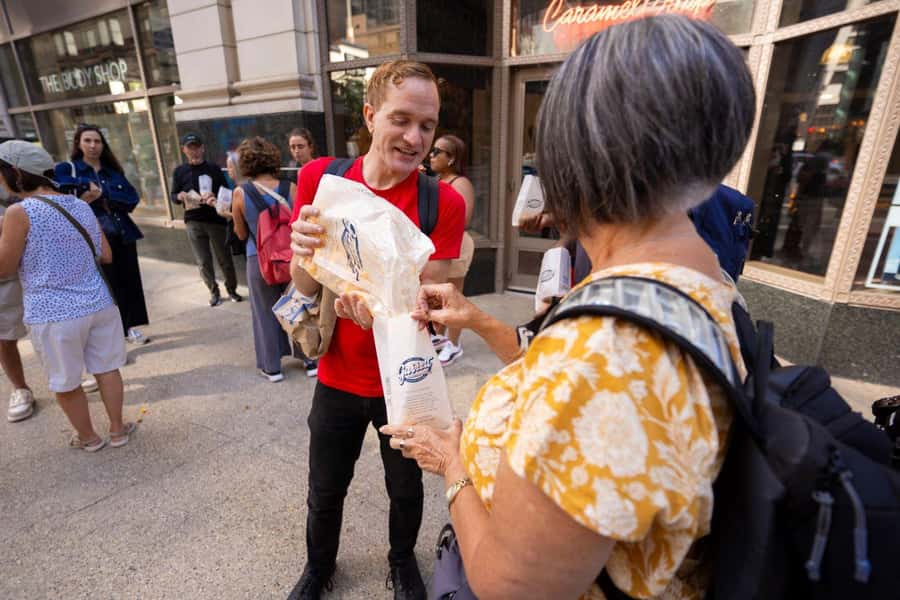
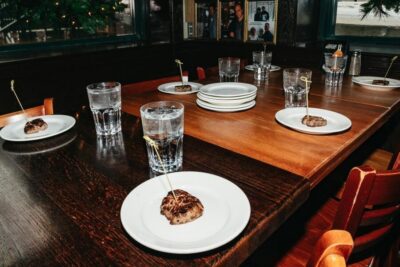
A Chicago-style popcorn tasting is included here or along the route. It is a modest extra, but a good one. The snack gives you a local flavor break and adds something you cannot get from simply following a free map. Vegetarian requests can be accommodated, but other allergies and dietary preferences cannot be handled, so tell the operator in advance if vegetarian food is important to you.
More architecture tours in Chicago:
- Chicago Architecture River Cruise
★ 5.0 · 15,756 reviews - Chicago River 90-Minute Architecture Tour
★ 4.5 · 9,629 reviews - Chicago River: 1.5-Hour Guided Architecture Cruise
★ 4.8 · 8,046 reviews - Chicago Architecture Center River Cruise aboard First Lady
★ 5.0 · 5,536 reviews
The Wrigley Building, Tribune Tower, and the power of newspapers
The route then takes in the Wrigley Building and Tribune Tower, shifting the conversation toward journalism and the people who helped shape Chicago’s public identity. These buildings are not just attractive backdrops. They reflect the importance of newspapers, business leaders, and civic storytelling in the city’s past.
This section is especially useful if you have already seen Chicago’s architecture from a boat. One person who had taken an architectural cruise found this walk an important complement because the street-level view supplies details a boat cannot. That is the key difference: a cruise gives you a broad skyline picture, while this tour lets you stop, face a building, and hear how it fits into the city’s story.
I like this pairing for first-time visitors. You see several major downtown sights in one route, but the guide also gives them meaning. You do not have to choose between architecture and history. The two subjects keep explaining each other.
Still, do not expect a full architectural survey of Chicago. The route concentrates on central downtown highlights and the Prohibition-era setting. If you want a specialist tour devoted to architectural styles, a river cruise may give you a longer and more focused look at the river corridor.
Ending at Millennium Park and the Bean
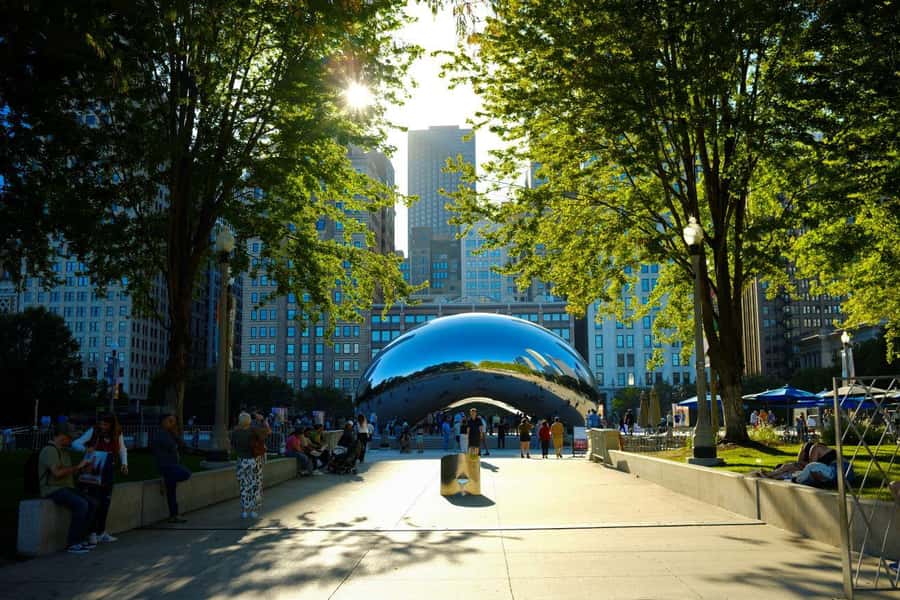
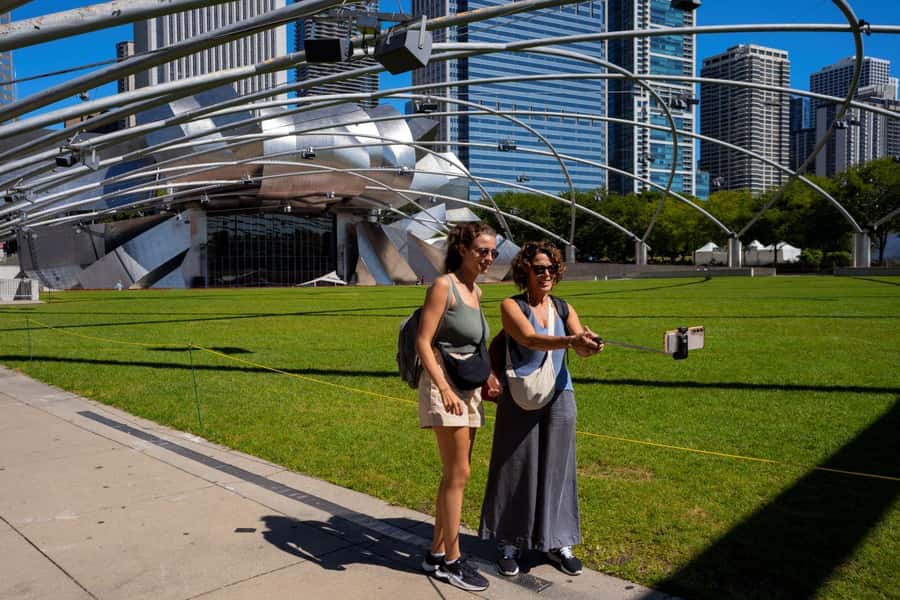
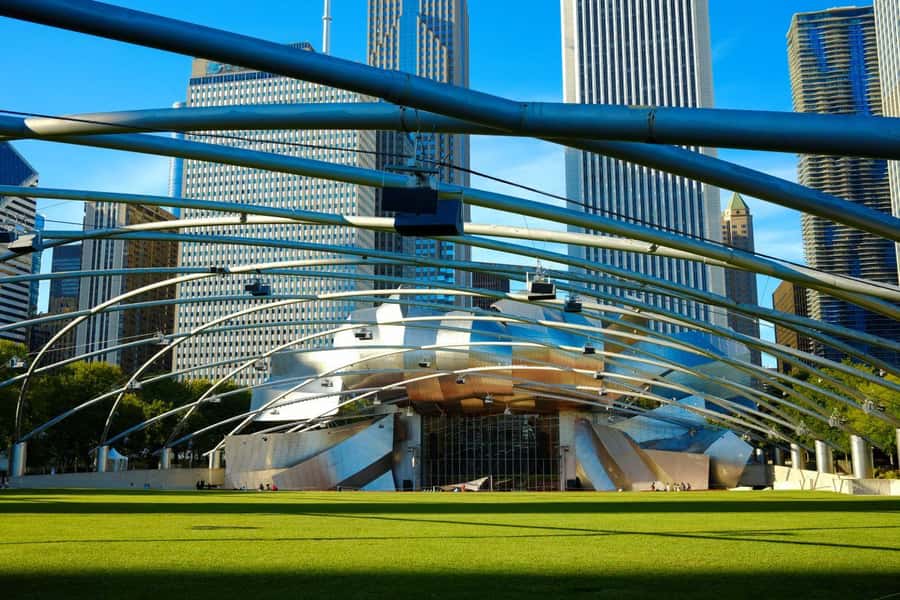
The walk ends at Millennium Park, home of the Bean. This is a practical finish because you can continue sightseeing on your own, take photos, find lunch, or use the guide’s recommendations to plan the rest of your day.
The ending also gives the tour a clear sense of time. You begin with the Chicago Theatre and its older entertainment world, then pass through the river and commercial core before arriving at a modern public park. The route shows a city that keeps reinventing itself while keeping its older buildings and stories in view.
Do not expect a long guided visit inside Millennium Park. The supplied details point to the park and the Bean as the final stop, with advice for lunch and further sights afterward. That is useful, but the final stop is more of a handoff to your own afternoon than a full park tour.
How the $49 price measures up
At $49 per person, this tour is fairly priced if you want a guide to connect many downtown sights in one outing. The fee covers the walking tour, a local English-speaking guide, and popcorn tasting. You are paying mainly for the route and the storytelling, not for admission to a tower or a major paid attraction.
That makes the value strongest for first-time visitors. A good guide can help you understand why the buildings matter, point out details you might miss, and suggest what to do next. The food sample is a pleasant bonus, but it should not be the reason you book.
The price is less compelling if you prefer to explore at your own speed. You can see many of these buildings from public streets without joining a tour. The value comes from interpretation, group access to the Cultural Center, and the guide’s ability to connect Prohibition with architecture, journalism, and urban growth.
A private group option may suit families or friends who want more control over the pace. The standard small-group version should be enough for most people, especially since the group limit is relatively modest.
Walking comfort, weather, and family fit
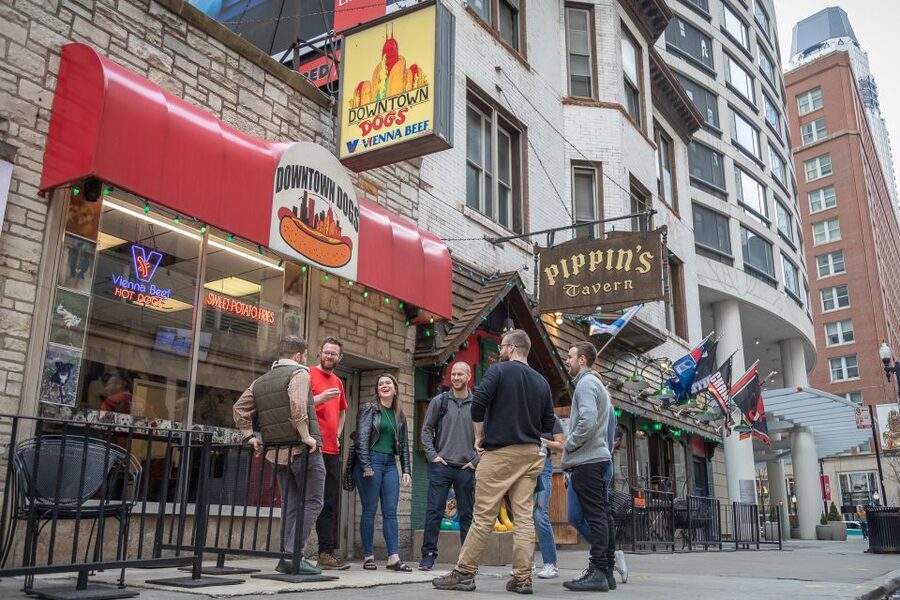
Plan on about three miles of walking over 2.5 hours. That is manageable for most ages and fitness levels, but the city pavement, standing time, and changing weather can make it feel longer than the distance suggests.
Comfortable shoes are essential. Bring weather-appropriate clothing because the tour operates in rain, snow, and fair weather. Morning and afternoon departures are usually available, so choose the time that best fits your energy and your plans for the rest of the day.
The tour is child-friendly, and children under six may join free of charge. Families should still think about the length. Young children may enjoy the popcorn and the Bean more than the architectural explanations, while older children can follow the crime, city growth, and design themes.
The route is described as suitable for all ages and fitness levels, but that does not mean it is effortless. If someone in your group needs frequent seated breaks, ask about the day’s pace before booking. Guides can respond to group needs, but the route still covers a fixed distance.
The operator also describes the tour as carbon neutral and run by a B Corp certified company. That may matter to you if responsible tourism is part of your buying decision. It does not change the route itself, but it adds a social and environmental point in the company’s favor.
Who will get the most from this walk
I would choose this tour for a first visit to Chicago, especially if you want a guided introduction before exploring museums, observation decks, or a river cruise. It gives you a useful downtown map in your head and ends in a place where you can easily continue on foot.
It also suits you if architecture interests you but you do not want a highly technical lecture. The route includes major buildings, Art Deco details, civic interiors, bridges, and modern landmarks, but the guide keeps the discussion tied to people and events.
Local residents can enjoy it too. One Chicago resident found that the route revealed facts about the city they did not know. That is a good sign for anyone who has seen the usual downtown sights but wants new context.
You may want another experience instead if your top priority is one of these:
- A view of Chicago’s skyline from the river: choose an architecture cruise.
- A focused gangster and crime story: choose a dedicated mob or gangsters tour.
- A high-altitude view: book an observation deck separately.
- A relaxed outing with minimal walking: this route may not be the best match.
Simple ways to prepare
Arrive at the Chicago Theatre marquee with enough time to find the meeting point. Bring water, wear shoes with good support, and check the forecast before leaving your hotel.
If you have a vegetarian request, notify the operator in advance. Other food allergies and dietary preferences cannot be accommodated according to the tour information.
Keep your afternoon flexible after the finish. The guide can recommend lunch and additional sights, and Millennium Park makes an easy starting point for more downtown exploring.
Should you book it?
Book this walking tour if you want history and architecture in the same package, prefer street-level sightseeing, and like having a guide explain the city as you go. The best part is not any single building. It is the way the route links the Chicago Theatre, Riverwalk, Art Deco landmarks, newspaper towers, the Cultural Center, and Millennium Park into one readable story.
The $49 price makes sense for first-time visitors, families with older children, and anyone who wants a well-organized introduction without committing to a full-day program. Choose a river cruise or a crime-focused tour instead if you want a narrower subject or less walking.
Pack for the weather, leave room for the popcorn, and expect the city’s pavement to be part of the lesson.
FAQ
How long is the Chicago Prohibition and architecture walking tour?
The tour lasts 2.5 hours and covers about 4.8 kilometers, or 3 miles, on foot.
Where does the tour start?
It starts beneath the marquee of the Chicago Theatre at 175 N. State Street, Chicago, Illinois 60601.
Where does the tour finish?
The tour ends at Millennium Park, near the Bean sculpture.
Is the tour conducted in English?
Yes. The tour includes a live English-speaking guide.
What is included in the price?
The $49 price includes the walking tour, a local English-speaking guide, and a Chicago-style popcorn tasting.
How many people are in the group?
The experience is promoted as a small-group tour with about 12 participants, and the stated maximum is 16 passengers. A private group option is also available.
Is the tour suitable for children?
Yes. It is described as child-friendly, and children under six are permitted to join free of charge.
What should I bring?
Bring comfortable shoes and clothing suited to the weather. The tour operates in rain, snow, and fair weather.
Can dietary requests be accommodated?
Vegetarian options can be arranged if you notify the operator in advance. Other food allergies and dietary preferences cannot be accommodated.
Just added in Chicago
- Chicago: Architecture and Engineering Marvels Walking Tour★ 5.0 · 3 reviews
- Private Downtown Chicago TV and Movie Sites Guided Walking Tour★ 4.5 · 3 reviews
- Black Heritage Tour★ 5.0 · 3 reviews
- Private SUV Transfer from Chicago Downtown to Midway airport★ 5.0 · 3 reviews
- Private Holiday City Tour★ 5.0 · 3 reviews
- BYOB Chicago River Guided History Tour★ 5.0 · 4 reviews
- Chicago 4-Hour Sightseeing Transfer by Luxury SUV★ 4.5 · 3 reviews
- Chicago, Cloud Gate, Grant Park Full-Day City Tour★ 4.0 · 4 reviews
Chicago Gangster & Prohibition Tours, compared.


Prohibition Speakeasies Bus Tour or Walking Tour
Read our review →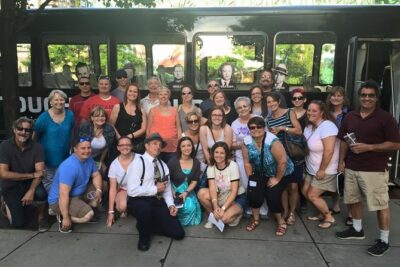
Explore Chicago’s Hidden Past: Prohibition Culture & Architecture
Read our review →
Historic Gangsters & Twilight Tales Night Cruise
Read our review →Browse the lists this tour appears in