

Reviewed · HISTORICAL TOURS
Walkin’ with Colin: Chicago History-Mystery-Comedy-Tragedy Tour
Chicago reveals itself in layers on this compact downtown walk. You’ll see Chagall’s colorful Four Seasons mosaic, Calder’s Flamingo, Picasso’s huge untitled sculpture, grand old interiors, and the Chicago Theatre. Colin ties art, architecture, tragedy, comedy, and local characters into one lively story.
I especially like the small maximum of 10 people, which gives the tour a more personal feel, and the mix of indoor and outdoor stops. I also like that Colin uses pictures and video to support his stories, rather than relying only on a long spoken lecture.
The main consideration is the pace and setting: this is a two-mile urban walk with stairs, elevators, escalators, pavement, and weather exposure. Some buildings may be busy or have access limits, and the Chicago Theatre admission is not included.
In This Review
- Key points at a glance
- Why this downtown walk feels different
- Chagall’s Four Seasons starts the story
- The Marquette Building brings you indoors
- Calder and Mies meet at Flamingo
- The Rookery rewards a careful look
- Picasso’s 50-foot sculpture makes a bold pause
- The Chicago Theatre connects art to entertainment
- Macy’s on State Street tells a retail story
- The Cultural Center is a fitting finish
- How Colin handles the walk
- What $44 buys you
- Who should book this experience
- Should you book Walkin’ with Colin?
- FAQ
- Where does the tour begin?
- Where does the tour end?
- How long is the experience?
- How far do you walk?
- Is the tour offered in English?
- How much does the tour cost?
- How large is the group?
- Are morning and afternoon departure times available?
- Is admission to the Chicago Theatre included?
- What happens if the weather is poor?
Key points at a glance
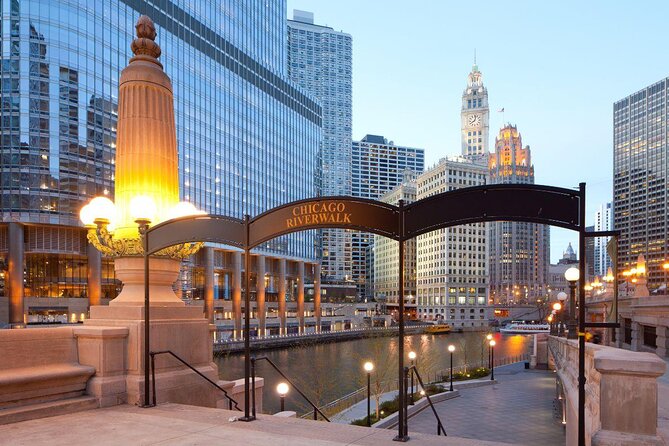
- Eight downtown stops in two hours: The route covers major art, architecture, theater, retail, and civic sights without requiring a full day.
- Colin’s storytelling style: Expect history mixed with humor, mystery, tragedy, visual aids, and plenty of room for questions.
- Remarkable interiors: The Marquette Building, Rookery Building, Macy’s on State Street, and Chicago Cultural Center reward you for stepping inside.
- Public art with context: Calder’s Flamingo and Picasso’s 50-foot sculpture make more sense when you hear how they fit into modern Chicago.
- A manageable but active walk: The route covers about two miles and includes indoor and outdoor sections, stairs, elevators, and escalators.
- Good value for architecture fans: At $44 per person, you receive a focused introduction to several important sights, with no separate admission charge listed for most stops.
Why this downtown walk feels different
Many Chicago walks choose one subject and stay there. This one moves between art, architecture, retail, theater, and city stories. That range is its strength. You might begin by studying a mosaic, then move into a skyscraper lobby, pause beside a modern sculpture, and finish in a historic public building.
Colin’s approach is not simply to point out façades. He uses stories to give each place a role in Chicago’s larger tale. The title promises history, mystery, comedy, and tragedy, and the route is designed around that mix. The tone can shift from playful to serious, which helps the material stick.
The group limit of 10 matters. Downtown Chicago can be noisy, and some interiors have details that are easy to miss. A small group makes it easier to hear, ask questions, and pause for photographs. The tour is also offered in the morning and afternoon, so you can fit it around museums, meals, or a theater booking.
The timing is tight. Eight stops in roughly 120 minutes means you should expect short visits rather than a long, detailed examination of every building. That is useful if you want a broad first look at central Chicago, but less useful if you prefer to spend half an hour with one building.
More history walks in Chicago:
- Chicago in a Day: Food, History & Architecture Walking Tour
★ 5.0 · 1,153 reviews - Chicago: Field Museum of Natural History Ticket or VIP Tour
★ 4.7 · 717 reviews - Field Museum of Natural History Admission Tickets
★ 4.5 · 489 reviews
Chagall’s Four Seasons starts the story

The opening stop is Marc Chagall’s Four Seasons, a large mosaic mural known for its bold color and dreamlike imagery. You get about 15 minutes here, enough to look closely and hear why this public artwork matters within Chicago’s collection of major civic art.
This is a strong opening because it immediately shows that the walk is not limited to old stone buildings. Chicago’s public art can be monumental, playful, strange, and difficult to classify. The mural gives Colin room to talk about the city’s willingness to place serious art in public spaces.
You do not pay a separate admission fee for this stop. Bring a camera, but take time to look before photographing. Large murals often make better sense when you first take in the full design, then return to smaller sections.
The Marquette Building brings you indoors
The Marquette Building is both an exterior landmark and an interior treat. The visit lasts about 10 minutes, and the focus is on one of Chicago’s older and more impressive skyscrapers.
This is where the indoor and outdoor format begins to pay off. You can study the building from the street, then appreciate the design from within. The change of scale is important: Chicago architecture is not only about the skyline. Lobbies, decorative details, and entrance spaces often carry as much character as the upper floors.
A short stop also helps if the weather is unpleasant. Several people who took the walk in cold, heat, or rain appreciated the chance to move indoors. Still, building access can vary, so you should treat the interior visit as part of the planned route rather than assume you can wander everywhere.
Calder and Mies meet at Flamingo

At Calder’s Flamingo, modern art meets the modern architecture associated with Mies van der Rohe. The stop lasts about 10 minutes, but the pairing gives you a lot to consider.
Calder’s sculpture is dramatic because of its scale and color. Set against a modern urban setting, it shows how a public artwork can alter the space around it. Colin’s route places the sculpture in an architectural context, making this more than a quick photo stop.
This is also one of the places where the tour’s broad subject range works well. You do not need to be an art specialist to enjoy the stop. You can simply compare the sculpture’s organic form with the clean lines of the surrounding architecture, then listen as Colin explains the people and ideas connected to the site.
A different way to spend an afternoon in Chicago:
- Chicago Architecture River Cruise
★ 5.0 · 15,756 reviews - Chicago River 90-Minute Architecture Tour
★ 4.5 · 9,629 reviews - Chicago River: 1.5-Hour Guided Architecture Cruise
★ 4.8 · 8,046 reviews - Chicago: Gangsters and Ghosts Walking Tour
★ 5.0 · 7,155 reviews
The Rookery rewards a careful look
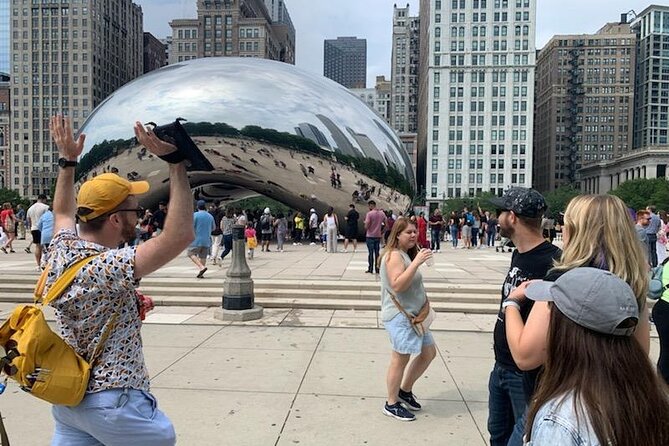
The Rookery Building receives about 15 minutes and is one of the major architectural moments of the walk. It is described as the oldest skyscraper in Chicago and one of the city’s most striking buildings.
The key here is the interior. The building’s public spaces show why Chicago architecture deserves attention at eye level, not just from a river cruise or a distant viewpoint. Look up, look along the walls, and notice how light, structure, and decoration work together.
Colin’s use of supporting images is useful at places like this. Historic buildings can change over time, and photographs help you picture earlier versions or understand details that are no longer obvious. The stop is short, so you will not receive an exhaustive architectural study, but you will leave with a good reason to return.
Picasso’s 50-foot sculpture makes a bold pause
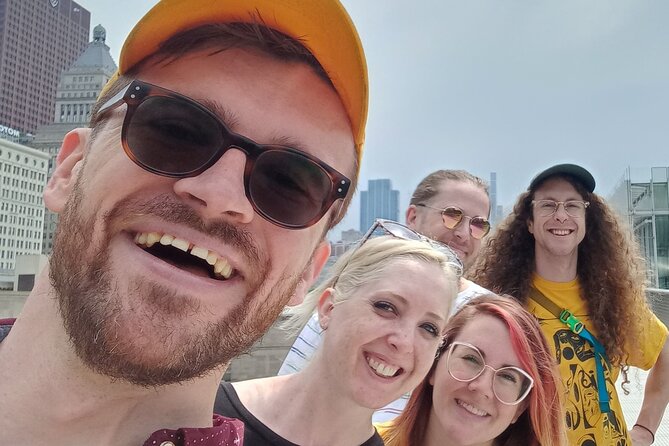
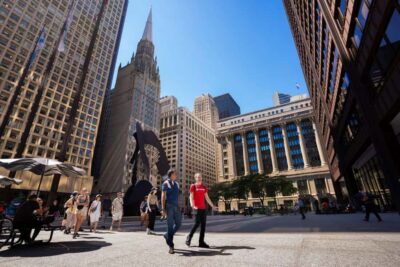
The route then reaches Picasso’s monumental untitled sculpture, a gift to Chicago that rises about 50 feet. It is one of the most recognizable pieces on the walk, yet its abstract form can still puzzle first-time viewers.
That is part of the fun. Colin’s history-mystery-comedy approach gives you a way into a work that does not offer an obvious portrait or simple subject. You can make your own judgment while hearing how the sculpture fits into the city’s public-art story.
The stop lasts around 10 minutes. That is enough for photographs and a clear explanation, though anyone hoping for a long discussion of Picasso’s career may find the time brief. Consider using this moment to ask a question, especially if modern art is not normally your interest.
The Chicago Theatre connects art to entertainment
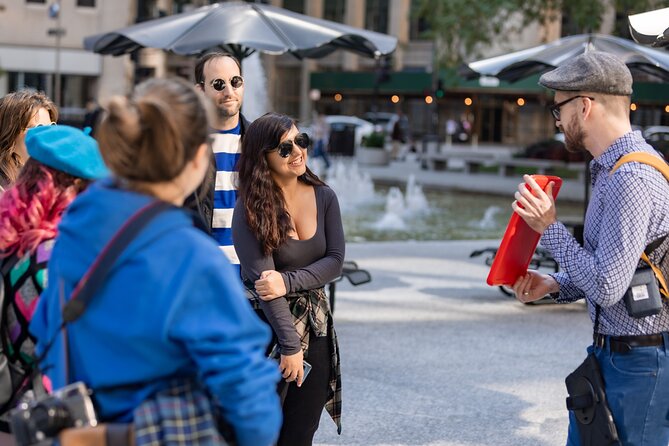
The Chicago Theatre gets about 15 minutes and brings the tour toward the city’s entertainment history. You will take a close look at the famous façade and hear about the great entertainers and the influences that shaped Chicago’s performance culture.
This stop adds a human side to the buildings. A theater is not only a decorative landmark. It is tied to audiences, performers, changing tastes, and the city’s public life. The visit also breaks up the architecture with a subject that should appeal to people who enjoy music, film, comedy, and stage history.
Admission is not included, so the tour focuses on the exterior rather than promising entry. If seeing the inside is important to you, check separately before booking another visit. The walk itself does not include that ticket.
Macy’s on State Street tells a retail story
At Macy’s on State Street, Colin turns to the former Marshall Field’s department store and Chicago’s role in shaping modern retail. The stop lasts about 10 minutes.
This is a smart inclusion because department stores are easy to overlook as historical sites. Yet they changed how people shopped, browsed, met friends, and experienced the city. The building also contains a famous Tiffany glass dome, a detail that can surprise you if you think of the store only as a place to buy clothes or household goods.
The stop is free, and the indoor setting gives you another break from traffic and weather. Keep your eyes open for decorative features above the shop floors. The tour’s value often comes from directing your attention to details you might otherwise pass without noticing.
The Cultural Center is a fitting finish
The final stop is the Chicago Cultural Center, located at 78 E Washington Street. The tour ends here, in a building sometimes known as the People’s Palace, with about 15 minutes devoted to its history and beauty.
Calling it a library with a legacy points to the building’s civic purpose. It is not simply an attractive interior. It reflects Chicago’s effort to create public spaces for learning, culture, and community use.
Ending here works well for practical reasons too. You finish near public transportation and remain in the heart of downtown, close to other central sights. The Cultural Center can also help you decide what to see next, especially if you want more architecture, public art, or Chicago history.
How Colin handles the walk
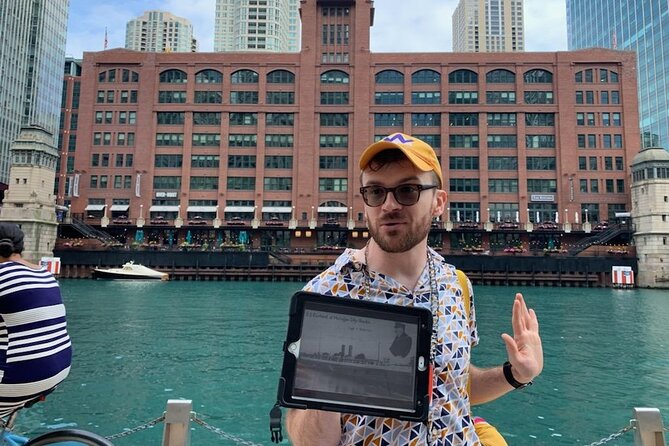
Colin is the central reason this experience works. His style combines preparation, humor, visual material, and direct explanation. You may see him use electronic images or video to add context to what is in front of you. That can be especially helpful when a building has changed or a story involves people and places no longer visible.
The tone is warm and conversational. You should expect questions and conversation rather than a purely scripted speech. People with a strong interest in Chicago architecture can ask for more detail, while newcomers can focus on the broad story.
The pace is generally easy, with stops breaking up the walking. Still, do not confuse easy with effortless. The route covers two miles, and the description specifically notes indoor and outdoor sections, upstairs and downstairs movement, elevators, and escalators. Wear comfortable shoes and plan for the forecast. An umbrella is a sensible addition in wet weather.
One useful strength is Colin’s ability to adjust the route when conditions change. If rain arrives, underground walkways may become part of the plan. That flexibility cannot guarantee access to every interior, but it can make the day more comfortable.
There is one practical point to watch. Stay together at crossings and tell Colin if you need a slower pace for photographs or mobility reasons. One less favorable experience involved the guide crossing before everyone had reached the crosswalk. It is a small issue, but downtown traffic deserves care, especially when the group is stopping often for pictures.
What $44 buys you
The price is $44 per person. For a two-hour, two-mile tour, that is not the cheapest way to walk around downtown, but the comparison should include what you are receiving.
You are getting a guide-led route through eight notable locations, explanations that connect separate subjects, a small group capped at 10, and access to several places that are free to enter. You are also getting local interpretation, not just a map of public sculptures and famous façades.
The value is strongest if you want an organized introduction in a short window. You can see major art and architecture without spending a full day planning a route or reading background material at each stop. The price is less compelling if you already know downtown Chicago well and prefer to explore at your own speed.
No general admission cost is listed for most stops. The Chicago Theatre admission is excluded, so budget separately if you want to visit it beyond the exterior portion. Confirmation arrives when you book, and free cancellation is available up to 24 hours before the start time. Bad weather or failure to meet the minimum group size can lead to a new date, another experience, or a full refund.
Who should book this experience
I would choose this tour for a first or second visit to Chicago, especially if you want to understand how art, architecture, retail, entertainment, and civic life fit together. It also suits local residents who have passed these buildings for years without going inside.
Families can use the variety to keep younger adults interested. The 25-year-old in one group reportedly enjoyed the history, which says something about the balance between facts and presentation. Couples, solo visitors, friends, and groups of up to eight have all fit comfortably within the stated limit.
You should be comfortable walking two miles and managing stairs or changes between street level and interiors. If you need a fully step-free route, this tour may require extra checking before booking. Service animals are allowed, and the meeting point is near public transportation.
Should you book Walkin’ with Colin?
Book it if you want a lively downtown orientation with real visual variety, rather than a narrow architecture lecture. Colin’s humor, preparation, and use of images give the route personality, while the small group keeps it from feeling like a crowd exercise.
Skip it if you want long, quiet visits inside each building, guaranteed Chicago Theatre admission, or a route with no stairs and no weather exposure. For most people who want two useful hours in central Chicago, $44 is a fair price for the range of places and the connecting stories.
Meet at 1 N Dearborn Street and finish at the Cultural Center. Bring good shoes, allow time for photographs, and keep your schedule flexible after the final stop. You may leave with a list of places you want to revisit at a slower pace.
FAQ
Where does the tour begin?
The tour begins at 1 N Dearborn Street, Chicago, Illinois 60602.
Where does the tour end?
It ends at the Chicago Cultural Center, 78 E Washington Street, Chicago, Illinois 60602.
How long is the experience?
The tour lasts approximately two hours.
How far do you walk?
The experience covers about two miles.
Is the tour offered in English?
Yes. The tour is offered in English.
How much does the tour cost?
The listed price is $44 per person.
How large is the group?
The tour has a maximum of 10 travelers.
Are morning and afternoon departure times available?
Yes. You can choose from morning and afternoon tour options.
Is admission to the Chicago Theatre included?
No. Admission to the Chicago Theatre is not included.
What happens if the weather is poor?
If the tour is canceled because of poor weather, you will be offered a different date or a full refund. You can also cancel up to 24 hours before the start time for a full refund.
Just added in Chicago
- Chicago: Architecture and Engineering Marvels Walking Tour★ 5.0 · 3 reviews
- Private Downtown Chicago TV and Movie Sites Guided Walking Tour★ 4.5 · 3 reviews
- Black Heritage Tour★ 5.0 · 3 reviews
- Private SUV Transfer from Chicago Downtown to Midway airport★ 5.0 · 3 reviews
- Private Holiday City Tour★ 5.0 · 3 reviews
- Chicago 4-Hour Sightseeing Transfer by Luxury SUV★ 4.5 · 3 reviews
- BYOB Chicago River Guided History Tour★ 5.0 · 4 reviews
- Chicago, Cloud Gate, Grant Park Full-Day City Tour★ 4.0 · 4 reviews
Historical Tours, compared.
Chicago in a Day: Food, History & Architecture Walking Tour
Read our review →
Field Museum of Natural History Ticket or VIP Tour
Read our review →
Field Museum of Natural History Admission Tickets
Read our review →
Chicago Walking Tour: Historic Treasures of Chicago
Read our review →
Historical and Architectural Chicago Fireboat River & Lake Cruise
Read our review →
Field Museum of Natural History All-Access Pass
Read our review →
Browse the lists this tour appears in