
Reviewed · HISTORICAL TOURS
African American Heritage Tour of Chicago
Chicago’s African American story is written across the South Side, not confined to one museum. This tour takes you through Bronzeville, Hyde Park, and South Shore, linking churches, homes, public figures, music, migration, politics, and neighborhood life from an air-conditioned vehicle.
I like the chance to see places tied to Pilgrim Baptist Church, Barack Obama, Muhammad Ali, Jesse Jackson, and Ida B. Wells in one outing. I also like Steve Johnson’s personal connection to Chicago and his lively, story-filled approach. The main caution is pace: the tour may run four and a half hours or longer, and the commentary can feel repetitive or overly forceful if you prefer a quiet, tightly scripted tour.
In This Review
- Key points to know before booking
- Why this tour matters in Chicago
- Bronzeville, where music and migration meet
- Hyde Park and the public figures who shaped Chicago
- South Shore and Chicago’s lakefront neighborhoods
- The museum stop: useful, but check your expectations
- Finishing with soul food at Pearl’s
- What Steve Johnson’s guiding style is like
- The vehicle, pickup, and practical comfort
- Timing, group size, and value
- Who should book this Chicago tour?
- Should you book the African American Heritage Tour?
- FAQ
- Where does the tour start?
- What time does the tour begin?
- How long does the tour last?
- Which Chicago neighborhoods does the tour visit?
- Is transportation included?
- Does the tour include a museum visit and soul food?
- Can I cancel for a refund?
Key points to know before booking
- Bronzeville is the heart of the route: Learn how the neighborhood earned its name and why it became central to Black Chicago.
- The tour connects famous names to real streets: See homes and institutions linked to Obama, Elijah Muhammad, Louis Farrakhan, Muhammad Ali, Jesse Jackson, Kanye West, and Jennifer Hudson.
- Steve Johnson leads with strong personality: His humor, local experience, and enthusiasm are major parts of the outing.
- You see several South Side neighborhoods by van: That saves walking time and lets you cover more ground than a neighborhood stroll.
- The museum and soul food stops add variety: The route includes an African American museum visit and ends at Pearl’s soul food restaurant, though the exact timing and length of stops can vary.
- Plan beyond the advertised four hours: Some outings last much longer, so do not schedule a tight afternoon appointment afterward.
Why this tour matters in Chicago
Chicago’s African American past is not a small side chapter. It shaped the city’s music, elections, churches, journalism, civil rights work, food, and neighborhoods.
This tour helps you connect those subjects geographically. Instead of hearing a list of names in a museum gallery, you move through the streets where important people lived, worked, worshipped, organized, and raised families. That makes the story easier to picture.
I find that especially useful if you are new to Chicago or have visited downtown several times without seeing the South Side. The route shows you a part of the city that standard sightseeing loops often skip.
The tone is informal and personal. Steve Johnson is not a quiet narrator reading from a script. He talks at length, adds jokes, points out details, and brings his own Chicago experience into the presentation. For some people, that makes the tour feel warm and alive. For others, it can feel scattered.
More history walks in Chicago:
- Chicago in a Day: Food, History & Architecture Walking Tour
★ 5.0 · 1,153 reviews - Chicago: Field Museum of Natural History Ticket or VIP Tour
★ 4.7 · 717 reviews - Field Museum of Natural History Admission Tickets
★ 4.5 · 489 reviews
Bronzeville, where music and migration meet
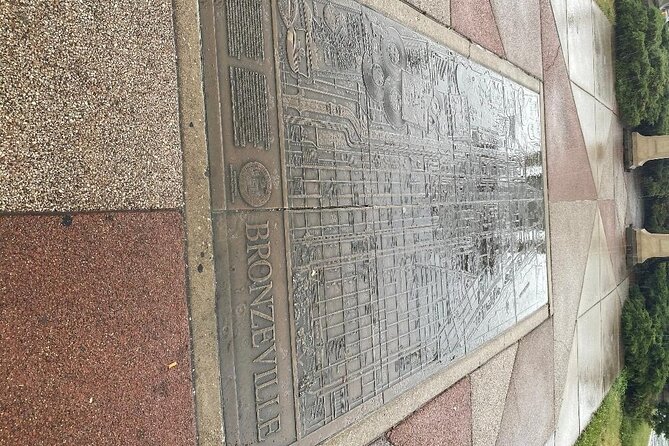
Bronzeville receives about an hour of attention and is the main historical anchor of the route. You will hear why the neighborhood is called Bronzeville and how Black Chicago developed here.
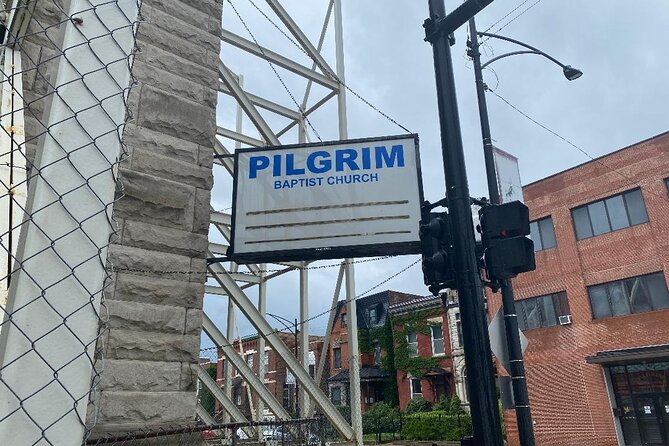
The route highlights Pilgrim Baptist Church, identified with the birth of gospel music. That connection gives the stop real weight. Gospel was not simply a church sound. It helped shape Chicago’s broader musical culture and influenced performers far beyond the sanctuary.
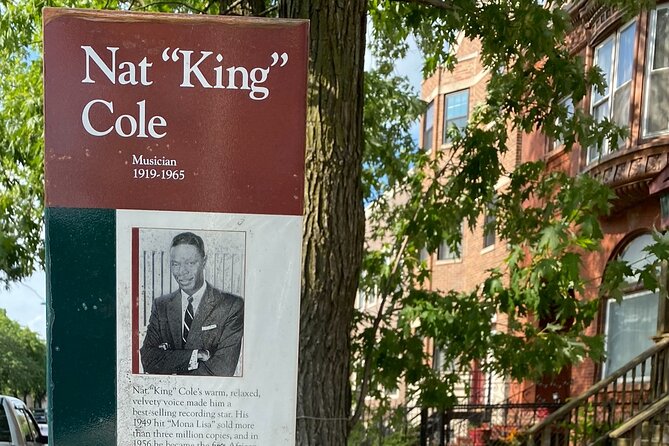
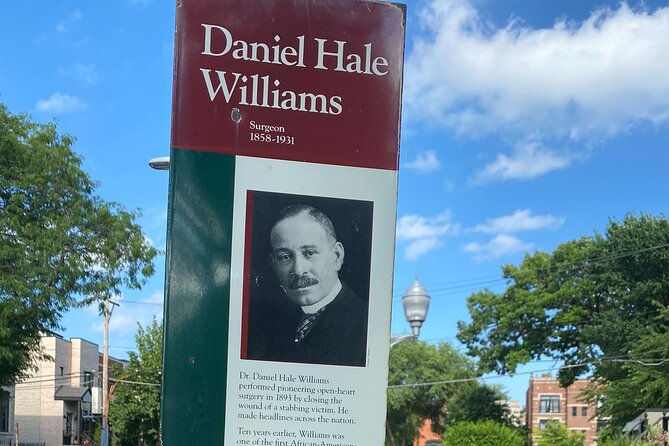
The tour also covers major Black musicians, churches, record labels, and public figures associated with Chicago. Names such as Nat King Cole, Louis Armstrong, Mahalia Jackson, Thomas Dorsey, and Ida B. Wells come into the story.
This is one of the strongest parts of the experience because the subjects connect naturally. Music, faith, migration, journalism, and political organizing all appear within the same neighborhood story.
You should know that much of Bronzeville is viewed from the vehicle, with selected photo stops. It is not a long walking tour through every landmark. If you want extended time inside historic buildings, you may find the format limited.
The tour also discusses public housing and low-income communities. That can provide useful context about segregation, housing policy, and neighborhood change. Still, this subject takes up more space than some people expect, and repeated references to housing may distract from the music and civil rights material.
Hyde Park and the public figures who shaped Chicago
The route then moves into Hyde Park, where the focus shifts toward major political and religious figures.
You will see the home associated with Barack Obama, the 44th president of the United States. The stop is primarily about location and context rather than a house tour. You should expect to view the exterior area and take photographs, not enter private property.
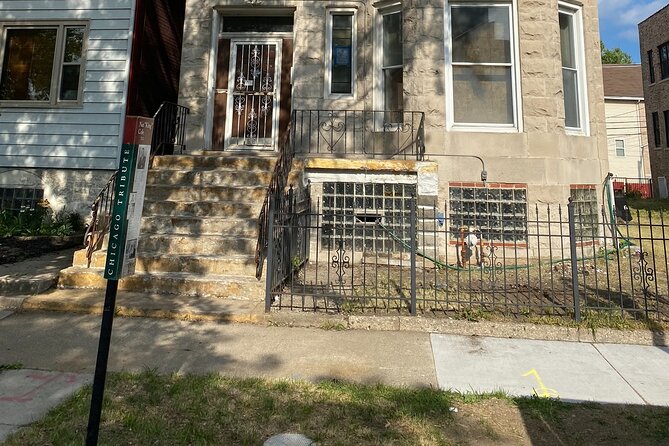
The route also includes the former home of Elijah Muhammad, who founded the Nation of Islam, and a home associated with Louis Farrakhan. These stops introduce the religious and political forces that shaped Black life in Chicago and the United States.
Muhammad Ali’s former residence and Reverend Jesse Jackson’s Operation PUSH national headquarters add another layer. Ali brings sports, celebrity, and activism into the picture. Jackson connects the tour to civil rights organizing and modern political action.
These are useful stops for anyone who wants more than a music-focused tour. At the same time, the presentation may touch on controversial figures and complicated subjects quickly. If you want a careful academic treatment of the Nation of Islam or American political movements, plan to do additional reading afterward.
South Shore and Chicago’s lakefront neighborhoods
The South Shore portion gives you a broader sense of the city. You will see lakefront parks and parts of Chicago’s eastern edge while learning about the neighborhood’s Black community.
The route also includes Kanye West’s childhood home, with other celebrity homes mentioned as part of the broader sightseeing. One practical point matters here: the advertised names do not guarantee that every home will receive a dedicated stop. Traffic, time, and the exact route can affect what you see.
That is typical of a driving tour built around private residences. You are seeing places from public streets, not entering them, and the value lies in the surrounding story rather than the building itself.
I would treat the celebrity homes as extra color, not the main reason to book. The stronger material is the connection between neighborhoods, institutions, and the people who helped shape Chicago.
A different way to spend an afternoon in Chicago:
- Chicago Architecture River Cruise
★ 5.0 · 15,756 reviews - Chicago River 90-Minute Architecture Tour
★ 4.5 · 9,629 reviews - Chicago River: 1.5-Hour Guided Architecture Cruise
★ 4.8 · 8,046 reviews - Chicago: Gangsters and Ghosts Walking Tour
★ 5.0 · 7,155 reviews
The museum stop: useful, but check your expectations
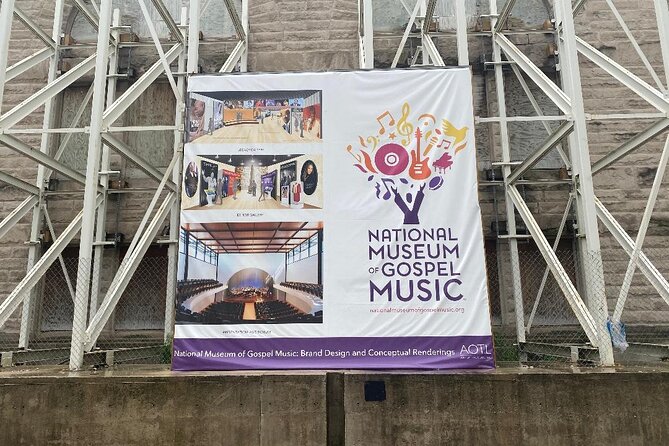
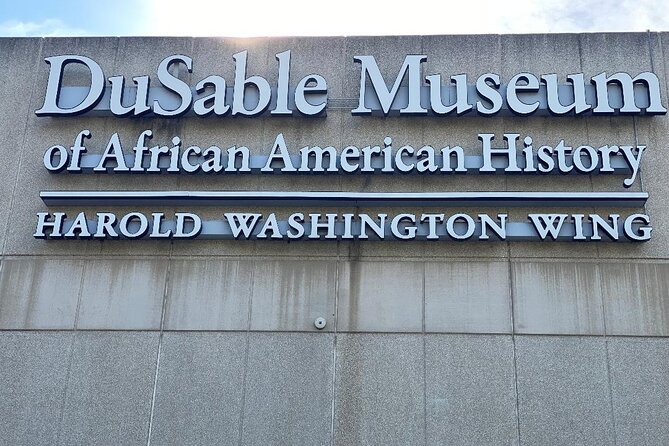
The itinerary includes a visit to an African American museum, and descriptions of the experience connect this stop with the DuSable Museum of Black History. Admission is listed as free.
This can be an important pause after several hours of driving. A museum gives you a chance to see objects, images, and displays rather than only listening from the van. It also lets you place Chicago’s story in a larger Black American context.
The catch is time. The tour does not promise a long, dedicated museum visit, and the museum may receive less attention than you expect. If museum time is your top priority, ask before booking how long the group will spend inside and which museum is scheduled for your date.
That question is worth asking because the overall route covers a lot. A four-hour tour that includes several neighborhoods, photo stops, a museum, and a meal cannot provide a full museum afternoon.
Finishing with soul food at Pearl’s
The outing ends at a soul food restaurant, identified in the tour details and visitor comments as Pearl’s. This is a welcome change of rhythm after hours in the vehicle.
A family-owned restaurant can make the experience feel connected to present-day Chicago rather than frozen in the past. You will have a chance to eat, talk, and consider the places you have just seen.
The meal is included as part of the tour experience, but the supplied details do not specify a fixed menu or whether the food cost is covered in every booking. Check the booking terms if the meal is a major reason you are choosing this outing.
Timing is another issue. The tour begins at 11 a.m., and the restaurant comes at the end. If the route runs long, you may be eating well into the afternoon or later. Bring water and consider a small snack, especially if you do not like waiting for a late meal.
One charming detail connected with the restaurant is an Obama-related table that has become a photo point. You may want to ask the guide or restaurant staff before taking pictures, since tables remain in ordinary use.
What Steve Johnson’s guiding style is like
Steve Johnson is the central personality of this tour. He speaks with confidence, humor, and strong emotion about Chicago. His local perspective is a real advantage, especially when he explains how neighborhoods connect to one another.
I like guides who can move beyond dates and names. Steve’s style includes personal stories, lively delivery, and practical help with photographs and getting around the city. Several parts of the tour may feel more like a conversation with an animated local than a formal lecture.
That style will not suit everyone. Some people find the commentary repetitive, loud, or too focused on personal anecdotes. A few complaints also describe incorrect names or incomplete explanations. Since the tour is built around one guide’s presentation, the experience depends heavily on how well his style matches your own.
If you enjoy a talkative guide who takes questions and brings plenty of energy, you may have a good time. If you want polished narration, short explanations, and a fixed script, you may prefer a museum-led program or a larger professional bus tour.
The vehicle, pickup, and practical comfort
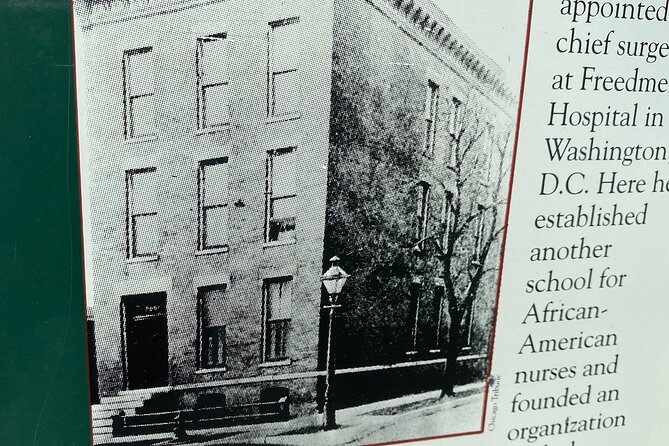
Pickup is offered from select locations, with the standard meeting point at the Chicago Theatre, 175 North State Street. The tour begins at 11 a.m. and returns to the meeting point.
The vehicle is air-conditioned. Based on the experience described by past participants, small groups may ride in a compact van, including a Dodge Caravan marked with The Tour. That format has advantages: it can move through city streets more easily than a large coach, and a small group can feel more personal.
It also has limits. A compact van is not as easy to enter and exit as a full-size sightseeing bus, particularly if you have mobility concerns. One report also noted that the microphone did not work well, which made it difficult to hear from some seats.
The tour involves pulling over or pausing near sights for explanations and photographs. Because city traffic can be tight, you should pay attention when boarding and leaving the vehicle. Clear pickup identification would also help, so look for the marked tour vehicle and confirm the guide’s name before getting in.
Airport pickup may be available if the schedule allows, at a price stated as 10 percent less than an Uber ride. This is not guaranteed, so arrange it in advance rather than assuming it will be offered on the day.
Timing, group size, and value
The advertised duration is about four hours, but you should plan for longer. Several accounts describe four and a half hours, and one describes an outing that lasted closer to six hours. Delays, extra stories, traffic, museum time, and restaurant timing can all stretch the day.
The listed maximum is 100 people, though the vehicle reports suggest that some departures are much smaller. Your actual group size may affect the feel of the tour. A small group allows more conversation, while a full departure could make it harder to hear and get in and out quickly.
Pricing needs a careful look. One booking was described as costing about $125 per person. At that level, you are paying for a private-style route across several neighborhoods, a local guide, transportation, and a substantial block of time. You are not simply paying for admission tickets.
The value is strongest if you want a broad introduction to Black Chicago and would otherwise need to arrange transportation between distant neighborhoods. It is weaker if you mainly want long museum visits, a polished vehicle, or precise four-hour scheduling.
Before paying, confirm what is included in the meal, which museum is planned, how long the museum stop lasts, and whether the advertised celebrity homes are actual stops or drive-bys.
Who should book this Chicago tour?
I would recommend it most to you if you want to see beyond downtown and prefer a personal guide with strong opinions and local stories. Families, first-time visitors, and anyone interested in music, politics, civil rights, and Chicago neighborhoods can get a lot from the route.
It also suits visitors who would rather ride between districts than spend the day managing buses, trains, and unfamiliar streets. The air-conditioned vehicle makes the wide route easier, especially in poor weather, although the experience itself requires good weather and may be canceled if conditions are unsuitable.
I would be cautious if you need a quiet, measured presentation or have limited time before another appointment. I would also think twice if you expect a large sightseeing coach, a fully scripted narration, or extensive time at the museum.
Free cancellation is available if you cancel at least 24 hours before the start time. Changes made inside that window are not accepted, and weather or minimum-group cancellations may lead to a new date or a full refund.
Should you book the African American Heritage Tour?
Book this tour if your priority is breadth, local perspective, and South Side context. You will cover more ground than on a short Bronzeville walk and hear about people and institutions tied to music, faith, politics, sports, and civil rights.
Go in with realistic expectations. Steve Johnson’s enthusiasm is part of the package, the van may be basic, the route can run well over four hours, and not every advertised home or sight will necessarily receive the same amount of attention.
For the best experience, keep your schedule open through late afternoon, ask about the museum and meal before booking, and choose this outing because you want the guide’s energetic personal style. If that sounds right, it can provide a memorable introduction to Black Chicago. If you want quiet precision and museum depth, choose a more formal sightseeing option instead.
FAQ
Where does the tour start?
The tour starts at the Chicago Theatre, 175 N State St, Chicago, Illinois 60601.
What time does the tour begin?
The scheduled start time is 11 a.m.
How long does the tour last?
The stated duration is approximately four hours, but the tour may run four and a half hours or longer. Plan to keep your schedule open beyond the advertised time.
Which Chicago neighborhoods does the tour visit?
The main areas are Bronzeville, Hyde Park, and South Shore. The route also covers other Chicago neighborhoods while traveling between stops.
Is transportation included?
Yes. An air-conditioned vehicle is included, and the activity returns to the original meeting point.
Does the tour include a museum visit and soul food?
The route includes an African American museum stop and ends at a soul food restaurant. Admission to the museum is listed as free, but the provided details do not specify a fixed meal menu or exact meal inclusions.
Can I cancel for a refund?
Yes. You can cancel at least 24 hours before the start time for a full refund. Cancellations or changes made less than 24 hours before the start time are not accepted, and poor weather or failure to meet the minimum group size may result in a new date or full refund.
Just added in Chicago
- Chicago: Architecture and Engineering Marvels Walking Tour★ 5.0 · 3 reviews
- Private Downtown Chicago TV and Movie Sites Guided Walking Tour★ 4.5 · 3 reviews
- Black Heritage Tour★ 5.0 · 3 reviews
- Private SUV Transfer from Chicago Downtown to Midway airport★ 5.0 · 3 reviews
- Private Holiday City Tour★ 5.0 · 3 reviews
- BYOB Chicago River Guided History Tour★ 5.0 · 4 reviews
- Chicago 4-Hour Sightseeing Transfer by Luxury SUV★ 4.5 · 3 reviews
- Chicago, Cloud Gate, Grant Park Full-Day City Tour★ 4.0 · 4 reviews
Historical Tours, compared.
Chicago in a Day: Food, History & Architecture Walking Tour
Read our review →
Field Museum of Natural History Ticket or VIP Tour
Read our review →
Field Museum of Natural History Admission Tickets
Read our review →
Chicago Walking Tour: Historic Treasures of Chicago
Read our review →
Historical and Architectural Chicago Fireboat River & Lake Cruise
Read our review →
Walkin’ with Colin: Chicago History-Mystery-Comedy-Tragedy Tour
Read our review →
Field Museum of Natural History All-Access Pass
Read our review →
Browse the lists this tour appears in