
Reviewed · CHICAGO ARCHITECTURE TOURS
Chicago: History and Architecture Guided Kayak Tour
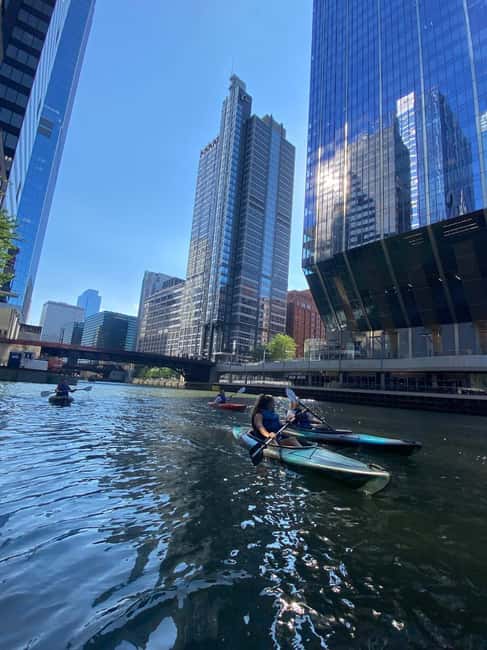
Chicago’s most unusual sightseeing route is not on a bus or sidewalk. It is the Chicago River, where you can sit close to the water and look up at downtown’s tall buildings from a kayak. This two-hour trip explains how the river helped shape the city and why its current runs backward.
I like the small group of six or fewer, which gives the guide room to talk with you rather than shout over a crowd. I also like the mix of engineering, city history, bridge design, wildlife, and everyday Riverwalk activity. The main drawback is practical: you need to be comfortable in a kayak, and the tour is not suitable for non-swimmers or people with mobility impairments.
In This Review
- Key details at a glance
- Why the Chicago River is the real attraction
- Beginning with a small group on the water
- Paddling through downtown’s urban canyon
- Passing beneath Chicago’s working bridges
- Understanding the river’s reversal
- Watching wildlife beside the Riverwalk
- What two hours and $64 really get you
- Who should book this kayak tour
- Timing, cancellation, and useful planning notes
- Should you book the Chicago history and architecture kayak tour?
- FAQ
- How long is the Chicago history and architecture kayak tour?
- What language is the tour conducted in?
- How many people are in each group?
- Is the kayak included in the price?
- Are single and double kayaks available?
- Is the tour suitable for non-swimmers?
- Is the tour suitable for people with mobility impairments?
- Can I cancel for a full refund?
Key details at a glance
- The river runs backward: Learn about the major engineering work that changed the direction of the Chicago River.
- Downtown from water level: Look up at the skyline while paddling through the urban canyon of central Chicago.
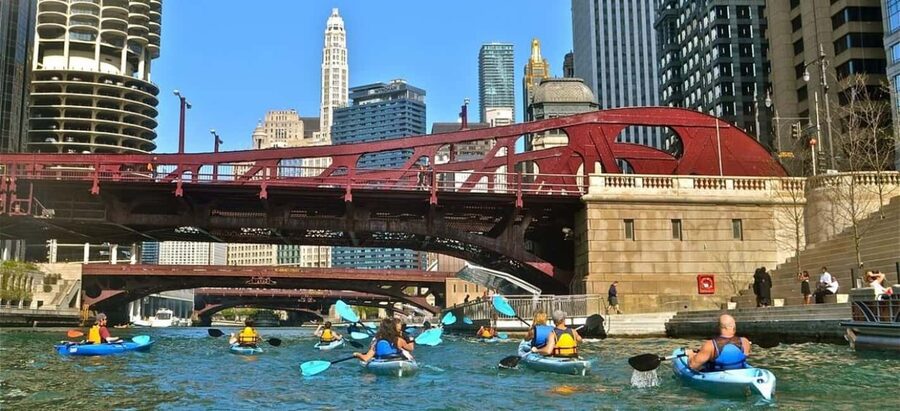
- Historic ironwork bridges: Pass beneath articulated bridges tied to one of the world’s largest working drawbridge systems.
- Small-group format: The tour is limited to six participants, making it easier to hear the guide and ask questions.
- Wildlife among the buildings: Watch for signs of animal life along a downtown waterway that has seen major renewal.
- Two-hour outing: The route ends in a central downtown location, useful if you want to keep sightseeing afterward.
Why the Chicago River is the real attraction
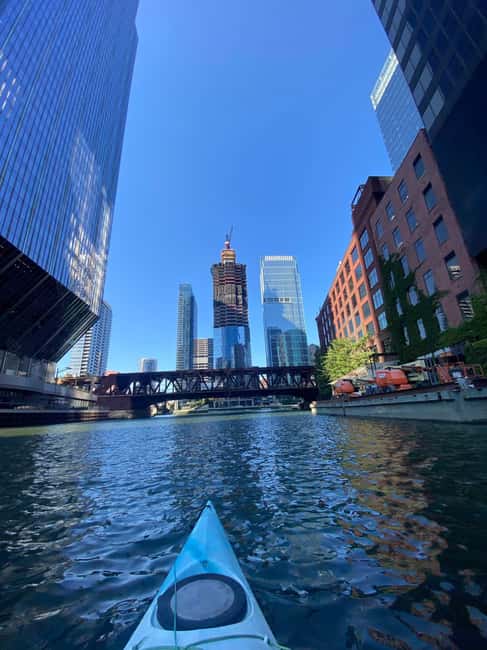
The Chicago River gives you a different way to read the city. From the street, downtown can feel like a wall of steel, stone, and glass. From a kayak, you are down at water level, looking beneath bridges and up along the sides of buildings. The river turns the city into a long outdoor room.
The most surprising story is the river’s reversal. Chicago’s engineers changed its flow as part of a major effort connected to the city’s growth and water management. You will hear how that decision affected the river and why this engineering feat still matters when you look at the water today.
That story gives the tour more weight than a simple paddle. You are not just passing buildings and taking skyline pictures. You are seeing the waterway that helped Chicago develop, then learning how human decisions reshaped it.
The route also brings you through the central section of the Riverwalk. This renovated promenade is a lively edge to the water, with people using the shoreline while kayakers move through the middle. You get a close view of downtown activity without having to stay on the pavement.
More architecture tours in Chicago:
- Chicago Architecture River Cruise
★ 5.0 · 15,756 reviews - Chicago River 90-Minute Architecture Tour
★ 4.5 · 9,629 reviews - Chicago River: 1.5-Hour Guided Architecture Cruise
★ 4.8 · 8,046 reviews
Beginning with a small group on the water
The tour includes the kayak and required equipment, so you do not need to arrange a separate rental. You can use a single kayak, rated for about 275 pounds, or a double kayak, rated for about 500 pounds. Those limits matter, so check them carefully when choosing your boat.
A group of no more than six is one of the strongest features here. On a city river, a very large group could make it harder to keep together and harder to hear the guide. This format should feel more personal, with a better chance to ask about a bridge, building, or piece of Chicago history as you pass it.
The guide speaks English. Since the tour includes ongoing commentary, this is best for you if you want stories and explanations while paddling, not simply time on the water. The guide covers Chicago’s development, the river’s part in that process, and the technical work that changed the city.
You should also be ready for an active outing. The tour is not suitable for non-swimmers, and it is not designed for people with mobility impairments. Those restrictions are worth taking seriously. A kayak is a stable craft for many people, but it still requires you to get in, paddle, and manage your position on the water.
Paddling through downtown’s urban canyon
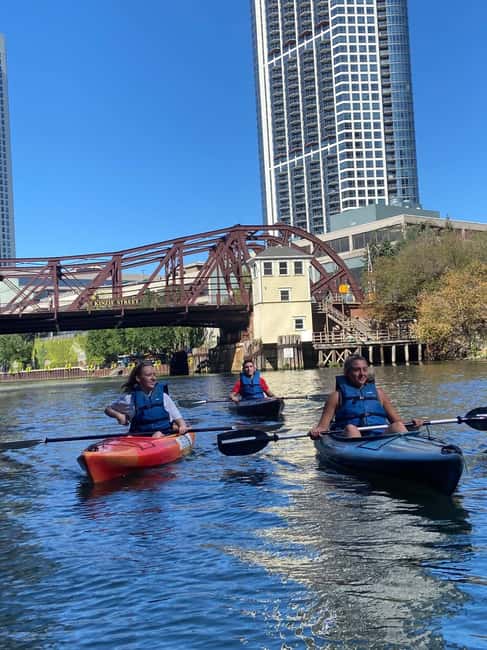
Once you are on the river, the city changes scale. The buildings rise around you, and the space between them creates the urban canyon described by the operator. Instead of seeing the skyline as a distant display, you view it from below, with bridges and waterfront buildings framing each section of the route.
I find this perspective especially useful if you have already walked downtown. Street-level sightseeing tends to focus on façades, shops, and busy crossings. From the kayak, the river becomes your route through the city, and the architecture appears in a more connected way.
The trip is not presented as a quiet wilderness paddle. You are in the center of Chicago, surrounded by city activity. That is the point. You may see people along the Riverwalk, shoreline recreation, and the steady movement of downtown life. The experience works best if you enjoy the contrast between a hands-on outdoor activity and a dense city setting.
The water also gives you a new view of the city’s changing waterfront. The Riverwalk has been renovated, and the route passes alongside this public promenade. You can see how the river has become part of downtown life rather than merely a working channel hidden behind buildings.
Passing beneath Chicago’s working bridges
The bridges are a major reason to choose this tour. You pass under distinctive ironwork structures while the guide explains their role in Chicago’s transportation and engineering story. From the water, you can study the underside and moving parts in a way that is difficult from a sidewalk or vehicle.
These are not just decorative crossings. Chicago has one of the world’s largest operational drawbridge systems, and the tour puts you close to that working infrastructure. The articulated design gives the bridges a mechanical character, connecting the city’s historic building methods with its ongoing daily use.
This part of the route may appeal most to you if you enjoy practical city history. The guide links the bridges to Chicago’s growth and explains how the river influenced the way the city was built. I would pay close attention here, since the details help make sense of the streets, buildings, and crossings you see later on foot.
There is also a simple visual pleasure in moving beneath a bridge under your own power. You look up at ironwork, then out toward the skyline, with the river carrying you into the next section of downtown. It is a memorable change from the usual architecture tour viewpoint.
More kayaking on the river:
- Chicago: Classic Food & Walking Tour with Free Bike or Kayak
★ 4.9 · 145 reviews - Chicago’s Lake Michigan Downtown Kayak Rental at Ohio Street Beach
★ 5.0 · 22 reviews - Chicago: 2-Hour Downtown Kayak Rental
★ 4.5 · 19 reviews - Chicago: Moonlight Paddle Tour on the Chicago River
★ 4.2 · 9 reviews
Understanding the river’s reversal
The backward-flowing river is the tour’s best conversation starter. Chicago is often associated with bold engineering, and the river’s reversal is one of the clearest examples of the city changing its natural setting to support urban growth.
You will learn why the river flows in reverse and how that decision shaped Chicago’s development. The information is useful because it connects the water beneath your kayak to the city above it. The river is not background scenery. It is part of the reason Chicago grew as it did.
I like tours that explain the practical choices behind a city. Instead of listing dates and names, this subject asks you to think about water, trade, sanitation, construction, and expansion. The supplied details promise discussion of major figures in Chicago’s development as well, giving the story a human side alongside the engineering.
The exact balance between paddling and commentary will depend on the guide and conditions, but the two-hour length should give the outing enough time for both. You get a real kayak trip, not just a brief photo stop, while still receiving a focused introduction to the river and downtown.
Watching wildlife beside the Riverwalk
A downtown river can surprise you. Along with skyscrapers, bridges, and promenades, the route offers a chance to spot wildlife that has returned to this section of the river. No specific species or guaranteed sightings are provided, so treat this as a possibility rather than the main reason to book.
That uncertainty is part of the appeal. You are not leaving the city to find nature, but you may notice signs of it while paddling through the center of Chicago. The contrast between animals along the water and buildings above it gives the trip another layer.
The Riverwalk adds a social side to the outing. You see shoreline activities from a position that walkers do not share, while people on the promenade get a view of the kayaks moving through the channel. This makes the route feel connected to downtown rather than separate from it.
If you want a silent nature trip, this is not the right choice. The setting is central Chicago, and the attraction is the meeting of water, architecture, engineering, and city life. I would choose it for that combination.
What two hours and $64 really get you
At $64 per person, the tour is priced above a basic kayak rental, but you are paying for more than the boat. The price includes a live English-speaking guide, the kayak, equipment, and a structured two-hour route through an unusual part of downtown.
The guide is the main added value. You could rent equipment and paddle without context, but you would miss the explanation of the reversed river, the city’s development, the bridges, and the engineering decisions around the water. If those subjects interest you, the fee is reasonable for a compact, guided city experience.
The small group improves that value. With no more than six people, the guide can keep the group close and provide commentary that is easier to follow. It also reduces the impersonal feel that can come with large sightseeing outings.
Still, you should compare the price with your own goals. If you mainly want exercise and are happy to explore without narration, a rental may suit you better. If you want Chicago’s river explained while you paddle through the center, this tour makes a stronger case.
Food and transportation to the starting point are not included. Plan to reach the launch point on your own and handle meals separately. The finish is central, so you can continue exploring downtown after the two-hour trip.
Who should book this kayak tour
I would recommend this outing to you if you want a fresh view of Chicago and are comfortable with a moderate outdoor activity. It suits first-time visitors who want city context, as well as repeat visitors who have already seen downtown from the streets.
It is also a good match for people who enjoy architecture but do not want another indoor lecture. The bridges, skyline, Riverwalk, and river engineering all become part of a moving lesson. You get information without giving up the pleasure of being outside.
The tour may work well for couples, friends, or a small family group, provided everyone meets the swimming and mobility requirements. The single and double kayak weight limits should be checked before booking. A double kayak has a combined limit of about 500 pounds, while a single kayak is rated for about 275 pounds.
I would skip it if you are not comfortable in a kayak, cannot swim, or need an accessible activity. I would also think twice if your main aim is a calm, remote paddle. This is a downtown experience, with city activity all around you.
The current score is 5 from three ratings, including a verified booking described as an excellent experience. That is a small sample, so I would not treat it as the whole story, but it supports the practical strengths of the trip: a clear two-hour format, a guide-led route, and an unusual way to see central Chicago.
Timing, cancellation, and useful planning notes
The tour lasts two hours, with starting times available according to the date you select. Since transportation is not included, leave enough time to reach the starting point without rushing. The activity ends in a central location, which makes it easy to add a museum, meal, or downtown walk afterward.
You can cancel up to 24 hours in advance for a full refund. A reserve-now, pay-later option is also available, useful if your Chicago schedule is still shifting.
Check the kayak weight limits before you pay. Make sure every participant is comfortable with the physical demands and swimming requirement, since the activity is not suitable for non-swimmers or people with mobility impairments.
Should you book the Chicago history and architecture kayak tour?
Book it if you want to understand Chicago through its river, not just photograph the skyline. The combination of a small group, live guide, working bridges, Riverwalk views, wildlife possibilities, and the story of the reversed river gives you a focused experience that is hard to reproduce on foot.
The $64 price makes the most sense when you value the explanation as much as the paddling. If you want a rental with no commentary, choose another option. If you want two hours of active sightseeing with a close look at Chicago’s engineering and waterfront, this is a smart addition to a downtown visit.
FAQ
How long is the Chicago history and architecture kayak tour?
The tour lasts two hours.
What language is the tour conducted in?
The live tour guide speaks English.
How many people are in each group?
The group is limited to six participants.
Is the kayak included in the price?
Yes. The kayak and equipment are included, along with the live guide.
Are single and double kayaks available?
Yes. Single kayaks have a weight limit of about 275 pounds, and double kayaks have a combined limit of about 500 pounds.
Is the tour suitable for non-swimmers?
No. The activity is not suitable for non-swimmers.
Is the tour suitable for people with mobility impairments?
No. The activity is listed as unsuitable for people with mobility impairments.
Can I cancel for a full refund?
Yes. You can cancel up to 24 hours in advance for a full refund.
More History Walks in Chicago
- Chicago in a Day: Food, History & Architecture Walking Tour
★ 5.0 · 1,153 reviews - Chicago: Field Museum of Natural History Ticket or VIP Tour
★ 4.7 · 717 reviews - Field Museum of Natural History Admission Tickets
★ 4.5 · 489 reviews - Chicago Walking Tour: Historic Treasures of Chicago
★ 5.0 · 362 reviews
Just added in Chicago
- Chicago’s Luxury Minibus City Sightseeing Tour★ 3.5 · 3 reviews
- Chicago White Sox Baseball Game Ticket at Guaranteed Rate Field★ 4.5 · 3 reviews
- City Cruises Chicago: Signature Brunch Cruise on Lake Michigan★ 4.5 · 3 reviews
- Private Transfer from Chicago Airport (ORD)★ 3.5 · 3 reviews
- Michigan Avenue Rendezvous Walking Tour with Smartphone App★ 3.2 · 3 reviews
- Airport transfer between Chicago O’Hare and Milwaukee★ 4.7 · 3 reviews
- Harry Potter Shop Chicago: Confectionary Collection★ 4.5 · 3 reviews
- Chicago Haunted Ghost Tour GPS Self-Guided Walking Tour★ 4.5 · 3 reviews
Chicago Architecture Tours, compared.
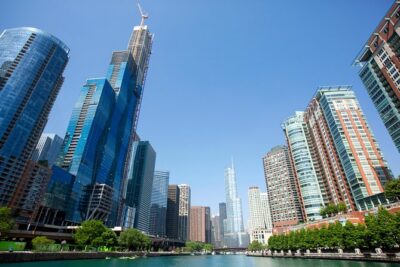
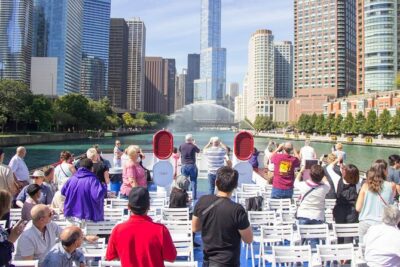
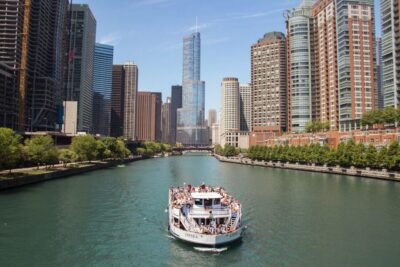
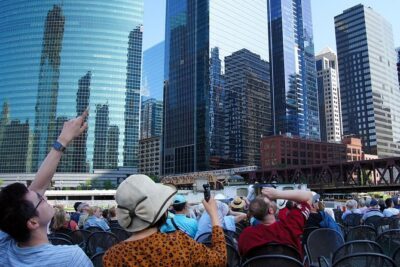
Chicago Architecture Center River Cruise aboard First Lady
Read our review →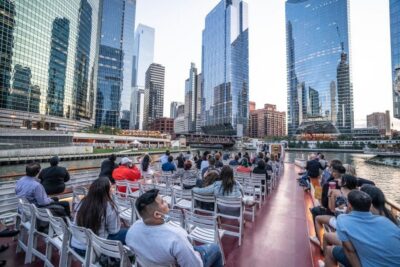
Architecture River Cruise Skip-the-Ticket Line
Read our review →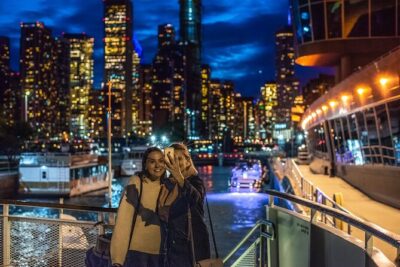
Chicago River 45-Minute Architecture Tour from Magnificent Mile
Read our review →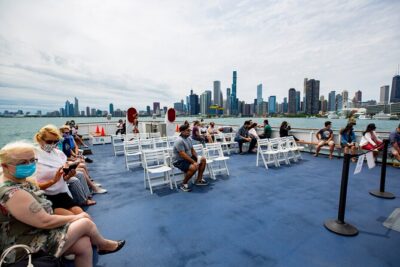
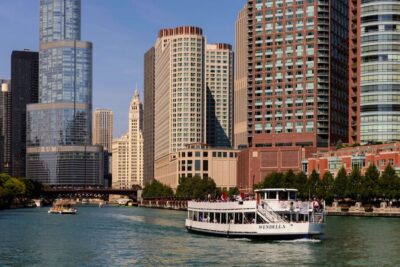
45-Minute Family-Friendly Architecture River Cruise
Read our review →Browse the lists this tour appears in