
Reviewed · CHICAGO ARCHITECTURE TOURS
Chicago’s Original Dazzling Architectural Interiors Tour
Chicago saves some of its best architecture for the inside. This two-hour walk takes you from a Roaring ’20s Art Deco interior to an 1880s downtown landmark, then ends beneath the world’s largest Tiffany stained-glass dome. The surprise is how many of these rooms you may have passed without noticing.
I like the broad sweep of the route: you get Art Deco, older Victorian-era design, Frank Lloyd Wright work, Moorish details, and Postmodern architecture in one compact outing. I also like the local feel. Guides such as Spencer, Henry, and Kaylee bring Chicago history into the buildings instead of treating the tour as a parade of pretty ceilings.
The main consideration is pace. Two hours goes quickly, and this is an interiors-focused walking tour, not a full survey of Chicago’s famous skyscrapers. You should also wear good shoes and dress for the weather, since you will walk between buildings.
In This Review
- Key points to know before you book
- Why Chicago’s interiors deserve two hours
- Meeting at 425 South Financial Place
- Art Deco elegance from the Roaring ’20s
- Returning to the 1880s in an old downtown landmark
- Frank Lloyd Wright’s touch on a turn-of-the-century interior
- Moorish details beneath a Postmodern ceiling
- Looking up at the world’s largest Tiffany stained-glass dome
- The surprise interiors along the way
- Guides who bring the rooms to life
- Who will get the most from this tour
- Practical advice for a comfortable visit
- Is Chicago’s Original Dazzling Architectural Interiors Tour worth booking?
- FAQ
- How long does the architectural interiors tour last?
- How much does the tour cost?
- Where does the tour meet?
- What language is the tour conducted in?
- Is the tour wheelchair accessible?
- Are entrance fees included?
- Can I cancel the booking for a refund?
Key points to know before you book
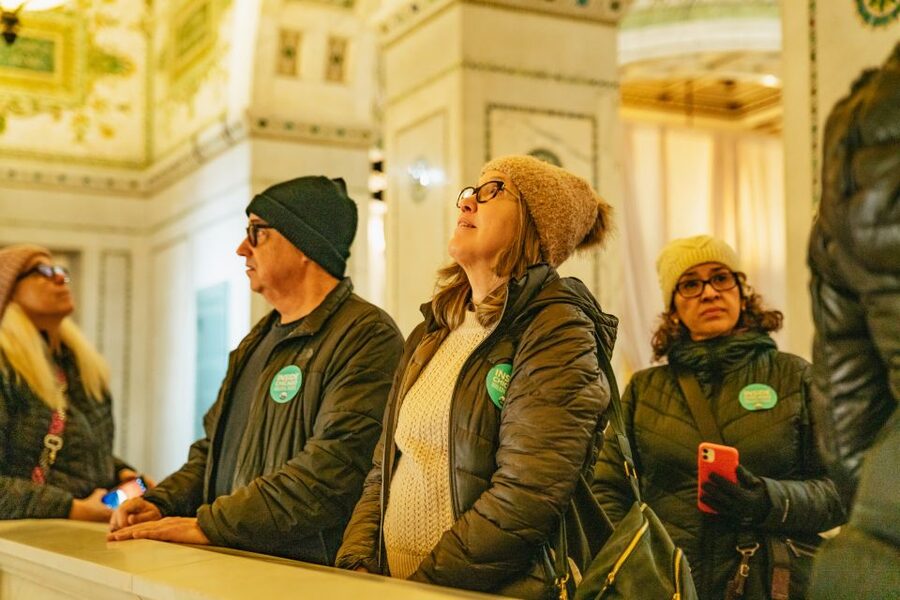
- The Tiffany finale is the star: Finish beneath the world’s largest Tiffany stained-glass dome.
- Four very different design periods: See Art Deco, 1880s architecture, Frank Lloyd Wright renovations, Moorish details, and Postmodern work.
- A strong guide can make the difference: Spencer, Henry, and Kaylee have led tours praised for clear Chicago history and enthusiastic presentation.
- Downtown location saves time: Meet at 425 S. Financial Place, near Millennium Park and the Bean.
- Good value at $35: Entrance fees are included, making the price reasonable for a two-hour guided look at several interiors.
- Plan for changing conditions: The tour runs in all weather, so bring comfortable shoes, suitable clothing, and a face covering.
Why Chicago’s interiors deserve two hours
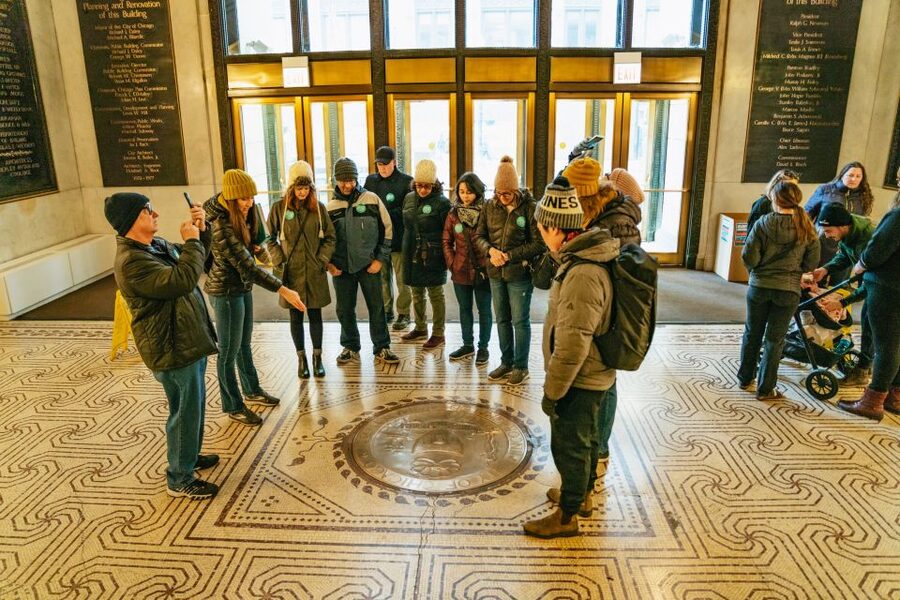
Chicago is famous for its skyline, but the city’s public interiors can be just as revealing. From the sidewalk, many buildings give you only a doorway, a lobby, or a quick glimpse through glass. Once you step inside, the ceilings, stained glass, tile, ornament, and proportions tell a fuller story.
This tour works because it places several styles side by side. You are not looking at one grand building for two hours. Instead, you move through a sequence of rooms from different eras, seeing how Chicago’s taste changed from the late 19th century through the 20th century and into the Postmodern period.
I like this approach for first-time visitors who want architecture without committing to a specialized museum visit. It also suits repeat visitors. The route focuses on spaces that even locals can walk past every day without realizing what is above them.
The tour costs $35 per person and lasts two hours. Since entrance fees are included, the price is fair for a guided route that visits multiple interiors. You are paying not just for access, but for someone to explain what you are seeing and point out details that are easy to miss.
More architecture tours in Chicago:
- Chicago Architecture River Cruise
★ 5.0 · 15,756 reviews - Chicago River 90-Minute Architecture Tour
★ 4.5 · 9,629 reviews - Chicago River: 1.5-Hour Guided Architecture Cruise
★ 4.8 · 8,046 reviews
Meeting at 425 South Financial Place
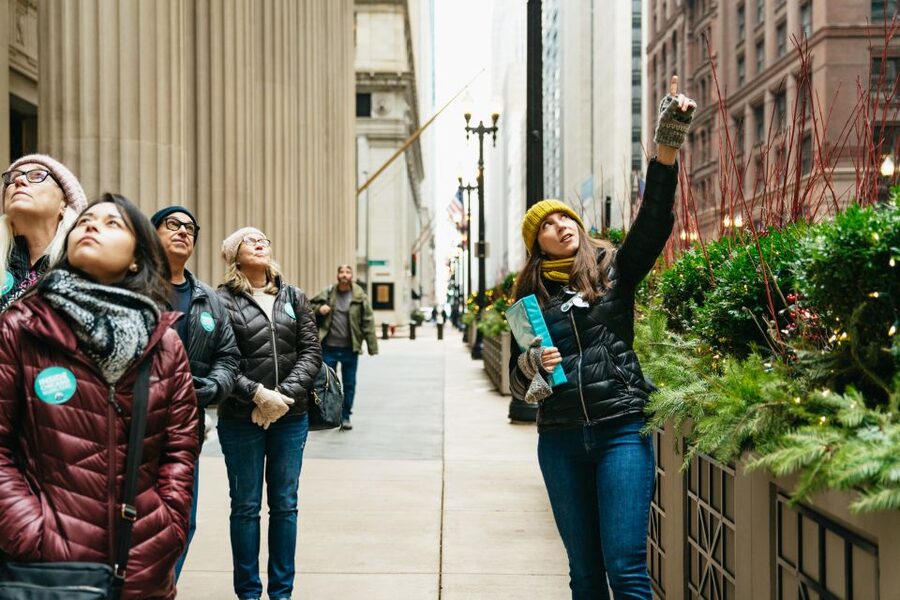
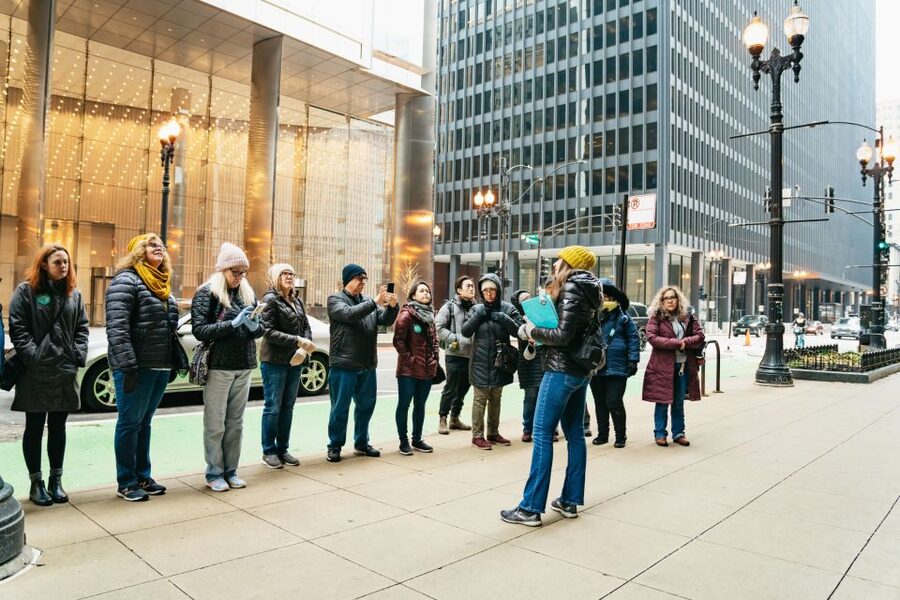
You meet in the plaza in front of 425 S. Financial Place, next to a metal horse sculpture. This is a useful meeting point in the downtown core, but give yourself enough time to find the correct plaza rather than arriving at the last moment.
The exact starting time varies, so check availability when booking. The tour is conducted in English, and the guide leads you on foot between the stops. Since the route is in downtown Chicago, you should expect city walking rather than a coach or shuttle experience.
The opening portion gets you into the subject quickly. You begin with Chicago architecture rather than a long orientation talk, which suits the tour’s practical format. If you enjoy learning through actual spaces, this is a better fit than a lecture delivered from one location.
Art Deco elegance from the Roaring ’20s
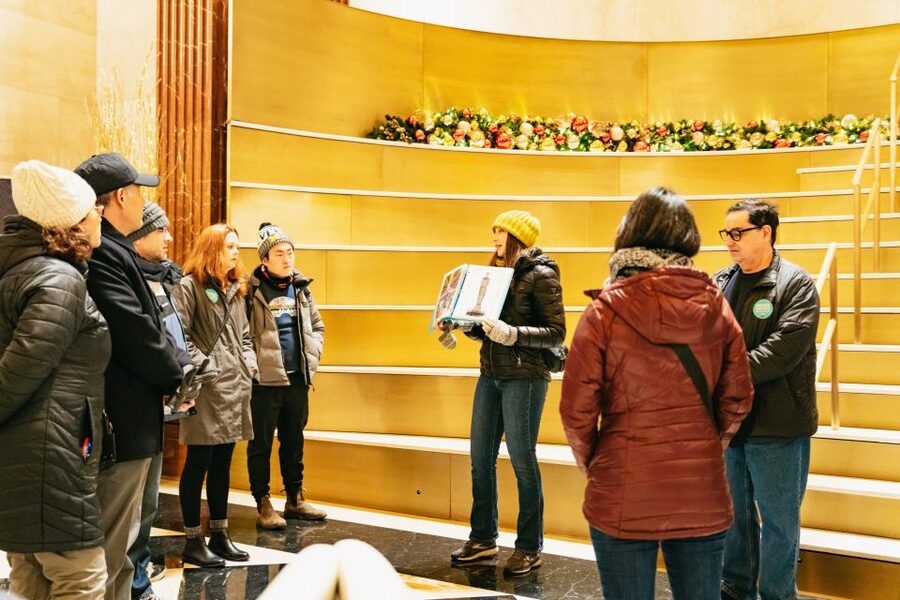
One of the early highlights is a classic Art Deco interior from the 1920s. This is the period when Chicago architecture often turned geometry into decoration. Look for the polished sense of order, repeated shapes, and carefully controlled ornament that give Art Deco its formal, confident character.
The value here is comparison. Art Deco is not simply old-fashioned decoration. Its lines and patterns reflect a different idea of modern life, one that celebrated machinery, speed, luxury, and clean geometry. Inside a grand public building, those ideas become easy to see in the ceiling, walls, and decorative details.
Your guide’s explanation matters at this stop. The room may impress you at first glance, but a good guide helps you notice the choices behind the design. Several people who took the tour singled out the way the guides connected architecture with Chicago history. Henry, who is a trained architect, has been praised for sharing his subject with energy and clear enthusiasm. Spencer has also been praised for his local Chicago knowledge.
This stop is especially good for anyone who thinks architectural tours are mostly about exterior facades. The interior gives you a close view of materials and craftsmanship that can be hard to appreciate from the street.
Returning to the 1880s in an old downtown landmark
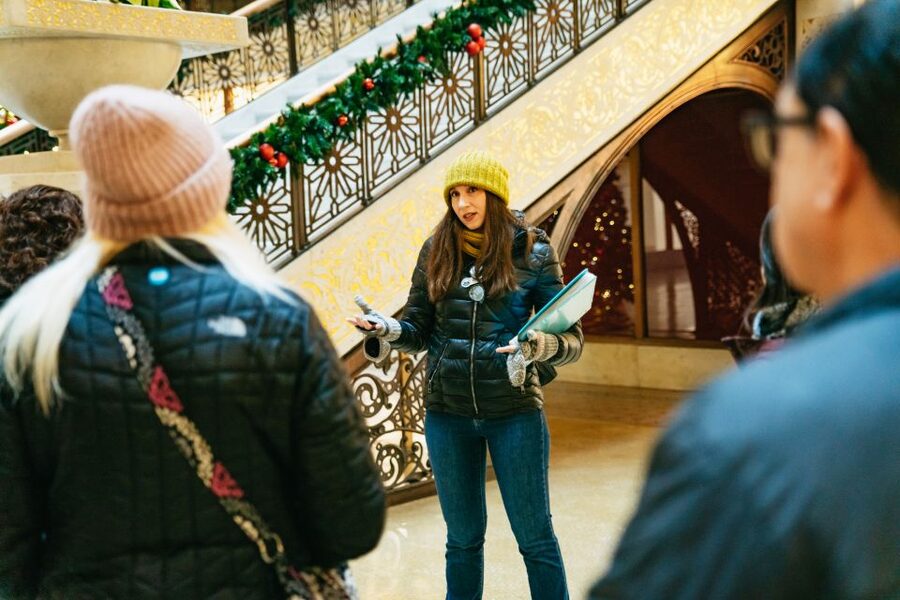
The route then moves back roughly 50 years to one of downtown Chicago’s oldest and most famous buildings. The change in mood is important. Instead of the sleek confidence of the 1920s, you see an earlier approach to architecture, shaped by the late 19th century.
The building’s age gives the stop its weight, but the point is not simply that it is old. You get to see how structure and style worked together before Art Deco became the dominant visual language. Details that seem small from outside can become much clearer once you are inside and looking upward.
This part of the tour also gives you a sense of Chicago’s rapid growth. The city’s central buildings record different stages of ambition and rebuilding. Moving from an 1880s interior to a 1920s one shows how quickly public taste and construction changed.
I would pay close attention to the guide here, especially if you are interested in how architecture reflects the city’s past. One of the strongest features of the experience is the way Chicago history is woven into the design rather than treated as a separate subject.
A different way to spend an afternoon in Chicago:
- Chicago: Gangsters and Ghosts Walking Tour
★ 5.0 · 7,155 reviews - Chicago Architecture Center River Cruise aboard First Lady
★ 5.0 · 5,536 reviews - Chicago: Willis Tower Skydeck and The Ledge Ticket
★ 4.6 · 4,350 reviews - Chicago: Architecture River Cruise Skip-the-Ticket Line
★ 4.8 · 4,325 reviews
Frank Lloyd Wright’s touch on a turn-of-the-century interior
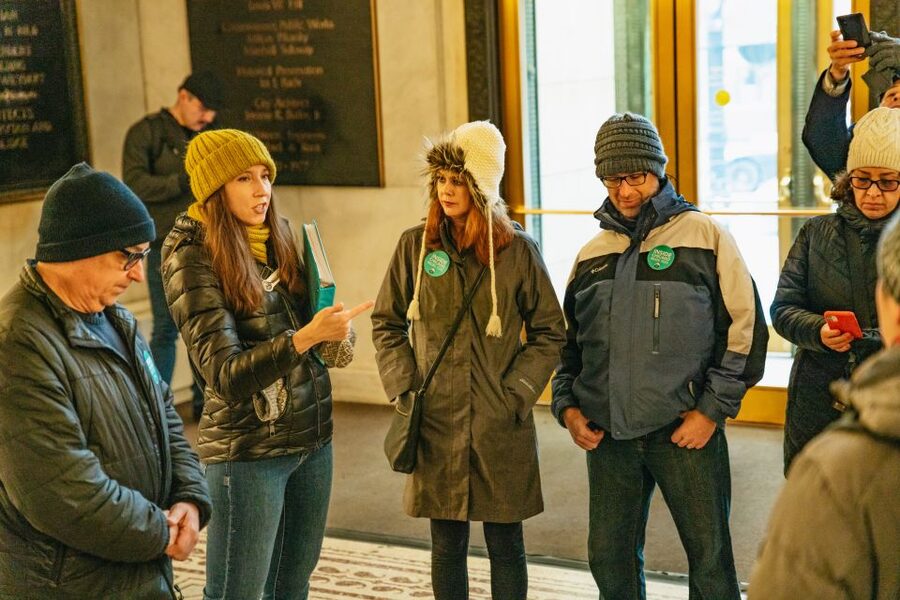
The tour includes turn-of-the-century interiors renovated by Frank Lloyd Wright. This is a valuable stop because it gives you a chance to consider Wright’s work in relation to an existing building, not only as a stand-alone house or purpose-built design.
Wright is often associated with broad ideas about space, nature, and flowing interiors. Here, the important point is the effect of his renovation work on an older setting. You can look for the way the room’s organization, decorative treatment, and visual rhythm were shaped by his hand.
The provided information does not specify every feature you will see, so it is best to let the guide direct your attention rather than arrive with a fixed checklist. That uncertainty is part of the pleasure of the route. The tour is built around details you may not recognize on your own.
This stop should appeal to architecture fans, but you do not need to be an expert. If you simply like well-designed rooms, the guide’s explanation can help you understand why the space feels different from the buildings before it.
Moorish details beneath a Postmodern ceiling
Later, you encounter a vaulted ceiling from the Postmodern era surrounded by Moorish details. This is perhaps the most unexpected pairing on the route. Postmodern architecture often borrowed freely from earlier styles, and this interior gives you a clear example of that playful approach.
The vaulted ceiling draws your eyes upward, while the Moorish decoration adds another layer of pattern and visual reference. It is a good reminder that Chicago architecture is not one single story of steel, glass, and straight lines. Some of the city’s most interesting rooms mix ideas from different places and periods.
This stop also breaks up the chronological movement of the tour. You have already seen older architecture, Art Deco, and Wright-related work. The Postmodern interior shows how later designers looked back at earlier forms and reused them in a new setting.
If you prefer simple, restrained rooms, this may feel more elaborate than your taste. That is not a flaw, but it is worth knowing. The tour offers variety rather than one consistent design style.
Looking up at the world’s largest Tiffany stained-glass dome
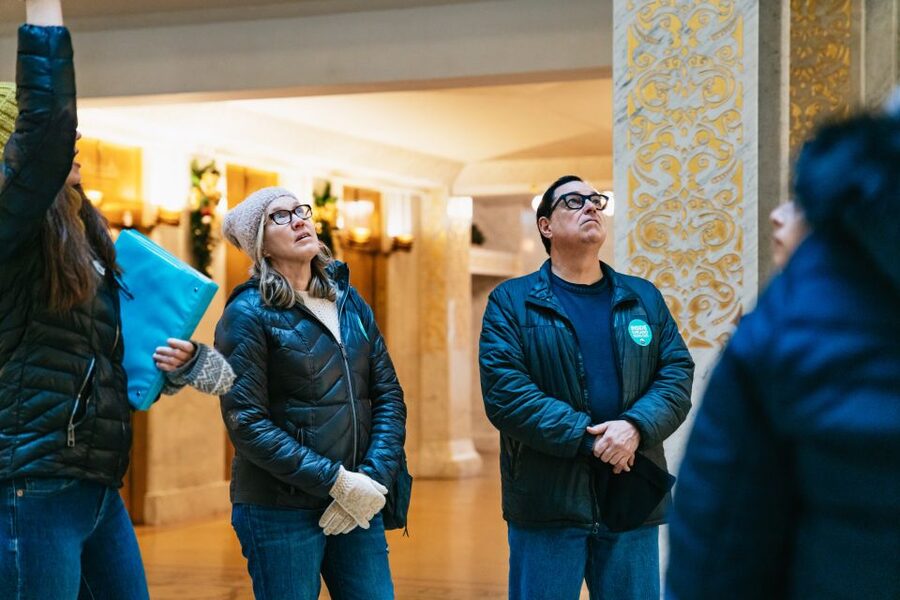
The final major stop is the tour’s visual high point: the world’s largest Tiffany stained-glass dome. You finish by looking upward at a huge field of colored glass, close to Millennium Park and the Bean.
This is not a quick photo stop tacked onto the end. The dome gives the tour a strong finish because it gathers together many of the themes you have seen along the way: workmanship, public ambition, decoration, changing technology, and the wish to make ordinary city life feel grand.
Stained glass can be easy to skim past when you are moving through a building. Here, you have time to stop and study the dome. Notice how the light changes the experience, and take a moment to look beyond the obvious colors. A guide can help explain what makes the dome significant, but you should also give yourself a quiet minute to simply look.
The location is convenient if you are planning to visit Millennium Park afterward. You will be close to the Bean, one of Chicago’s best-known landmarks, so the tour can fit neatly into a downtown sightseeing day. The route itself is more concerned with interiors than with outdoor photo stops, but the ending places you near one of the city’s most recognizable public spaces.
The surprise interiors along the way
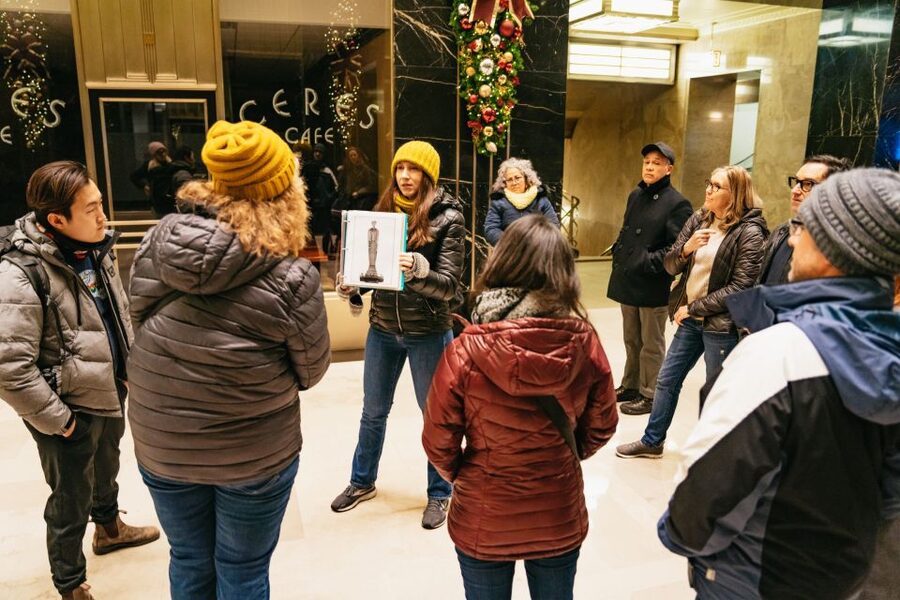
The advertised highlights are only part of the appeal. Additional beautiful interiors appear along the route, and their surprise factor is important. You are not just checking off famous buildings. You are learning to look at entrances, ceilings, lobbies, and public rooms that can be overlooked.
That makes this a good choice if you have already seen the Bean, walked the Loop, or taken a standard architecture cruise. The tour offers a different angle on downtown. Instead of viewing Chicago from the river or street, you step inside and study the places that shape the city’s daily life.
The route also gives you useful visual training. After two hours, you may start noticing details elsewhere: decorative borders, ceiling patterns, stained glass, and the way older rooms were changed for later use. That is a lasting benefit, especially for people who enjoy exploring cities without a strict checklist.
Do not expect every stop to be equally dramatic. A tour with several design periods will naturally have highlights and quieter moments. The reward is the range, and the guide’s ability to explain why each interior matters.
Guides who bring the rooms to life
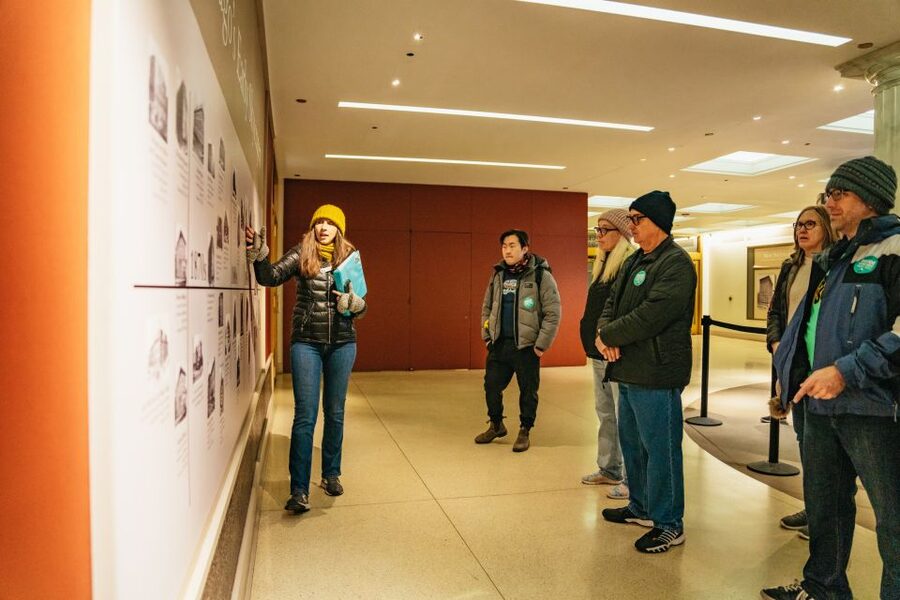
The guides are central to this experience. Spencer has been praised for being a true Chicago local and for explaining the stops with strong personal knowledge of the city. Henry, a trained architect, has been praised for his enthusiasm and broad understanding of the subject. Kaylee has been described as professional, friendly, and able to keep the group engaged even during on-and-off rain.
Those details matter because interiors do not always explain themselves. A guide needs to help you see structure, decoration, and history at the same time. The best moments come when a ceiling or ornament stops being background decoration and becomes part of the city’s story.
The tour is available in English only. If you are comfortable following an English-speaking guide, the presentation should work well for visitors who want context without a highly academic lecture. The tone appears to favor clear explanations and enthusiasm over dense technical language.
Who will get the most from this tour
I would recommend this tour to:
- First-time Chicago visitors who want more than skyline photographs
- Repeat visitors looking for places beyond the standard route
- Architecture fans interested in Art Deco, Frank Lloyd Wright, stained glass, and later design
- Photographers who enjoy ceilings, patterns, glass, and interior details
- People who prefer a focused two-hour walk to a longer full-day activity
It is less suitable if you want a tour centered on skyscraper engineering, famous exterior views, or Chicago’s full architectural timeline. The focus is narrower and more intimate: public interiors and the stories they reveal.
Families may appreciate the short duration, though the success of the experience will depend on how much children enjoy looking closely at rooms and ceilings. Since the tour is wheelchair accessible, it is also a practical option for visitors who need an accessible walking activity, although you should still consider your own comfort with a two-hour city route.
Practical advice for a comfortable visit
Wear comfortable shoes. The tour lasts two hours and includes walking between downtown buildings, so footwear matters more than dressing up for the interiors.
Bring weather-appropriate clothing. The route includes outdoor movement, and one guide has kept the group engaged through rain, but you should not rely on good weather. A face mask or protective covering is also listed among the items to bring.
Entrance fees are included in the $35 price. Gratuities are not included, so plan to tip the guide separately if you feel the tour earned it.
The booking terms are flexible. You can reserve now and pay later, and cancellation is allowed up to 24 hours in advance for a full refund. Check the available starting times for your date, since the tour does not list one fixed daily departure time.
Is Chicago’s Original Dazzling Architectural Interiors Tour worth booking?
Yes, if you want a compact and unusual introduction to downtown Chicago. The route gives you a lot for two hours: Art Deco elegance, an 1880s landmark, Frank Lloyd Wright renovation work, Moorish-inspired Postmodern details, and a remarkable Tiffany dome.
The strongest reason to book is the combination of access and interpretation. You could perhaps glimpse some of these spaces on your own, but you are much more likely to understand their importance with a guide pointing out the details and linking them to Chicago’s past.
Book it if you enjoy looking up, noticing small design choices, and seeing a city from the inside. Skip it if you are mainly after exterior skyscrapers or a broad survey of the entire city. At $35, with entrance fees included and a convenient ending near Millennium Park, it is a solid downtown choice for curious visitors.
FAQ
How long does the architectural interiors tour last?
The tour lasts two hours.
How much does the tour cost?
The price is $35 per person.
Where does the tour meet?
Meet in the plaza in front of 425 S. Financial Place, next to the metal horse sculpture.
What language is the tour conducted in?
The tour is conducted in English.
Is the tour wheelchair accessible?
Yes, the tour is listed as wheelchair accessible.
Are entrance fees included?
Yes, all necessary entrance fees are included.
Can I cancel the booking for a refund?
Yes. You can cancel up to 24 hours in advance for a full refund.
Just added in Chicago
- Chicago: Architecture and Engineering Marvels Walking Tour★ 5.0 · 3 reviews
- Private Downtown Chicago TV and Movie Sites Guided Walking Tour★ 4.5 · 3 reviews
- Black Heritage Tour★ 5.0 · 3 reviews
- Private SUV Transfer from Chicago Downtown to Midway airport★ 5.0 · 3 reviews
- Private Holiday City Tour★ 5.0 · 3 reviews
- BYOB Chicago River Guided History Tour★ 5.0 · 4 reviews
- Chicago 4-Hour Sightseeing Transfer by Luxury SUV★ 4.5 · 3 reviews
- Chicago, Cloud Gate, Grant Park Full-Day City Tour★ 4.0 · 4 reviews
Chicago Architecture Tours, compared.
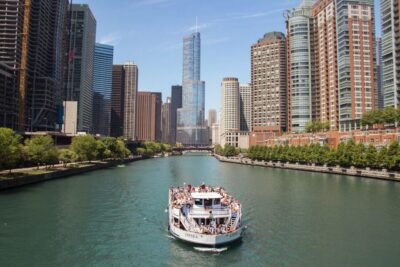
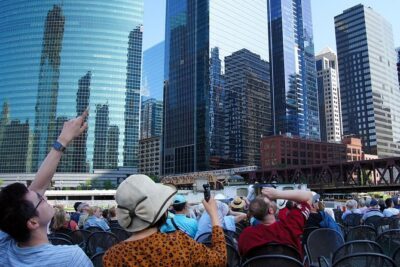
Chicago Architecture Center River Cruise aboard First Lady
Read our review →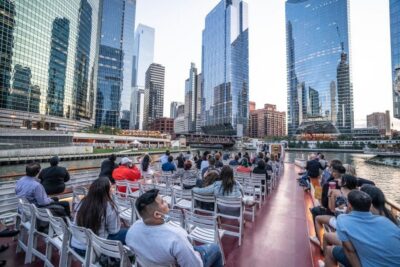
Architecture River Cruise Skip-the-Ticket Line
Read our review →
Chicago River 45-Minute Architecture Tour from Magnificent Mile
Read our review →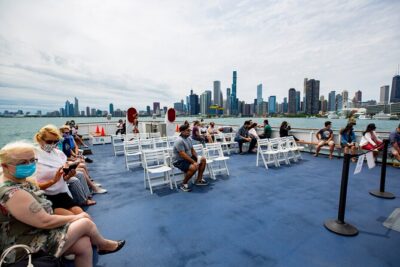
45-Minute Family-Friendly Architecture River Cruise
Read our review →Browse the lists this tour appears in