
Reviewed · WORKSHOPS
Exclusive Sushi-Making Class in Chicago (Includes 3-Course Meal)
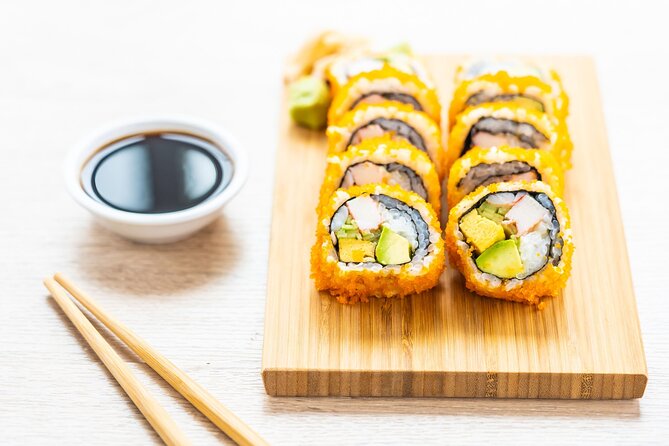
Chicago’s sushi lesson is built around the part most people want: making food with their own hands and eating it soon after. In about two hours, Chef Kumi guides a maximum of eight people through knife work, filling choices, and rolling methods, then sits you down to enjoy the finished meal.
I like the very small group, which gives you a better chance to ask questions and get help before your roll falls apart. I also like the practical menu: spicy ahi tuna, shrimp tempura, and tropical fruit cover raw, fried, savory, sweet, and spicy flavors in one sitting.
The main consideration is the strict cancellation policy. The $125 price also makes more sense for people who value instruction, a full meal, and a social evening than for anyone simply looking for dinner.
In This Review
- Key Points
- Making Sushi at 6:30 p.m. in Chicago
- Learning From Chef Kumi’s Friendly Style
- First Course: Spicy Ahi-Tuna Roll
- Second Course: Shrimp Tempura Roll
- Finishing With Tōgarashi and Honey
- What the $125 Price Covers
- Who Will Get the Most From This Class
- What You Can Expect to Take Away
- Booking and Cancellation Details
- Is This Chicago Sushi Class Worth Booking?
- FAQ
- Where does the sushi class begin?
- What time does the class start?
- How long does the experience last?
- How many people can attend?
- What food will I prepare?
- Is the meal included in the price?
- Can I bring alcohol?
- Can dietary needs be accommodated?
Key Points
- Chef Kumi’s approachable instruction: The class is designed to suit different skill levels, with useful kitchen tips beyond sushi.
- Two different rolls: You prepare a spicy ahi-tuna roll and a shrimp tempura roll, each with its own texture and sauce.
- A true hands-on meal: Your work becomes the three-course dinner, including a tōgarashi-and-honey tropical fruit dessert.
- Maximum of eight people: The small format allows more direct help with knife skills and rolling.
- BYOB-friendly setting: Bring wine or beer to enjoy during the class.
- Convenient evening timing: The class begins at 6:30 p.m. and ends at the same Chicago meeting point after about two hours.
Making Sushi at 6:30 p.m. in Chicago
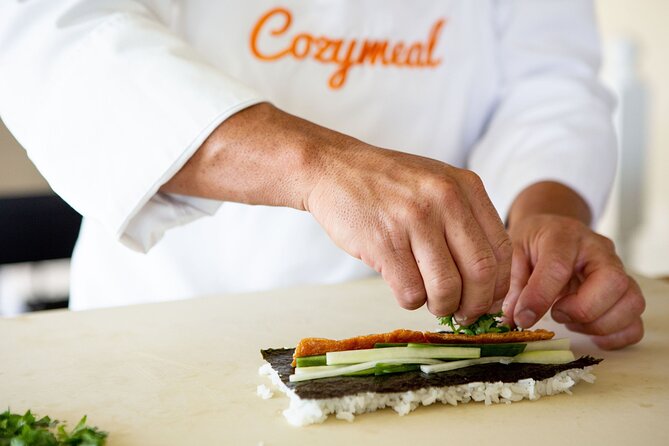
The class begins at 6:30 p.m. at 2316 S Leavitt St, apartment 3, Chicago, Illinois 60608. You return to this same meeting point when the activity ends, so the evening has a simple start and finish rather than a moving route through the city.
That fixed location matters. You are not paying for sightseeing or transportation. You are paying for instruction, ingredients, equipment, and a prepared meal in a private-feeling cooking setting. Plan your journey to the address carefully, since the experience does not include transport.
The class lasts about two hours. That is enough time for a focused introduction and a leisurely meal, but not so long that the lesson becomes an all-night cooking project. I see this as a good fit after a day of Chicago sightseeing, especially if you want an evening activity that gives you something to do instead of another restaurant reservation.
The group limit is eight people. This is one of the strongest features of the experience. Sushi can be fiddly, particularly when you are trying to spread rice evenly or keep a roll tight, and a large class would make personal help harder to get. With eight or fewer participants, you should have a fair chance to see the technique clearly and ask for a correction.
A few more Chicago tours worth a look before you decide
- Chicago Perfume Making Classes on Magnificent Mile
★ 5.0 · 44 reviews - Deep Dish Cooking Class at Pizzeria Uno in Chicago
★ 4.5 · 25 reviews - Chicago: BYOB Spray Paint and Sip Workshop
★ 5.0 · 22 reviews
Learning From Chef Kumi’s Friendly Style
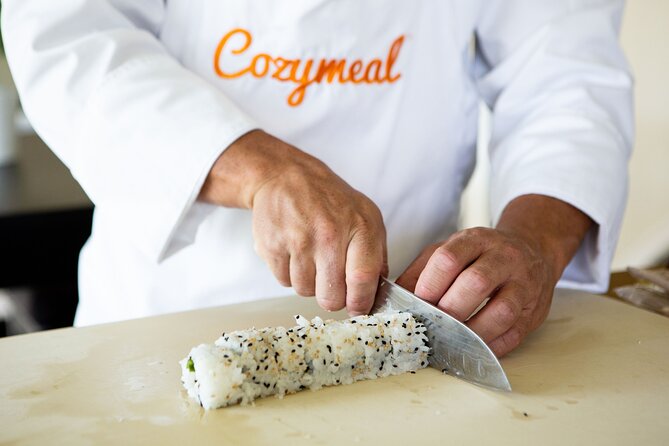
Chef Kumi leads the class in a welcoming, easy-to-follow way. The instruction is aimed at different skill levels, so you do not need to arrive with sushi-making experience. That matters for beginners who may feel awkward handling a sharp knife or rolling mat in front of other people.
The lesson is not limited to copying a recipe. You work on knife skills and rolling methods, two basic abilities that carry over into other home cooking. The class also includes everyday kitchen advice, which gives the session more use than a single evening meal.
I particularly like that the teaching style is described as comfortable and interactive rather than stiff or formal. You can expect guidance as you work, not just a demonstration followed by a command to reproduce it. If your rice is uneven or your filling is too generous, the small group makes it easier to get help.
Still, this is an introductory class, not professional sushi training. The menu is built around Japanese-inspired rolls with sauces and fillings that are friendly to home cooks. If you already make sushi often, you may find the basic knife and rolling instruction familiar. For most first-timers, though, the chance to practice immediately is the point.
First Course: Spicy Ahi-Tuna Roll
The first roll combines fresh ahi tuna with spicy aioli, oyster sauce, cucumber, scallions, and avocado. It gives you several jobs to manage at once: cutting ingredients, balancing soft and crisp textures, adding sauce without overfilling, and rolling the mixture into a neat shape.
The flavors are designed to be bold and familiar. Ahi tuna brings a clean, meaty center, while avocado adds creaminess. Cucumber supplies crunch, scallions add a sharp note, and spicy aioli gives the roll its heat. Oyster sauce brings a salty, savory edge.
This is a useful first roll because it shows how small changes affect the finished bite. Too much avocado can make the roll soft. Too much sauce can overpower the fish. You get to see why sushi preparation depends on proportion as much as presentation.
The use of fresh ahi tuna also makes this course different from a standard beginner cooking lesson. It introduces you to handling a raw fish filling in a guided setting. The available information does not specify the tuna’s sourcing or the exact food-safety instruction, so anyone with particular concerns should ask the provider before booking.
Second Course: Shrimp Tempura Roll
The shrimp tempura roll changes the pace and texture. Instead of the soft, cool center of the tuna roll, you work with crispy shrimp, jalapeño, cucumber, and miso aioli.
This course should appeal to people who prefer cooked seafood or enjoy the crunch of tempura. The jalapeño adds heat, while cucumber keeps the roll from feeling too heavy. Miso aioli supplies a savory, creamy finish that gives the shrimp a strong partner.
Preparing two rolls with different fillings is a smart use of a short class. You are not making the same recipe twice. The tuna roll teaches balance around raw fish and creamy ingredients, while the shrimp roll shows how fried texture and heat change the character of a roll.
The menu also makes the class suitable for couples or friends with different tastes. One person can favor the ahi tuna roll, while another may prefer the shrimp. You are still learning the same core techniques, but the meal does not feel repetitive.
A different way to spend an afternoon in Chicago:
- Chicago Architecture River Cruise
★ 5.0 · 15,756 reviews - Chicago River 90-Minute Architecture Tour
★ 4.5 · 9,629 reviews - Chicago River: 1.5-Hour Guided Architecture Cruise
★ 4.8 · 8,046 reviews - Chicago: Gangsters and Ghosts Walking Tour
★ 5.0 · 7,155 reviews
Finishing With Tōgarashi and Honey
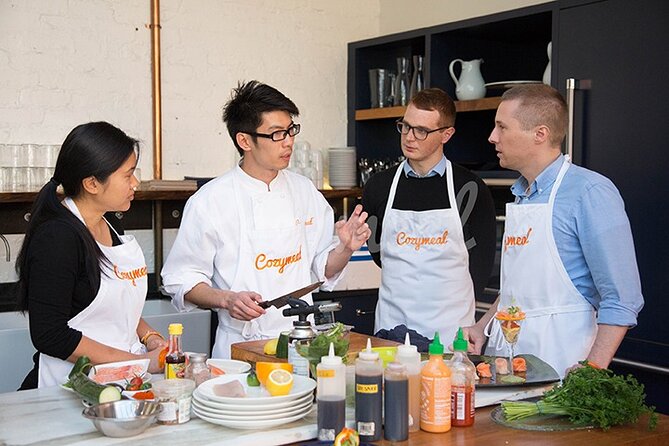
Dessert is tropical fruit seasoned with tōgarashi and drizzled with honey. Tōgarashi is a Japanese chili seasoning, so the final course is not simply sweet fruit. It adds a gentle sweet-and-spicy contrast after the savory rolls.
This is a small but thoughtful finish. A fruit dessert keeps the meal fresh after rice, aioli, oyster sauce, miso, and tempura. Honey softens the heat, while the seasoning gives a familiar dessert an unexpected Japanese-inspired note.
The dessert also helps make the evening feel like a complete meal rather than a technical workshop with a snack at the end. The advertised menu includes two sushi rolls plus the fruit course, and those three parts are included in the $125 price.
What the $125 Price Covers
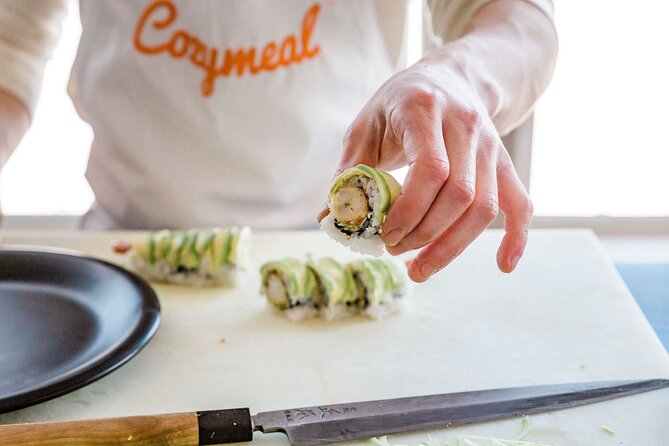
At $125 per person, this is not a budget dinner. The value comes from combining a cooking lesson with a three-course meal in a small group. You are also paying for the chef’s time, ingredients, hands-on practice, and the chance to leave with a new skill.
For comparison, a simple restaurant meal might cost less, especially if you are not ordering drinks or premium sushi. But a restaurant meal does not give you instruction in knife handling or rolling, and it does not offer the same shared activity. If you are looking for a date-night experience, the price is easier to justify because the evening includes both entertainment and dinner.
I would book this for someone who enjoys participating in a meal, not just receiving one. It is also a reasonable pick for a couple celebrating something, since one direct account described it as an excellent date night and said the participant left feeling confident about making sushi independently.
The BYOB policy helps control drink costs. You may bring wine or beer to enjoy during the class, so you do not have to purchase drinks through the experience. The provided information does not specify glassware, corkage, or other drink rules, so check those details before arriving.
Who Will Get the Most From This Class
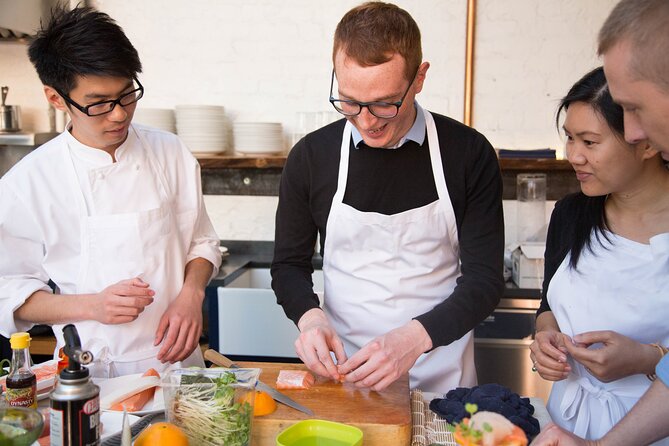
This class suits first-time sushi makers, home cooks who want to add a new technique, couples, and small groups of friends. It is especially useful if you like learning by doing. You will not simply watch a chef assemble food and then eat it.
The class also works well for people who want a social evening without committing to a full-day activity. The two-hour length leaves room for other plans before or afterward, although the 6:30 p.m. start makes it naturally suited to dinner.
The setting can accommodate a range of dietary needs if you notify the provider in advance. Do not wait until the class begins. Give clear information about allergies, restrictions, or ingredients you cannot eat so the chef has a chance to adjust the preparation.
Service animals are allowed. The supplied details do not explain general accessibility features, seating arrangements, or the building layout, so ask directly if you need specific accommodations.
This may be less suitable for someone who dislikes raw fish, spicy flavors, or group participation. The menu includes ahi tuna, jalapeño, spicy aioli, oyster sauce, and tōgarashi. Even with dietary adjustments, those are central themes of the class.
What You Can Expect to Take Away
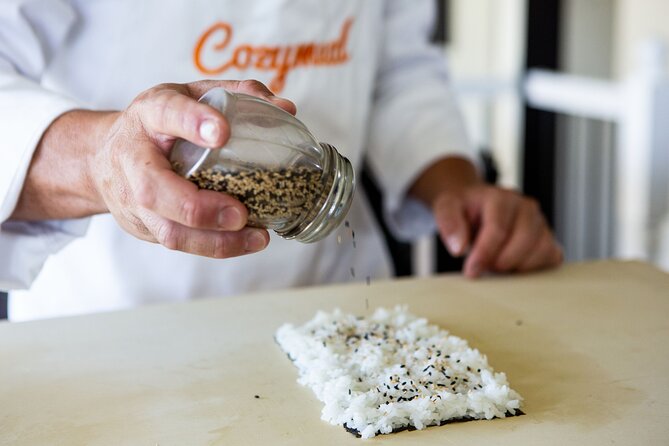
The most useful result is confidence. A good beginner class should leave you able to repeat the basic process at home, and this one is structured around that goal. You learn how to handle ingredients, use a knife, control filling, and roll sushi into a finished shape.
You also gain a better sense of why sushi works. The two rolls contrast soft tuna and avocado with crisp shrimp tempura and cucumber. Sauces add salt, heat, and creaminess, but the lesson shows that they need restraint.
The class is not only about getting perfect-looking pieces. Sushi rolling takes practice, and your first roll may not look like something from a restaurant. That is part of the appeal. You get immediate feedback, eat what you make, and can try the method again at home with simpler fillings.
Chef Kumi’s approach seems particularly helpful for nervous beginners. The instruction can be adjusted to different abilities, and the practical cooking advice gives you something to remember beyond the evening’s menu.
Booking and Cancellation Details
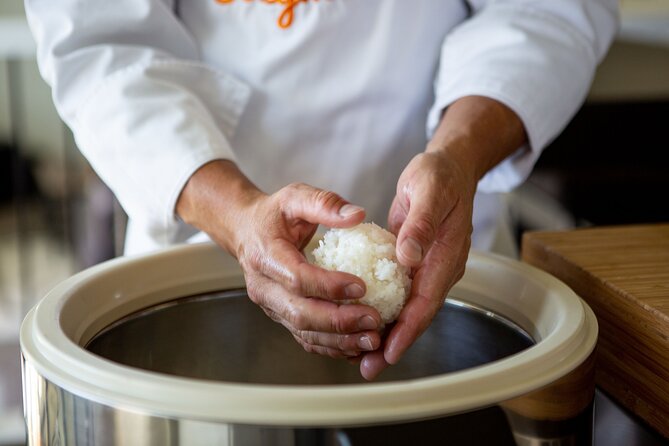
The experience is often reserved about 28 days ahead, so I would not leave it until the last minute if your Chicago dates are fixed. The maximum is eight participants, and small classes can fill faster than larger group activities.
You receive confirmation when booking, and the ticket is mobile, which keeps arrival simple. Bring your phone with the booking details and allow enough time to reach the exact apartment address.
The cancellation rule is strict: the experience is non-refundable and cannot be changed for any reason. If you cancel or request an amendment, you lose the amount paid. Only cancellation caused by the minimum number of participants not being reached provides the option of a different date or experience, or a full refund. Book only when your plans are firm.
Is This Chicago Sushi Class Worth Booking?
I would book it if you want a compact, hands-on evening and are happy to pay for instruction as well as food. The strongest reasons are the eight-person limit, Chef Kumi’s supportive teaching style, the two contrasting sushi rolls, and the practical skills you can repeat at home.
I would skip it if you want an inexpensive restaurant dinner, dislike raw fish or spicy ingredients, or need flexible cancellation. For everyone else, the class offers a pleasant way to turn dinner into an activity, with enough guidance for beginners and enough variety to keep the meal interesting.
FAQ
Where does the sushi class begin?
It begins at 2316 S Leavitt St apt 3, Chicago, IL 60608, USA.
What time does the class start?
The class starts at 6:30 p.m.
How long does the experience last?
The activity lasts approximately two hours.
How many people can attend?
The class has a maximum of eight participants.
What food will I prepare?
You will prepare a spicy ahi-tuna roll, a shrimp tempura roll, and tropical fruit with tōgarashi and honey.
Is the meal included in the price?
Yes. The $125 per person price includes the full three-course menu.
Can I bring alcohol?
Yes. The class is BYOB, and you may bring wine or beer to enjoy during the experience.
Can dietary needs be accommodated?
The class is designed to accommodate a variety of dietary needs. Tell the provider about your restrictions in advance so the chef can try to adjust the menu.
Just added in Chicago
- Chicago: Architecture and Engineering Marvels Walking Tour★ 5.0 · 3 reviews
- Private Downtown Chicago TV and Movie Sites Guided Walking Tour★ 4.5 · 3 reviews
- Black Heritage Tour★ 5.0 · 3 reviews
- Private SUV Transfer from Chicago Downtown to Midway airport★ 5.0 · 3 reviews
- Private Holiday City Tour★ 5.0 · 3 reviews
- BYOB Chicago River Guided History Tour★ 5.0 · 4 reviews
- Chicago 4-Hour Sightseeing Transfer by Luxury SUV★ 4.5 · 3 reviews
- Chicago, Cloud Gate, Grant Park Full-Day City Tour★ 4.0 · 4 reviews
Workshops, compared.

Chicago Perfume Making Classes on Magnificent Mile
Read our review →
Deep Dish Cooking Class at Pizzeria Uno in Chicago
Read our review →

Artisan Italian Pasta Class in Chicago (Includes 3-Course Meal)
Read our review →
Traveling Spoon Chicago-Style Deep Dish Pizza Private Online Cooking Class
Read our review →Browse the lists this tour appears in