
Reviewed · CHICAGO
Explore Chicago’s Indoor Mushroom Farm Experience
Chicago’s mushroom crop grows indoors, behind sealed doors and carefully managed rooms rather than under open skies. At Four Star Mushrooms, you’ll follow gourmet fungi from raw growing material through sterilization, incubation, fruiting, and final packaging. It is a practical look at controlled-environment agriculture, with the machinery and production steps left in plain view.
I like two things here: the tour explains the full process rather than showing only a finished grow room, and it connects mushroom farming to Chicago’s restaurant trade. At $20, the experience also gives you a focused local activity without taking up half a day. The main drawback is that this is more useful for adults and curious food-minded visitors than for young children.
The tour begins at noon at 320 N Oakley Blvd and lasts about 1 hour and 30 minutes overall, with roughly an hour devoted to the farm visit. The group can reach 25 people, so you get a structured introduction rather than a private look at the operation.
In This Review
- Key points to know before booking
- Inside Four Star Mushrooms at 320 N Oakley Boulevard
- Starting with substrate, sterilization, and inoculation
- Seeing what happens during incubation
- Entering the grow rooms where fruiting happens
- From grow room to Chicago restaurants and shops
- Why regenerative agriculture belongs in the conversation
- Is $20 a fair price for 90 minutes?
- Is this a good choice for children?
- Group size, timing, and practical planning
- Who should book the indoor mushroom farm tour?
- FAQ
- Where does the mushroom farm tour begin?
- What time does the tour start?
- How long does the experience last?
- Where does the tour end?
- What will I see during the tour?
- Is the tour offered in English?
- How many people can join the tour?
- Can I cancel for a full refund?
- Should you book Four Star Mushrooms?
Key points to know before booking
- Follow the whole mushroom process: See raw substrate bagged and sterilized, inoculated, incubated, fruited, and packed for sale.
- Visit a working Chicago farm: Four Star Mushrooms grows specialty mushrooms indoors for retail and wholesale customers around Chicagoland.
- Learn why the setting matters: Controlled rooms let the producer manage the conditions needed for gourmet mushroom cultivation.
- Connect food with farming: The tour explains the farm’s ties to Chicago restaurants and the role mushrooms can play in regenerative agriculture.
- Plan for an adult-focused visit: Young children can attend, but the material and working-farm setting are better suited to older children and adults.
- Keep the schedule simple: Meet at noon at 320 N Oakley Blvd, and finish back at the same location.
Inside Four Star Mushrooms at 320 N Oakley Boulevard
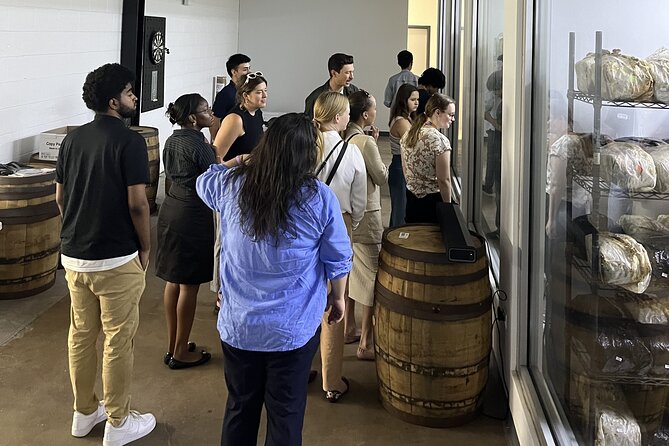
This experience takes you into a high-tech urban farm in Chicago. You are not heading out to a rural field or a traditional garden. Instead, you get to see how specialty mushrooms can be produced indoors, close to the people and businesses that buy them.
That city setting is part of the appeal. Mushroom farms do not need broad stretches of cropland in the same way many conventional crops do. Four Star Mushrooms uses a controlled environment to manage the growing process in stages, making the farm a useful example of how food production can fit into an urban economy.
You will meet at 320 N Oakley Blvd at noon. The activity returns to this same point, which keeps the logistics easy. No separate transportation between stops is involved, and the entire visit remains focused on one working facility.
The tour is offered in English. No guide name is provided in the booking details, so you should not expect to select a particular host. The format is built around the farm’s process and operation rather than a named personality.
What else people book in Chicago on the same trip:
- Chicago Architecture River Cruise
★ 5.0 · 15,756 reviews - Chicago River 90-Minute Architecture Tour
★ 4.5 · 9,629 reviews - Chicago River: 1.5-Hour Guided Architecture Cruise
★ 4.8 · 8,046 reviews
Starting with substrate, sterilization, and inoculation
The first important lesson is that mushrooms do not simply appear in a bag. The farm prepares a growing material, known as substrate, and the early stages require careful handling before the mushroom culture is introduced.
You will see how raw substrate is bagged and sterilized. This part may sound technical, but it gives you the clearest sense of why indoor cultivation needs control. The farm must prepare a consistent base and treat it before inoculation, when the mushroom culture is added.
I like this section because it shows the work before anything looks like a mushroom. Many food tours jump straight to the finished product. Here, you see the less glamorous steps that make the final crop possible.
The equipment and production flow also help you understand the scale of the operation. This is not simply a hobbyist growing a few kits on a shelf. Four Star Mushrooms supplies specialty produce to retail and wholesale customers throughout Chicagoland, so the process must be organized from the start.
The visit is not described as a hands-on workshop. You should expect to watch, listen, and ask questions rather than handle materials or take part in the production. That makes the tour tidy and informative, but visitors hoping to plant, harvest, or cook mushrooms should adjust their expectations.
Seeing what happens during incubation
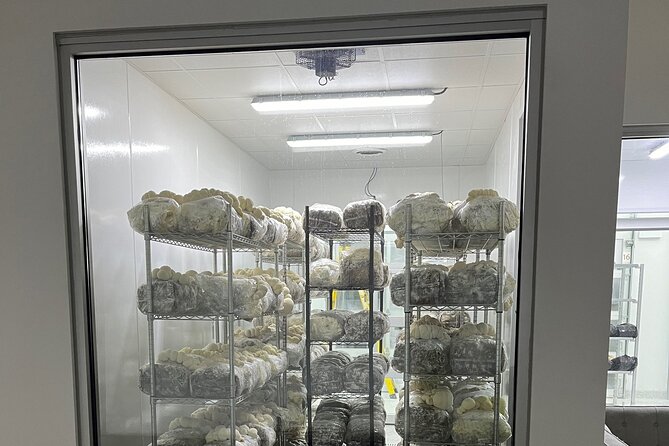
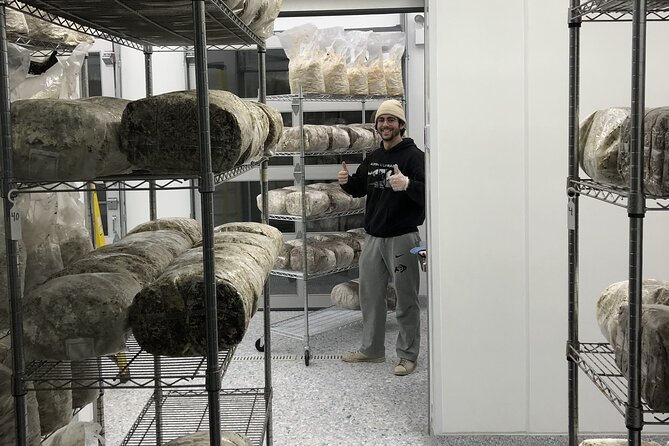
After inoculation, the bags are staged to incubate. This is the waiting and development stage, when the mushroom culture works through the prepared substrate before fruiting begins.
That middle step matters because it explains the farm’s use of separate rooms and stages. The product is not treated the same way from beginning to end. Each phase has its own place in the production cycle, and the tour lets you see how the operation moves bags through those phases.
For you, this is one of the more useful parts of the visit if you are interested in food systems or small-scale commercial farming. You can see how timing and organization affect a crop that may look simple once it reaches a restaurant kitchen.
The tour lasts roughly 60 minutes at the farm, though the full activity is listed at about 1 hour and 30 minutes. That extra time likely allows for gathering, moving through the facility, and wrapping up, but the precise division is not stated. Give yourself room around the noon start rather than planning a tight connection immediately afterward.
Entering the grow rooms where fruiting happens
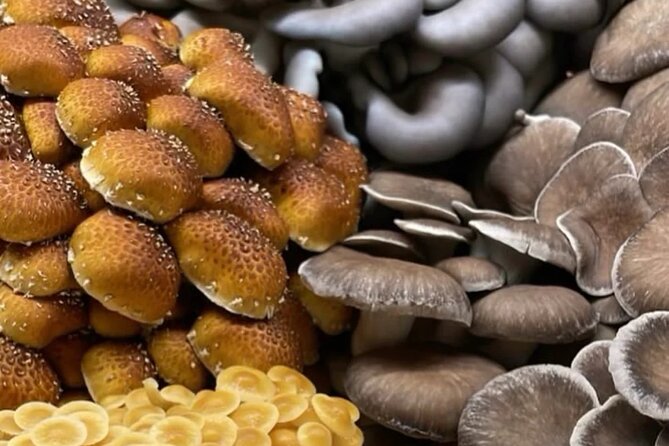
The grow rooms are the visual payoff. This is where the mushrooms fruit and take the recognizable form you associate with the finished crop.
The farm uses a high-tech indoor system, so the grow rooms show how production takes place in a managed setting instead of relying on open-air conditions. The tour is designed to explain how the fruiting stage works and how the product is brought to the point where it can be sold.
I would give this section your full attention. The farm’s earlier steps can seem abstract until you see the fruiting rooms and connect them to the bags, incubation areas, and final packages. The process becomes easier to understand when you can trace one stage to the next.
Still, keep your expectations grounded. The supplied details do not promise a tasting, a harvest, or a cooking demonstration. The central experience is a behind-the-scenes farm tour, not a food sampling event.
Mushrooms also change over time, so what you see can vary with the production schedule. The information does not identify particular mushroom varieties or promise a certain crop on the day you visit. You are booking access to the growing process, not a guarantee of a specific display.
A different way to spend an afternoon in Chicago:
- Chicago: Gangsters and Ghosts Walking Tour
★ 5.0 · 7,155 reviews - Chicago Architecture Center River Cruise aboard First Lady
★ 5.0 · 5,536 reviews - Chicago: Willis Tower Skydeck and The Ledge Ticket
★ 4.6 · 4,350 reviews - Chicago: Architecture River Cruise Skip-the-Ticket Line
★ 4.8 · 4,325 reviews
From grow room to Chicago restaurants and shops
The final stage covers packaging for retail and wholesale customers throughout Chicagoland. This is where the farm’s connection to the city becomes most clear.
You will learn how the finished product is prepared for customers, including the restaurant scene in Chicago. That connection adds value because it places the farm inside a working food network. You are not only looking at mushrooms as an agricultural curiosity. You are seeing how a local producer moves specialty food from a production room into commercial kitchens and stores.
One especially useful point is the link between a farm and its buyers. Restaurants often care about specialty produce, consistent supply, and local sourcing. The tour explains how Four Star Mushrooms interacts with that market, giving you a better sense of why an urban producer can serve a city’s food businesses.
The packaging stage may be less visually dramatic than the grow rooms, but it answers a basic question: what happens after the crop is ready? For anyone who enjoys Chicago’s restaurant culture, this part makes the visit feel connected to the meals you may order elsewhere in the city.
Why regenerative agriculture belongs in the conversation
The tour also places mushroom cultivation within regenerative agriculture. The supplied details do not spell out every practice used at the farm, so you should treat this as an introduction to the subject rather than a full course in soil science or sustainability.
Even so, the topic adds an important layer. Mushrooms are part of a broader discussion about how food can be produced with different materials, in different spaces, and with closer ties to local markets. The farm’s indoor model gives you a real example to consider rather than an abstract talk about future food systems.
I like that the tour connects production methods with a larger question: how can cities feed themselves while using available buildings and local distribution networks? You may leave with a better understanding of why specialty mushroom farms are appearing in urban areas.
Do not book this expecting a sweeping lecture on climate policy. The visit is short and centered on the actual operation. Regenerative agriculture is one thread in the tour, alongside growing, packaging, and restaurant supply.
Is $20 a fair price for 90 minutes?
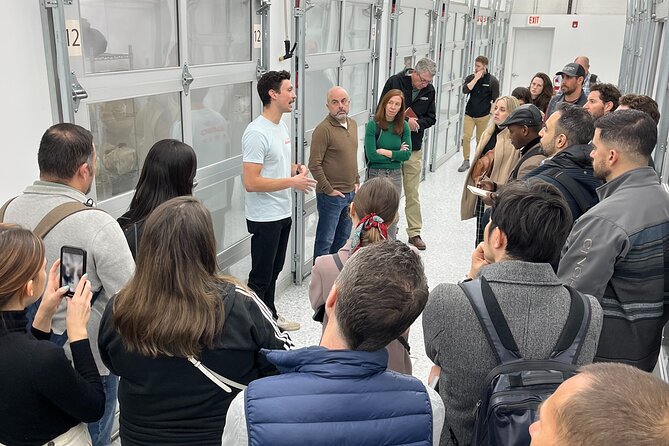
At $20 per person, this is a reasonable buy if you enjoy unusual local tours, food production, or practical science. You are paying for access to a working specialty mushroom facility and an explanation of the process from beginning to end.
The value is strongest because the experience is specific. You are not getting a broad city tour with a few minutes of farm commentary. The entire visit focuses on one operation and one crop, which gives the guide room to explain the production chain in a useful way.
The price may feel less attractive if you want a tasting, a take-home product, or a hands-on activity. None of those features is included in the supplied information. For a straightforward educational visit, however, $20 keeps the commitment modest.
The tour has an average rating of 4.7 from three reviews, so the score is encouraging but based on a small sample. The most consistent strength is the amount of information, especially the connection between mushroom production and Chicago’s restaurant business. That is the reason I would book it, not simply because mushrooms are photogenic.
Is this a good choice for children?
Young children can participate, and the farm welcomed a family with children ages five and three. Still, the experience is aimed more at grownups.
A working facility is different from a children’s museum. The visit includes production equipment, process explanations, and a forklift that naturally attracts small hands. The family was able to attend, but the children were not allowed to touch the forklift. That detail tells you what kind of setting this is: friendly, but still a functioning workplace.
If you bring children, prepare them to look and listen rather than run or handle equipment. Older children with an interest in science, food, or how businesses work may get more from the visit than preschoolers.
For adults, food enthusiasts, urban agriculture fans, and curious Chicago residents, the subject should hold attention well. It is also a good option when you want a short activity that feels local and different from the usual architecture, museum, and restaurant circuit.
Group size, timing, and practical planning
The maximum group size is 25 people. That is small enough for a more focused visit than a large bus tour, but it is not a private appointment. Your experience may depend on where you stand and how easily you can hear during explanations.
The start time is 12:00 pm. The meeting and ending point are both 320 N Oakley Blvd, Chicago, Illinois 60612. Because the tour does not list additional stops, you can keep your day simple and pair it with other Chicago plans before or after, provided you allow enough time for the approximately 90-minute activity.
A mobile ticket is available, and confirmation is provided when you book. The tour is offered in English, and most people can participate. The supplied information does not give further details about mobility accommodations, so contact the provider if you need a specific arrangement.
Four Star Mushrooms offers free cancellation when you cancel at least 24 hours before the start time. A cancellation made less than 24 hours ahead is not refunded, and changes inside that window are not accepted. The cut-off uses Chicago local time, so check your plans before the deadline.
Who should book the indoor mushroom farm tour?
Book this if you like seeing how food is made, especially when the process takes place somewhere you would not normally enter. The strongest fit is an adult or older child who enjoys practical explanations, local business stories, and the connection between farming and restaurants.
I would also recommend it to Chicago residents looking for a fresh weekend activity. The tour offers a different view of the city, one based on production rather than landmarks. It is short enough to fit around lunch or afternoon plans, though the precise schedule after the noon start is not guaranteed.
Think twice if your ideal farm visit means open fields, animals, picking, or a meal. This is an indoor production facility, and the emphasis is on systems, rooms, equipment, and supply chains. The experience is educational rather than playful.
FAQ
Where does the mushroom farm tour begin?
The tour begins at 320 N Oakley Blvd, Chicago, IL 60612, USA.
What time does the tour start?
The activity starts at 12:00 pm.
How long does the experience last?
The total experience lasts approximately 1 hour and 30 minutes. The farm tour itself takes roughly 60 minutes.
Where does the tour end?
The activity ends back at the meeting point at 320 N Oakley Blvd.
What will I see during the tour?
You will see substrate being bagged and sterilized, inoculation, incubation staging, grow rooms where fruiting occurs, and packaging for retail and wholesale customers.
Is the tour offered in English?
Yes. The experience is offered in English.
How many people can join the tour?
The maximum group size is 25 people.
Can I cancel for a full refund?
Yes, if you cancel at least 24 hours before the experience start time. Cancellations made less than 24 hours in advance are not refunded.
Should you book Four Star Mushrooms?
I would book this tour if you want a close look at a real Chicago food business and prefer substance over spectacle. For $20, you get a clear walk through mushroom production, from sterilized substrate to restaurant-ready packaging, plus context about urban farming and regenerative agriculture.
The best reason to go is the farm-to-restaurant connection. You leave with a better idea of how specialty mushrooms reach Chicago businesses and why an indoor producer can operate in a city. Skip it if you need a tasting, hands-on work, or a child-centered attraction. For curious adults and food-minded families who can respect a working facility, it is a smart, unusual way to spend 90 minutes.
Just added in Chicago
- Chicago’s Luxury Minibus City Sightseeing Tour★ 3.5 · 3 reviews
- City Cruises Chicago: Signature Brunch Cruise on Lake Michigan★ 4.5 · 3 reviews
- Chicago White Sox Baseball Game Ticket at Guaranteed Rate Field★ 4.5 · 3 reviews
- Michigan Avenue Rendezvous Walking Tour with Smartphone App★ 3.2 · 3 reviews
- Airport transfer between Chicago O’Hare and Milwaukee★ 4.7 · 3 reviews
- Private Transfer from Chicago Airport (ORD)★ 3.5 · 3 reviews
- Chicago Haunted Ghost Tour GPS Self-Guided Walking Tour★ 4.5 · 3 reviews
- Harry Potter Shop Chicago: Confectionary Collection★ 4.5 · 3 reviews