
Reviewed · MUSEUMS
Illinois Holocaust Museum Experience360 Admission
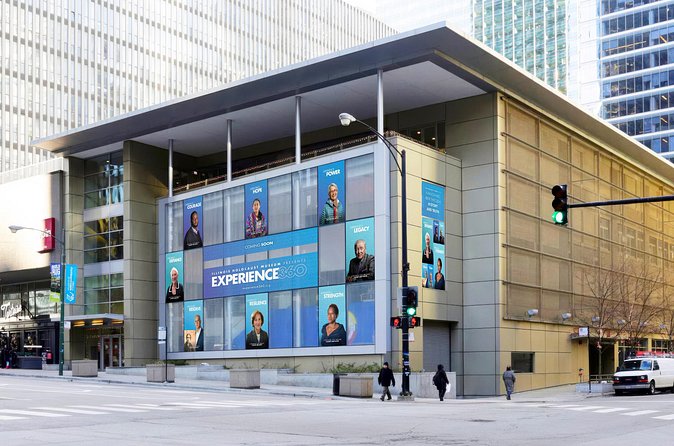
The most striking part of Illinois Holocaust Museum Experience360 is the chance to speak with holographic Holocaust Survivors. This is not a standard video display. The technology lets you ask questions and hear responses, creating a direct, human connection across time.
I like the mix of virtual reality and personal artifacts, which gives you both a broad view of the Holocaust and intimate details from individual lives. I also like the staff presence. Tom, MJ, and Val are singled out for clear explanations and thoughtful answers, so you are not left to puzzle through difficult material alone.
This is serious, emotional subject matter, and you should allow more than a quick lunch break if you want to see everything. The museum is not recommended for children under 12, and even older children may need time to process what they encounter.
In This Review
- Key Points To Know Before You Go
- Why Experience360 Feels Different
- Start With The Call-to-Action Gallery
- Build The Timeline In The Karkomi Foundation Gallery
- Follow Survivor Journeys In Virtual Reality
- Look Closely At Object, Image, Memory
- Ask Questions In The Hologram Theater
- Staff Support Adds Real Value
- How Long Should You Allow?
- Is $12 A Good Price?
- Who Should Book This Experience?
- Plan Around The Museum’s Opening Hours
- My Final Recommendation
- FAQ
- Where is Illinois Holocaust Museum Experience360 located?
- How much does admission cost?
- How long does the experience take?
- Does admission include all exhibitions?
- Does the experience include virtual reality?
- What is the hologram exhibit?
- Is the experience suitable for young children?
- Are service animals allowed?
- Is the museum near public transportation?
- What is the cancellation policy?
Key Points To Know Before You Go
- Holographic survivor conversations: Ask questions and hear recorded survivor responses through advanced interactive technology.
- Virtual reality theater: Follow survivors through childhood homes and places where they hid during the Holocaust.
- Several exhibitions in one admission: Your ticket includes the Call-to-Action Gallery, Karkomi Foundation Gallery, VR theater, and Stories of Survival exhibition.
- Personal objects and testimony: Artifacts, photographs, and written accounts connect large historical events to individual lives.
- Helpful staff on hand: Tom, MJ, and Val have been praised for answering questions and adding context.
- Good value at $12: The low admission price gives you access to the full museum rather than one limited exhibit.
Why Experience360 Feels Different
Many Holocaust museums rely on photographs, documents, and objects arranged behind glass. Those tools remain important here, but Experience360 adds two modern ways to encounter testimony: virtual reality and holographic conversation.
The result is a visit that shifts between wide historical context and close personal stories. One room may explain the forces behind World War II and the Holocaust. Another may place you beside a survivor as a child, showing the streets and buildings tied to that person’s life.
I find that combination useful because it prevents the subject from becoming a list of dates. You learn about the scale of the crime, but you also meet the people behind the numbers. The tone is reflective rather than sensational.
The museum also connects Holocaust education with the wider study of genocide. The Call-to-Action Gallery and other displays consider why museums like this were founded and how learning about the past can shape choices in the present.
More museums in Chicago:
- Medieval Torture Museum Ticket with Audio Guide and Ghost Hunting
★ 5.0 · 962 reviews - Chicago: Field Museum of Natural History Ticket or VIP Tour
★ 4.7 · 717 reviews - Field Museum of Natural History Admission Tickets
★ 4.5 · 489 reviews
Start With The Call-to-Action Gallery
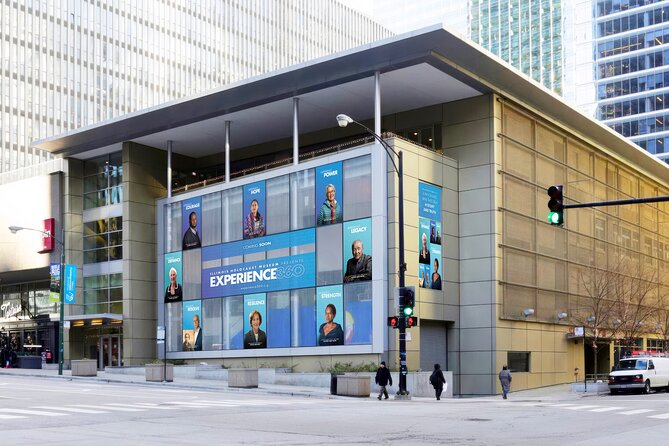
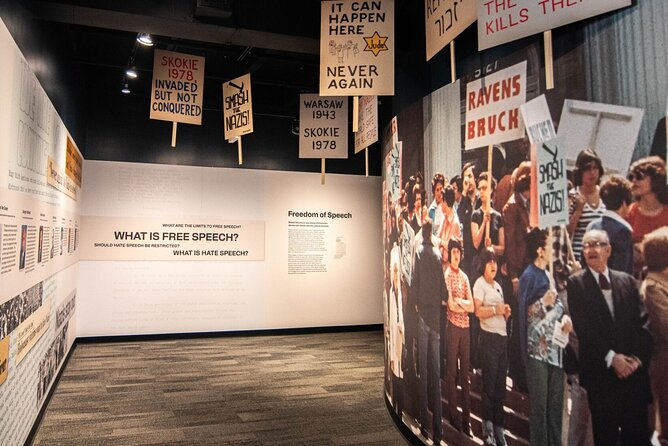
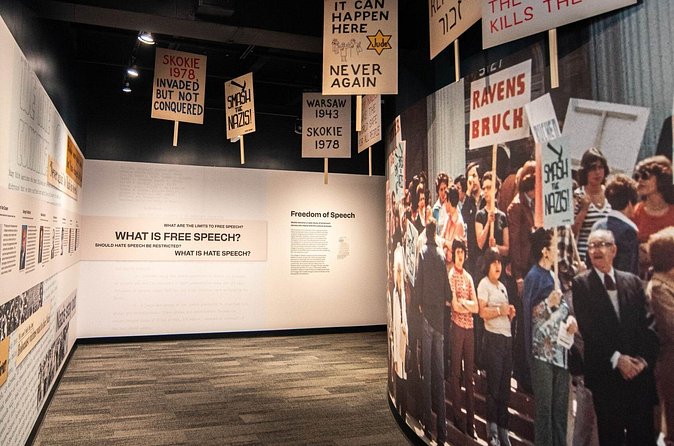
Your visit begins in the Call-to-Action Gallery. This section explains why a Holocaust museum was founded in Skokie and gives the institution’s work a local setting.
That introduction matters. It helps you understand that this is not simply a collection of objects from far away. The museum is also asking what it means to remember, educate, and respond to hatred in your own community.
You may want to take your time here instead of rushing toward the technology. The gallery establishes the questions that later displays explore: How do people respond when rights are threatened? What does it mean to preserve testimony? How can remembrance lead to action?
This is a strong first stop for visitors who know little about the museum itself. It also gives returning visitors a useful reminder of its purpose.
Build The Timeline In The Karkomi Foundation Gallery
The Karkomi Foundation Gallery provides the main historical framework. It presents the Holocaust alongside World War II, helping you understand the political and social setting in which persecution grew into mass murder.
This part is especially valuable if you need a clear introduction before viewing personal testimony. Without that framework, the later stories can feel disconnected. Here, the museum gives you the background needed to understand how events developed and why individual choices became so dangerous.
The displays are informative, but the subject is painful. You will encounter material that asks for attention and quiet reflection. This is not a quick entertainment stop between other Chicago activities.
One strength of the gallery is its role as a bridge. You move from the wider story of the Holocaust to the lives of particular survivors. The visit works best when you allow those two levels to speak to each other.
Follow Survivor Journeys In Virtual Reality
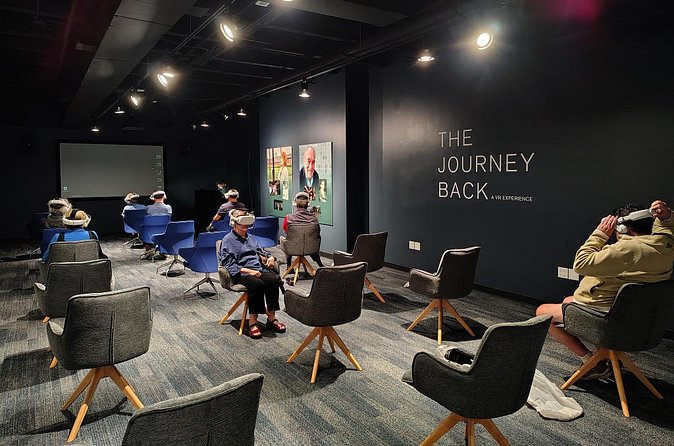
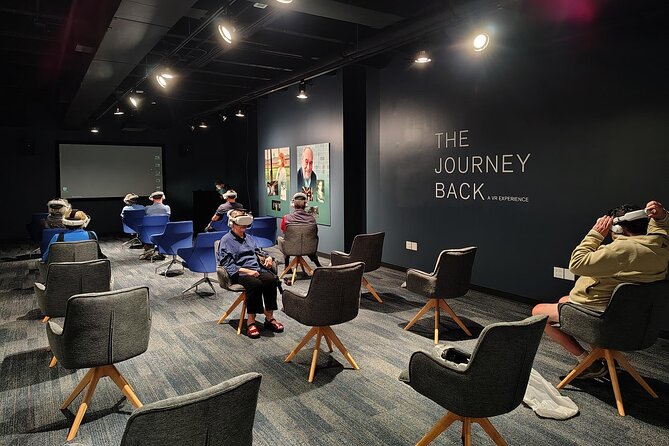
The Northern Trust Virtual Reality Theater is one of the main reasons to choose Experience360. Through VR, you accompany survivors through childhood hometowns and places where they hid.
The value here is perspective. A conventional photograph can show you a location, but VR can give you a stronger sense of how a survivor remembers it. You are not simply reading a caption about a childhood home or hiding place. You are following a personal account tied to a real setting.
The experience is also a change of pace after the gallery displays. Instead of moving past objects and panels, you spend time with a guided digital presentation. One visitor described the VR portion as the best part of the visit, and I can understand why. It brings a direct emotional force that text alone may not provide.
Still, you should not treat the VR theater as the whole museum. It is one piece of the visit, not a replacement for the galleries. Plan to return to the displays afterward, especially if you want to understand the historical details behind the survivor stories.
A different way to spend an afternoon in Chicago:
- Chicago Architecture River Cruise
★ 5.0 · 15,756 reviews - Chicago River 90-Minute Architecture Tour
★ 4.5 · 9,629 reviews - Chicago River: 1.5-Hour Guided Architecture Cruise
★ 4.8 · 8,046 reviews - Chicago: Gangsters and Ghosts Walking Tour
★ 5.0 · 7,155 reviews
Look Closely At Object, Image, Memory
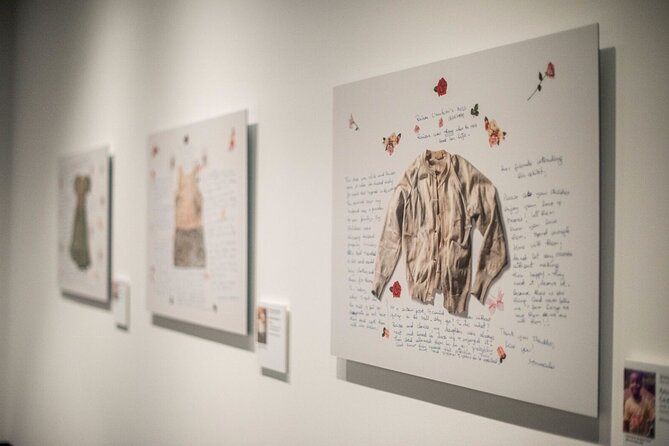
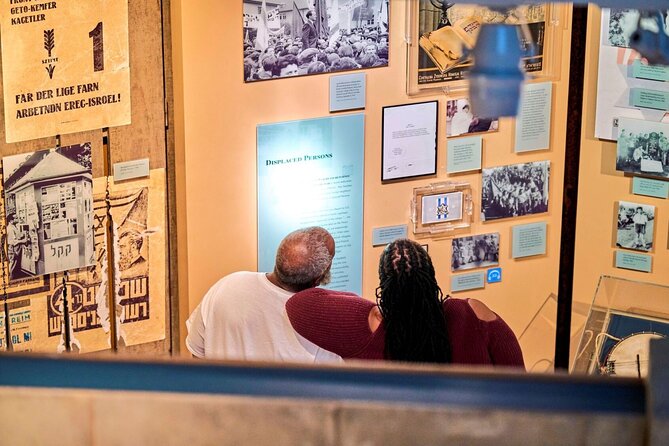
The ITW Stories of Survival: Object. Image. Memory exhibition focuses on the emotional power of personal belongings, photographs, and written testimony.
This section makes history tangible. An object can be small, ordinary, and deeply important at the same time. A photograph can show a person before the events that changed everything. Written testimony gives the object a voice and helps explain why it was kept or remembered.
I like this part for the pause it creates. The VR theater uses advanced technology, while this exhibition asks you to look carefully at physical evidence and personal words. That contrast keeps the visit from feeling like a technology showcase.
Expect an emotional response. The material is designed to connect you with individual lives, and some displays may stay with you long after you leave. Bring patience, and if you are sensitive to difficult subjects, give yourself permission to take a quiet break.
A short visit during a lunch hour may not be enough for this section. The museum is open from 10 a.m. to 5 p.m. daily during the stated operating period, so a longer daytime visit gives you more room to read and reflect.
Ask Questions In The Hologram Theater
The interactive survivor conversations are the most unusual feature at Experience360. Through holographic technology, you can hear survivors answer questions about their lives and experiences.
The important practical tip is simple: ask questions. The display is designed for interaction, and one of the most useful parts of the experience is the opportunity to engage rather than simply watch. If you arrive with a question about daily life, family, hiding, survival, or memory, this is the place to raise it.
You may find the format more personal than expected. A recorded testimony can feel distant, but a holographic conversation creates the impression of a person present in the room. That effect can be moving, even when you understand how the technology works.
The exhibit does require emotional readiness. A direct encounter with survivor testimony can be difficult, and you should not feel pressured to stay longer than feels right. Staff can help explain the format and answer questions about what you are seeing.
Staff Support Adds Real Value
Staff interaction is a meaningful part of this admission. Tom has been praised for leading an excellent visit, while MJ and Val have been noted for their kindness, clear explanations, and willingness to answer questions.
That matters in a museum covering such painful material. Labels can provide facts, but a staff member can explain a difficult point, suggest where to spend more time, or help you connect one exhibit with another.
You should use that opportunity. Ask questions throughout the visit, not only at the hologram display. The museum’s strength is not just its technology. It is also the human guidance that helps you understand what you are seeing.
The staff presence can be especially useful for first-time visitors and families with older children. Since the museum is not recommended for children under 12, parents should decide in advance how much historical detail is suitable for their group.
How Long Should You Allow?
The stated visit length is about 1 to 2 hours. I would treat that as a flexible range rather than a strict schedule.
You can see the major areas in roughly an hour if you move steadily. That approach may work if you are fitting the museum into a busy Chicago day, but you will have less time for written testimony, questions, and reflection.
Two hours is a better target if you want to use the VR theater, speak with staff, examine the personal objects, and spend time in the holographic conversations. The length also depends on how much you choose to read and how long you remain with each story.
A short stop can still be worthwhile, but do not expect to absorb every section during a rushed lunch break. One visitor needed to return after an abbreviated visit because there was not enough time to see everything.
Is $12 A Good Price?
At $12 per person, the admission is fairly priced. Your ticket includes access to all the museum exhibitions, not just the VR theater or hologram display.
That makes the cost easier to justify. You receive a full museum visit with historical galleries, personal artifacts, written testimony, VR, and interactive survivor conversations. If you spend close to two hours inside, the price compares well with many paid cultural attractions.
The value is strongest if you approach this as an educational visit rather than a quick attraction. The technology may draw you in, but the galleries provide the context and the personal stories give the visit its lasting weight.
There is one practical limit. If you only have time for a brief stop, you may not experience the full value of the admission. Check your schedule before booking and try to protect enough daytime time for the museum.
Who Should Book This Experience?
I recommend Experience360 most strongly for adults, history students, educators, and anyone interested in survivor testimony. It also suits visitors who want a thoughtful museum experience that uses more than traditional panels and objects.
The VR and hologram displays may appeal to teenagers 12 and older, but parents should consider the subject matter carefully. This is not designed as a light family outing. The emotional content can be intense, and children need enough maturity to understand what they are seeing.
You will also get more from the visit if you are willing to ask questions. The staff interaction is part of the experience, and the hologram exhibit is built around conversation.
Service animals are allowed, the museum is near public transportation, and most people can participate. The ticket is provided by mobile admission, and confirmation arrives when you book.
Plan Around The Museum’s Opening Hours
The museum is listed as open Monday through Sunday, from 10 a.m. to 5 p.m., during the operating period of August 26, 2025, through February 16, 2027.
That daily schedule gives you flexibility. You can visit on a weekday or weekend and fit the museum into a daytime Chicago plan. Since the subject deserves attention, I would avoid placing it between two tightly timed activities.
You can cancel for a full refund if you do so at least 24 hours before the scheduled start time. Cancellations or changes made within 24 hours are not refunded or accepted, so check your plans before the deadline.
The experience is booked an average of 15 days in advance. That does not guarantee that every date will sell out, but booking ahead is sensible if your Chicago schedule is fixed.
My Final Recommendation
You should book Illinois Holocaust Museum Experience360 if you want a serious, well-priced museum visit built around survivor stories. The VR theater and holographic conversations give the subject a modern form, while the galleries, artifacts, and testimony keep the focus on people rather than gadgets.
Allow the full two hours if you can. Ask questions, especially in the hologram exhibit, and do not rush the personal stories. Bring emotional readiness, and consider whether younger children are prepared for the material.
I would skip it only if you want a light attraction or have less than an hour to spare. For everyone else, the $12 admission offers a thoughtful way to learn, remember, and leave with a clearer sense of why these stories still matter.
FAQ
Where is Illinois Holocaust Museum Experience360 located?
The experience is located in Chicago, USA.
How much does admission cost?
Admission costs $12 per person.
How long does the experience take?
The visit takes approximately 1 to 2 hours, depending on how much time you spend with the exhibitions, VR theater, holographic conversations, and staff.
Does admission include all exhibitions?
Yes. The admission includes access to all the museum’s exhibitions.
Does the experience include virtual reality?
Yes. You can enter the Northern Trust Virtual Reality Theater and follow survivors through childhood hometowns and places where they hid.
What is the hologram exhibit?
The museum offers interactive conversations with Holocaust Survivors through holographic technology. You can ask questions and hear survivor responses.
Is the experience suitable for young children?
The experience is not recommended for children under 12.
Are service animals allowed?
Yes. Service animals are allowed.
Is the museum near public transportation?
Yes. The museum is near public transportation.
What is the cancellation policy?
You can cancel at least 24 hours before the experience start time for a full refund. Cancellations or changes made less than 24 hours before the start time are not accepted, and the amount paid is not refunded.
Just added in Chicago
- Chicago: Architecture and Engineering Marvels Walking Tour★ 5.0 · 3 reviews
- Private Downtown Chicago TV and Movie Sites Guided Walking Tour★ 4.5 · 3 reviews
- Black Heritage Tour★ 5.0 · 3 reviews
- Private SUV Transfer from Chicago Downtown to Midway airport★ 5.0 · 3 reviews
- Private Holiday City Tour★ 5.0 · 3 reviews
- BYOB Chicago River Guided History Tour★ 5.0 · 4 reviews
- Chicago 4-Hour Sightseeing Transfer by Luxury SUV★ 4.5 · 3 reviews
- Chicago, Cloud Gate, Grant Park Full-Day City Tour★ 4.0 · 4 reviews
Museums, compared.

Field Museum of Natural History Ticket or VIP Tour
Read our review →
Field Museum of Natural History Admission Tickets
Read our review →

2-Hour Chicago Lakefront & Museum Campus Segway Tour
Read our review →

Chicago Landmarks & Museum Campus Small Group Segway Tour
Read our review →
Browse the lists this tour appears in