
Reviewed · CHICAGO ARCHITECTURE TOURS
Marvels & Feats: An Engineer’s Tour of Chicago Architecture
Chicago’s most exciting architecture stories are often about what you cannot see. This two-hour walk explains the hidden work of gravity, wind, foundations, and steel that lets the city rise above its muddy ground. You’ll move through the Loop, enter a few buildings, then finish beside the Chicago River with a broader view of modern engineering.
I like two things in particular: the guide is a real engineer who explains tough ideas in plain language, and the tour goes inside several buildings instead of keeping you on the sidewalk. The stop connected with a supposedly haunted building is especially useful, since its reputation comes from uneven settling on a floating foundation.
The main drawback is pace. Two hours is enough for a strong introduction, not a full survey of Chicago architecture, and you’ll be on foot in all weather. The 2:30 pm start also makes this a poor fit if you want an early-morning activity or a relaxed, unhurried route.
In This Review
- Key points to know before booking
- Why Chicago makes such a good engineering classroom
- Starting at 430 South Michigan Avenue
- The Loop: from early skyscrapers to structural problem-solving
- Going inside buildings instead of only looking up
- The supposedly haunted building and its floating foundation
- Walking toward the Chicago River
- What the guide’s teaching style means for you
- Is $35 a fair price?
- Comfort, weather, and practical planning
- Who should book this Chicago architecture walk?
- Should you book Marvels & Feats?
- FAQ
- How long is the tour?
- Where does the tour start?
- Where does the tour end?
- What time does the tour start?
- Is hotel pickup included?
- Is the tour offered in bad weather?
- How many people can join the tour?
- Can I cancel for a full refund?
Key points to know before booking
- Chicago’s engineering story takes center stage: Expect explanations of how buildings handle gravity, wind, and unstable ground.
- A real engineer leads the walk: The teaching is designed to make technical ideas clear without stripping away the substance.
- You enter selected buildings: Interior access gives you a better sense of how Chicago’s famous structures work.
- The route covers two very different areas: Spend about 75 minutes in the Loop, then 45 minutes along the Chicago River.
- The group is limited to 20 people: That is small enough for a more personal walking experience.
- The tour ends with a river view: The final stop is Riverpoint Park at 150 N Riverside Plaza.
Why Chicago makes such a good engineering classroom
Chicago is widely described as the birthplace of the skyscraper, but that simple label does not explain why the city mattered. The real story is a long sequence of practical problems: how to build upward, how to support heavy structures on soft ground, and how to keep tall buildings steady when wind pushes against them.
That is the focus here. Instead of treating architecture as a parade of famous facades, the tour asks you to notice the forces working behind them. You learn how engineers deal with gravity and wind, two basic facts of nature that become serious design problems once a building grows tall.
I find this approach useful because it changes the way you look at Chicago. After hearing how a structure carries its weight, you are less likely to see a tower as just a pretty wall of glass or stone. You start looking for the clues that reveal how it was made.
The tour covers more than 150 years of engineering development. That gives the walk a clear timeline, from early skyscraper ideas to newer work along the Chicago River. It also helps you connect older buildings with the modern city instead of treating them as separate subjects.
More architecture tours in Chicago:
- Chicago Architecture River Cruise
★ 5.0 · 15,756 reviews - Chicago River 90-Minute Architecture Tour
★ 4.5 · 9,629 reviews - Chicago River: 1.5-Hour Guided Architecture Cruise
★ 4.8 · 8,046 reviews
Starting at 430 South Michigan Avenue
The meeting point is at 430 S Michigan Ave, a central location that is easy to reach by public transportation. You should arrive ready to walk at 2:30 pm, with your mobile ticket available. There is no hotel pickup or drop-off, so you handle your own way to the starting point and away from the finish.
The opening portion takes place in downtown Chicago, known as the Loop. You’ll spend roughly 1 hour and 15 minutes here, and this is where much of the tour’s historical and structural explanation takes place.
The exact order of buildings can matter less than the way the guide connects them. You are not simply stopping for photographs. You are listening for the reasons certain design choices were needed, and for the ways Chicago engineers answered those needs.
That makes this a good first or second activity during a Chicago visit. Early in a trip, it gives you a working map of the city center. Later, it can add useful meaning to buildings you have already seen from the street.
The Loop: from early skyscrapers to structural problem-solving
The Loop portion introduces more than 150 years of change. Chicago’s early tall buildings forced architects and engineers to rethink traditional masonry construction. A building can only grow so tall when its walls carry most of the weight, so new structural methods became essential.
You’ll hear about a building connected with the father of the skyscraper. The detail that makes this story especially interesting is that he was an engineer and a classmate of Gustav Eiffel. That connection places Chicago’s work within a wider age of ambitious metal and structural design.
The point is not simply to attach a famous name to a building. It is to show you how engineering ideas traveled, developed, and became visible in the city. Chicago’s early skyscrapers were not created by style alone. They depended on people who understood how to transfer loads and create taller, more useful buildings.
The guide also explains how Chicago buildings cope with wind. From the sidewalk, a tall building can look perfectly still. Higher up, though, wind places pressure on the structure and can create movement that affects both the building and the people inside it.
A strong guide can make this subject easy to picture without turning it into a school lecture. The tour is built around that balance. You get enough technical information to understand the challenge, but the explanation remains tied to buildings you can see around you.
Going inside buildings instead of only looking up
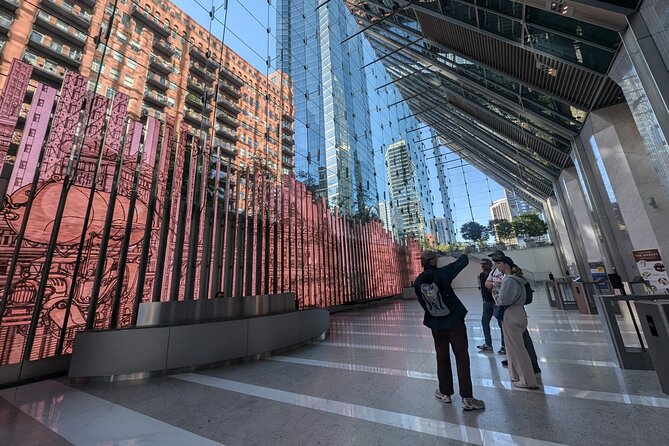
One of the better features is interior access to a few buildings with notable structural design. Many architecture walks stay outdoors, which can leave you with a fine collection of facades but little sense of the spaces behind them.
Here, stepping inside helps you grasp scale and construction in a more direct way. You can compare the public face of a building with the interior space it creates. You may also notice details that are easy to miss from the street, although the supplied information does not name every building or guarantee a fixed list of interior stops.
That uncertainty is worth keeping in mind. The tour promises entry into a few buildings, but you should not book it expecting a full architectural interiors program or guaranteed access to every major landmark. The appeal is the added perspective, not a long museum-style visit at each stop.
The interiors also give you a short break from the weather. Do not count on them to make the whole walk comfortable, though. The majority of the route remains outdoors, and the tour operates in all weather conditions.
A different way to spend an afternoon in Chicago:
- Chicago: Gangsters and Ghosts Walking Tour
★ 5.0 · 7,155 reviews - Chicago Architecture Center River Cruise aboard First Lady
★ 5.0 · 5,536 reviews - Chicago: Willis Tower Skydeck and The Ledge Ticket
★ 4.6 · 4,350 reviews - Chicago: Architecture River Cruise Skip-the-Ticket Line
★ 4.8 · 4,325 reviews
The supposedly haunted building and its floating foundation
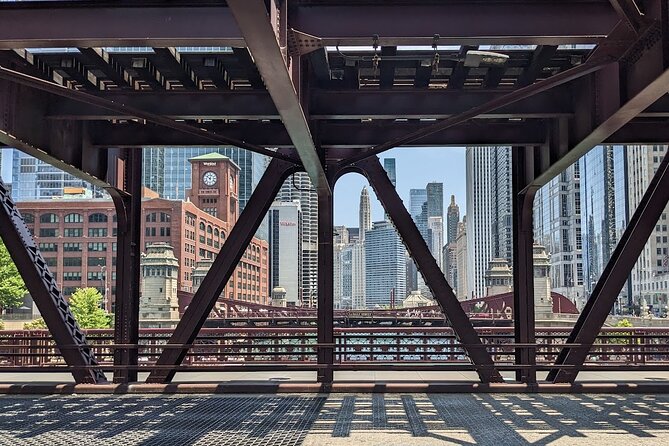
The story of the haunted building may be the tour’s most memorable lesson because it shows how a technical fault can turn into a city legend. Its reputation comes from uneven settling on a floating foundation.
That explanation turns a spooky tale into a lesson in soil and weight. Chicago’s ground conditions made foundations a major concern for builders. A floating foundation distributes a building’s load, but uneven movement can still create visible or unsettling effects.
I like this part because it links engineering with everyday observation. You do not need advanced mathematics to understand the basic problem. If one part of a structure settles differently from another, doors, floors, walls, and windows can behave in strange ways.
The guide does not need to choose between a ghost story and a technical explanation. You get both, with the engineering giving the legend a more useful context. This is the kind of detail that tends to stay with you after the tour, especially when you later notice an old building that appears slightly out of level.
Walking toward the Chicago River
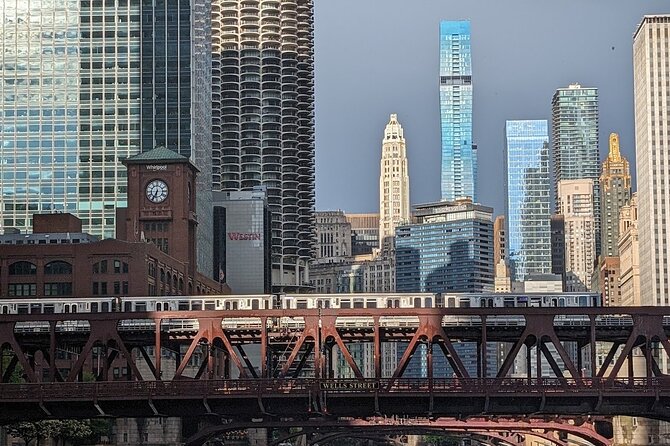
After about 75 minutes in the Loop, the route shifts to the Chicago Riverwalk area for roughly 45 minutes. This changes the visual rhythm of the tour. The Loop gives you dense downtown buildings and older structural questions, while the river offers open views and a chance to look at more recent engineering work from a distance.
The river is a practical place to discuss how the city has changed. Newer buildings, riverfront spaces, and large-scale infrastructure can be read as responses to a different set of needs. You’ll continue learning about engineering feats, but the setting gives you more room to see how structures relate to one another.
The riverfront portion also helps break up the concentration of the Loop. After a long stretch of looking at individual buildings, you can step back and consider the city as a whole. The views are part of the reward, but the route remains an educational walk rather than a sightseeing cruise or a dedicated photography tour.
The ending point is Riverpoint Park at 150 N Riverside Plaza. The tour finishes with a sweeping view of the Chicago River, a fitting place to pause and look back at the city’s mix of old and new construction.
Because the tour ends at a different location from where it begins, you should plan your next activity from the riverfront rather than assuming you will return to Michigan Avenue. The end point is near public transportation, which makes continuing your day straightforward, though no onward transfer is included.
What the guide’s teaching style means for you
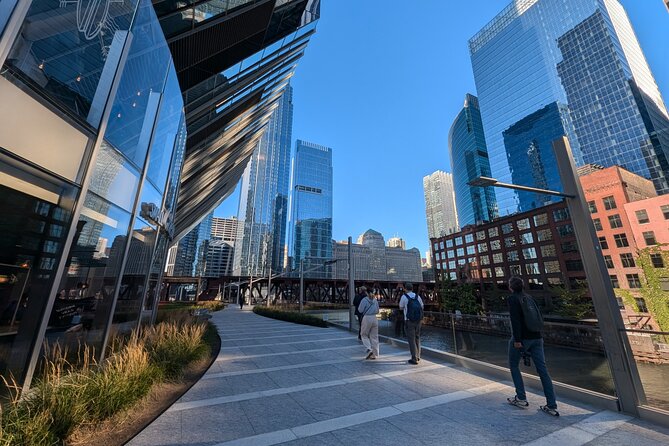
The tour is led by a local guide, and the experience is built around a real engineer making technical subjects accessible. One guide identified in the available feedback is Hillary, who was praised for opening up Chicago’s early architecture and pointing out less obvious parts of the city.
That praise matters because technical tours can fail in two opposite ways. They can become so simple that you learn little, or so packed with jargon that you lose the thread. The stated aim here is to keep the ideas graspable without dumbing them down.
You should still expect some concentration. This is not a casual stroll with only short comments between photo stops. You’ll be asked to follow explanations about foundations, structural forces, and the way buildings respond to their surroundings.
The format suits curious adults, students, engineers, architects, and anyone who has looked at Chicago’s skyline and wondered how it stays upright. It can also work for a general sightseeing audience, provided you enjoy learning as you walk.
If your main goal is a long list of famous buildings, a boat architecture cruise, or access to landmark interiors, another activity may suit you better. This tour gives priority to how buildings work, not simply how many names you can collect.
Is $35 a fair price?
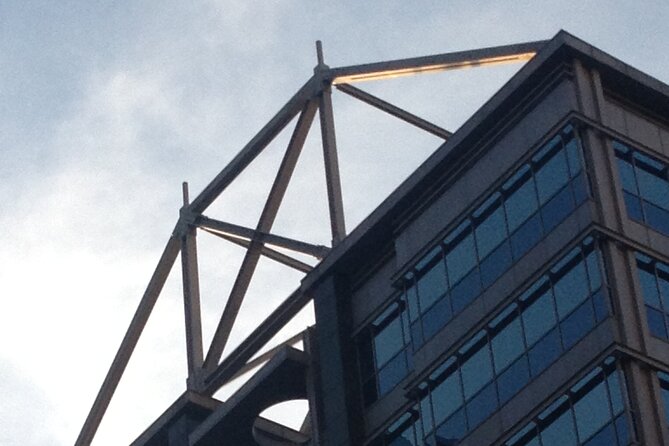
At $35 per person, the tour offers about two hours with a local guide, interior visits to a few buildings, and a route covering both the Loop and the riverfront. I consider that a reasonable price for a small-group walking tour, especially with a maximum of 20 people.
The value depends on how much you want explanation. If you only need exterior views, you can see plenty of Chicago architecture without paying for a tour. The fee becomes more worthwhile when you want someone to explain why the buildings look and behave as they do.
A group of 20 is not private, but it is more manageable than a large city walk. You should be able to hear the guide more easily and ask questions when the group pauses. The experience still depends on where you are standing and how busy the sidewalks are, so do not expect the intimacy of a one-to-one lesson.
The tour is often booked about 45 days ahead. That is useful planning information if your Chicago dates are fixed, particularly during a busy visit. Confirmation is sent within 48 hours of booking, subject to availability.
Free cancellation is allowed until 24 hours before the 2:30 pm start time. A cancellation inside that window is not refunded, and late changes are not accepted. If your plans are uncertain, keep that cut-off in mind before booking.
Comfort, weather, and practical planning
You need a moderate level of physical fitness. The supplied details do not give a precise distance or a list of seating stops, so you should expect to walk and stand for much of the two hours.
The tour runs in all weather. Wear shoes suited to city walking and dress for the forecast, since the riverfront portion offers less shelter than an indoor attraction. A rain layer, water, and protection from sun or cold are sensible choices, depending on the season.
The mobile ticket keeps arrival simple. You do not need hotel pickup, and the starting point is near public transportation. Service animals are allowed.
The 2:30 pm departure gives you time for breakfast, a museum, or a morning activity before the walk. It also means the tour occupies a large part of the afternoon, so you should avoid booking another fixed activity too tightly afterward.
Who should book this Chicago architecture walk?
I would recommend it most strongly if you want to understand Chicago rather than only photograph it. The tour gives you a clear way to read the city, with early skyscraper engineering, foundation problems, wind, gravity, and riverfront development all tied together.
It is also a good match for anyone who usually finds architecture tours too abstract. The haunted-building story and the interior visits give the technical material concrete examples. You are not asked to admire a facade without context.
Families with older children may enjoy it if they can handle a two-hour walking tour and have an interest in how things are built. The subject is more specialized than a general city highlights walk, so younger children may find the explanations demanding.
I would hesitate to book it if you have limited mobility, need guaranteed indoor time, or want a relaxed route with little standing. The moderate fitness requirement and all-weather format are important, not minor footnotes.
Should you book Marvels & Feats?
Book this tour if you want a focused look at the forces that shaped Chicago’s skyline. For $35, you get a small-group walk, a real engineer’s explanations, selected building interiors, and a finish beside the Chicago River. The strongest feature is the teaching: Hillary and the other guides aim to make serious engineering clear without reducing it to empty trivia.
Skip it if your priority is broad sightseeing, landmark admission, or a slow architectural photo walk. This is a subject-driven experience with a firm two-hour route and outdoor walking in every kind of weather.
For curious visitors, it offers a useful change from simply looking up at Chicago’s towers. You leave with a better sense of how the city’s buildings carry weight, resist wind, and cope with the ground beneath them.
FAQ
How long is the tour?
The tour lasts approximately two hours. About 1 hour and 15 minutes is spent in the Loop, followed by about 45 minutes near the Chicago River.
Where does the tour start?
It starts at 430 S Michigan Ave, Chicago, Illinois 60605.
Where does the tour end?
The tour ends at Riverpoint Park, 150 N Riverside Plaza, Chicago, Illinois 60606, with a broad view of the Chicago River.
What time does the tour start?
The start time is 2:30 pm.
Is hotel pickup included?
No. Hotel pickup and drop-off are not included. You make your own way to the meeting point and from the ending point.
Is the tour offered in bad weather?
Yes. It operates in all weather conditions, so you should dress appropriately for the forecast.
How many people can join the tour?
The maximum group size is 20 people.
Can I cancel for a full refund?
Yes. You can cancel for a full refund up to 24 hours before the experience starts. Cancellations or changes made less than 24 hours before the start time are not accepted, and the amount paid is not refunded.
Just added in Chicago
- Private Downtown Chicago TV and Movie Sites Guided Walking Tour★ 4.5 · 3 reviews
- Chicago: Architecture and Engineering Marvels Walking Tour★ 5.0 · 3 reviews
- Black Heritage Tour★ 5.0 · 3 reviews
- Private SUV Transfer from Chicago Downtown to Midway airport★ 5.0 · 3 reviews
- Private Holiday City Tour★ 5.0 · 3 reviews
- BYOB Chicago River Guided History Tour★ 5.0 · 4 reviews
- Chicago 4-Hour Sightseeing Transfer by Luxury SUV★ 4.5 · 3 reviews
- Chicago, Cloud Gate, Grant Park Full-Day City Tour★ 4.0 · 4 reviews
Chicago Architecture Tours, compared.
Chicago Architecture Center River Cruise aboard First Lady
Read our review →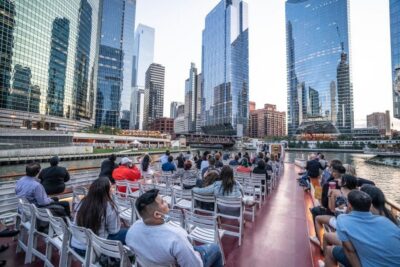
Architecture River Cruise Skip-the-Ticket Line
Read our review →
Chicago River 45-Minute Architecture Tour from Magnificent Mile
Read our review →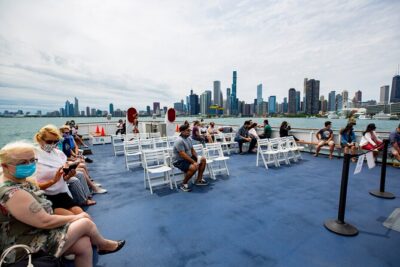
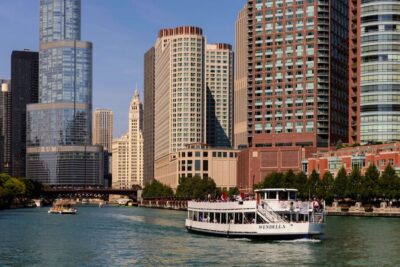
45-Minute Family-Friendly Architecture River Cruise
Read our review →Browse the lists this tour appears in