
Reviewed · CHICAGO ARCHITECTURE TOURS
Chicago Architecture Walking Tour: What’s New
Chicago keeps adding bold buildings, and this 90-minute walking tour gives you a smart way to see the newest work without trying to cover the whole city. You’ll look at Tribune Tower’s recent changes, modern rental apartments, 465 N Park Drive, the St. Regis Chicago, and Apple Michigan Avenue, with a Chicago Architecture Center guide such as Paul, Paula, Mary Jo, or Mary Ann explaining what you’re seeing. I like the focused route and the included CAC gallery admission. I also like the small maximum of 15 people, which leaves room for questions.
The main tradeoff is that the tour moves through a compact part of downtown, so it is not a grand tour of every major Chicago style. Building interiors may also be unavailable because of weekend, holiday, or unexpected closures. Still, for $35, the combination of expert narration, fresh architectural subjects, and gallery access makes this a strong choice for anyone curious about how Chicago is building today.
In This Review
- Key points to know before you book
- Why this tour is useful for understanding modern Chicago
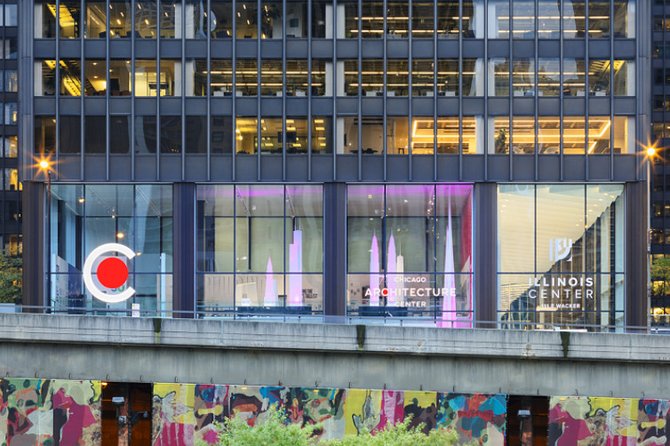
- Starting at the Chicago Architecture Center
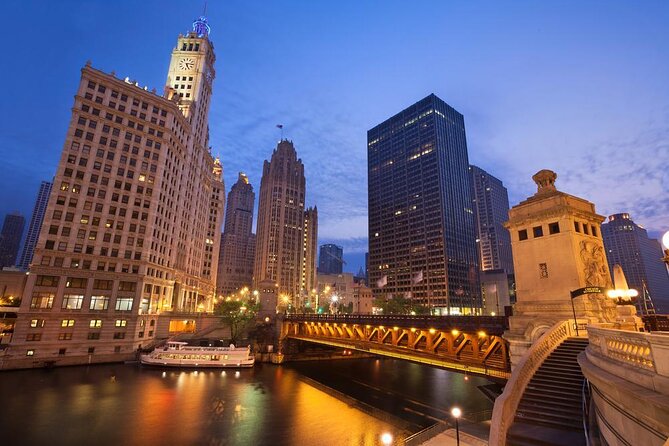
- Pioneer Court and Chicago’s changing riverfront
- Tribune Tower: old Chicago with new purpose
- Small rental apartments and the question of urban housing
- 465 N Park Drive and the St. Regis Chicago
- Apple Michigan Avenue and public-facing design
- What the guides add to the walk
- Is $35 a fair price?
- Practical details for a smooth visit
- Who should book this Chicago architecture walk?
- Should you book it?
- FAQ
- Where does the Chicago Architecture Walking Tour: What’s New begin?
- Where does the tour finish?
- How long does the tour last?
- How much does the tour cost?
- What is included in the ticket?
- How many people can join the tour?
- Which buildings or areas are included?
- Will I enter every building on the route?
- Are service animals allowed?
- Can I bring luggage or use a coat check?
Key points to know before you book
- New Chicago is the main subject: Focus on recent buildings, renovations, and current design trends rather than a full survey of the city.
- The route stays compact: Begin and end at the Chicago Architecture Center near the Chicago River, with stops around Pioneer Court, Michigan Avenue, and nearby developments.
- Small groups help: The maximum group size is 15, so you have a better chance to hear the guide and ask questions.
- Several guides bring different strengths: Paul, Paula, Mary Ann, Mary Jo, and other CAC guides have led this experience, with special attention to architecture, history, sustainability, and urban design.
- CAC galleries are included: Allow time before or after the walk to see the center’s galleries at no extra admission cost.
- Plan for an outdoor tour: Coat check, luggage storage, and stroller storage are not provided, and the route can change.
Why this tour is useful for understanding modern Chicago
Chicago is famous for its early skyscrapers, grand towers, and bold experiments in steel and glass. That reputation can make the newest buildings harder to read. You may look at a polished apartment tower and see only a tall façade. A good guide helps you ask better questions: How does the building meet the sidewalk? What did it replace? How does it handle crowded city blocks? Who is it meant to house?
That is the value of this tour. It is not simply a stroll past photogenic buildings. The guide connects current projects with older Chicago ideas about commerce, housing, public space, and engineering. The route around the Chicago Architecture Center and Chicago River also keeps the subject manageable. You get a concentrated lesson instead of a tiring march across the entire Loop.
The tour suits architects, designers, students, and curious visitors. You do not need technical training. The guides explain the buildings in plain terms, then go deeper when the group has questions. Some guides, including Paul and Paula, have been especially good at combining design details with stories about the architects, the city, sustainability, and the people who use these spaces.
More architecture tours in Chicago:
- Chicago Architecture River Cruise
★ 5.0 · 15,756 reviews - Chicago River 90-Minute Architecture Tour
★ 4.5 · 9,629 reviews - Chicago River: 1.5-Hour Guided Architecture Cruise
★ 4.8 · 8,046 reviews
Starting at the Chicago Architecture Center
The experience begins at the Chicago Architecture Center, at 111 E Wacker Drive. The opening remarks take about 10 minutes and set the terms for the walk. You receive narration from a certified professional guide, then head outside for the main portion.
Starting at the CAC is practical. You are already in one of the city’s best places for architectural context, and the tour finishes here as well. The center’s gallery admission is included, so you can visit before or after the walk. If your schedule allows, I would use the galleries either before the tour to get oriented or afterward to revisit ideas that came up outside.
The CAC location is near public transportation, which makes arrival fairly simple. The building is also the meeting point and the final stop, so you do not need to figure out a separate return route at the end. Keep in mind that there is no coat check or storage for luggage and strollers. Bring only what you can comfortably carry for an outdoor walk.
Pioneer Court and Chicago’s changing riverfront
The first major outdoor discussion takes place around Pioneer Court. The area gives the guide several nearby buildings to compare, and it is a useful place to see how old and new Chicago meet in a small space.
You will not merely hear names and dates. The guide discusses why recent buildings look and function as they do, how they relate to neighboring structures, and how the riverfront area has changed. This is where the tour starts to feel less like sightseeing and more like reading a city block.
The estimated time here is about 15 minutes. That is enough for a focused explanation, though not enough to examine every building in detail. If you enjoy long stops at one façade, the pace may feel brisk. If you prefer a clear overview with several examples, the timing works well.
This area also gives you a good test of the guide. Architecture can sound dry when reduced to jargon. The strongest guides make the subject human, explaining how buildings shape public spaces and how design decisions affect the way you move through downtown. Paul and Mary Jo have been praised for making those connections clear and engaging.
Tribune Tower: old Chicago with new purpose
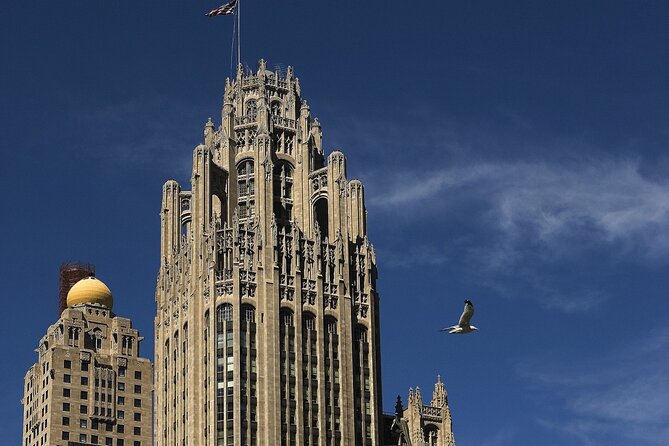
One of the most interesting parts of the walk is the discussion of recent renovations and additions to the historic Tribune Tower. This stop lets you consider a familiar Chicago landmark alongside the newer work surrounding it.
The useful question here is not simply old versus new. It is how a historic building can be adapted while keeping its identity. Renovation can bring new uses, new circulation patterns, and new demands for modern building systems. Additions raise another question: how should fresh construction meet a much-loved older tower?
The tour does not promise entry into every building. Access to interiors can change because of weekend and holiday schedules or unexpected closures. You should think of this primarily as an outdoor architecture experience, with the guide using the exterior and surrounding streets to explain the changes.
For photographers, Tribune Tower is a strong stop because it gives you contrast. The historic structure provides detail and visual weight, while nearby contemporary buildings show how design priorities have shifted. For students and design professionals, the conversation about renovation may be more useful than another list of famous Chicago landmarks.
More walking tours in Chicago:
- Chicago: Gangsters and Ghosts Walking Tour
★ 5.0 · 7,155 reviews - Chicago Favorites Ultimate Food and Walking Tour
★ 5.0 · 1,962 reviews - Chicago: Gangsters and Ghosts Guided Walking Tour
★ 4.7 · 1,697 reviews - Chicago in a Day: Food, History & Architecture Walking Tour
★ 5.0 · 1,153 reviews
Small rental apartments and the question of urban housing
The tour also examines recent trends in small urban rental apartments. This is one of the most practical subjects on the route because it connects architecture to daily life.
A building can look sleek from the street, but the real issue is how it handles limited space and high demand. Small apartments raise questions about storage, shared amenities, privacy, daylight, and the cost of living in a central location. The guide’s role is to show how design responds to those pressures, not simply to point out another tall building.
This stop adds needed balance to the tour. The St. Regis and 465 N Park Drive offer dramatic examples of high-rise design, but compact rental housing brings the conversation back to ordinary urban life. You begin to see that new architecture is not only about landmark towers. It is also about the kinds of homes a growing city creates.
Do not expect a housing policy lecture or an inside look at an apartment. The subject is discussed from the street, and the tour’s 90-minute limit means the treatment remains selective. Still, it is a valuable stop if you want to understand how architecture affects budgets, neighborhoods, and the use of scarce downtown land.
465 N Park Drive and the St. Regis Chicago
The walk continues to 465 N Park Drive and then to the St. Regis Chicago. These stops show the scale and variety of recent high-rise construction near the river.
At 465 N Park Drive, the guide gives you another chance to consider how a newer tower fits into the surrounding group of buildings. Look beyond the skyline silhouette. Pay attention to the base, the street edge, the shape of the upper floors, and the relationship between the tower and open space. Those details tell you more about city planning than a quick glance from a distance.
The St. Regis Chicago provides a different visual subject. Its strong form and height make it easy to spot, but the guide adds meaning by explaining how the building belongs to current Chicago design. You may hear about the thinking behind its shape, its placement, or its role in the newer riverfront district. The exact discussion can vary with the guide and the day.
These stops are especially good for people who enjoy comparing buildings. You can ask why two towers built in the same broad period may have different profiles, materials, or relationships to the street. The small group helps here. With no more than 15 people, you have a reasonable chance to ask about a detail that caught your eye.
Apple Michigan Avenue and public-facing design
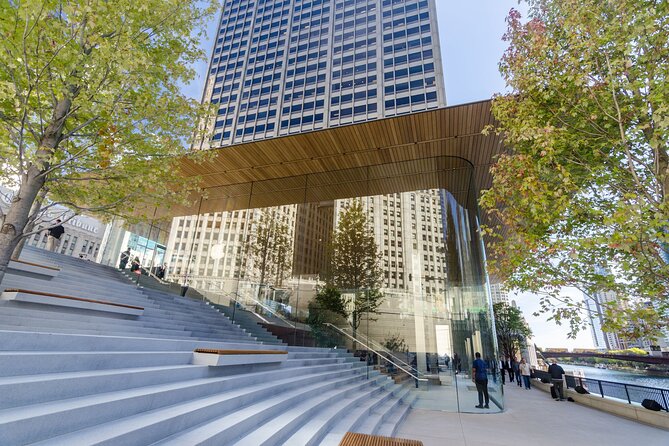
The route includes a 10-minute stop at Apple Michigan Avenue. The store is a useful example because it is not just a conventional glass box or a private office tower. It is a highly public retail space on one of Chicago’s best-known avenues.
The guide discusses the building from the outside, helping you notice how the store meets Michigan Avenue and how it uses its riverfront setting. It is a reminder that modern architecture often has to perform several jobs at once: attract people, support retail, create a welcoming entrance, and contribute to a major public street.
This is a short stop, so do not expect a long interior visit. The itinerary specifies a view of the Apple store, and access to interiors can change. The stop works best as part of the larger lesson about current design, not as a separate shopping visit.
It also gives the tour a change of scale. After discussing large residential and mixed-use towers, you look at a building that most people encounter at street level. That variety keeps the walk moving and shows that what’s new in Chicago includes public-facing spaces as well as skyscrapers.
What the guides add to the walk
The guide can make or break an architecture tour. Here, the Chicago Architecture Center provides professional and certified narration, and several guide names appear repeatedly in the experience’s history: Paul S., Paula, Mary Ann, Mary Jo, and Karen.
You may not receive a particular guide, so book for the format rather than a specific person. Still, the range of feedback gives you a useful sense of the experience. Paul has handled questions well, including on a rainy day, and has been praised for keeping a difficult-weather tour upbeat. Paula has been especially strong on architecture, history, building stories, and sustainability. Mary Jo has connected present-day design with older trends, helping explain where modern Chicago follows the past and where it breaks away.
That variety matters because there is no single correct way to discuss a building. One guide may focus on materials and form. Another may spend more time on planning, community space, or environmental concerns. You should feel free to ask questions. The tour is built around live narration, not an audio recording, and the small group makes conversation possible.
Rain is still rain, of course. Wear shoes suited to walking and check the forecast before you go. The tour runs for about an hour and a half, and much of the experience takes place outdoors.
Is $35 a fair price?
The price is $35 per person. For a 90-minute guided walk, that is a reasonable rate, particularly because admission to the Chicago Architecture Center galleries is included.
The value depends on how you use it. If you only want a quick list of building names, you may find the cost less compelling. You can walk past several of these structures on your own. But independent sightseeing rarely gives you the same context about renovations, rental housing, sustainability, planning, and design choices.
The included galleries improve the deal. You can pair the outdoor walk with an indoor look at the CAC’s architectural material, turning a short tour into a broader visit. The small maximum of 15 also matters. You are paying for access to a guide who can respond to your questions, not just for permission to follow a large crowd.
The tour is often booked well ahead, with an average booking lead time of 57 days. That does not guarantee every date sells out, but it is a good reason to reserve early if your Chicago schedule is fixed.
Practical details for a smooth visit
The tour begins and ends at the Chicago Architecture Center, 111 E Wacker Drive. It lasts about 1 hour and 30 minutes, with the opening taking roughly 10 minutes, the Pioneer Court discussion about 15 minutes, the Apple Michigan Avenue stop about 10 minutes, and closing remarks about five minutes. The remaining time covers the walk and discussions at Tribune Tower, small rental apartments, 465 N Park Drive, and the St. Regis Chicago.
The group can include up to 15 people. Most people can participate, and service animals are allowed. Pets are not allowed. The route is near public transportation, but hotel pickup and drop-off are not provided.
The itinerary may change without notice. Interior access to featured buildings can also change, especially on weekends, holidays, or during unexpected closures. Plan on an outdoor route and do not bring luggage or a stroller that needs storage.
Free cancellation is available if you cancel at least 24 hours before the start time. Cancellations or changes made less than 24 hours ahead are not accepted for a refund, and the cut-off uses Chicago local time.
Who should book this Chicago architecture walk?
I would choose this tour if you want a focused introduction to current Chicago building design rather than a broad trip through every architectural era. It is especially suitable for architects, designers, students, city planners, and people who enjoy asking why a building looks and works the way it does.
It also suits Chicago residents. The route can reveal changes in familiar places, and the guide’s stories may give you a new way to read streets you have passed many times. You do not need to be an expert. Curiosity is enough.
I would look at other CAC options if your main goal is a full survey of historic skyscrapers or a different neighborhood. This experience is intentionally centered on new buildings and recent changes near the CAC. That focus is its strength, but it also limits the range.
Should you book it?
Book it if you want expert context in a compact route, enjoy walking outdoors, and care about how Chicago is changing now. The $35 fee is fair because it includes a certified guide, a small group, and CAC gallery admission.
Skip it if you want extensive interior access, a citywide architecture survey, or a leisurely stop at every landmark. For most people interested in buildings, though, this is a smart use of 90 minutes. You will leave with more than photographs. You will have a clearer way to look at Chicago’s newest towers, renovated landmarks, public spaces, and homes.
FAQ
Where does the Chicago Architecture Walking Tour: What’s New begin?
It begins at the Chicago Architecture Center, 111 E Wacker Drive, Chicago, Illinois 60601.
Where does the tour finish?
The tour finishes back at the Chicago Architecture Center.
How long does the tour last?
The experience lasts approximately 1 hour and 30 minutes.
How much does the tour cost?
The listed price is $35 per person.
What is included in the ticket?
The ticket includes narration by a professional certified guide and admission to the Chicago Architecture Center galleries.
How many people can join the tour?
The tour has a maximum group size of 15 people.
Which buildings or areas are included?
The route includes Pioneer Court, recent renovations and additions to Tribune Tower, current trends in small urban rental apartments, 465 N Park Drive, the St. Regis Chicago, and Apple Michigan Avenue.
Will I enter every building on the route?
Interior access may change because of weekend and holiday schedules or unexpected closures. The itinerary is also subject to change without notice.
Are service animals allowed?
Yes. Service animals are allowed, but pets are not.
Can I bring luggage or use a coat check?
Coat check, luggage storage, and stroller storage are not included.
Just added in Chicago
- Chicago: Architecture and Engineering Marvels Walking Tour★ 5.0 · 3 reviews
- Private Downtown Chicago TV and Movie Sites Guided Walking Tour★ 4.5 · 3 reviews
- Black Heritage Tour★ 5.0 · 3 reviews
- Private SUV Transfer from Chicago Downtown to Midway airport★ 5.0 · 3 reviews
- Private Holiday City Tour★ 5.0 · 3 reviews
- Chicago 4-Hour Sightseeing Transfer by Luxury SUV★ 4.5 · 3 reviews
- BYOB Chicago River Guided History Tour★ 5.0 · 4 reviews
- Chicago, Cloud Gate, Grant Park Full-Day City Tour★ 4.0 · 4 reviews
Chicago Architecture Tours, compared.

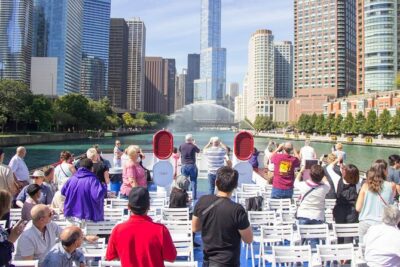
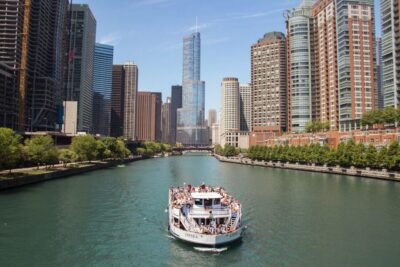
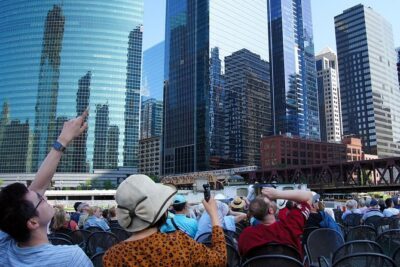
Chicago Architecture Center River Cruise aboard First Lady
Read our review →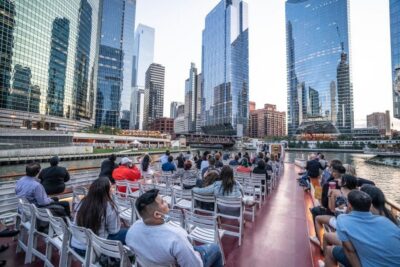
Architecture River Cruise Skip-the-Ticket Line
Read our review →
Chicago River 45-Minute Architecture Tour from Magnificent Mile
Read our review →
45-Minute Family-Friendly Architecture River Cruise
Read our review →Browse the lists this tour appears in