
Reviewed · CHICAGO ARCHITECTURE TOURS
Chicago: Art Deco Skyscrapers Walking Tour
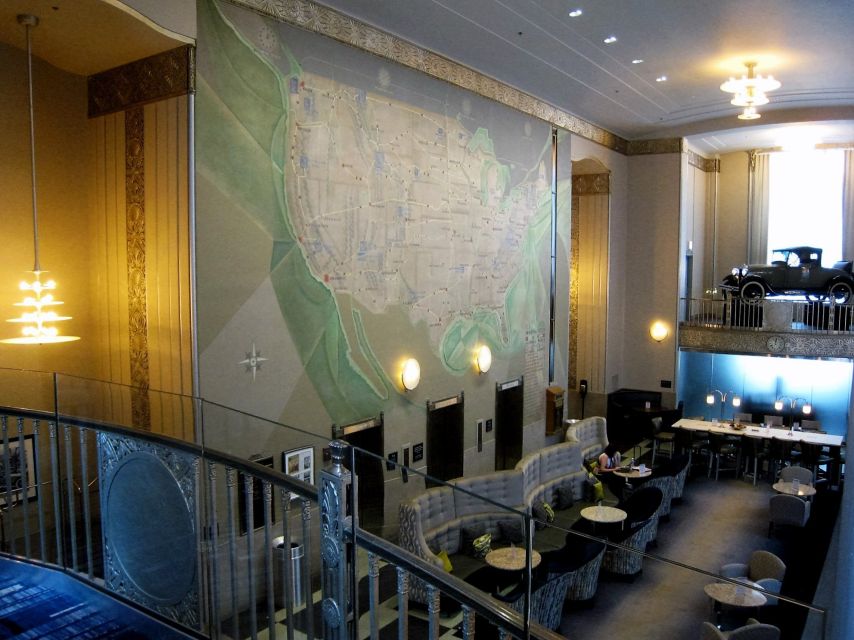
Chicago’s Art Deco is best understood from the inside. This 90-minute walk takes you into the ornate lobbies of five skyscrapers built during the Roaring ’20s, when bold geometry and expensive materials announced that business was booming. The interiors are the main event, not just a quick look at façades from the sidewalk.
I like the small group of no more than 10 people and the docent training provided by the Chicago Architecture Center. I also like the route’s focus: five interiors, clear design lessons, and a finish at the Merchandise Mart. The main consideration is practical: you must leave luggage and strollers behind, and the tour runs rain or shine.
In This Review
- Key points to know before you book
- Why Chicago is such a good city for Art Deco
- Starting at 30 North LaSalle Street
- The Carbide and Carbon Building, dark glamour on Michigan Avenue
- Chicago Motor Club Building and the age of the automobile
- The Trustees System Service Building, a colorful surprise
- The Engineering Building and practical modern ambition
- A fifth lobby and the route toward Merchandise Mart
- What the docent adds to the experience
- Is $35 good value?
- Timing, weather, and what to bring
- Who should book this Chicago walk?
- Should you book it?
- FAQ
- How long is the Art Deco skyscrapers walking tour?
- Where does the tour meet?
- Where does the tour end?
- How many buildings can I enter?
- Is the tour wheelchair accessible?
- Can I bring luggage, a stroller, or a pet?
Key points to know before you book
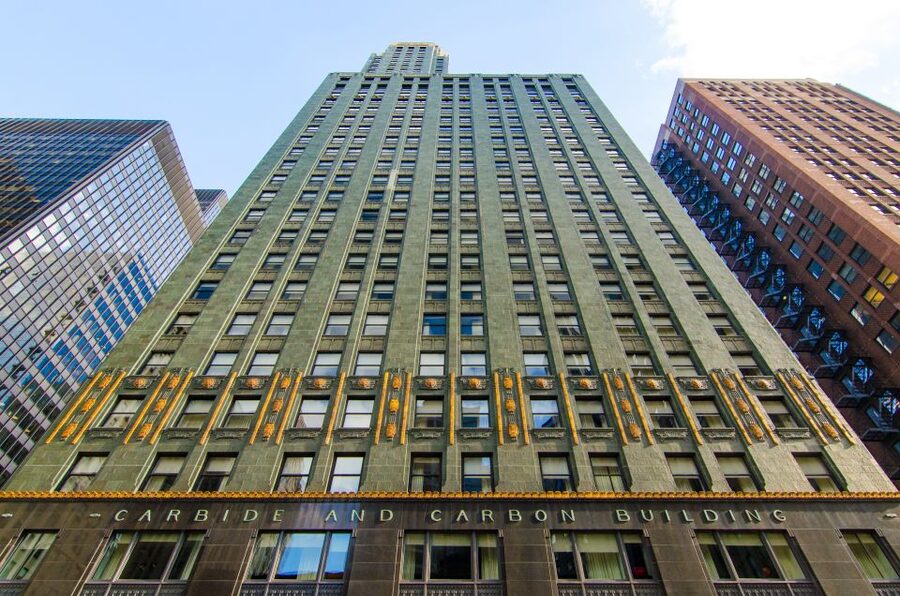
- Five Art Deco interiors: Enter the lobbies of notable buildings near the Chicago River, including the Carbide and Carbon Building and Chicago Motor Club Building.
- A short, focused route: The 90-minute format gives you a useful introduction without taking up half a day.
- Trained local docents: Guides receive hundreds of hours of instruction from the Chicago Architecture Center and explain both design and Chicago history.
- Small groups: The tour is limited to 10 participants, making it easier to hear the guide and ask questions.
- Merchandise Mart finish: The walk ends at one of Chicago’s best-known commercial buildings, with access to Chicago Architecture Center exhibits included.
- Rain-or-shine planning: There are no weather refunds, so bring suitable clothing and do not arrive with large bags.
Why Chicago is such a good city for Art Deco
Art Deco arrived in Chicago during the 1920s, after the style appeared at an international art exposition in Paris. It soon found a natural home in a city already known for ambitious commercial buildings, technical innovation, and a taste for dramatic new forms.
The style also received a major public showcase at Chicago’s 1933 to 1934 Century of Progress Exposition. By then, Art Deco had become a visual language for modern life. It looked forward, but it borrowed from older cultures and decorative traditions.
Your docent will help you recognize the ingredients. Look for zigzags, octagons, sunbursts, and stylized flowers. Cubism helped shape the sharp, stepped geometry, while art and architecture from the ancient Middle East added another source of pattern and ornament.
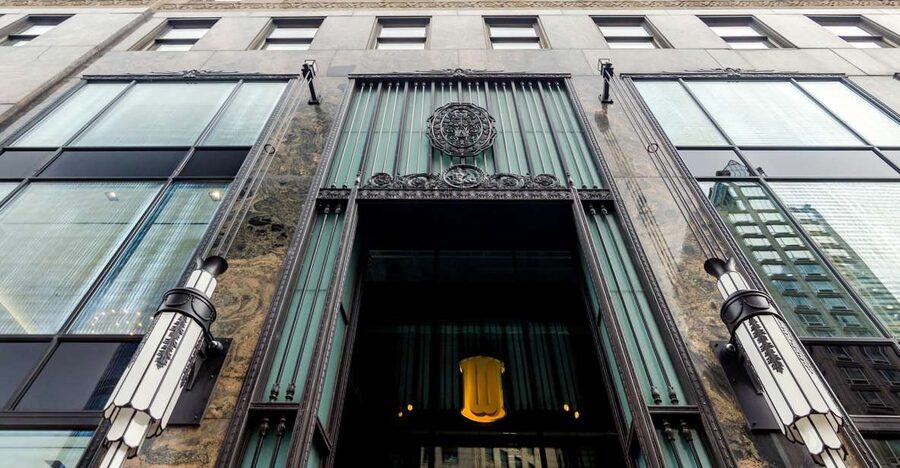
The effect is not quiet or modest. Art Deco uses symmetry, polished surfaces, strong lines, and decorative detail to create a sense of energy. In a skyscraper lobby, those choices had a practical purpose as well as a decorative one. The lobby was the first message a company gave its customers and employees. Marble, metal, geometric ornament, and rich color said that the building belonged to a confident new age.
More architecture tours in Chicago:
- Chicago Architecture River Cruise
★ 5.0 · 15,756 reviews - Chicago River 90-Minute Architecture Tour
★ 4.5 · 9,629 reviews - Chicago River: 1.5-Hour Guided Architecture Cruise
★ 4.8 · 8,046 reviews
Starting at 30 North LaSalle Street
You meet at 30 N LaSalle Street and should arrive 10 minutes before departure. Have your confirmation ready, since the docent checks names against the attendance list.
This is a city walking tour, not a bus tour, so you need comfortable shoes and a little patience around building entrances. The route is near the Chicago River and concentrates on commercial skyscrapers from the business boom of the 1920s.
The group limit of 10 is a real advantage here. Art Deco details can be easy to miss, especially in a busy lobby where you may need to stand to one side while office workers pass through. A smaller group lets the guide point out patterns without shouting across a crowd.
The tour is conducted in English. It is wheelchair accessible, though the experience still involves walking between buildings and entering working commercial properties. If you use a wheelchair, contact the provider before booking if you need precise information about the route between stops.
The Carbide and Carbon Building, dark glamour on Michigan Avenue
One of the most memorable stops is the Carbide and Carbon Building, now the St. Jane Hotel. Its dark exterior and gold-toned decoration give it a particularly theatrical Art Deco character.
The building is useful for understanding how the style could make a skyscraper feel almost like a piece of jewelry. Instead of relying only on height, the design uses color and ornament to draw attention. Inside, you can expect the lobby to show how polished materials and decorative geometry turn an ordinary entrance into a formal public room.
Your docent will connect the exterior to the interior, which is important. Art Deco was not only a surface treatment applied to a façade. It carried through the building’s public spaces, where patterns, materials, and lighting helped create a unified look.
This stop should appeal to you if you enjoy architectural photography, though you will need to follow the guide’s instructions about where you can pause. These are active buildings, not museums built solely for sightseeing.
Chicago Motor Club Building and the age of the automobile
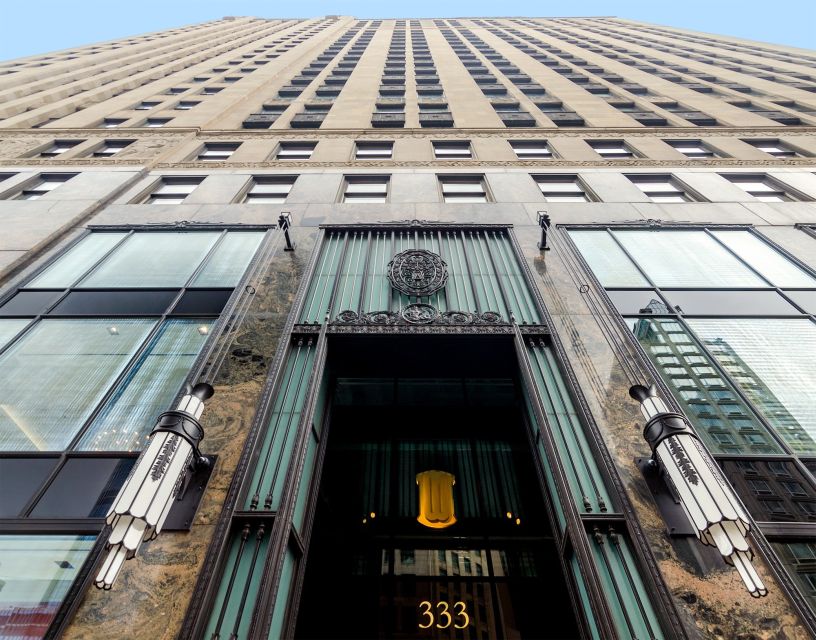
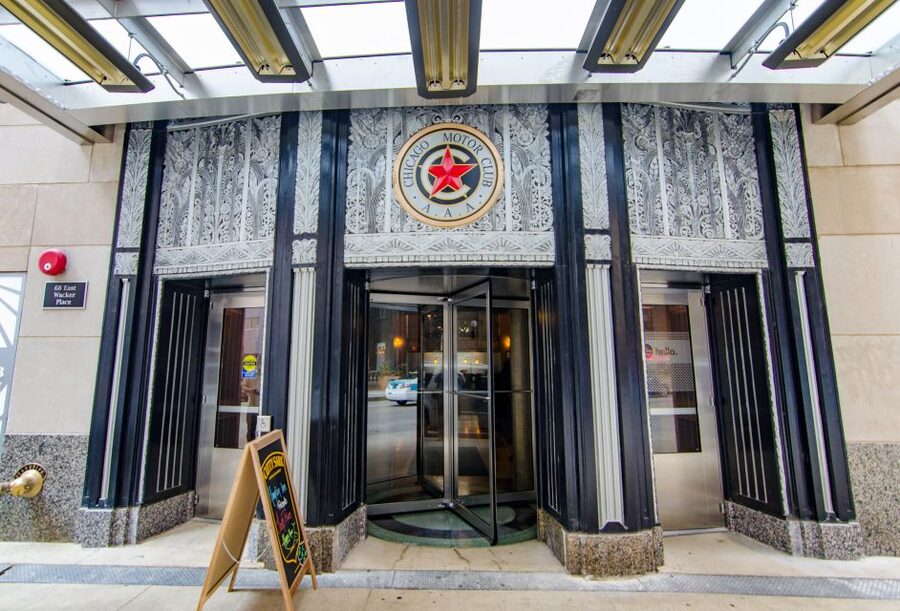
The Chicago Motor Club Building, now a Hampton Inn, brings another side of 1920s Art Deco into view. Its original purpose ties the building to the growing popularity of driving and the freedom associated with the automobile.
That connection matters because Art Deco was closely linked to modern speed, travel, machines, and new forms of entertainment. The style’s sharp lines and stepped forms could look at home in a skyscraper, a train station, an automobile showroom, or a fairground display.
Inside, focus on the way decoration organizes the lobby. Art Deco often creates order through repeated shapes and strong symmetry. A good guide will help you stop seeing isolated patterns and start noticing how the entire room directs your eye.
This is also one of the places where the tour’s historical context adds value. Without an explanation, a geometric panel may simply look attractive. With the story of the building’s original purpose, the design becomes part of Chicago’s larger shift toward mass transportation, commercial growth, and a faster urban life.
More walking tours in Chicago:
- Chicago: Gangsters and Ghosts Walking Tour
★ 5.0 · 7,155 reviews - Chicago Favorites Ultimate Food and Walking Tour
★ 5.0 · 1,962 reviews - Chicago: Gangsters and Ghosts Guided Walking Tour
★ 4.7 · 1,697 reviews - Chicago in a Day: Food, History & Architecture Walking Tour
★ 5.0 · 1,153 reviews
The Trustees System Service Building, a colorful surprise
The Trustees System Service Building, now the Century Tower, is described as colorful and often overlooked. That makes it an especially useful stop on the route.
Many people come to Chicago expecting a few famous towers and overlook the less famous buildings that carry just as much design interest. This building helps correct that habit. Its color gives the Art Deco vocabulary a livelier quality, showing that the style was not limited to black, gray, silver, and bronze.
The building is also a Chicago landmark. That designation reflects its importance to the city’s architectural story, but you do not need a specialist background to enjoy it. The docent will point out the elements worth your attention and explain why the building matters.
I would pay close attention here if you prefer discovery over famous names. The tour does include recognized Chicago landmarks, but it also gives space to a building you might easily pass without a second glance.
The Engineering Building and practical modern ambition
The Engineering Building is another Chicago landmark on the route. Its inclusion shows that the tour is not built around one famous façade. Instead, it compares several buildings from the same broad period and lets you see how architects used Art Deco ideas in different ways.
The name itself points to the era’s faith in engineering and technical progress. Chicago’s skyscrapers were feats of construction as well as works of visual design. Art Deco gave that progress a public face through orderly geometry, decorative metalwork, and grand entrances.
At this stop, listen for the difference between structural features and applied decoration. Art Deco often makes a building look more streamlined and powerful, even when the decorative work is not carrying the weight of the structure.
The guide’s role is especially important in a place like this. The best part of the tour is not simply being allowed inside. It is learning what to look at once you are there.
A fifth lobby and the route toward Merchandise Mart
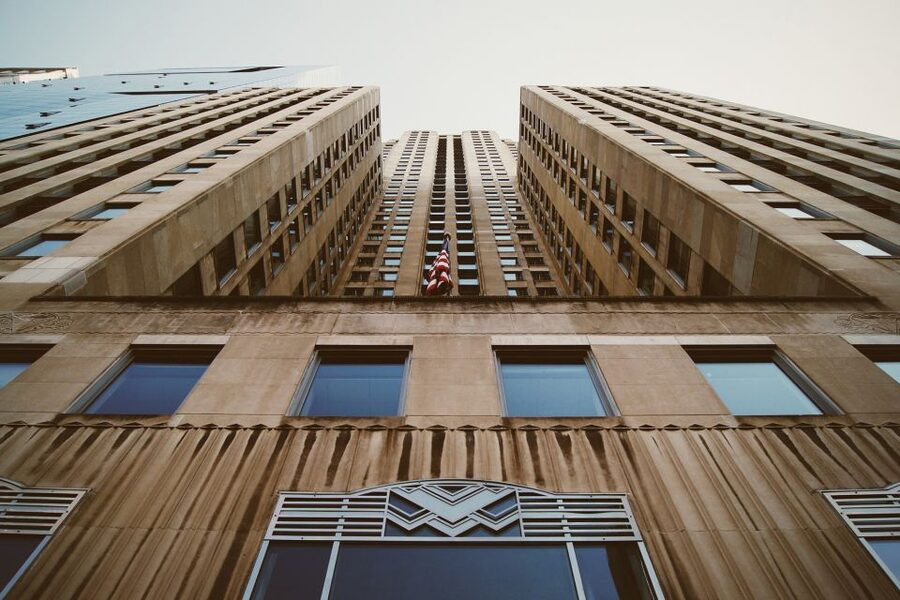
The tour enters five Art Deco buildings in all. The supplied details identify four by name: the Carbide and Carbon Building, Chicago Motor Club Building, Trustees System Service Building, and Engineering Building. The fifth stop is part of the route, but its name is not specified in the booking information.
That is a small point, but it is worth knowing if you are planning your day around particular buildings. The experience promises access to five iconic Art Deco interiors, yet you should not assume that every stop will be named in advance or that access to every interior is identical on every departure.
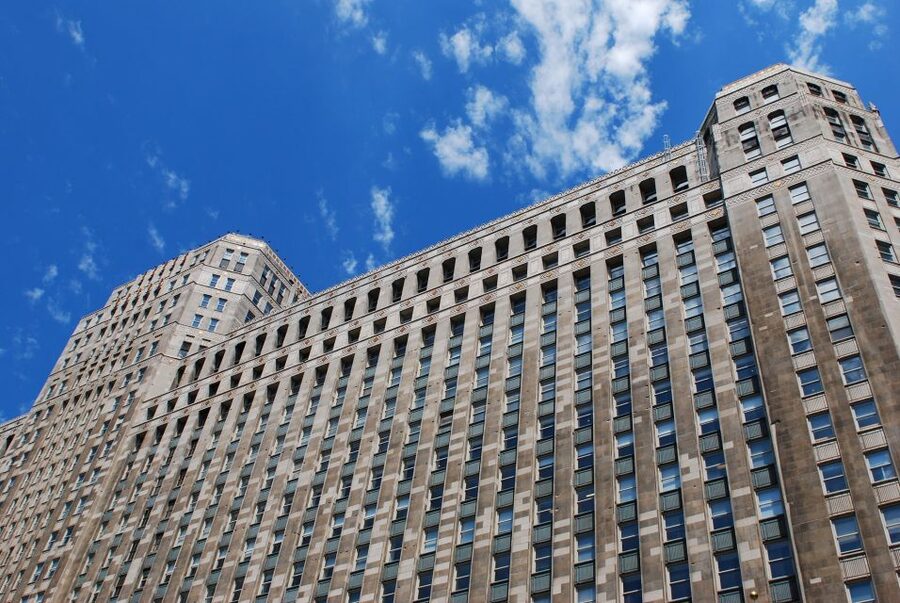
The walk ends at the Merchandise Mart. This gives the route a natural finish because the Mart represents commercial Chicago on a grand scale. It also means you do not return to the starting point, so plan your next activity from the Merchandise Mart area rather than expecting a circular walk.
Admission to Chicago Architecture Center exhibits is included with the experience. If you have time, this adds useful context after the walk. The exhibits can help you organize what you have just seen, especially if the tour is your first serious introduction to Chicago architecture.
What the docent adds to the experience
The guides are certified volunteer docents trained by the Chicago Architecture Center. They receive hundreds of hours of training in Chicago architecture and history, so the tour is built around interpretation rather than simple directions between buildings.
That training is reflected in the strongest part of the experience: the explanations. The feedback consistently points to guides who are funny, clear, detailed, and good at setting a comfortable pace. One participant described the guide as both amusing and well informed about the subject, while another praised the balance of pace and information.
Those details matter. A walking tour can fail by moving too fast, cramming in too many facts, or spending too long on one doorway. Here, the comments point to a measured pace and useful explanations. The tour is informative without needing to feel like a lecture.
No individual guide names are provided, and the docent changes by departure. You should expect a trained local storyteller rather than a specific named guide. That is a good reason to judge the experience by the Chicago Architecture Center’s training system, not by an expectation of one particular person.
Is $35 good value?
The listed price is $35 for a group of up to one person, so check the booking screen carefully to confirm how the total is calculated for your party. The unusual wording makes it especially important not to assume the price is automatically a standard per-person rate.
For that cost, you receive a 90-minute walking tour, entry into five Art Deco buildings, a certified docent, and admission to Chicago Architecture Center exhibits. The value is strongest if you care about interiors. Many architecture walks can show you façades from the pavement, but this one takes you into public spaces that you would not likely study in the same way on your own.
The tour also supports the Chicago Architecture Center’s educational work. Ticket income helps fund programs such as Girls Build!, Teen Fellows, the Newhouse Architecture + Design Competition, and free community events including Open House Chicago. That does not replace the need for a good tour, but it gives your purchase a wider civic purpose.
I would consider it a fair buy for a first visit to Chicago or for anyone who already enjoys architecture. It is less useful if you want a broad survey of the whole city, a skyscraper viewpoint, or a long outdoor walk. This is a concentrated lesson in one style and one period.
Timing, weather, and what to bring
The tour lasts 90 minutes, making it easy to fit before lunch, after a morning museum visit, or before an evening activity. Check availability for the departure times that fit your schedule.
Tours leave in rain or shine, and weather does not qualify for a refund. Bring a coat, umbrella, or rain shoes as needed, but keep your belongings compact. Pets are not allowed, although service animals are welcome.
Do not bring luggage or large bags. Secure storage is not available for luggage or strollers, and there is no coat check. This is the most important logistical warning for people arriving from a hotel, train station, or airport.
The tour is wheelchair accessible. Still, accessibility in historic and working buildings can involve details that are not covered in the general description, so ask the provider about your specific needs before departure if necessary.
Cancellation is free up to 24 hours before the tour for a full refund. You can also reserve now and pay later, which helps if your Chicago schedule is still shifting.
Who should book this Chicago walk?
I would recommend it to you if you like buildings, city history, design, or the small clues that explain how a place once saw itself. It also works well for first-time Chicago visitors who want a short, organized introduction to the city’s architecture without committing to a full-day program.
The tour suits adults and older children who can keep pace and listen in working building lobbies. The small group helps if you want to ask questions, take notes, or get a closer look at details the guide identifies.
It may not suit you if you dislike walking, need to carry a stroller or suitcase, or want a tour focused on famous exterior views only. The route is also not a weather-proof indoor program. You move between buildings, and the walk continues in poor weather.
If you are mainly interested in the Chicago River itself, this is not a river cruise or a waterfront history tour. The river corridor provides the setting, but the focus is Art Deco architecture and interior design.
Should you book it?
Book this tour if you want to see the inside of five landmark-era skyscrapers and understand why their decoration looks the way it does. The trained docent, small group, and clear 90-minute format make it a strong choice for a focused architecture outing.
I would skip it only if your schedule cannot handle a rain-or-shine walk or if you need to bring large bags or a stroller. For everyone else, the combination of access, context, and Chicago Architecture Center support offers solid value, especially when the city’s most interesting details are often above your eye level or just inside a lobby you might otherwise walk past.
FAQ
How long is the Art Deco skyscrapers walking tour?
The tour lasts 90 minutes.
Where does the tour meet?
Meet at 30 N LaSalle Street and arrive 10 minutes before departure with your confirmation available.
Where does the tour end?
The tour ends at the Merchandise Mart.
How many buildings can I enter?
The tour includes entry into the lobbies of five iconic Art Deco buildings.
Is the tour wheelchair accessible?
Yes, the tour is wheelchair accessible.
Can I bring luggage, a stroller, or a pet?
Large bags, luggage, and strollers are not allowed, and secure storage is not available. Pets are not allowed, but service animals are welcome.
Just added in Chicago
- Chicago: Architecture and Engineering Marvels Walking Tour★ 5.0 · 3 reviews
- Private Downtown Chicago TV and Movie Sites Guided Walking Tour★ 4.5 · 3 reviews
- Black Heritage Tour★ 5.0 · 3 reviews
- Private SUV Transfer from Chicago Downtown to Midway airport★ 5.0 · 3 reviews
- Private Holiday City Tour★ 5.0 · 3 reviews
- BYOB Chicago River Guided History Tour★ 5.0 · 4 reviews
- Chicago 4-Hour Sightseeing Transfer by Luxury SUV★ 4.5 · 3 reviews
- Chicago, Cloud Gate, Grant Park Full-Day City Tour★ 4.0 · 4 reviews
Chicago Architecture Tours, compared.
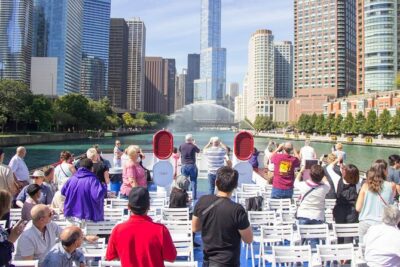
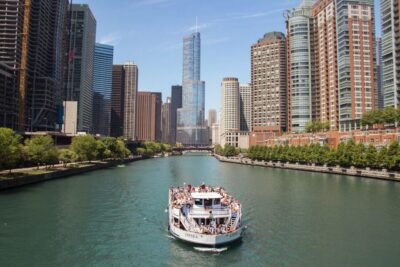
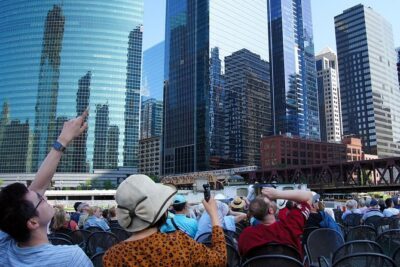
Chicago Architecture Center River Cruise aboard First Lady
Read our review →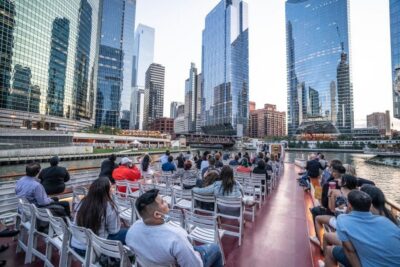
Architecture River Cruise Skip-the-Ticket Line
Read our review →
Chicago River 45-Minute Architecture Tour from Magnificent Mile
Read our review →
45-Minute Family-Friendly Architecture River Cruise
Read our review →Browse the lists this tour appears in