
Reviewed · CHICAGO IMMERSIVE & INDOOR ATTRACTIONS
Chicago-Rosemont Indoor Skydiving with Two Flights
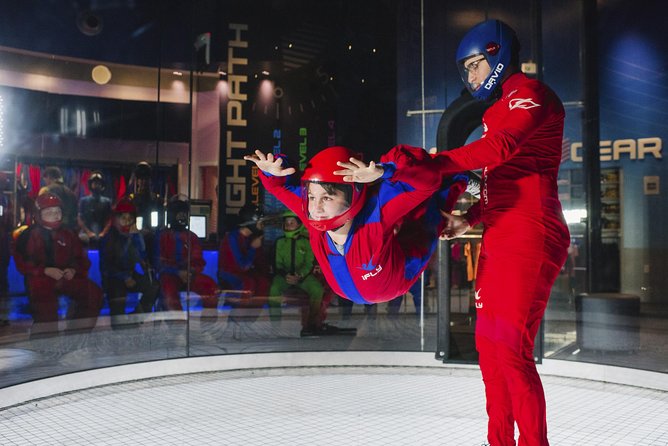
Floating on a column of air at up to 175 mph is the main event here, and you never have to leave the building or leap from an airplane. At iFLY Chicago-Rosemont, an instructor guides you through body position, then helps you stay airborne inside an enclosed vertical wind tunnel.
I like the two separate 60-second flights, since the first gives you time to get comfortable and the second lets you use what you learned. I also like the hands-on instruction, especially for children and first-timers. The main drawback is simple: two minutes of actual flight can feel short for the $131.25 price, even though the full visit lasts about 75 to 90 minutes.
- Two one-minute flights: You fly one at a time with an instructor, not packed into the tunnel with other people.
- No skydiving experience needed: Training, equipment, and a certificate of flight achievement are included.
- A powerful 800-horsepower tunnel: Air speeds reach roughly 130 to 175 mph, creating a stable cushion beneath you.
- Family-friendly age range: Children can fly from age three, with a parent or guardian waiver required for anyone under 18.
- Skilled instructors make the difference: Instructors named Maddie, Maddison, and Adam have been praised for working well with children and showing impressive tunnel tricks.
- Plan your arrival carefully: Check in 10 to 15 minutes early, wear lace-up shoes, and call the local facility directly if you need to reschedule.
In This Review
- What You Are Really Buying for $131.25
- Arriving at 5520 Park Place in Rosemont
- Training Comes Before the Air
- Inside the 800-Horsepower Wind Tunnel
- Two Flights, One at a Time
- The Instructors Are the Key Part of the Experience
- Who Will Enjoy It Most
- What to Wear and What to Leave Behind
- Is It Scary, Difficult, or Hard to Breathe?
- How the Timing Works in a Chicago Visit
- The Certificate and the After-Flight Feeling
- Should You Book the Rosemont Wind Tunnel?
- FAQ
- How does the Chicago-Rosemont wind tunnel work?
- How many flights are included?
- Do I fly alone or with a group?
- How long does the full experience take?
- Do I need previous experience?
- What is the minimum age?
- Is there a height restriction?
- Are there weight restrictions?
- What should I wear?
- Can I cancel or reschedule my booking?
What You Are Really Buying for $131.25
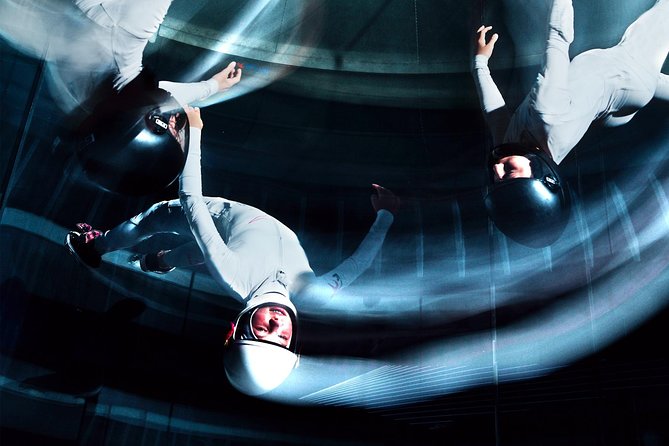
The price includes two flights for one person, training, the flight suit and safety gear, one-on-one help from a certified instructor, a certificate, and all taxes and handling charges. You do not pay extra for the basic equipment or the instruction.
The fair way to judge the value is to separate the 120 seconds of flight from the rest of the experience. The time in the tunnel is brief, but it is the part that most people remember. You also receive a proper orientation, time to get suited up, coaching between flights, and a certificate at the end.
For a person who wants a low-risk introduction to the sensation of freefall, the price is reasonable enough for a special occasion. It is especially easy to justify as a birthday gift or family activity. One parent described bringing a son-in-law for his birthday, and the family enjoyed watching his reaction almost as much as the flight itself.
Still, this is not a full afternoon attraction. You are paying for a focused, high-energy experience rather than hours of entertainment. If you are booking for a group, remember that the listed price is per person. A family of four will need four separate bookings or an arrangement that covers everyone.
Arriving at 5520 Park Place in Rosemont
Your meeting point is iFLY Chicago-Rosemont at 5520 Park Pl, Rosemont, Illinois 60018. The activity begins and ends there, and hotel pickup, drop-off, food, and drinks are not included.
Arrive 10 to 15 minutes before your scheduled time. This matters because the session starts promptly, and arriving late can put your reservation at risk. The experience provider also asks you to call the Rosemont location directly if you need to change your time. Online modifications or other methods are not accepted for rescheduling.
The booking is offered in English, and confirmation is provided when you reserve. Start times can be selected to fit your day, which makes this easier to pair with other Rosemont or Chicago plans. Give yourself enough room before and after the session, since the total visit may run about 75 minutes according to the tour details and up to around 90 minutes according to the first-time flyer information.
More indoor attractions for a wet day:
- Flyover in Chicago
★ 5.0 · 486 reviews - Flyover in Chicago: An Immersive Flying Theatre Experience
★ 4.8 · 362 reviews - Chicago Lincoln Park Indoor Skydiving with Two Flights
★ 4.5 · 67 reviews
Training Comes Before the Air
The first part is not glamorous, but it is important. You put on the provided gear and attend a specialized training session with an expert flight instructor.
You learn the basic body position used in the tunnel, along with hand signals and practical safety instructions. First-time flyers must attend this class. It is not optional, and that is a good thing: a few minutes of preparation makes the flight less confusing once the air starts moving.
Wear comfortable clothing under the flight suit. Pants and a shirt without a collar work best. Choose well-fitting lace-up sneakers or running shoes, and tie long hair into a braid and low bun. Remove watches, rings, necklaces, bracelets, earrings, and loose hair accessories. Empty your pockets before entering the chamber. Lockers are available, but leaving valuables at home is easier.
You can wear eyeglasses, since larger goggles are available to fit over them. The flight suit also has a practical purpose. Its handles give the instructor something secure to hold if you need help getting into position.
Inside the 800-Horsepower Wind Tunnel
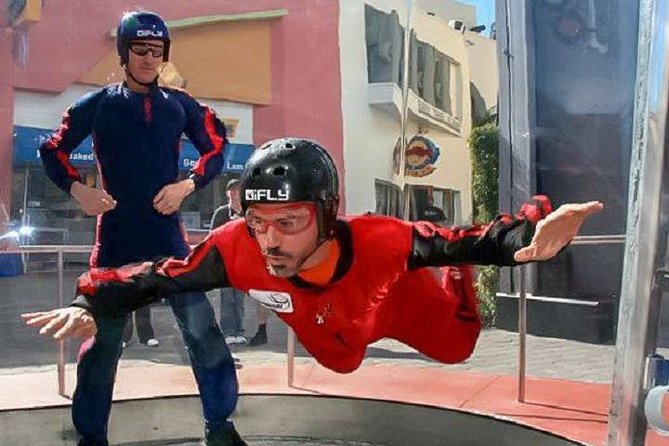
The tunnel moves air in a continuous loop. Fans draw air upward through the flight chamber, push it down the sides, compress it, and send it back through the chamber. The result is a smooth vertical column strong enough to support your body.
You do not jump, fall, or step out of an aircraft. The operator gradually increases the wind speed until you and the instructor are airborne. The air may reach between 130 and 175 mph, or about 209 to 282 kph, but the wall-to-wall airflow keeps you inside the flying area.
The sensation is more like strong wind in your face than a stomach-dropping fall. You can breathe normally through your nose or mouth. For many people, this makes the experience less frightening than they expect. You still get a serious rush, but you are in an enclosed chamber with an instructor beside you.
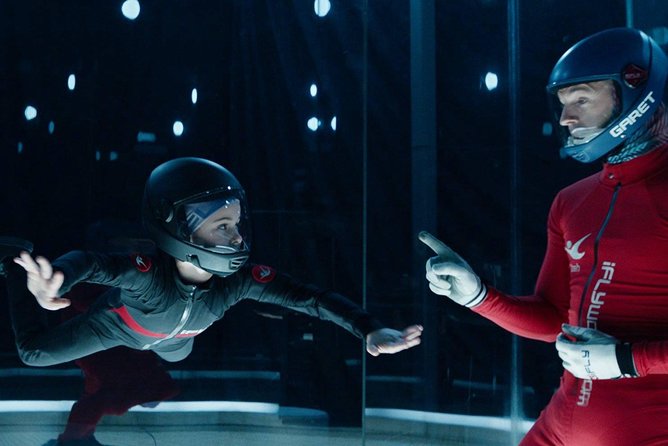
The instructor is present throughout your flight. That matters because small changes in your arms, legs, or chin position affect how your body moves. A relaxed posture helps. Fighting the air or trying to rush through the instructions does not.
Two Flights, One at a Time
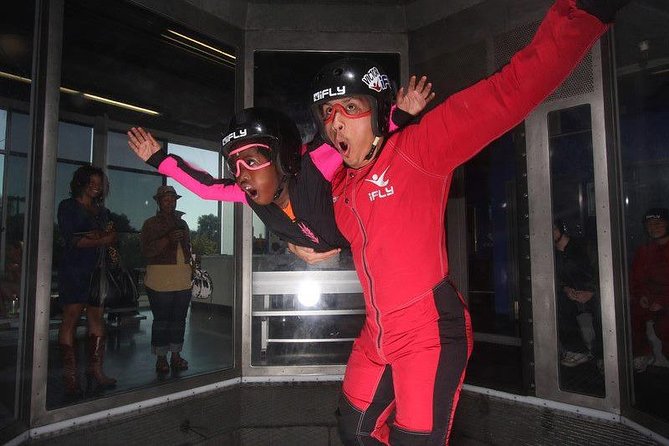
Although the session is shared, you fly individually with your instructor. The information provided for the experience describes groups of up to six people, while the overall activity may allow as many as 12 people. Group size can vary, so expect to watch other participants between your own turns.
That shared setup is not necessarily a weakness. You get a chance to see how the tunnel works before entering it, and younger flyers often enjoy watching family members take their turns. Friends and relatives who do not participate can watch from the observation area.
Your first flight is mainly about finding balance. The instructor may support you physically and guide your position through hand signals. You will have one 60-second session, which sounds short on paper but can feel surprisingly long once you are working against the air.
The second flight gives you a chance to improve. You already know the basic position, the sound of the tunnel, and the feeling of entering the airflow. Some first-timers can begin making turns or moving around during this flight, but flips and more advanced tricks are reserved for experienced flyers.
If you want to try a special feature such as High Fly, ask the instructor what is suitable for your ability and included in your session. High Fly was singled out as a fun addition, but your instructor should decide what is safe for you.
A different way to spend an afternoon in Chicago:
- Chicago Architecture River Cruise
★ 5.0 · 15,756 reviews - Chicago River 90-Minute Architecture Tour
★ 4.5 · 9,629 reviews - Chicago River: 1.5-Hour Guided Architecture Cruise
★ 4.8 · 8,046 reviews - Chicago: Gangsters and Ghosts Walking Tour
★ 5.0 · 7,155 reviews
The Instructors Are the Key Part of the Experience
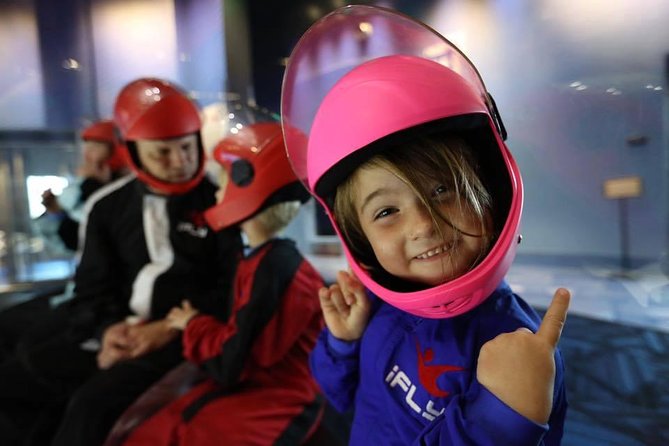
The machine creates the air, but the instructor determines how much you get from it. The strongest feedback about this activity centers on staff who make the process clear, calm, and fun.
Maddie has been praised for her instruction and for the impressive demonstration she gave at the end of a session. Maddison has also been noted for explaining the process well and working especially effectively with children. Adam received similar praise for his skill and for the tunnel tricks he demonstrated.
You may not have one of these specific instructors, and staff assignments can change. The useful point is that your session depends heavily on your instructor’s coaching. Pay close attention to the hand signals, ask how to improve between flights, and do not be shy about saying if you feel unsure.
The instructor demonstration at the end can be a highlight. Watching an experienced flyer spin, turn, and control the tunnel shows what the equipment can do once someone has mastered it. It also puts your own first attempt in perspective. You are not expected to perform like a professional after two minutes.
Who Will Enjoy It Most
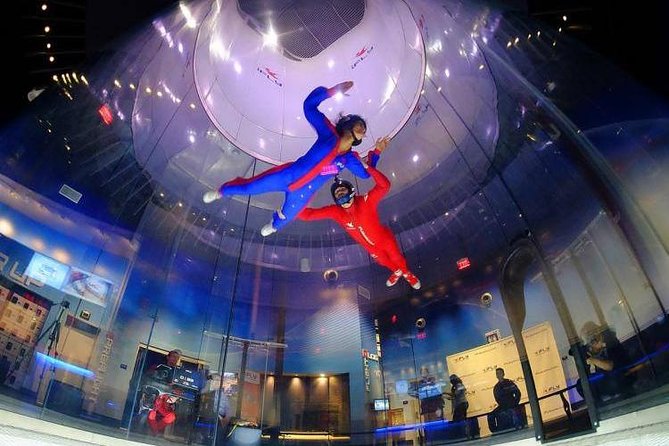
This works well for families, couples, friends, solo visitors, and birthday groups. Children as young as three can participate, and there is no upper age limit stated. Anyone under 18 needs a parent or guardian to sign the waiver.
It is a good choice if you want the feeling of flight without the commitment, fear, or cost of jumping from a plane. It also suits people who like active experiences but need something indoors. No height restriction is listed, and most people can take part.
The activity may also accommodate people with physical or cognitive challenges who want to try indoor flight. Speak with the local facility before booking if you need particular assistance, since the staff must decide what can be done safely.
There are firm health restrictions. You cannot fly if you are pregnant, wearing a hard cast, or have certain previous conditions involving your neck, back, heart, injuries, or shoulder dislocations. People between 260 and 300 pounds require an additional evaluation at check-in, and anyone over 300 pounds cannot be accommodated. If your weight falls in that range, note it in the special requirements section when booking to avoid delays.
What to Wear and What to Leave Behind
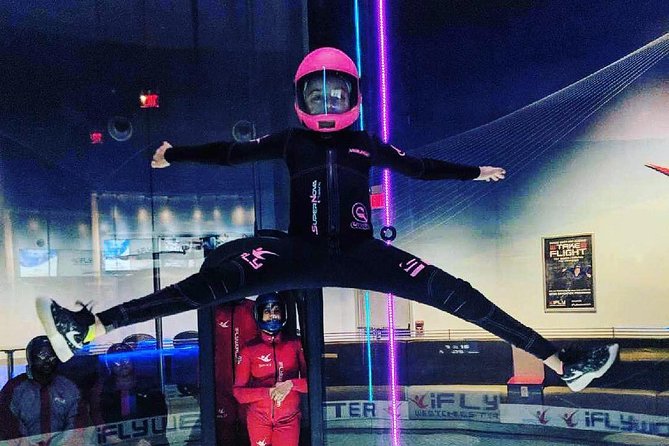
Your clothing choices can make the session more comfortable. Wear casual clothes that fit under a flight suit, with pants and a shirt without a collar preferred.
Your shoes should be closed, secure, and laced. Running shoes are a good choice. Avoid loose footwear, sandals, or anything that could come off in the tunnel.
Remove all jewelry and anything that could flap, snag, or fall. That includes watches, rings, bracelets, necklaces, earrings, and loose hair items. Empty your pockets before your turn. Eyeglasses are allowed with the larger goggles supplied at the facility.
These rules are not needless fussiness. The tunnel has strong air movement, and the instructor needs a clear, safe way to guide you. Preparing at home saves time at check-in.
Is It Scary, Difficult, or Hard to Breathe?
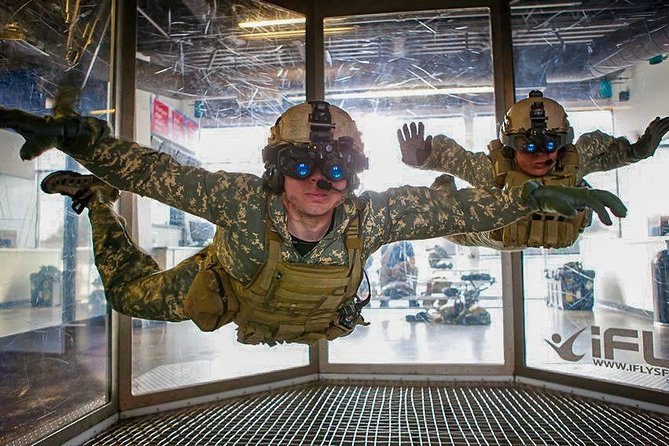
For most first-timers, the biggest surprise is that the experience feels more manageable than the phrase indoor skydiving suggests. There is no sensation of falling, and the enclosed chamber removes the height issue associated with jumping from an aircraft.
You will feel powerful wind on your face, similar to sticking your head out of a moving car. Breathe normally and listen to the instructor. The first few seconds may feel awkward as you learn to hold your body in the correct position, but the instructor remains with you.
The activity is physical. You need to respond to directions and hold a stable position in moving air. The supplied restrictions are important, especially for anyone with prior neck, back, heart, or shoulder problems. If you are unsure about your condition, get medical advice before booking.
How the Timing Works in a Chicago Visit
Reserve a start time that leaves breathing room around the session. The advertised duration is about one hour and 15 minutes, while the first-time flyer information allows about one hour and 30 minutes. Treat the longer figure as the safer planning estimate.
The activity is near Chicago but located in Rosemont, so check your transport plan before choosing a start time. Since no pickup or drop-off is included, you are responsible for reaching 5520 Park Pl.
A mobile ticket is convenient, but keep your confirmation available when you arrive. The tour is typically booked about 13 days ahead, suggesting that popular times may fill before the day of your visit. If your schedule is fixed, reserving in advance is sensible.
The cancellation terms are useful but strict near the start time. You receive a full refund if you cancel at least 24 hours ahead. Cancellations or changes made inside that 24-hour window are not accepted for a refund, so do not book a tight appointment if illness or a changing schedule could be an issue.
The Certificate and the After-Flight Feeling
At the end, you receive a certificate of flight achievement. It is a small detail, but it gives children and first-time flyers something tangible to take home.
The stronger souvenir is usually the memory of the second flight and the instructor’s demonstration. Some people leave wanting to try real skydiving next, while others simply enjoy the safe indoor version. The activity does not claim to replace a jump from an airplane, but it does give you a clear taste of body control in freefall conditions.
The best part is often the contrast between expectation and reality. You arrive expecting a scary stunt, then discover that careful instruction and a stable air column make it surprisingly approachable.
Should You Book the Rosemont Wind Tunnel?
Book it if you want a memorable, active experience that works for children, adults, and complete beginners. It is particularly strong as a birthday gift, family outing, or unusual addition to a Chicago visit. The excellent instructor support, two flights, and included equipment make the process easy for a first attempt.
Skip it if you want long flight time, dislike shared sessions, or need a flexible same-day cancellation option. The actual airtime is only two minutes, and the $131.25 cost feels high if you judge the activity only by minutes in the tunnel.
My advice is to book when the goal is a special experience, not a cheap way to fill an afternoon. Arrive early, wear proper shoes, listen closely in training, and treat the first flight as practice. The second flight is where the experience begins to click.
FAQ
How does the Chicago-Rosemont wind tunnel work?
Fans move and compress air through a vertical flight chamber. The resulting column of air rises strongly enough to support you and allow you to float.
How many flights are included?
You receive two flights for one person. Each flight lasts 60 seconds.
Do I fly alone or with a group?
You generally share the session with other people, but you fly one at a time in the chamber with your instructor. The activity information describes groups of up to six for each session, with a maximum of 12 participants for the activity.
How long does the full experience take?
The experience takes about 75 minutes according to the tour details. First-time flyer information says to allow about 90 minutes from start to finish, so plan for roughly 75 to 90 minutes.
Do I need previous experience?
No. The activity is designed for beginners, and training is included before your flight.
What is the minimum age?
Children can fly from age three. Anyone under 18 must have a parent or guardian sign the waiver.
Is there a height restriction?
No height restriction is listed.
Are there weight restrictions?
Participants must weigh less than 300 pounds. People between 260 and 300 pounds require an additional evaluation by local staff, and extra restrictions may apply.
What should I wear?
Wear comfortable clothes, preferably pants and a shirt without a collar, along with well-fitting lace-up sneakers or running shoes. Long hair should be braided and secured in a low bun.
Can I cancel or reschedule my booking?
You can cancel at least 24 hours before the start time for a full refund. Changes or cancellations made less than 24 hours before the experience are not accepted for a refund. To reschedule, call the Rosemont location directly.
Just added in Chicago
- Chicago: Architecture and Engineering Marvels Walking Tour★ 5.0 · 3 reviews
- Private Downtown Chicago TV and Movie Sites Guided Walking Tour★ 4.5 · 3 reviews
- Black Heritage Tour★ 5.0 · 3 reviews
- Private SUV Transfer from Chicago Downtown to Midway airport★ 5.0 · 3 reviews
- Private Holiday City Tour★ 5.0 · 3 reviews
- Chicago 4-Hour Sightseeing Transfer by Luxury SUV★ 4.5 · 3 reviews
- BYOB Chicago River Guided History Tour★ 5.0 · 4 reviews
- Chicago, Cloud Gate, Grant Park Full-Day City Tour★ 4.0 · 4 reviews
Chicago Immersive & Indoor Attractions, compared.
Flyover in Chicago: An Immersive Flying Theatre Experience
Read our review →
Chicago Lincoln Park Indoor Skydiving with Two Flights
Read our review →
Browse the lists this tour appears in