
Reviewed · CHICAGO ARCHITECTURE TOURS
Chicago: Secret Interiors Architecture Walking Tour
Chicago’s best architectural surprises are often indoors. This two-hour walk takes you from Union Station into the Loop, where grand lobbies, domes, mosaics, and carefully handled light reveal what the street facades only hint at. I love the way it connects engineering problems with beautiful design, and I like that it gets you into buildings you might otherwise pass without entering.
The guides are a major strength. Grant, Talia, Annie, Angel, and Matthew are repeatedly praised for clear explanations, humor, local stories, and an easy willingness to answer questions. The main drawback is practical: much of the tour is outside, and some buildings involve stairs, so winter weather and mobility need a little thought.
In This Review
- Key points to know before you go
- Why Chicago’s interiors are worth your time
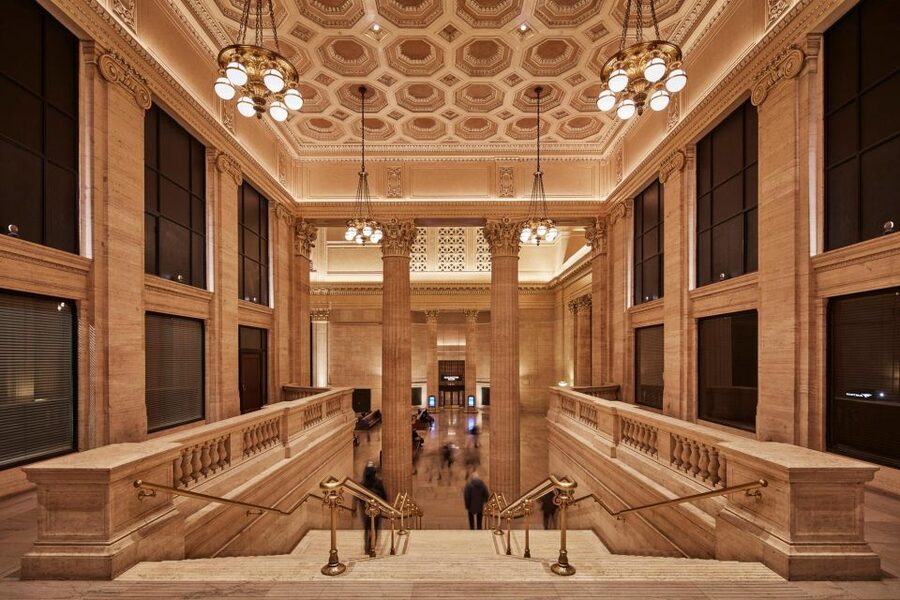
- Starting inside Union Station’s Great Hall
- South La Salle Street and the Loop
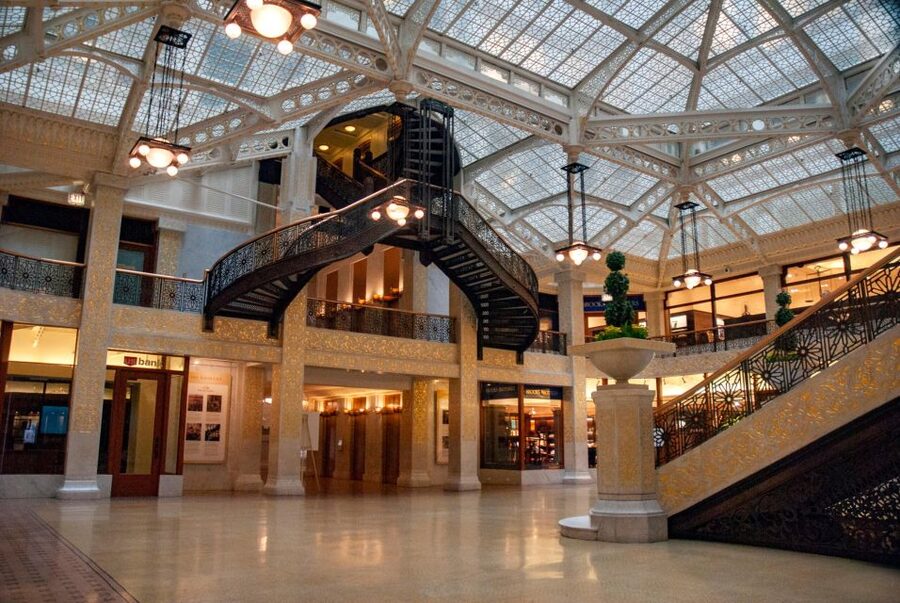
- The Rookery Building’s dramatic interior
- The Field Building and Marquette Building
- Palmer House and the value of looking up
- The Chicago Cultural Center’s art and light
- Marshall Field and Company Building, the final stop
- What the $35 price gets you
- Guides, group feel, and pace
- Accessibility and useful planning advice
- Who should book this Chicago architecture walk?
- Should you book the Secret Interiors Architecture Walking Tour?
- FAQ
- How long is the Chicago Secret Interiors Architecture Walking Tour?
- How much does the tour cost?
- Where does the tour meet?
- Where does the tour finish?
- What language is the tour offered in?
- Is the tour wheelchair accessible?
- What should I bring?
- Is the Rookery Building included every day?
- Can I cancel or pay later?
Key points to know before you go
- The interiors are the main event: See domes, mosaics, ornate craftsmanship, and design details that are easy to miss from the sidewalk.
- Union Station is a useful starting point: Meet inside the Great Hall beneath the Clinton Street sign, not outside on the street.
- The tour links beauty to problem-solving: Your guide explains how architects handled light and structural demands in a growing city.
- Expect a brisk city walk: The route covers several Loop buildings in about two hours, with most of the time outdoors.
- Sunday changes the plan: The Rookery is closed on Sundays, so an alternative stop is used.
- It costs $35 per person: That is fair value if you want access, context, and stories rather than a quick look at facades.
Why Chicago’s interiors are worth your time
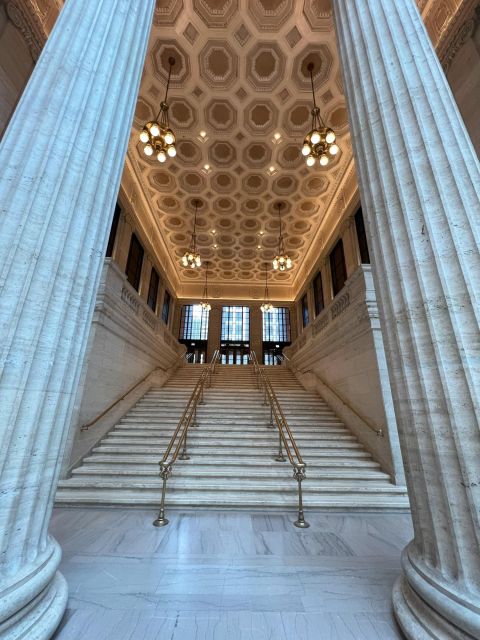
Chicago is famous for its skyline, but the city’s older buildings often save their best work for the inside. From the pavement, you may notice a grand entrance or a handsome facade. Once inside, you can find patterned mosaics, elaborate ceilings, domes, and small decorative choices that explain the building’s original ambition.
This tour is built around that contrast. You move through the Loop with an English-speaking guide, pausing at important buildings and hearing why particular materials, structural methods, and lighting solutions mattered. The subject is not just decoration. You also learn how architects and engineers responded to the hard demands of a dense, fast-growing city.
I especially like that the experience treats architecture as a human story. Industrial magnates, famous personalities, and infamous figures once moved through these corridors during the Gilded Age and Roaring Twenties. Those stories give the polished interiors some grit. You are not simply looking up at a ceiling. You are thinking about who commissioned it, who used it, and what the building was meant to say about Chicago.
More architecture tours in Chicago:
- Chicago Architecture River Cruise
★ 5.0 · 15,756 reviews - Chicago River 90-Minute Architecture Tour
★ 4.5 · 9,629 reviews - Chicago River: 1.5-Hour Guided Architecture Cruise
★ 4.8 · 8,046 reviews
Starting inside Union Station’s Great Hall
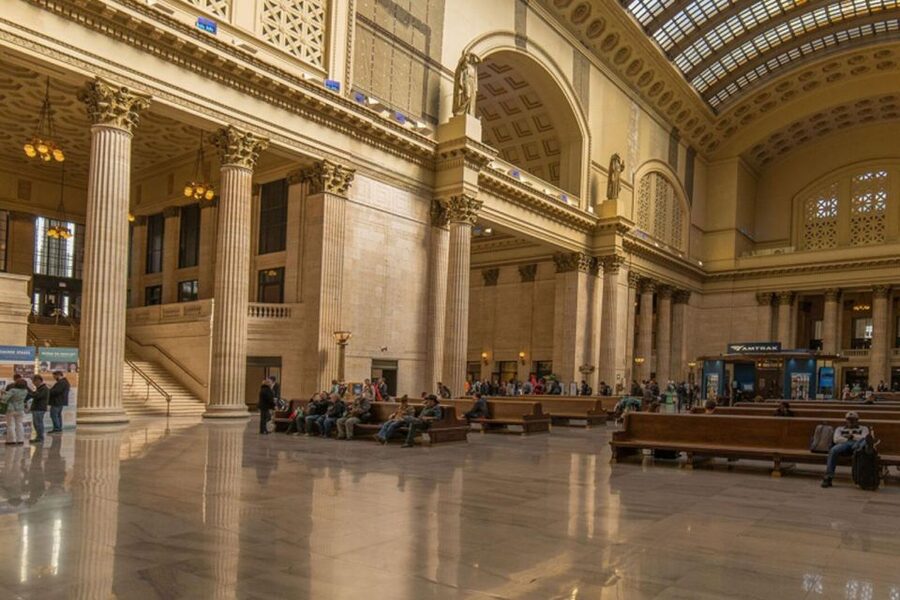
The meeting point is inside Union Station’s Great Hall, beneath the Clinton Street sign. This is a sensible place to begin because you are already in one of Chicago’s major historic public spaces, and it gives the group a clear indoor rendezvous point.
Arrive with comfortable shoes. The route is a walking tour through the Loop, and although several reviews describe the pace as manageable, one person found it brisk and noted stairs in and out of buildings. The walk is not described as exhausting, but you should still allow for city sidewalks, standing, outdoor stops, and changes between indoor spaces.
Starting at Union Station also helps frame the tour. You begin with a major transportation setting, then move toward South La Salle Street and the cluster of historic buildings that shaped Chicago’s business center. The transition from station to street is part of the story: architecture here was designed for movement, commerce, prestige, and sheer urban growth.
South La Salle Street and the Loop
The route continues through the Chicago Loop, with South La Salle Street as an early area of focus. This part of the city gives you a useful sense of how architectural styles sit side by side. Older commercial buildings, monumental civic spaces, and later additions create a visual record of changing ideas about business and public life.
Your guide’s commentary matters most here. A facade can be impressive without being easy to read. You might notice columns, arches, stonework, or repeated patterns, but the guide explains what those choices were doing and how they fit into Chicago’s rise as an architectural center.
The outdoor portions also give you time to see buildings in full scale. That is something an interior-only visit cannot provide. You can compare the public face of a building with the atmosphere inside it, then consider how architects moved from heavy street walls to brighter, more open interior spaces.
The Rookery Building’s dramatic interior
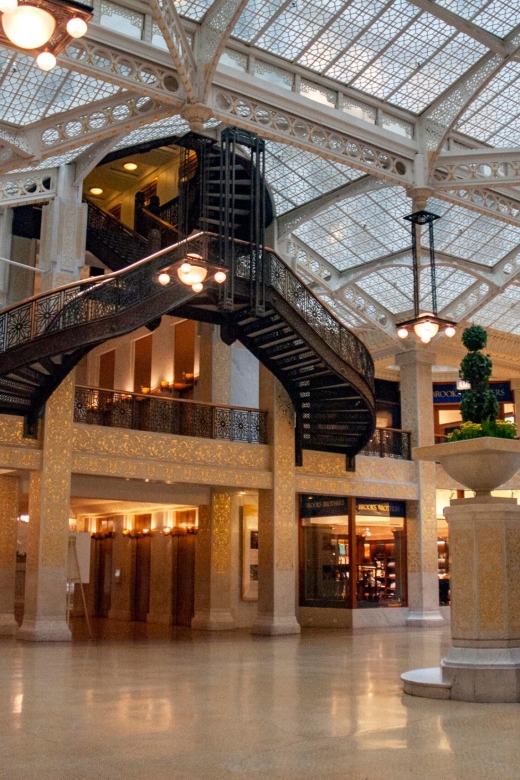
The Rookery Building is one of the tour’s key stops and a strong reason to book. Its interior is known for exquisite design, and the experience focuses on the kinds of details that a casual passerby would probably miss.
Here, your guide discusses architectural innovation, craftsmanship, and the ways light was managed inside a substantial urban building. The tour description places special attention on domes, mosaics, and the challenge of bringing illumination into large structures. That makes the stop more than a photo opportunity. You learn to look at how a space works as well as how it looks.
The Rookery is closed on Sundays. If you book for that day, an alternative stop is included instead. I would not cancel a Sunday booking solely for this reason, but if the Rookery is your top priority, choose another day and check the current schedule before paying.
More walking tours in Chicago:
- Chicago: Gangsters and Ghosts Walking Tour
★ 5.0 · 7,155 reviews - Chicago Favorites Ultimate Food and Walking Tour
★ 5.0 · 1,962 reviews - Chicago: Gangsters and Ghosts Guided Walking Tour
★ 4.7 · 1,697 reviews - Chicago in a Day: Food, History & Architecture Walking Tour
★ 5.0 · 1,153 reviews
The Field Building and Marquette Building
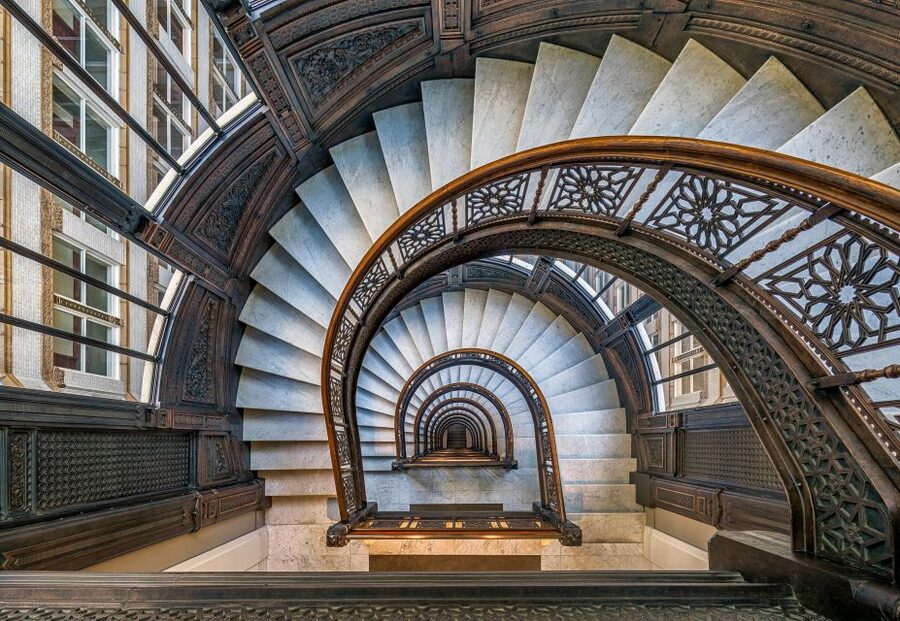
The Field Building and Marquette Building continue the interior-focused portion of the walk. Each stop adds another example of how Chicago architects used structure, decoration, and circulation to give a commercial building a distinct identity.
You may find the most useful part is the comparison between buildings. Instead of hearing one long lecture about Chicago architecture, you see different responses to similar needs: how to make a large building feel impressive, how to guide people through it, and how to make interior spaces feel bright and memorable.
The guides also connect architectural choices to Chicago’s larger story. Grant is praised for historical detail and conversational explanations. Talia is frequently described as warm, funny, and especially good at explaining beautiful interiors. Annie is noted for answering questions and adding helpful local recommendations. The exact guide depends on the departure, but the pattern is clear: this is a people-led tour, not an audio recording with a fixed script.
One useful tip is to ask questions when a doorway, decorative panel, or ceiling catches your eye. One person wished the guide had explained more of the smaller decorations while walking, but also found the guide happy to discuss those details when prompted. If you are interested in ornament, do not wait for every detail to be announced.
Palmer House and the value of looking up
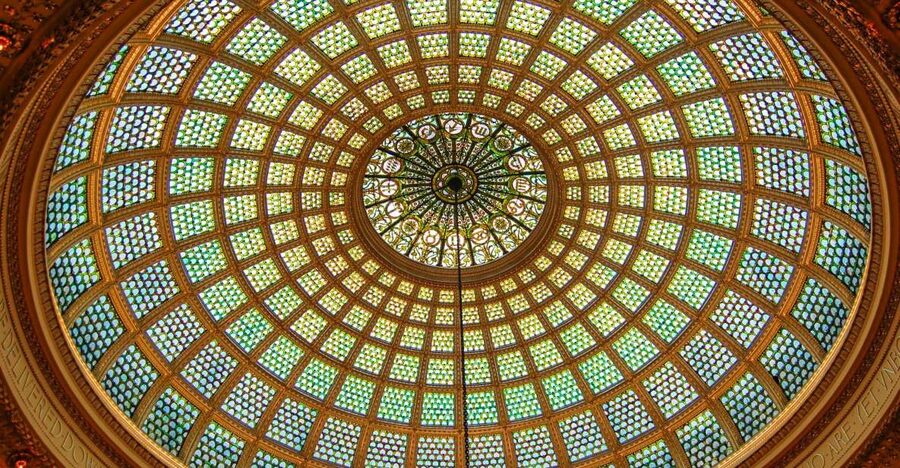
The Palmer House adds another grand interior to the route. It is the kind of stop where you should slow your eyes down. Look above the obvious focal point and check the edges of ceilings, entrances, and corridors. The point of a tour like this is to train you to notice the features you would otherwise hurry past.
That habit is one of the tour’s best takeaways. A guide can explain a building for only a few minutes, but the skill of reading a space stays with you for the rest of your trip. Afterward, you may find yourself examining a lobby’s lighting, asking why a doorway is shaped a certain way, or noticing how ornament helps direct movement.
The tour also gives you a useful contrast between private power and public display. Buildings connected to hotels, commerce, and major companies were designed to impress. Their interiors communicated wealth, confidence, and permanence. The stories of the people who passed through them add another layer, especially when the guide connects architecture with the ambitions and scandals of the period.
The Chicago Cultural Center’s art and light
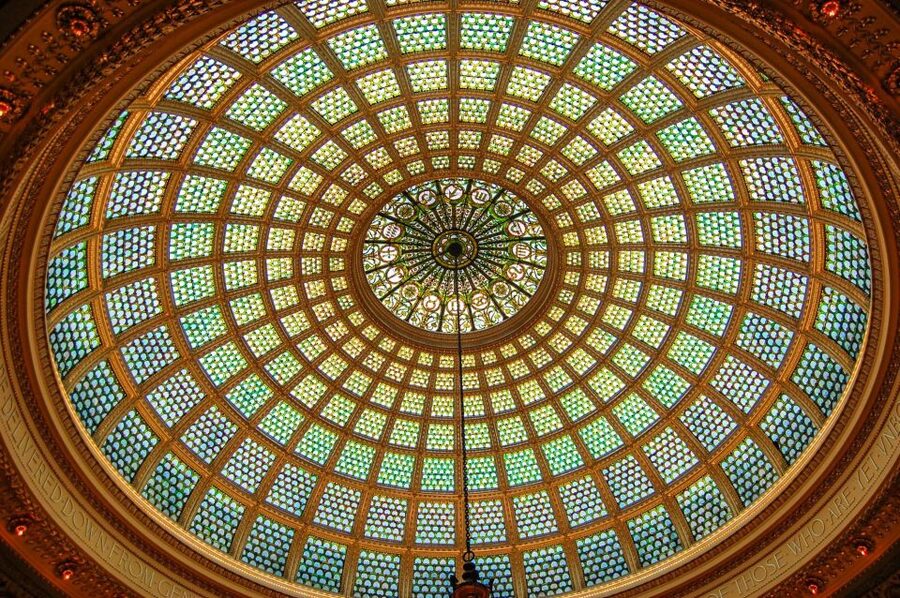
The Chicago Cultural Center is another important stop, particularly if you enjoy decorative arts. The route highlights the building’s architectural splendor and the relationship between design and natural or artificial light.
The interior details here help explain why Chicago’s architecture cannot be reduced to skyscraper engineering. The city is also about mosaics, glass, ornamental surfaces, and carefully framed public rooms. These elements turn a functional building into a place people remember.
Your guide also explains how each building differs from the next. That keeps the tour from becoming a parade of similar old facades. You hear about styles and innovations across different periods, from early skyscrapers that changed city views to modernist work that reflects Chicago’s continuing architectural development.
Marshall Field and Company Building, the final stop
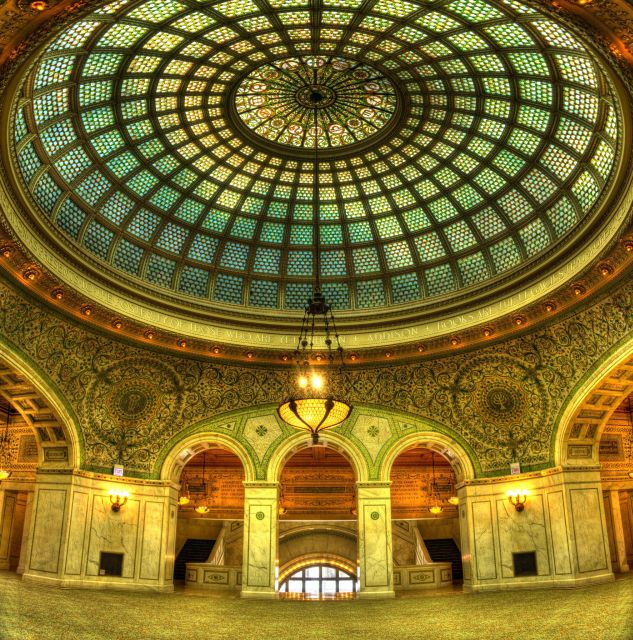
The tour finishes at the Marshall Field and Company Building. This ending gives you one last chance to examine a major commercial interior and think about the themes that have run through the walk: public display, skilled craftsmanship, engineering, and the link between architecture and commerce.
Finishing here is also convenient if you want to continue exploring the Loop afterward. The tour does not return to Union Station, so plan your next move from the final building. The route can work well as a bridge between the station and other downtown sights, though you should not treat it as a simple transfer. You are stopping often, listening, and looking closely.
At this final stop, ask your guide to point out details that connect with earlier buildings. Comparing similar features across several interiors is where the tour’s ideas begin to click. You see that Chicago’s architectural story is not one style replacing another. It is a running argument about materials, light, height, business, and civic pride.
What the $35 price gets you
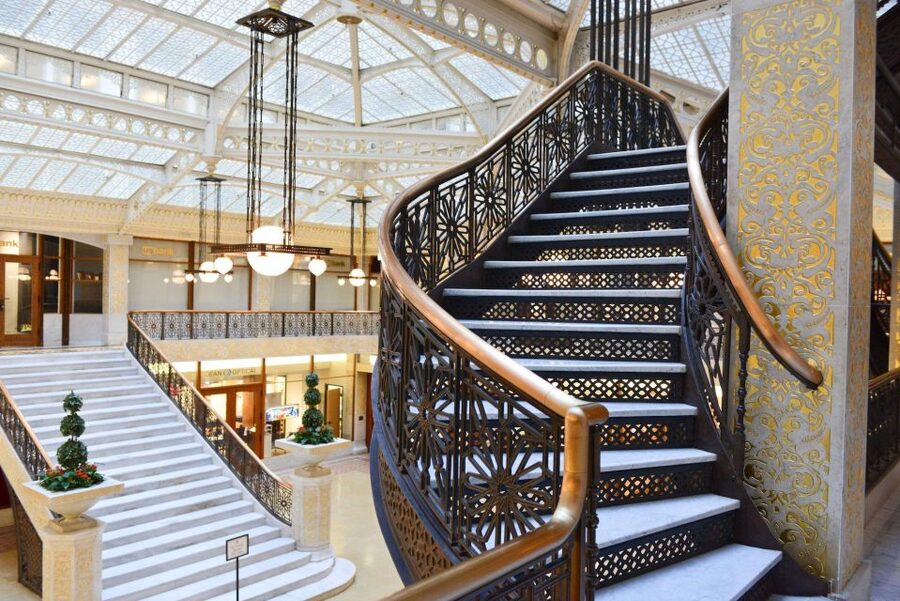
At $35 per person, this is a reasonably priced walking tour for Chicago. You are paying for two hours with a live guide, access to several notable interiors, and interpretation that would be difficult to assemble on your own in one afternoon.
The value is strongest if you care about context. You can walk past the Rookery, Palmer House, or Cultural Center by yourself, but you may not know which details matter or how the buildings connect. The tour turns a collection of impressive rooms into a clear story about design and city growth.
The price is less compelling if you want a slow photography session or a complete architectural survey. Two hours is enough for a focused introduction, not an exhaustive study. The route covers a lot of ground, and the schedule means you will sometimes need to keep moving.
I would pair this with a Chicago river architecture cruise rather than use it as a replacement. A boat tour gives you the best broad view of the skyline and exterior forms. This walk gives you the inside story. One person who had done both preferred the boat tour, but still found this walk a strong complement. That is the right way to think about it.
Guides, group feel, and pace
The guide can shape the experience, and the names most often praised are Grant, Talia, Annie, Angel, and Matthew. Grant is described as especially strong on history, with clear delivery and practical local tips. Talia is praised for warmth, humor, and patience with questions. Annie is valued for friendly commentary and food and drink suggestions. Angel receives high marks for enthusiasm and design knowledge, while Matthew is noted for being charismatic and well informed.
Group size can vary. Some departures have been very small, including a tour with only two people, while others include families and larger groups. A small group gives you more room to ask questions and can make it easier to hear. The experience remains guided and conversational rather than self-directed.
The pace is generally described as comfortable or leisurely, but you should not assume it will be slow. You cover a large section of the Loop in roughly two hours. Comfortable shoes are essential, and winter visitors should bundle up because about 90 percent of the time may be outside.
Accessibility and useful planning advice
The activity is marked wheelchair accessible, which is important information when planning. At the same time, one participant reported several stairs in and out of buildings, and another noted that the pace felt fast for their legs. If you use a wheelchair or have difficulty with stairs, confirm the current route and building access before booking.
Free cancellation is available up to 24 hours before the tour, and you can reserve now and pay later. Those options are useful when your Chicago schedule depends on weather, train arrivals, or changing plans.
For the best experience, choose a day when the buildings you most want to see are open. Sundays specifically require an alternative to the Rookery. Holidays can also affect access, as one Labor Day visit encountered closures, though the tour still provided an architectural experience.
Who should book this Chicago architecture walk?
I would recommend it to first-time visitors who want more than skyline photographs, architecture fans who care about interiors, and Chicago residents who have somehow never walked into these buildings. The route also suits families and mixed-interest groups because the stories cover engineering, design, business, art, and colorful personalities.
It is a good choice after a river cruise, not necessarily instead of one. It also works well early in your stay, since the guide can point out places to revisit and suggest nearby food and drink.
I would be cautious if you dislike outdoor walking, have trouble with stairs, or want a fully indoor experience. Chicago weather can change the mood of the tour, and winter requires proper layers. Still, for $35, the combination of access, clear storytelling, and architectural detail makes this one of the better-value ways to see the Loop from the inside.
Should you book the Secret Interiors Architecture Walking Tour?
Book it if you want to enter places you would likely overlook and learn how Chicago’s design choices solved real problems with light, structure, and movement. The tour is particularly worthwhile when you get a guide such as Grant, Talia, Annie, Angel, or Matthew, all of whom are praised for bringing energy and substance to the walk.
Choose the river cruise first if you have room for only one architecture activity and want the broadest view of the city. Choose this walking tour if domes, mosaics, ornate interiors, and personal stories are what you will remember most. For many visitors, doing both gives the fullest picture of Chicago.
FAQ
How long is the Chicago Secret Interiors Architecture Walking Tour?
The tour lasts two hours.
How much does the tour cost?
The price is $35 per person.
Where does the tour meet?
Meet your guide inside Union Station’s Great Hall, beneath the Clinton Street sign.
Where does the tour finish?
The tour finishes at the Marshall Field and Company Building.
What language is the tour offered in?
The live guided tour is offered in English.
Is the tour wheelchair accessible?
The activity is marked wheelchair accessible. However, some participants have reported stairs in and out of buildings, so confirm current access arrangements if stairs may be difficult for you.
What should I bring?
Bring comfortable shoes. Much of the tour takes place outdoors, so weather-appropriate clothing is also sensible.
Is the Rookery Building included every day?
The Rookery is closed on Sundays. An alternative stop is included on Sunday tours.
Can I cancel or pay later?
You can cancel up to 24 hours in advance for a full refund. You can also reserve your place and pay later.
Just added in Chicago
- Chicago: Architecture and Engineering Marvels Walking Tour★ 5.0 · 3 reviews
- Private Downtown Chicago TV and Movie Sites Guided Walking Tour★ 4.5 · 3 reviews
- Black Heritage Tour★ 5.0 · 3 reviews
- Private SUV Transfer from Chicago Downtown to Midway airport★ 5.0 · 3 reviews
- Private Holiday City Tour★ 5.0 · 3 reviews
- BYOB Chicago River Guided History Tour★ 5.0 · 4 reviews
- Chicago 4-Hour Sightseeing Transfer by Luxury SUV★ 4.5 · 3 reviews
- Chicago, Cloud Gate, Grant Park Full-Day City Tour★ 4.0 · 4 reviews
Chicago Architecture Tours, compared.
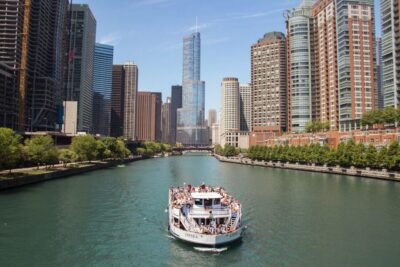
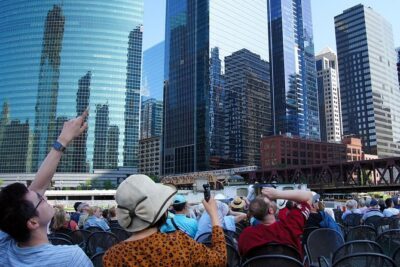
Chicago Architecture Center River Cruise aboard First Lady
Read our review →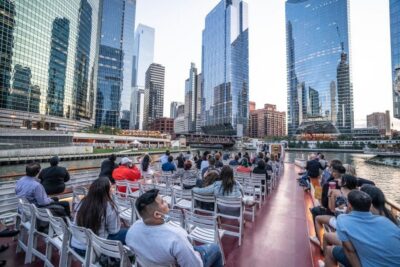
Architecture River Cruise Skip-the-Ticket Line
Read our review →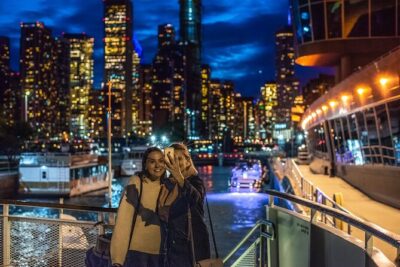
Chicago River 45-Minute Architecture Tour from Magnificent Mile
Read our review →
45-Minute Family-Friendly Architecture River Cruise
Read our review →Browse the lists this tour appears in