
Reviewed · CHICAGO ARCHITECTURE TOURS
Chicago’s Modern Skyscrapers Guided Walking Tour
Chicago’s modern skyline makes the most sense when you understand the idea behind it. This 90-minute walk connects steel-frame construction and vast glass walls with the people who made Chicago a center of Modernism, including Ludwig Mies van der Rohe and Mayor Richard J. Daley.
I like the tour’s riverfront views and its clear focus. You see landmark buildings such as Marina City, the Daley Center, and the IBM Building while learning why they look the way they do. I also like that your ticket supports the nonprofit Chicago Architecture Center and its local education programs. The main drawback is simple: the tour runs rain or shine, and there is no luggage or stroller storage.
In This Review
- Key points to know before you book
- Why Chicago is the right place to study Modernism
- Starting inside the Chicago Architecture Center
- The Reliance Building and the roots of Modernism
- Mies van der Rohe and the clean-lined city
- Marina City, Bertrand Goldberg, and a different kind of tower
- The River Walk and Chicago’s changing edge
- The Daley Center and Mayor Richard J. Daley’s influence
- The IBM Building and the logic of the modern office tower
- What the 90-minute format does well
- Price, nonprofit value, and what you receive
- Who should book this walk
- Should you book Chicago’s Modern Skyscrapers Guided Walking Tour?
- FAQ
- Where does the tour meet?
- How long does the walking tour last?
- What language is the tour offered in?
- Is the tour wheelchair accessible?
- Which buildings are highlighted?
- Which architects are discussed?
- Is admission to the Chicago Architecture Center included?
- Can I bring luggage, a stroller, or a pet?
- What happens if it rains?
- Can I cancel my booking?
Key points to know before you book
- Modernism in real scale: See how steel, reinforced concrete, and glass changed the shape of the skyscraper.
- Chicago River views: Walk along the new River Walk while examining the buildings lining the water.
- Major architectural names: Learn about Ludwig Mies van der Rohe, Bertrand Goldberg, Harry Weese, and the political influence of Richard J. Daley.
- Important early stop: The Reliance Building helps explain the roots of Modernism before the tour moves toward later skyscrapers.
- Trained local guide: A Chicago Architecture Center certified volunteer docent leads the walk after extensive training in Chicago architecture and history.
- Practical format: The tour lasts 90 minutes, is offered in English, and is wheelchair accessible. Wear comfortable shoes and plan for changing weather.
Why Chicago is the right place to study Modernism
Modernism can sound like a dry design term. On this walk, it becomes easier to grasp because Chicago gives you the buildings in front of you, at street level, with the river and downtown streets as your classroom.
The style shaped far more than skyscrapers. Modernist ideas influenced homes, furniture, appliances, cars, and fashion. The common thread was a belief in useful design, new materials, and production on a large scale.
The skyscraper was Modernism’s most dramatic public achievement. Steel or reinforced concrete could carry a building’s weight, freeing the outside walls from their old structural job. That made broad expanses of glass possible and allowed buildings to rise higher.
Chicago is widely considered the birthplace of the skeleton frame, the structural system at the heart of the modern skyscraper. That fact gives this tour a useful focus. You are not only looking up at tall buildings. You are learning how their hidden framework changed the city.
More architecture tours in Chicago:
- Chicago Architecture River Cruise
★ 5.0 · 15,756 reviews - Chicago River 90-Minute Architecture Tour
★ 4.5 · 9,629 reviews - Chicago River: 1.5-Hour Guided Architecture Cruise
★ 4.8 · 8,046 reviews
Starting inside the Chicago Architecture Center
You check in inside the Chicago Architecture Center at 111 E Wacker Drive. This is a practical meeting point, especially if you want a short introduction to Chicago’s built environment before heading outside.
Admission to the Center’s new exhibits is included with the tour. That adds value, since you can spend time looking at the exhibits before or after the walk rather than treating the meeting point as somewhere to pass through.
Your guide is a certified Chicago Architecture Center volunteer docent. These docents receive hundreds of hours of training in Chicago architecture and history, then lead tours as storytellers and local experts. The exact guide is not specified in advance, so you should expect a trained docent rather than a named celebrity architect.
The tour is conducted in English. If you need a slower pace or have questions about the route, ask your docent at the start. The activity is wheelchair accessible, but city walking conditions can still vary, so it is sensible to mention any mobility concerns before setting out.
The Reliance Building and the roots of Modernism
The Reliance Building is one of the key stops because it helps place later Modernist towers in context. It is not simply another downtown façade to photograph. It represents an earlier stage in the move toward buildings with more glass and less visual weight.
This is where the tour’s story begins to connect architectural theory with what you can see. The changing relationship between structure, windows, and exterior walls prepared the way for the clean, glass-heavy skyscrapers associated with the 20th century.
You may find this stop especially useful if you do not already know the difference between an older masonry skyscraper and a Modernist one. The docent can point out how construction methods affected appearance, light, and the experience of the street.
The Reliance Building also keeps the tour from becoming a parade of famous names. You first get the underlying story, then see how later architects pushed those ideas in new directions.
Mies van der Rohe and the clean-lined city
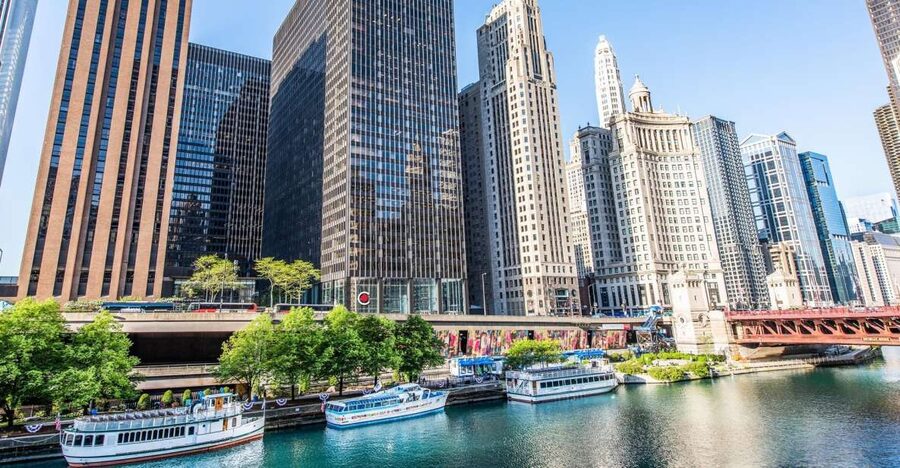
Ludwig Mies van der Rohe is one of the central figures on this walk. His work had a lasting effect on Chicago, and the tour explains why his approach became so influential.
Mies is closely linked with an architectural language of simple forms, exposed structural logic, and carefully ordered glass and steel. You do not need a design background to follow the discussion. Look for the relationship between the building’s frame and its outer skin, then consider how much ornament has been removed.
The result can look effortless. It was not. A clean exterior depends on decisions about proportion, repetition, materials, and the way a building meets the street. Your docent helps make those choices visible.
This is one of the tour’s strongest features for anyone who has seen modern office towers but never understood their design. You begin to notice that two glass buildings are not automatically alike. Their spacing, grid, materials, and connection to the surrounding city can tell different stories.
More walking tours in Chicago:
- Chicago: Gangsters and Ghosts Walking Tour
★ 5.0 · 7,155 reviews - Chicago Favorites Ultimate Food and Walking Tour
★ 5.0 · 1,962 reviews - Chicago: Gangsters and Ghosts Guided Walking Tour
★ 4.7 · 1,697 reviews - Chicago in a Day: Food, History & Architecture Walking Tour
★ 5.0 · 1,153 reviews
Marina City, Bertrand Goldberg, and a different kind of tower
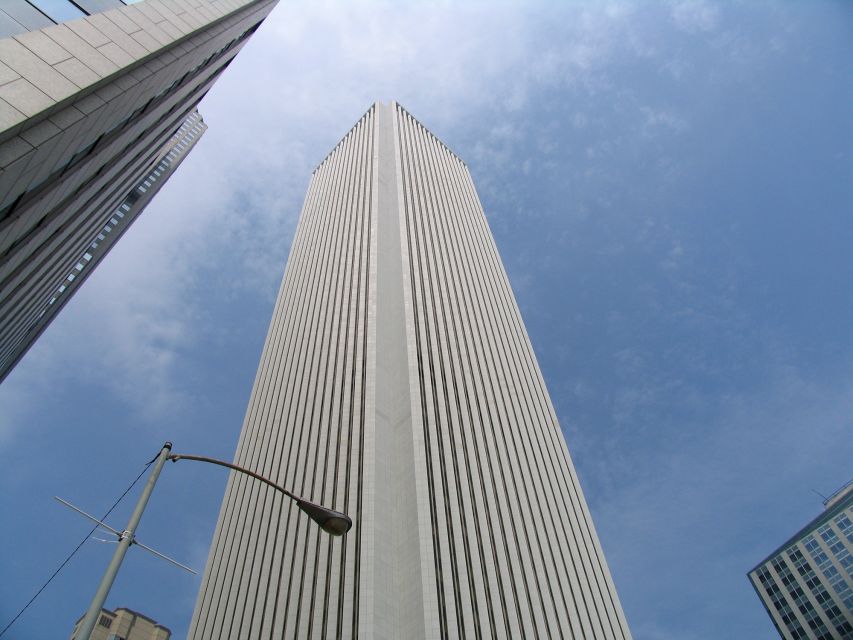
Marina City brings another major architect into the conversation: Bertrand Goldberg. Its unusual form gives the tour a welcome change of pace after the more rectilinear language associated with Mies van der Rohe.
The buildings are a reminder that Modernism was not one fixed look. Some architects favored strict grids and spare rectangular towers. Goldberg explored a more rounded, expressive form while still working with modern materials and construction.
That contrast matters. If every stop showed the same glass box, you might leave thinking Modernism means only minimal decoration. Marina City broadens the picture and shows how architects could use modern construction for a more sculptural result.
Your view is also shaped by the riverfront setting. The River Walk gives you a public path beside the water and a useful angle on the buildings. Instead of viewing them only from a crowded street corner, you can consider their height, shape, and relation to the river.
The route does involve city walking, so wear shoes that can handle pavement. The tour lasts 90 minutes, which is long enough for several major examples without becoming an all-day architectural march.
The River Walk and Chicago’s changing edge
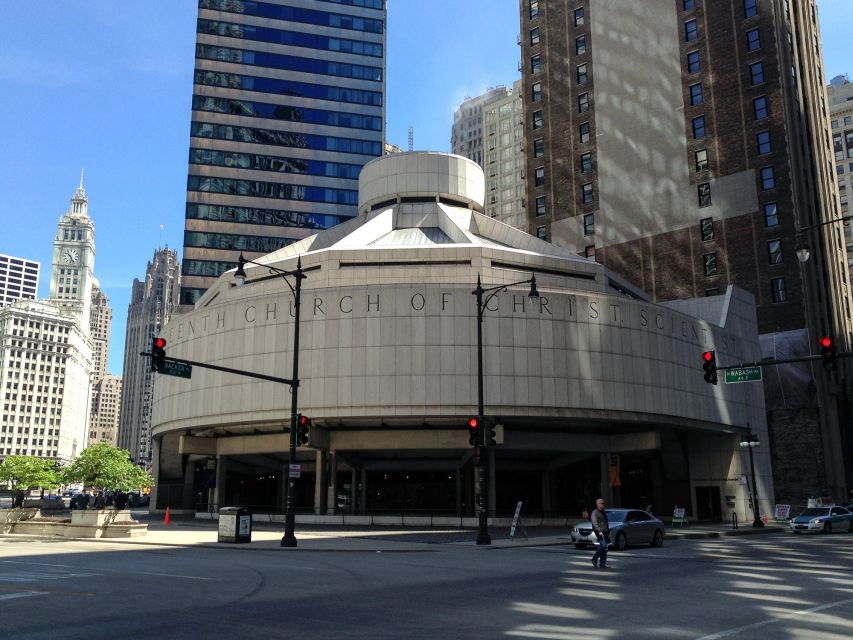
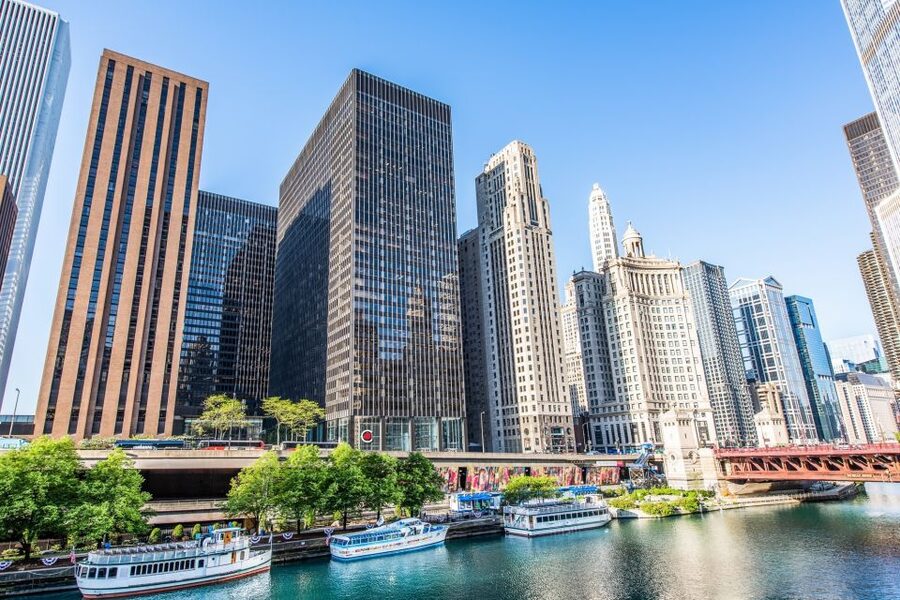
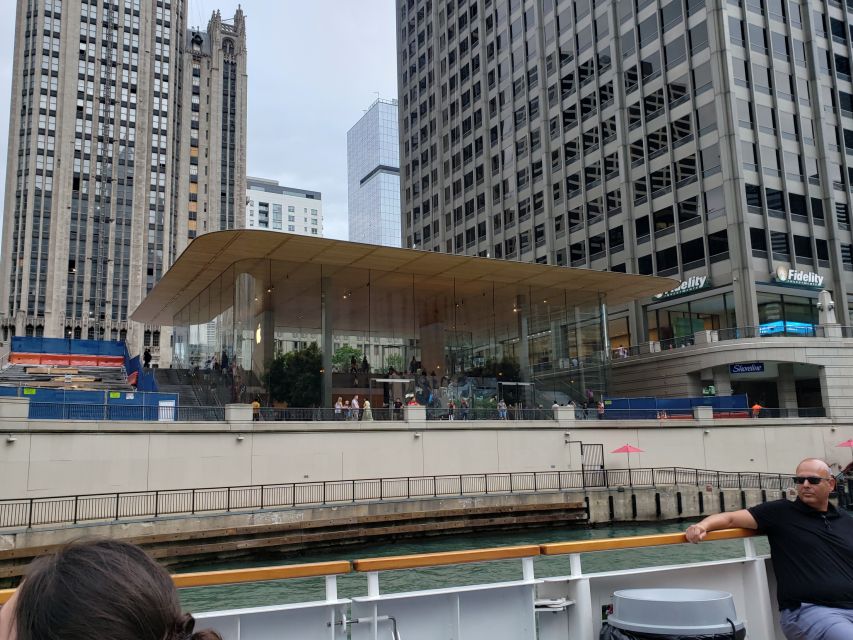
Walking along the new River Walk is one of the most appealing parts of the experience. You get superb views of the riverfront while learning about the many modern structures that line the water.
The river is more than a pleasant backdrop. It gives you a clean sightline across the lower and upper portions of the buildings, helping you see how towers meet the waterfront. From street level, the lower floors can disappear behind traffic, signs, or nearby structures. Along the water, the overall shape is easier to read.
This part of the walk also shows how Chicago continues to use its riverfront. The tour is about architecture, but the route places that architecture in a public setting where people walk, pause, and look back toward the skyline.
Weather matters here. The tour operates rain or shine, and there are no refunds because of weather. A light drizzle does not have to ruin the experience. One customer described a tour in drizzly weather as excellent and full of useful information. Still, bring weather-appropriate clothing, since the route is outdoors and conditions can change quickly.
The Daley Center and Mayor Richard J. Daley’s influence
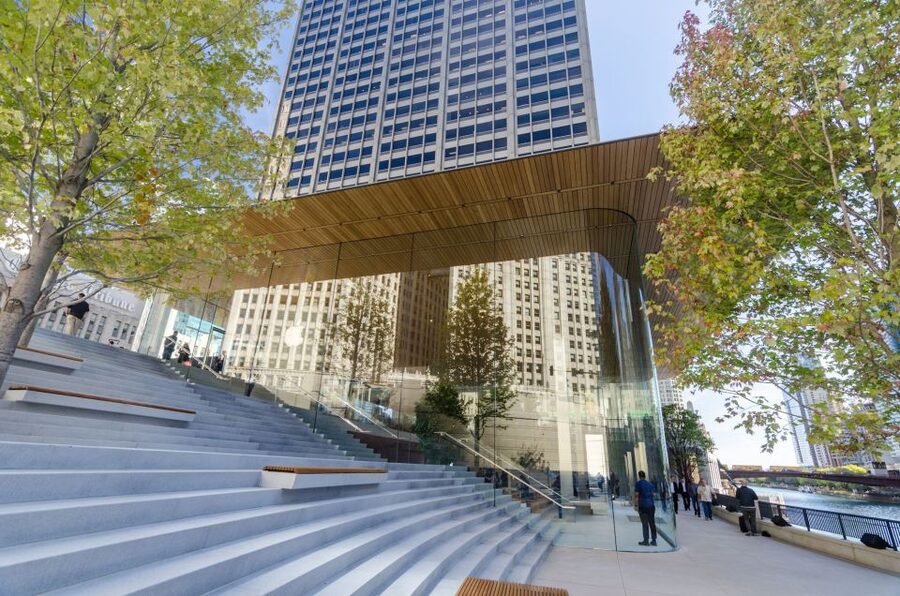
The tour also considers Mayor Richard J. Daley, whose influence on Chicago extended beyond city politics. His time in office overlapped with major changes in the downtown core, and the walk connects civic leadership with the construction of modern Chicago.
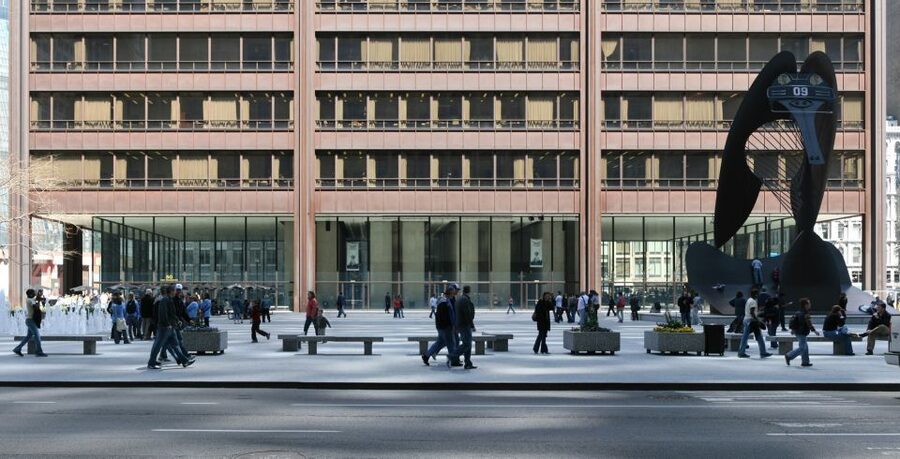
The Daley Center is a natural place to discuss that relationship. It is a major civic building, not merely a private office tower, so its design and location say something about how a city presents government and public life.
This stop gives the tour a broader frame. Architecture does not happen in isolation. Large buildings require political support, planning decisions, funding, and a public idea of what the city should become.
If you are mainly interested in architects and materials, this section may feel less visual than the stops focused on glass and steel. I still find it worthwhile because it explains why Chicago’s modern buildings appeared where they did and how civic ambition shaped the skyline.
The IBM Building and the logic of the modern office tower
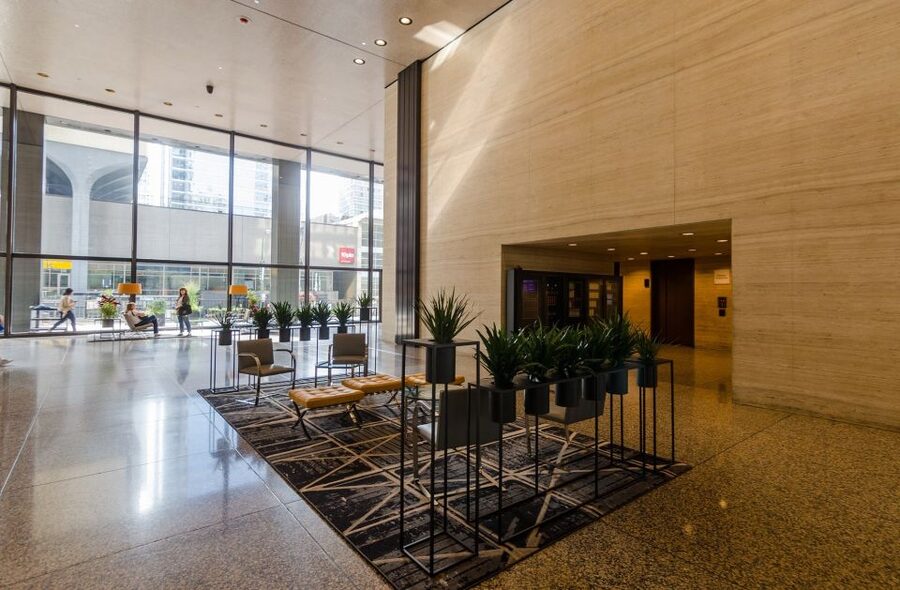
The IBM Building is another highlighted structure. Here, the focus returns to the modern commercial skyscraper and the way office buildings use repeated vertical and horizontal elements.
Look carefully rather than simply taking a quick photograph. Modernist buildings often reward attention to proportion. The repeated windows, structural lines, and smooth surfaces can seem plain at first, but the docent can show you how those parts create order.
The IBM Building also helps connect the architecture to the age of mass production. Modern skyscrapers were products of industrial methods and modern business needs. Their design had to support large numbers of workers, repeated office layouts, elevators, mechanical systems, and efficient construction.
That practical side is important. Modernism was not only an artistic preference. It responded to the demands of a growing city and a new type of workplace.
What the 90-minute format does well
Ninety minutes is a sensible length for this subject. You have enough time to examine several important buildings, walk beside the river, and hear the main story without committing half a day.
The short format also makes the tour easy to fit between other Chicago plans. You can pair it with time at the Chicago Architecture Center, nearby downtown sights, or a separate river experience.
The limitation is that this is an introduction, not a full architectural survey. Chicago has far more Modernist buildings than can fit into one walk, and each named architect could fill an entire afternoon. You should book this tour to build a strong framework, not to inspect every detail of the city’s modern architecture.
The quality of the experience depends partly on your docent. All guides are certified Chicago Architecture Center volunteers with extensive training, but each person will tell the story in a slightly different way. That variety can make the walk feel personal, though the emphasis may vary from one departure to another.
Price, nonprofit value, and what you receive
The listed price is $35 per group of up to one person. Because that wording is unusual, check the final booking screen carefully to confirm the total price for your party and date.
The value is stronger if you plan to use the included admission to the Chicago Architecture Center exhibits. You are paying for a guided walk, a trained docent, and access to an institution devoted to explaining Chicago’s architecture.
Your ticket also helps fund Chicago Architecture Center programs. These include Girls Build!, Teen Fellows, and the Newhouse Architecture + Design Competition. Ticket income also helps keep programs such as Open House Chicago free for participants.
That nonprofit connection does not replace the need for a good tour, but it gives your purchase a useful local purpose. You are supporting education and community projects while seeing the city.
Who should book this walk
I would recommend this experience to you if you like cities, design, engineering, or urban history. It is also a good choice if you look at Chicago’s skyline and want to understand more than the names of the tallest buildings.
First-time visitors can use it to get their bearings in the downtown core. Repeat visitors may appreciate the fresh angle, especially if they have already seen the river but never considered how construction technology shaped the buildings along it.
The tour suits adults and older children who can follow a 90-minute architecture discussion. It may be less suitable for anyone who wants an interior-heavy experience, since the main activity is an outdoor walking route.
Leave large bags, luggage, and strollers elsewhere. The Center cannot provide secure storage, and pets are not allowed, though service animals are welcome. Wear comfortable shoes and dress for rain, wind, or sun. The walk departs in all weather.
Free cancellation is available up to 24 hours before the tour for a full refund. You can also reserve now and pay later, which helps if your Chicago schedule is still taking shape.
Should you book Chicago’s Modern Skyscrapers Guided Walking Tour?
Book it if you want a focused explanation of how Chicago helped create the modern skyscraper. The strongest reasons are the trained architecture docent, the River Walk views, and the mix of architects and buildings, from the Reliance Building and Mies van der Rohe to Bertrand Goldberg’s Marina City and the IBM Building.
Skip it if you dislike outdoor walking in uncertain weather or want access inside every building. This is a street-level lesson in structure, style, and city planning.
For most architecture-curious visitors, the 90-minute length makes it an easy addition to a Chicago day. You leave with more than skyline photographs. You gain a way to read the city’s steel, glass, concrete, and civic ambition.
FAQ
Where does the tour meet?
You check in inside the Chicago Architecture Center at 111 E Wacker Drive, Chicago, Illinois 60601.
How long does the walking tour last?
The tour lasts 90 minutes. Starting times vary, so check availability for your chosen date.
What language is the tour offered in?
The tour is conducted in English.
Is the tour wheelchair accessible?
Yes, the activity is wheelchair accessible.
Which buildings are highlighted?
The tour highlights Marina City, the Daley Center, the IBM Building, and the Reliance Building. It also discusses modern structures along the Chicago River.
Which architects are discussed?
The tour focuses on Ludwig Mies van der Rohe, Bertrand Goldberg, and Harry Weese. It also discusses Mayor Richard J. Daley’s influence on Chicago.
Is admission to the Chicago Architecture Center included?
Yes, admission to the Center’s new exhibits is included with the walking tour.
Can I bring luggage, a stroller, or a pet?
No. Luggage, large bags, and strollers cannot be stored, and pets are not allowed. Service animals are welcome.
What happens if it rains?
The tour departs rain or shine, and weather-related refunds are not available. Dress for the conditions and wear comfortable shoes.
Can I cancel my booking?
Yes. You can cancel up to 24 hours in advance for a full refund. You can also reserve now and pay later.
Just added in Chicago
- Chicago: Architecture and Engineering Marvels Walking Tour★ 5.0 · 3 reviews
- Private Downtown Chicago TV and Movie Sites Guided Walking Tour★ 4.5 · 3 reviews
- Black Heritage Tour★ 5.0 · 3 reviews
- Private SUV Transfer from Chicago Downtown to Midway airport★ 5.0 · 3 reviews
- Private Holiday City Tour★ 5.0 · 3 reviews
- BYOB Chicago River Guided History Tour★ 5.0 · 4 reviews
- Chicago 4-Hour Sightseeing Transfer by Luxury SUV★ 4.5 · 3 reviews
- Chicago, Cloud Gate, Grant Park Full-Day City Tour★ 4.0 · 4 reviews
Chicago Architecture Tours, compared.
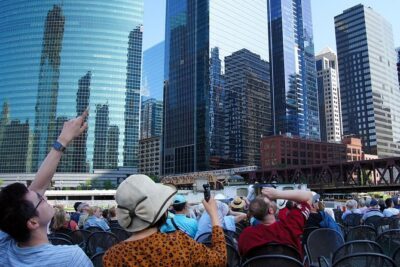
Chicago Architecture Center River Cruise aboard First Lady
Read our review →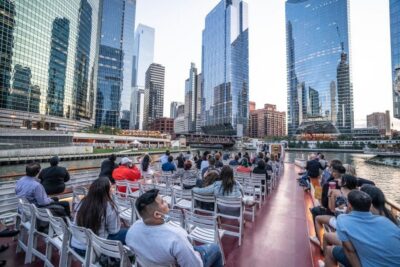
Architecture River Cruise Skip-the-Ticket Line
Read our review →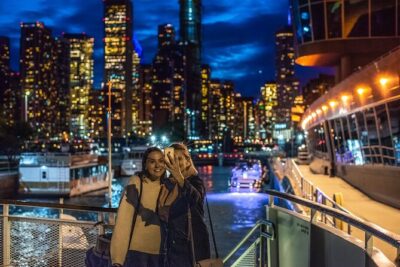
Chicago River 45-Minute Architecture Tour from Magnificent Mile
Read our review →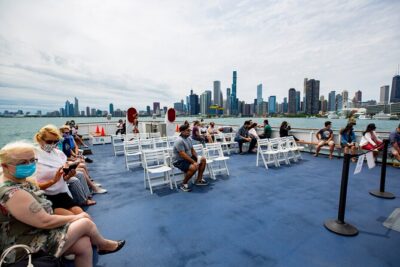
45-Minute Family-Friendly Architecture River Cruise
Read our review →Browse the lists this tour appears in