Reviewed · TOURS
Inside Tour of Chicago’s Fine Arts Building
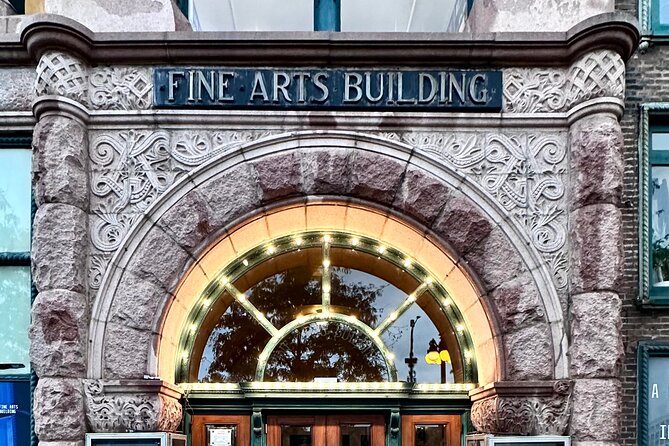
Chicago’s Fine Arts Building is the kind of place you can pass many times without realizing how much is happening inside. Behind its Michigan Avenue entrance are 10 floors of studios, shops, offices, and old corridors, all tied to the building’s long life as a home for creative work.
I like two things right away: the focus stays on one remarkable building, and guide Ronnie Frey connects architecture with the artists, teachers, makers, and other tenants who gave the place its character. The main consideration is physical: expect stairs and plenty of walking, and one visit was slowed by late arrivals who made it harder for the group to stay together.
In This Review
- Key points at a glance
- Why this building deserves your time
- Entering the 1898 corridors
- From carriage showroom to artists’ address
- The people who shaped the Fine Arts Building
- The stringed-instrument workshop
- A guide-led visit rather than a self-guided wander
- Is $45 a fair price?
- Timing, meeting point, and physical effort
- Who will enjoy this Chicago tour most?
- My call: book it for the inside story
- FAQ
- Where does the Fine Arts Building tour begin?
- What time does the tour start?
- How long does the tour last?
- Does the tour return to the starting point?
- How much does the tour cost?
- How many people can join the tour?
- What should I expect to see inside the building?
- Is the tour physically demanding?
- What happens if the tour is canceled?
Key points at a glance
- Built around creative work: Painters, photographers, music instructors, architects, lawyers, booksellers, and stringed-instrument makers have all been part of the building’s story.
- Solon Spencer Beman connection: Learn about the architect who also designed the town of Pullman and buildings for the Pullman Palace Car Company.
- Hallways largely unchanged since 1898: The tour turns ordinary corridors, tiles, plaster, and marble into clues from another era.
- Working artistic spaces: Stops can include a stringed-instrument maker and studios still used by creative professionals.
- Small-group format: The tour accepts no more than 10 people, which makes it easier to hear the guide and ask questions.
- Good indoor option: The experience takes place inside, though the operator notes that poor weather can still affect whether a tour runs.
Why this building deserves your time
Chicago is full of famous architecture, but the Fine Arts Building offers something different from a quick look at a grand facade. It is a functioning place with a long artistic identity. You are not simply admiring a preserved shell. You are seeing a building designed to support work, teaching, performance, craft, and business.
That distinction matters. The Fine Arts Building was originally connected to the Studebaker Brothers Carriage Company Showroom, which relocated in 1896. By 1898, the building had become a place where creative tenants could make and teach. The result is a setting that feels more personal than a formal monument.
Solon Spencer Beman gives the tour its architectural backbone. He is best known here for his connection to Pullman, the planned industrial community south of Chicago, and for his work associated with the Pullman Palace Car Company. On this tour, Beman is not treated as a distant name in a textbook. His design choices become part of the walk through the building.
I especially like the way the experience joins architecture to people. A hallway matters more when you know who used it. A studio becomes more interesting when you understand the kind of work that took place there. That human scale is the reason this tour can appeal even to people who do not normally spend a morning studying architectural details.
What else people book in Chicago on the same trip:
- Chicago Architecture River Cruise
★ 5.0 · 15,756 reviews - Chicago River 90-Minute Architecture Tour
★ 4.5 · 9,629 reviews - Chicago River: 1.5-Hour Guided Architecture Cruise
★ 4.8 · 8,046 reviews
Entering the 1898 corridors
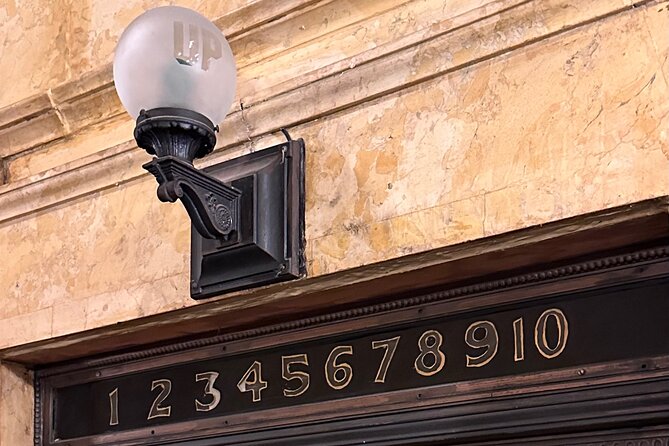
The central pleasure of the tour is walking through interior spaces that have retained much of their original character. The corridors have been remarkably unchanged since 1898, so the experience depends less on a long list of exhibits and more on close looking.
Pay attention to the surfaces. The building includes hand-finished work in areas such as plaster and marble, along with handmade floor tiles. These details are easy to miss if you are only passing through on your own. Ronnie Frey points out the small touches that turn the building from an old office block into a carefully made artistic environment.
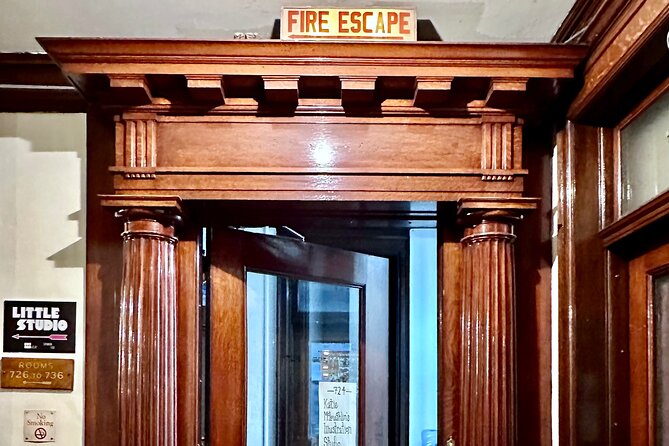
The light and stairs also shape the experience. One account describes the stairs and light as central to the building’s flair, which is useful to know before booking. This is not a flat, effortless stroll through a single room. You will move through multiple levels and should be comfortable with a moderate amount of physical activity.
There is also the possibility of riding the building’s manually operated elevator. That is an unusual detail and one of the tour’s more memorable moments when available. The experience is not just about looking at old architecture. It gives you a sense of how the building worked as a physical place.
From carriage showroom to artists’ address
The Fine Arts Building’s early connection to Studebaker gives the tour a strong Chicago setting. The building grew out of a change in use, from a carriage company showroom to a place where artists and other professionals could work.
That shift reflects a larger story about Chicago. The city was developing quickly, and its buildings had to serve changing industries, businesses, and cultural needs. The Fine Arts Building preserved a connection to manufacturing and transportation while making room for artistic work.
The tour helps you see that transition inside the building rather than treating it as a loose piece of background. The former Studebaker Theatre is one of the special stops, and it adds another layer to the visit. A theatre in the same complex as studios, music instruction, offices, and craft workshops shows how varied the building’s purpose has always been.
You should not expect a full theatre performance as part of this tour. The value is in seeing the space as one element of a larger building and understanding how performance fit into its creative life.
The people who shaped the Fine Arts Building
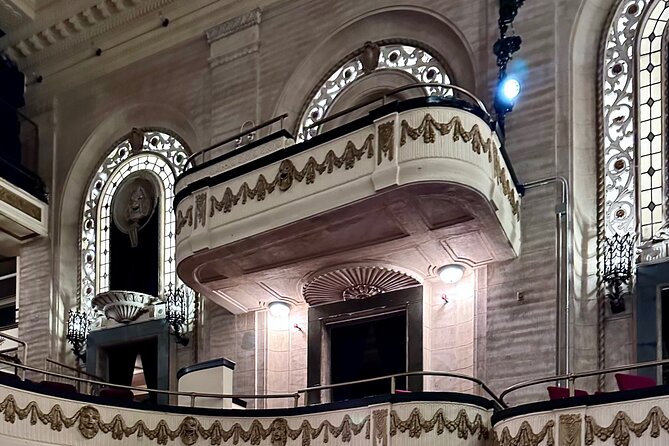
The building’s past tenants are a major reason to choose this experience. Its story includes painters, photographers, music instructors, architects, lawyers, booksellers, and makers of stringed instruments. The range is important because it prevents the tour from becoming a narrow account of one art form.
The former occupants also include well-known creative figures such as Frank Lloyd Wright and Norman Rockwell, according to the tour material. Their connection gives the building extra appeal for architecture and art enthusiasts, but the tour’s strength is broader than famous names.
You will also hear about the lesser-known people who worked in the building. That is where the experience becomes more than a roll call of celebrities. A place feels alive when you can picture teachers giving lessons, artists working in studios, booksellers handling their stock, and craftspeople making instruments by hand.
Ronnie Frey is the guide most closely associated with this tour. His approach is described as enthusiastic, personal, and story-driven. He also has a space in the Fine Arts Building with views toward the Board of Trade and Willis Tower. That gives the tour a useful local connection: you are not being led through a building by someone treating it as a random stop, but by a guide with a direct relationship to the place.
A different way to spend an afternoon in Chicago:
- Chicago: Gangsters and Ghosts Walking Tour
★ 5.0 · 7,155 reviews - Chicago Architecture Center River Cruise aboard First Lady
★ 5.0 · 5,536 reviews - Chicago: Willis Tower Skydeck and The Ledge Ticket
★ 4.6 · 4,350 reviews - Chicago: Architecture River Cruise Skip-the-Ticket Line
★ 4.8 · 4,325 reviews
The stringed-instrument workshop
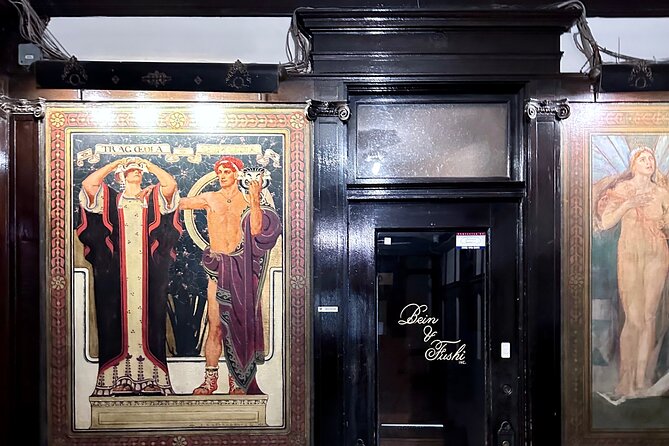
The stop at a stringed-instrument maker is one of the tour’s strongest surprises. It brings the building’s artistic purpose into the present. Instead of only hearing about former tenants, you may see a working craft business connected to music and hand production.
This is valuable because old interiors can sometimes feel like museum displays. A working instrument shop changes that feeling. It shows that the Fine Arts Building is not only remembered for its past. It still supports specialized creative work.
The tour information does not promise every behind-the-scenes area on every departure, so you should treat individual access as part of the experience rather than a guarantee of a particular workshop demonstration. Still, the instrument-making stop is a strong reason to choose this tour over a general architecture walk.
If you enjoy music, design, woodworking, or traditional crafts, this part may be the highlight. It also gives the tour an authentic quality that cannot be reproduced by looking at photographs alone.
A guide-led visit rather than a self-guided wander
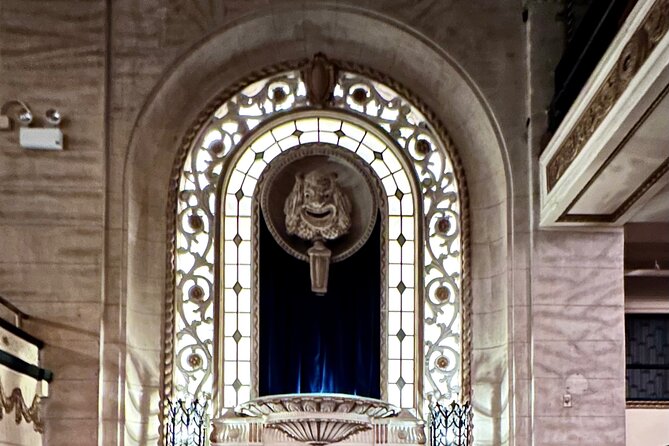
You can enter the Fine Arts Building on your own, but it would be easy to see only the most obvious public spaces. The tour earns its price through access to stories, connections, and details that are not apparent at first glance.
Ronnie also provides a phone link with historical photographs, including images of former occupants and views of the building’s earlier exterior. That material helps you compare the building’s past with what you are seeing in front of you. A phone-based supplement is practical, though you should make sure your device is charged before arriving.
The small group size is another plus. With a maximum of 10 people, the tour should feel more conversational than a large downtown group walk. You can ask about a particular tenant or architectural feature without trying to catch a guide’s voice from the back of a crowd.
There is one practical weakness: keeping a small group together still depends on everyone arriving on time. The meeting time is 10:00 a.m., and you should arrive early rather than just on time. A delayed start or repeated regrouping can cut into a tour that already has plenty to cover in 60 to 90 minutes.
Is $45 a fair price?
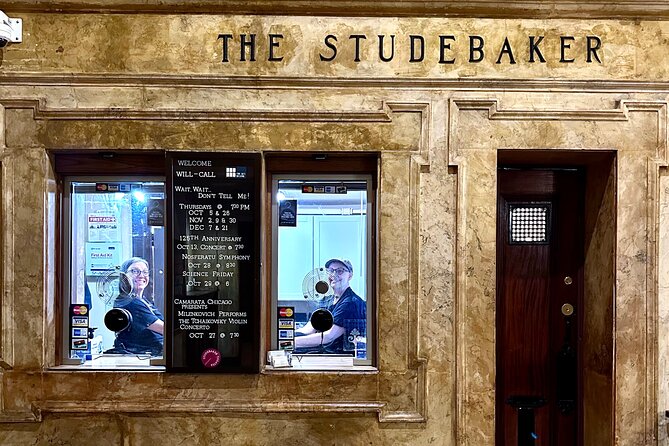
The cost is $45 per person. That is more than you would pay to simply walk into a public building, but this is not priced as a basic admission ticket. You are paying for a guide, historical interpretation, a planned route through 10 floors, and access to details that are easy to overlook.
I consider the price reasonable if you care about Chicago architecture, local history, art, or unusual working spaces. The value is strongest for someone who wants context rather than a quick photo stop. The tour can also fill a useful morning hour before visiting other attractions in the Loop.
The value is less clear if you only want a broad overview of downtown Chicago. This experience is tightly focused on one building. You will not receive a general city tour, a wide architectural survey, or a long outdoor walk along Michigan Avenue.
The tour is typically booked about five days ahead, so do not assume you can always decide at the last minute. Confirmation arrives when you book, and mobile tickets make the arrival process simple.
Timing, meeting point, and physical effort
The meeting point is 410 Michigan Ave, Chicago, Illinois 60611, and the tour returns there at the end. It begins at 10:00 a.m. and lasts approximately one hour to one hour and 30 minutes.
The building is near public transportation, which helps if you are staying elsewhere in Chicago. Since the activity begins and ends at the same point, you do not need to plan a separate pickup or figure out where the group will finish.
Wear comfortable shoes. The tour requires a moderate level of physical fitness, and several accounts specifically point to stairs. The manual elevator may be part of the fun, but you should not count on it replacing all stair use.
The operator also notes that good weather is required. That may seem odd for an indoor visit, but the tour can be canceled if conditions are poor. If that happens, you are offered another date or a full refund. The same applies if the minimum number of participants is not reached.
The standard cancellation terms are strict: once booked, the experience is non-refundable and cannot be changed for personal reasons. Read that carefully before paying, especially if your Chicago schedule is uncertain.
Who will enjoy this Chicago tour most?
I would choose this tour for:
- Architecture fans who want to see Solon Spencer Beman’s work from the inside.
- Art and design enthusiasts interested in studios, handmade materials, and former creative tenants.
- Chicago repeat visitors looking for a focused experience away from the usual major attractions.
- History-minded visitors who enjoy connecting a building’s design with the people who used it.
- Anyone who likes small groups and a guide with a personal connection to the site.
- Visitors seeking an indoor activity, especially on a cold day, provided the tour is operating.
Families with young children may find the pace and historical detail less engaging, though the elevator and instrument workshop could provide memorable moments. People with limited mobility should think carefully about the stairs before booking, since the activity calls for moderate physical fitness.
This is also a good choice for visitors who prefer stories over spectacle. The Fine Arts Building does not depend on a huge collection or theatrical production. Its appeal comes from the accumulated marks of work, design, and human use.
My call: book it for the inside story
Book the Fine Arts Building tour if you want a close look at Chicago’s creative past and present, and if you enjoy noticing plaster, marble, tiles, stairways, studios, and old theatres rather than rushing between famous landmarks.
The strongest reasons to go are Ronnie Frey’s engaging storytelling, the small group, the former Studebaker Theatre, the handmade architectural details, and the chance to see a working stringed-instrument maker. At $45, it is a fair buy for visitors who value access and interpretation.
Skip it if your priority is a broad city tour, a fully accessible route, or a flexible reservation you can cancel freely. For everyone else, arrive early, wear good shoes, bring a charged phone, and give this 125-year-old building the attention it deserves.
FAQ
Where does the Fine Arts Building tour begin?
The tour begins at 410 Michigan Ave, Chicago, IL 60611, USA.
What time does the tour start?
The scheduled start time is 10:00 a.m.
How long does the tour last?
The experience lasts approximately one hour to one hour and 30 minutes.
Does the tour return to the starting point?
Yes. The activity ends back at the meeting point.
How much does the tour cost?
The price is $45 per person.
How many people can join the tour?
The activity has a maximum of 10 participants.
What should I expect to see inside the building?
You will learn about the Fine Arts Building and Solon Spencer Beman, walk through hallways largely unchanged since 1898, and hear about artists, musicians, architects, booksellers, lawyers, photographers, and other tenants. Stops may include the Studebaker Theatre and a stringed-instrument maker.
Is the tour physically demanding?
The activity requires a moderate level of physical fitness. Stairs are part of the experience, so comfortable shoes are recommended.
What happens if the tour is canceled?
If poor weather causes a cancellation, you are offered a different date or a full refund. If the minimum number of participants is not reached, you are offered a different date or experience, or a full refund.
Just added in Chicago
- Chicago: Architecture and Engineering Marvels Walking Tour★ 5.0 · 3 reviews
- Private Downtown Chicago TV and Movie Sites Guided Walking Tour★ 4.5 · 3 reviews
- Black Heritage Tour★ 5.0 · 3 reviews
- Private SUV Transfer from Chicago Downtown to Midway airport★ 5.0 · 3 reviews
- Private Holiday City Tour★ 5.0 · 3 reviews
- Chicago 4-Hour Sightseeing Transfer by Luxury SUV★ 4.5 · 3 reviews
- BYOB Chicago River Guided History Tour★ 5.0 · 4 reviews
- Chicago, Cloud Gate, Grant Park Full-Day City Tour★ 4.0 · 4 reviews
Tours, compared.


Chicago River 45-Minute Architecture Tour from Magnificent Mile
Read our review →
Big Bus Chicago: Hop-On Hop-Off Sightseeing Tour, 24/48/72hr Pass
Read our review →
Chicago Favorites Ultimate Food and Walking Tour
Read our review →