
Reviewed · MAGNIFICENT MILE TOURS
Magnificent Mile Tour With Optional 360 Chicago Upgrade
Chicago’s Magnificent Mile is more than a shopping street. It is a compact lesson in how Chicago rebuilt, grew rich, and kept changing, and this walking tour connects the buildings, businesses, and public spaces that tell that story. Guides such as Ben and Chris keep the pace lively with history, humor, and useful Chicago tips.
I like the tour’s small maximum of 20 people, which makes questions practical rather than awkward. I also like the optional 360 Chicago add-on: after walking past the city’s best-known buildings, you can look down on Michigan Avenue, Lake Michigan, and the surrounding city from 1,030 feet up. The main caution is that this is an architecture-focused walk, not a general Chicago highlights tour. The Bean is not a scheduled stop.
In This Review
- Key points to know
- Why this Chicago walk works
- Starting at the Federal Building Columns
- Three buildings and the Chicago Riverwalk
- Fifty minutes along the Magnificent Mile
- Rush Street, Cartier, and the riverfront contrast
- The Tribune Tower and Wrigley Building
- Adding 360 Chicago at 1,030 feet
- What the guides add to the experience
- Timing, meeting point, and practical limits
- Who should book this walk?
- Should you book the Magnificent Mile Tour?
- FAQ
- How much does the Magnificent Mile Tour cost?
- How long does the tour last?
- What time does the tour start?
- Where does the tour meet?
- Where does the tour end?
- Is 360 Chicago included in the base price?
- Does the 360 Chicago ticket include TILT?
- Is the Bean included on the tour?
- How large is the tour group?
- Can I cancel for a full refund?
Key points to know
- A 10 a.m. start at the Federal Building Columns puts you near Millennium Park and the Chicago Cultural Center.
- The route links several eras of Chicago architecture, from Italian Renaissance and Beaux Arts design to Art Deco and late Modernism.
- The 50-minute Magnificent Mile section includes the world’s largest Starbucks retailer, Cartier, Burberry, and a Harry Potter themed shop.
- The 360 Chicago upgrade is self-guided, so you can remain on the observation deck as long as you like.
- The tour ends at 360 Chicago, rather than returning you to the starting point.
- The $39 base price is reasonable if you want a guided overview of central Chicago without paying for several separate attractions.
Why this Chicago walk works
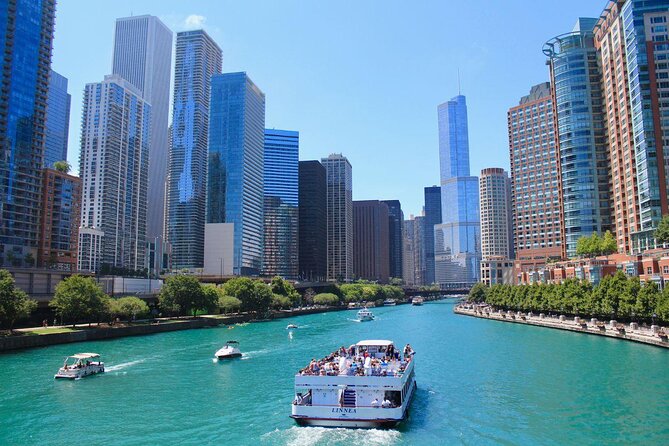
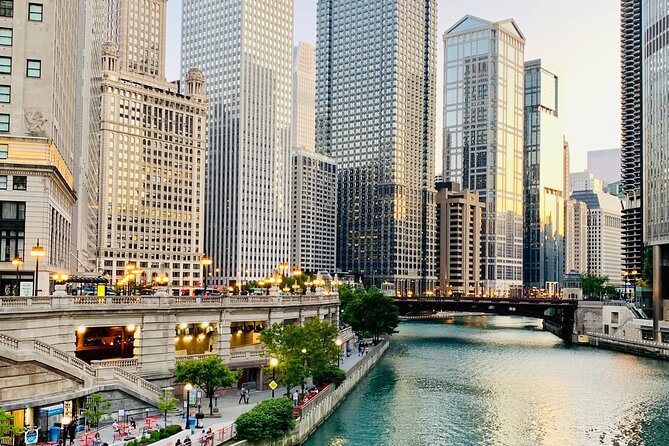
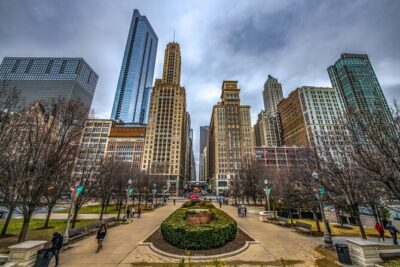
I like this tour because it gives you a clear route through central Chicago instead of scattering facts across unrelated stops. You begin near the lakefront, move toward the river, follow Michigan Avenue north, and finish at 360 Chicago on the 94th floor of 875 North Michigan Avenue.
That route has a useful shape. You start with public spaces and civic buildings, then see the riverfront’s grand architecture, followed by commercial streets and luxury retail. By the end, you have a better sense of how Chicago’s identity shifted from civic ambition to business, shopping, and spectacle.
The tour lasts about two hours and has a maximum of 20 people. That is long enough to cover a good stretch of downtown, but short enough to fit into a morning. You should expect a steady walking pace with regular stops for explanations and photos. Wear comfortable shoes, and remember that the experience takes place outside for much of its length.
The base price is $39 per person. For a guided walk through several major downtown areas, that is fair value, particularly if you want a first orientation to Chicago architecture. The value changes if your main aim is a long visit to an observation deck. In that case, the 360 Chicago upgrade matters, since it adds the ticket and allows you to continue independently after the walking portion.
The experience has a 4.9 rating from 80 ratings, with 99 percent of customers recommending it. The strongest praise centers on the guides’ delivery. Ben is repeatedly described as entertaining, clear, and good at mixing stories with facts. Chris also receives praise for keeping the tour interesting. That matters here, because architecture tours can become a parade of dates and building names if the guide does not give the details a human connection.
More along the Magnificent Mile:
- Chicago River 45-Minute Architecture Tour from Magnificent Mile
★ 4.5 · 2,924 reviews - Chicago Perfume Making Classes on Magnificent Mile
★ 5.0 · 44 reviews - Chicago Walking Tour: The Magnificent Mile
★ 5.0 · 34 reviews
Starting at the Federal Building Columns
The meeting point is at the Federal Building Columns on East Randolph Service Street. The tour begins at 10 a.m., near Millennium Park, and uses the opening minutes to discuss Chicago’s lakefront.
That is a smart starting point. Before you reach the famous shopping avenue, you get context for the city’s relationship with the water and its public spaces. The emphasis is not simply on taking a quick picture at a landmark. You are beginning with the larger civic idea of Chicago as a planned, ambitious city.
The nearby Chicago Cultural Center adds a quick look at Italian Renaissance style. The stop is listed as about 20 minutes and has no separate admission charge. You should think of this section as an introduction rather than a museum visit. The route gives you a glimpse of the building’s design while your guide explains what to notice.
One point is worth making clearly: the Bean is not included as a scheduled stop. Millennium Park appears in the route, but this tour is built around architecture along Michigan Avenue and the river. If seeing Cloud Gate is your main goal, plan a separate visit before or after the tour.
Three buildings and the Chicago Riverwalk
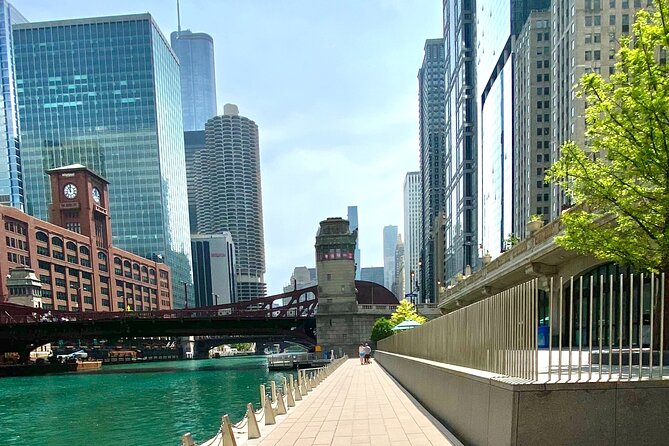
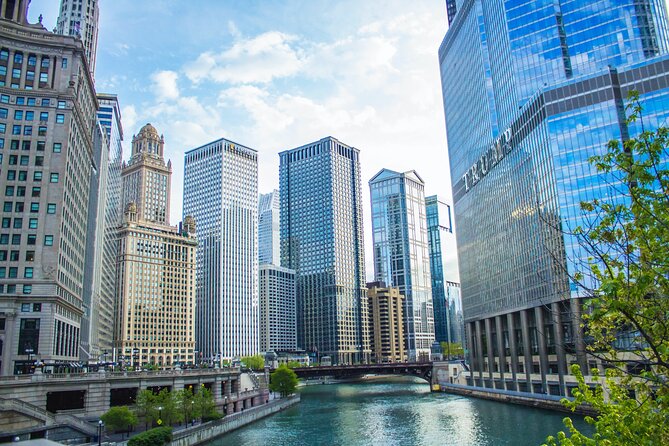
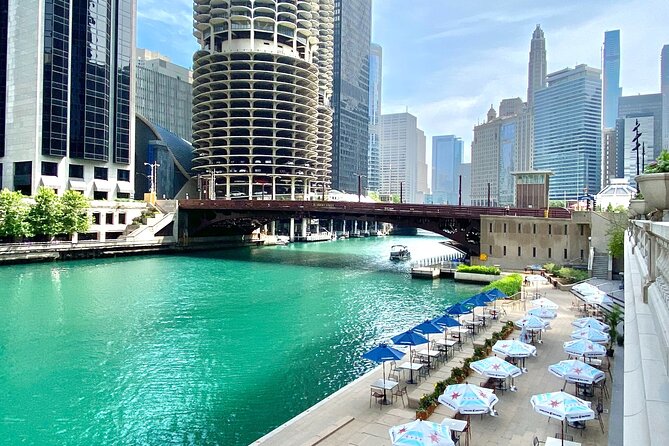
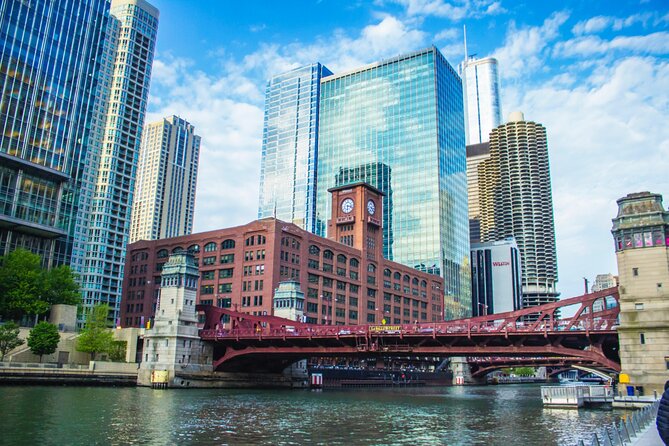
The route then reaches the Chicago Riverwalk, where the focus shifts to the city’s architectural development along the water. You spend about 20 minutes looking at three distinct Chicago buildings from the 1920s.
This is one of the better parts of the experience for anyone who wants more than a list of famous addresses. You will hear about Beaux Arts and Art Deco design, along with the effect of the Chicago School of Architecture. Those terms can sound academic, but they become easier to understand when you are looking at actual facades, shapes, decoration, and scale.
The river also gives you a change of pace. After the formal civic setting near Millennium Park, the water opens the view and lets you compare buildings across the river. Your guide can point out how commercial ambition shaped the skyline and how different design movements appeared in the same central area.
The stop is free, but you should not expect a boat ride or a long independent visit along the Riverwalk. This is a guided viewing point within a larger walking route. If you enjoy architectural comparisons, it is likely to be one of the most useful 20 minutes of the morning.
Fifty minutes along the Magnificent Mile
The longest portion of the route is the Magnificent Mile, with about 50 minutes devoted to Michigan Avenue. This is where the tour becomes especially useful for first-time visitors who might otherwise see only storefronts and traffic.
The street combines grand older buildings with highly polished modern retail. Your guide points out architecture ranging from Art Deco to late Modernism, explaining how the avenue changed as commerce and high-end shopping expanded.
There is plenty to look at. You pass the world’s largest Starbucks retailer, a detail that will appeal to coffee fans and curious shoppers even if you have no interest in buying a drink. You also see Burberry’s distinctive facade and the only Harry Potter themed store in the country outside Orlando, according to the tour information.
Luxury storefronts add another layer. Cartier is included later near the Chicago River, while other high-end names appear along the route. The contrast is the point: Chicago places major architectural landmarks beside international retail brands, and the tour helps you see both as part of the avenue’s character.
The Magnificent Mile section is also where the guides’ personality matters most. Ben is praised for making the information accessible, adding humor, and telling stories about the pioneers and businesspeople who shaped the street and nearby neighborhoods. That approach is more useful than memorizing a building’s completion date. You come away with a sense of the people and commercial forces behind the street.
This is still a fairly quick look. Fifty minutes cannot provide a detailed interior visit to every building or shop. You are mostly observing from the sidewalk, listening, and moving on. If you want time for shopping, coffee, or detailed photography, plan to return later.
A different way to spend an afternoon in Chicago:
- Chicago Architecture River Cruise
★ 5.0 · 15,756 reviews - Chicago River 90-Minute Architecture Tour
★ 4.5 · 9,629 reviews - Chicago River: 1.5-Hour Guided Architecture Cruise
★ 4.8 · 8,046 reviews - Chicago: Gangsters and Ghosts Walking Tour
★ 5.0 · 7,155 reviews
Rush Street, Cartier, and the riverfront contrast
The next section takes about 20 minutes near the Chicago River and Rush Street. Here, the tour highlights the way luxury retail sits close to more ordinary commercial activity.
You pass storefronts associated with St. Laurent and Cartier, as well as the Esquire Theater. These stops help explain the polished public face of Michigan Avenue, but they also offer a useful contrast with the older civic and commercial buildings seen earlier.
I like this part because it prevents the Magnificent Mile from feeling like a single-purpose shopping district. The route shows how different businesses occupy the same urban corridor, from major luxury labels to familiar retail and entertainment. The city’s character comes from that mix.
You should not expect entry into the stores or theater. The point is the street-level view, the facades, and the way your guide connects retail to architecture. If you are looking for a shopping tour with time to browse, this is not it. If you want to understand why Michigan Avenue looks the way it does, the stop earns its place.
The Tribune Tower and Wrigley Building
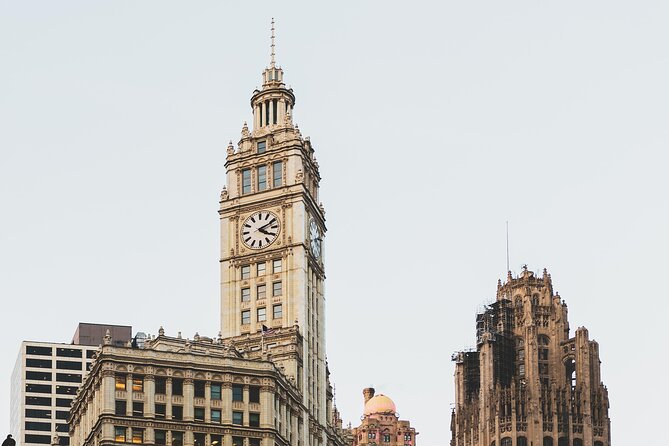
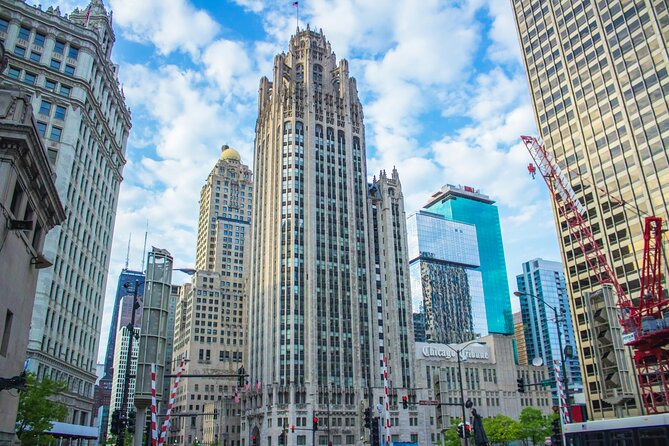
The tour also passes two of the avenue’s best-known landmarks, the Tribune Tower and the Wrigley Building. These are among the buildings that make a walk along Michigan Avenue more rewarding than a simple shopping trip.
The Tribune Tower and Wrigley Building show how Chicago’s commercial architecture can be both practical and theatrical. Your guide places them within the larger story of Chicago’s design movements and business growth, rather than treating them as isolated photo stops.
The supplied tour details do not assign a separate stop length to each building, so you should think of them as part of the route rather than extended visits. You will have time to see them from outside and hear their place in the city’s architectural story, but not to explore every interior detail.
That limitation is part of the tour’s design. It covers a lot of ground in roughly two hours. You trade long visits at one or two buildings for a connected walk through several parts of downtown.
Adding 360 Chicago at 1,030 feet
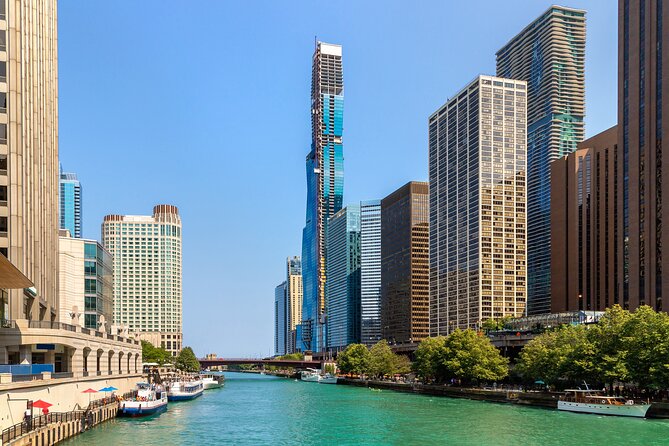
The optional upgrade takes you to 360 Chicago, located on the 94th floor at 875 North Michigan Avenue. From 1,030 feet above the city, you can look across the Magnificent Mile and Lake Michigan.
This is the most obvious add-on for a first visit. The walking tour shows you the street-level pattern of Chicago. The observation deck lets you see that pattern from above, including the avenue, the lake, and the wider city.
Your visit to 360 Chicago is self-guided. You are not hurried through a fixed tour segment, and you can stay as long as you like after the walking portion. The listed itinerary gives the observation-deck portion 10 minutes, but the practical detail is that the upgraded ticket allows an open-ended visit.
The ticket does not include TILT, the attraction that angles visitors out from the building. You can purchase that upgrade on-site if you feel up to it. I would treat TILT as optional, not as part of the core value. The deck itself supplies the main benefit: a high view that puts the morning walk into perspective.
If you are deciding between the base tour and the upgrade, ask yourself how much you value city views. Choose the base tour if architecture and guided context are your priority. Add 360 Chicago if you want a strong visual finish and the freedom to continue on your own after the guide says goodbye.
What the guides add to the experience
The guide can make or break a two-hour architecture walk. Here, Ben receives especially strong praise for his presentation, humor, and ability to answer questions. His style appears energetic rather than dry, with stories about the people who built Chicago’s businesses and neighborhoods.
Chris is also described as keeping the tour interesting and bringing solid subject knowledge to the walk. The guide names are not guaranteed at booking, so you should not assume one particular person will lead your departure. Still, the reported strengths give you a good idea of the intended tone: informed, lighthearted, and open to questions.
A useful detail from the feedback is that the guide offered Chicago suggestions beyond the tour itself. That can be valuable early in a visit, when you are still working out where to eat, what to see, and how the central districts fit together.
The tour has a maximum of 20 people. That is not a private walk, but it is more manageable than a large group. You should be able to hear the guide and ask a question without stopping the entire street.
Timing, meeting point, and practical limits
You meet at the Federal Building Columns at 10 a.m. and finish at 360 Chicago. The ending point is important because the tour does not return to Millennium Park or the starting location.
The route is near public transportation, making it practical to reach without a car. Confirmation arrives when you book, and mobile tickets are supported. The experience is offered in English.
Service animals are allowed, and most people can take part. Even so, this is a walking tour with several outdoor sections, so comfortable footwear and attention to the weather are sensible choices. The provided information does not promise a fully indoor route or specify the amount of seating.
Free cancellation is available up to 24 hours before the start time for a full refund. Cancellations or changes made less than 24 hours before the 10 a.m. start are not accepted for a refund.
Who should book this walk?
I would choose this tour if you want a well-organized first look at central Chicago architecture and prefer stories to a silent self-guided stroll. It suits couples, families, solo visitors, and locals who want a fresh explanation of a familiar street.
It is also a good fit if you want to combine history with modern Chicago. You will see civic spaces, riverfront buildings, department-store-era architecture, luxury retail, recognizable storefronts, and a major observation deck in one morning.
You may want something else if your priorities are the Bean, museum interiors, river cruises, or extended shopping time. Those are not the focus here. The tour covers many landmarks from the outside and keeps moving, which is its strength and its limit.
Should you book the Magnificent Mile Tour?
Book it if you want a short, energetic route through Chicago’s central architectural story, especially if you appreciate a guide who can mix facts with humor. The $39 price is sensible for a two-hour guided walk, and the optional 360 Chicago ticket gives you a useful way to extend the experience.
I would add the observation deck if this is your first time in Chicago or if you enjoy seeing how a city fits together from above. Skip the upgrade if you already have another skyline viewpoint planned.
Most important, book with the right expectation: this is a Magnificent Mile and architecture tour, not a complete Chicago highlights package. If that focus suits you, the route, the guide-led stories, and the final view from 360 Chicago make a strong downtown morning.
FAQ
How much does the Magnificent Mile Tour cost?
The base tour costs $39 per person. The optional 360 Chicago upgrade is available for an additional charge, though the supplied information does not state the upgrade price.
How long does the tour last?
The experience lasts approximately two hours. If you purchase the 360 Chicago upgrade, you can stay on the observation deck as long as you like after the walking tour.
What time does the tour start?
The tour starts at 10 a.m.
Where does the tour meet?
You meet at the Federal Building Columns on East Randolph Service Street, Chicago, Illinois 60601.
Where does the tour end?
The tour ends at 360 Chicago, located at 875 North Michigan Avenue on the 94th floor.
Is 360 Chicago included in the base price?
No. A 360 Chicago ticket is included only if you purchase the optional upgrade.
Does the 360 Chicago ticket include TILT?
No. TILT is not included. You can purchase a TILT upgrade on-site.
Is the Bean included on the tour?
No. The Bean is not a scheduled stop. The tour focuses on architecture along Millennium Park, the river, Michigan Avenue, and nearby areas.
How large is the tour group?
The tour has a maximum of 20 people.
Can I cancel for a full refund?
Yes. You can cancel at least 24 hours before the experience start time for a full refund. Cancellations or changes made less than 24 hours before the start time are not accepted for a refund.
Just added in Chicago
- Chicago: Architecture and Engineering Marvels Walking Tour★ 5.0 · 3 reviews
- Private Downtown Chicago TV and Movie Sites Guided Walking Tour★ 4.5 · 3 reviews
- Black Heritage Tour★ 5.0 · 3 reviews
- Private SUV Transfer from Chicago Downtown to Midway airport★ 5.0 · 3 reviews
- Private Holiday City Tour★ 5.0 · 3 reviews
- BYOB Chicago River Guided History Tour★ 5.0 · 4 reviews
- Chicago 4-Hour Sightseeing Transfer by Luxury SUV★ 4.5 · 3 reviews
- Chicago, Cloud Gate, Grant Park Full-Day City Tour★ 4.0 · 4 reviews
Magnificent Mile Tours, compared.
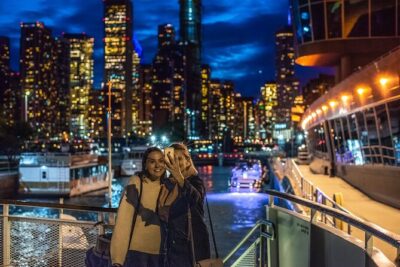
Chicago River 45-Minute Architecture Tour from Magnificent Mile
Read our review →
Chicago Perfume Making Classes on Magnificent Mile
Read our review →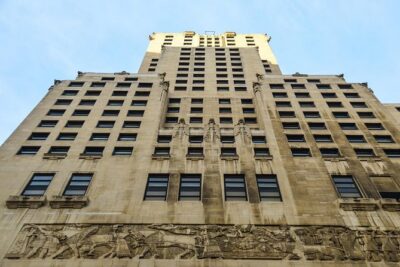

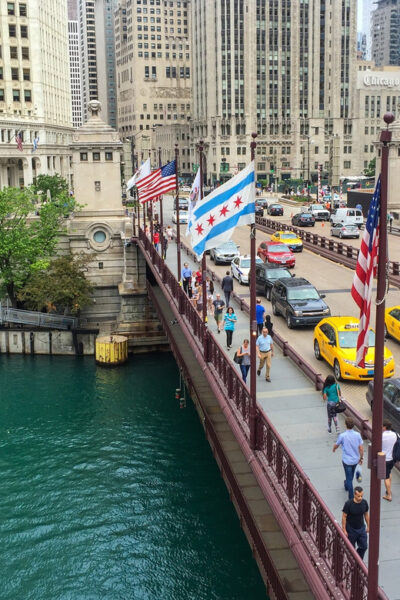
Chicago Food Tour with The Magnificent Mile and Millennium Park
Read our review →Browse the lists this tour appears in