
Reviewed · MAGNIFICENT MILE TOURS
Chicago: Magnificent Mile Walking Tour
Chicago’s Magnificent Mile is not just a row of luxury shops. It is a carefully built story of urban change, from a dirt road called Pine Street to a grand avenue shaped by Daniel Burnham’s vision for Chicago. This 90-minute walk gives you that story while pointing out famous buildings such as the Wrigley Building, Tribune Tower, and 875 N. Michigan Avenue.
I like the strong architectural focus, especially the chance to see inside the Medinah Athletic Club and view sculptural panels in an Art Deco office building. I also like the included Chicago Architecture Center admission, which lets you continue studying Chicago’s buildings after the guide has finished.
The main consideration is the narrow route. One past participant wanted to cover more territory and see additional streets, so this tour works best if you want a focused introduction to North Michigan Avenue rather than a broad tour of downtown Chicago. The published details also describe it as wheelchair accessible but not suitable for people with mobility impairments, so check your needs before booking.
In This Review
- Key points to know before you book
- From Pine Street to the Paris on the Prairie
- The DuSable Bridge and Chicago’s changing riverfront
- Wrigley Building, a bright marker on Michigan Avenue
- Inside the InterContinental and the Medinah Athletic Club
- Art Deco panels and the avenue’s retail identity
- What the guide adds to the buildings
- What is included, and what is not
- Who will enjoy this North Michigan Avenue walk?
- Is the Chicago Magnificent Mile Walking Tour worth booking?
- FAQ
- How long does the Chicago Magnificent Mile Walking Tour last?
- Where does the tour begin?
- Where does the tour finish?
- What language is the tour offered in?
- Is admission to the Chicago Architecture Center included?
- Is food or drink included?
- Can I bring luggage or a stroller?
- Can I bring a pet?
- What is the cancellation policy?
Key points to know before you book
- Pine Street’s remarkable makeover: Follow the road’s change from a rough route into a polished avenue known as the Paris on the Prairie.
- Landmarks with a story: Hear how the Wrigley Building, Tribune Tower, DuSable Bridge, and 875 N. Michigan Avenue helped shape Chicago.
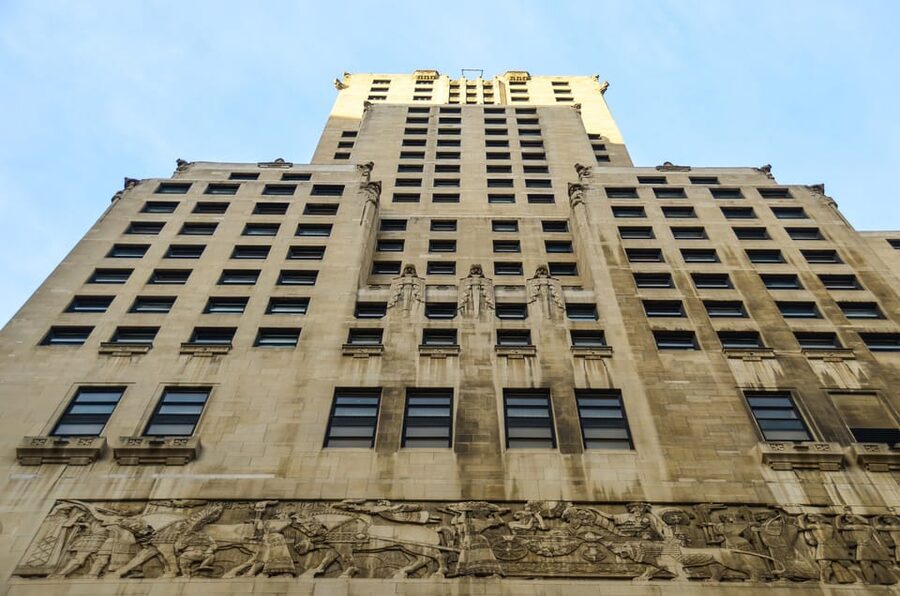
- Interior details beyond the sidewalk: See the Medinah Athletic Club’s Egyptian and Renaissance decoration and Art Deco bas relief panels.
- Shopping district architecture: Look at how hotels, vertical malls, residential towers, and shops were designed to express the brands inside.
- Chicago Architecture Center access: Use your tour ticket to visit galleries, building models, and an interactive downtown display.
- A short, focused walk: The 90-minute route stays around North Michigan Avenue, which keeps the pace manageable but limits the number of streets covered.
From Pine Street to the Paris on the Prairie
The best part of this walk is its simple question: how did a former dirt road become one of Chicago’s grandest commercial avenues? Your guide traces that change in clear stages instead of treating the Magnificent Mile as a finished product.
The route begins inside the Chicago Architecture Center at 111 E Wacker Drive. This is a useful meeting point because the Center gives you an introduction to Chicago’s architecture before you head outside. You check in there, meet your English-speaking certified guide, and begin with the city’s larger story.
The phrase Paris on the Prairie points to the way Chicago wanted North Michigan Avenue to look and feel. The wide avenue and Parisian-style buildings reflected Daniel Burnham’s Plan of Chicago from 1909, which promoted a more ordered and impressive city center.
You will hear how the area changed again after the DuSable Bridge was built in the 1920s. The bridge helped connect the north and south sides of the river and turned an area of warehouses and factories into a commercial district. That connection mattered: grand buildings and major shops need people, movement, and strong links to the rest of the city.
I find this context more useful than a simple list of construction dates. It shows why the Magnificent Mile looks so different from nearby older districts. The street was planned and reshaped in response to commerce, transport, architecture, and changing ideas about what a modern city should be.
More along the Magnificent Mile:
- Chicago River 45-Minute Architecture Tour from Magnificent Mile
★ 4.5 · 2,924 reviews - Magnificent Mile Tour With Optional 360 Chicago Upgrade
★ 5.0 · 80 reviews - Chicago Perfume Making Classes on Magnificent Mile
★ 5.0 · 44 reviews
The DuSable Bridge and Chicago’s changing riverfront
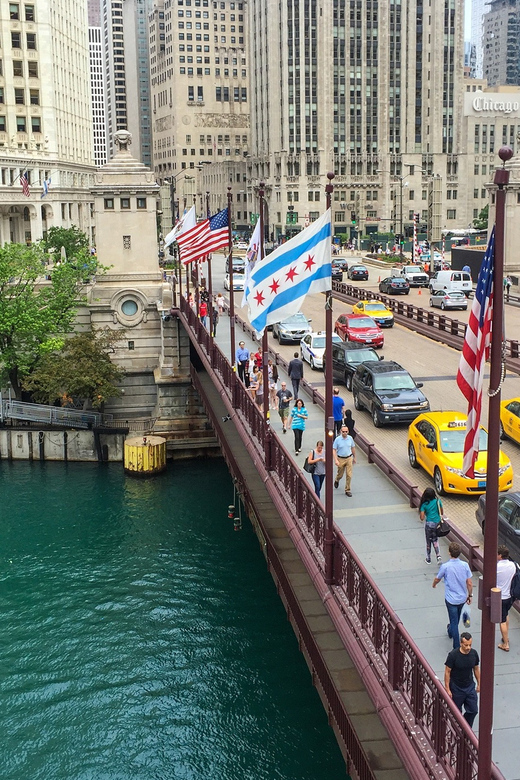
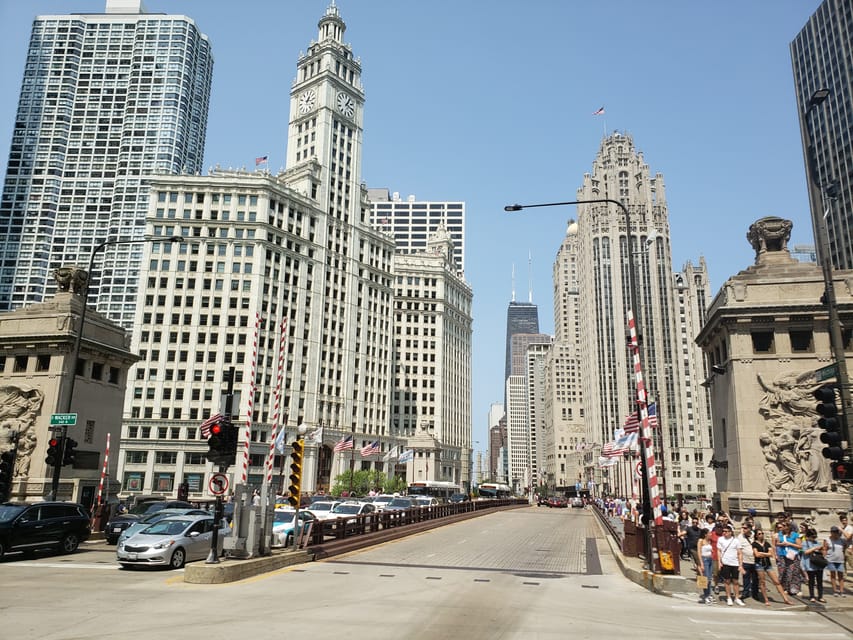
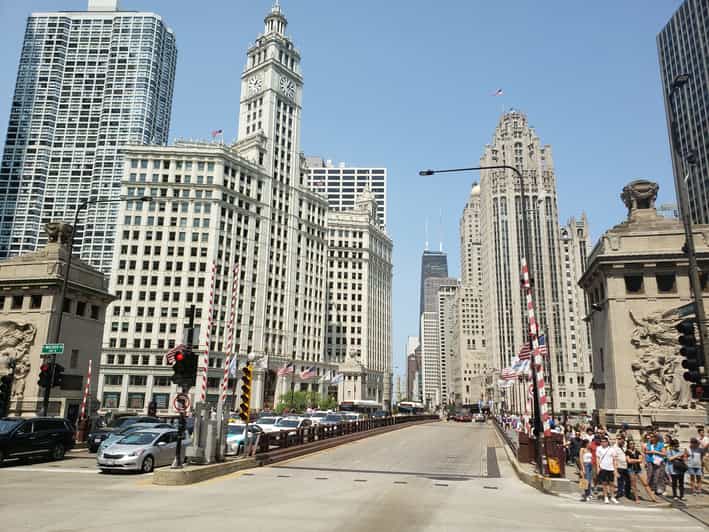
The short stop at the DuSable Bridge gives you a strong opening view of the district’s transformation. The bridge itself dates from the 1920s, and the tour explains how it helped redirect the area from industrial use toward shops, offices, hotels, and public activity.
You will not spend a long time here, with about five minutes listed for the visit, but the stop has a clear purpose. It connects the physical geography of the river with the rise of Michigan Avenue. It also helps you understand why the avenue became such an important north-south route.
The bridge is a good place to pay attention to the guide’s explanation rather than simply take photographs. The wider lesson is that Chicago’s famous architecture did not appear in isolation. Roads, bridges, river crossings, and business interests all helped decide where impressive buildings would rise.
Wrigley Building, a bright marker on Michigan Avenue
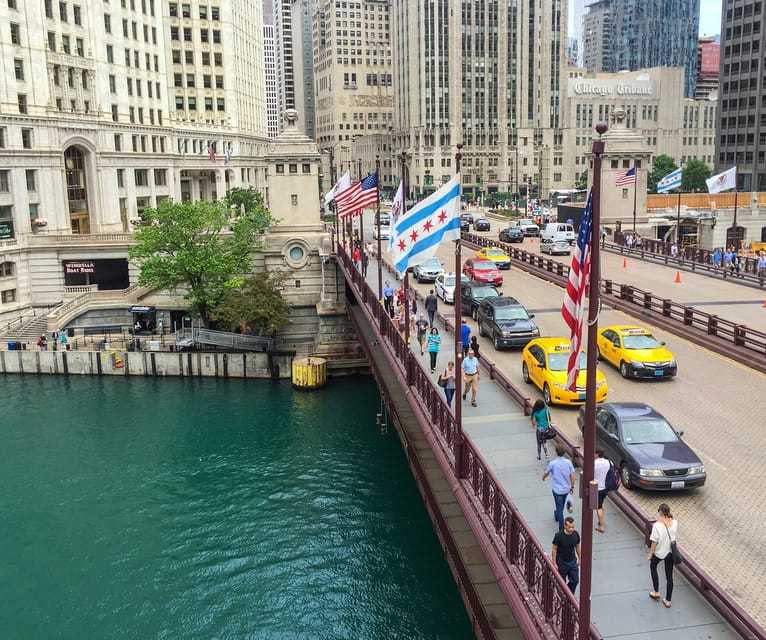
The Wrigley Building is one of the tour’s five-minute stops and one of the avenue’s most recognizable landmarks. Here, the guide discusses the building as part of the wider story of North Michigan Avenue, not merely as a pretty exterior.
The tour also covers the Tribune Tower, another architectural icon known around the world. The supplied route does not list a separate timed stop for the tower, so expect to hear about it as the walk moves through the district rather than spend a long period at every major building.
That approach suits this tour’s pace. In 90 minutes, you get a guided reading of several buildings instead of a long interior visit at one site. If you want detailed architectural drawings or extensive time for photographs, you may find the schedule brisk.
The Wrigley Building also helps introduce the idea that commercial architecture can become civic identity. A building made for business can turn into a symbol of the city, especially when its design is distinctive and its location is so prominent.
Inside the InterContinental and the Medinah Athletic Club
The InterContinental Chicago Magnificent Mile is listed as a five-minute stop, but its real value is the connection to the Medinah Athletic Club. This is one of the more unusual parts of the walk because you are not only looking at a famous facade.
Inside, the decoration ranges from Egyptian to Renaissance influences. That mixture reflects the era’s taste for dramatic themes and elaborate interiors. It also gives you a welcome change from the tall glass and stone buildings outside.
I like this stop because it reminds you that Chicago architecture is not only about height. Interior decoration, materials, symbols, and decorative programs can tell you just as much about a building’s purpose and period as its exterior.
The amount of access is important to understand. The information promises a chance to see inside, but it does not describe a long interior visit or guarantee access to every part of the building. Treat it as a guided glimpse, not a full building tour.
More walking tours in Chicago:
- Chicago: Gangsters and Ghosts Walking Tour
★ 5.0 · 7,155 reviews - Chicago Favorites Ultimate Food and Walking Tour
★ 5.0 · 1,962 reviews - Chicago: Gangsters and Ghosts Guided Walking Tour
★ 4.7 · 1,697 reviews - Chicago in a Day: Food, History & Architecture Walking Tour
★ 5.0 · 1,153 reviews
Art Deco panels and the avenue’s retail identity
The walk also brings you to bas relief sculptural panels inside an Art Deco office building. These panels are easy to miss if you are shopping or rushing between landmarks, which is why a certified guide adds real value here.
Art Deco is often associated with geometric forms, strong lines, and decorative surfaces. The panels give you something concrete to study instead of relying on broad labels. Look closely at the relief work and listen for the guide’s explanation of how decoration helped define an office building.
The route includes Burberry and Apple Michigan Avenue, each with a five-minute visit. These stops show a later phase of Michigan Avenue’s development, when retail brands began using architecture as part of their public image.
The point is not simply to admire expensive stores. The tour looks at how modern shops, vertical malls, hotels, skyscrapers, and residential towers are designed to express the brands and experiences inside. Apple Michigan Avenue, in particular, represents a newer retail style compared with the older masonry landmarks along the avenue.
This contrast is one of the strongest reasons to take the walk. You see several eras close together: early commercial ambition, grand historic buildings, hotel interiors, Art Deco ornament, and contemporary retail design.
What the guide adds to the buildings
A good walking tour depends heavily on the guide, and the strongest feedback here focuses on the quality of the explanations and the relaxed way questions are handled. Jim received especially warm praise for being articulate, well informed, and fun, though the information does not promise that Jim will lead every departure.
That distinction matters. The tour is run by the Chicago Architecture Center and includes a professional certified guide, but the individual guide can vary. You should expect clear English-language interpretation of the buildings and an opportunity to ask questions.
I would choose this experience for anyone who likes knowing why a building matters, not just where it is. The route is more rewarding when you ask about changes to the avenue, the meaning of the decorative details, and the shift from industrial district to commercial center.
The walk also works well early in a Chicago visit. After 90 minutes, you will have a better sense of how the river, bridge, avenue, retail district, and major towers fit together. You can then return to places that caught your eye, this time with more context.
What is included, and what is not
The price is listed as $35 per group up to one person. Since the wording says up to one, check the booking screen carefully if you are arranging the tour for more than one person. The value is strongest for someone who wants a short, professionally led architecture walk and plans to use the included galleries afterward.
Admission to the Chicago Architecture Center is included. Inside, you can see displays about Chicago’s architectural styles, an interactive model of downtown buildings, and models showing how Chicago skyscrapers developed over time.
That extra access changes the value calculation. You are not paying only for 90 minutes on the sidewalk. You also receive a place to continue learning at your own pace, which is especially useful if the weather is poor after the walk or if you want a clearer picture of the city’s architectural development.
Food and drink are not included. There is no hotel pickup or drop-off, and the Center cannot provide secure storage for luggage or strollers. Large bags and luggage are not allowed, so plan to arrive with only what you can carry comfortably.
Coat check is not included either. The tour runs rain or shine, and the provided information says there are no weather-related refunds. You can cancel up to 24 hours in advance for a full refund, and reserve now while paying later, but once the weather turns during your visit, you should be prepared to continue.
Who will enjoy this North Michigan Avenue walk?
I would recommend this tour to first-time Chicago visitors who want a compact introduction to the city’s architecture. It is also a good fit for shoppers who want to understand the street beyond its stores, and for anyone who prefers a guide’s explanation to reading plaques alone.
Architecture students, design fans, and visitors interested in urban planning will get the most from the route. The combination of Burnham’s plan, the DuSable Bridge, historic landmarks, interiors, Art Deco details, and modern retail buildings gives you several useful points of comparison.
You may want something else if your main goal is to cover a large part of downtown. The route is concentrated on North Michigan Avenue, and one participant specifically wished it had covered more territory and more streets. This is a focused walk, not a full city architecture survey.
The accessibility information needs careful attention. The activity is marked wheelchair accessible, yet it is also listed as not suitable for people with mobility impairments. Since those statements conflict, contact the provider before booking if you need particular assistance or have concerns about walking, building access, or the route surface.
Is the Chicago Magnificent Mile Walking Tour worth booking?
Book it if you want a short, focused explanation of how Chicago turned Pine Street into a major avenue, and if you value access to the Chicago Architecture Center afterward. The Medinah Athletic Club interiors and Art Deco panels add details you might miss on a self-guided shopping walk.
Skip it if you want a long citywide route, extensive time inside each building, or a tour built mainly around shopping. At 90 minutes, the experience moves quickly and keeps its attention on North Michigan Avenue.
For most visitors, the best plan is to schedule it early in your Chicago stay, wear shoes suited to walking, leave luggage behind, and allow extra time for the Architecture Center galleries. That way, the tour becomes more than a stroll past famous addresses. It gives you a practical way to read the city.
FAQ
How long does the Chicago Magnificent Mile Walking Tour last?
The tour lasts 90 minutes.
Where does the tour begin?
Meet inside the Chicago Architecture Center at 111 E Wacker Drive, Chicago, Illinois 60601.
Where does the tour finish?
The walk returns to the Chicago Architecture Center.
What language is the tour offered in?
The live guided tour is offered in English.
Is admission to the Chicago Architecture Center included?
Yes. Your tour price includes admission to the Center’s galleries, including the interactive downtown building model and displays about Chicago architecture.
Is food or drink included?
No. Food and drink are not included.
Can I bring luggage or a stroller?
No secure storage is available for luggage or strollers, and large bags and luggage are not allowed.
Can I bring a pet?
Pets are not allowed. Service animals are welcome.
What is the cancellation policy?
You can cancel up to 24 hours in advance for a full refund. The tour operates rain or shine, and weather-related refunds are not provided.
Just added in Chicago
- Private Downtown Chicago TV and Movie Sites Guided Walking Tour★ 4.5 · 3 reviews
- Chicago: Architecture and Engineering Marvels Walking Tour★ 5.0 · 3 reviews
- Black Heritage Tour★ 5.0 · 3 reviews
- Private SUV Transfer from Chicago Downtown to Midway airport★ 5.0 · 3 reviews
- Private Holiday City Tour★ 5.0 · 3 reviews
- BYOB Chicago River Guided History Tour★ 5.0 · 4 reviews
- Chicago 4-Hour Sightseeing Transfer by Luxury SUV★ 4.5 · 3 reviews
- Chicago, Cloud Gate, Grant Park Full-Day City Tour★ 4.0 · 4 reviews
Magnificent Mile Tours, compared.

Chicago River 45-Minute Architecture Tour from Magnificent Mile
Read our review →
Magnificent Mile Tour With Optional 360 Chicago Upgrade
Read our review →
Chicago Perfume Making Classes on Magnificent Mile
Read our review →

Chicago Food Tour with The Magnificent Mile and Millennium Park
Read our review →Browse the lists this tour appears in