
Reviewed · CHICAGO ARCHITECTURE TOURS
Private Chicago Architecture Walking Tour
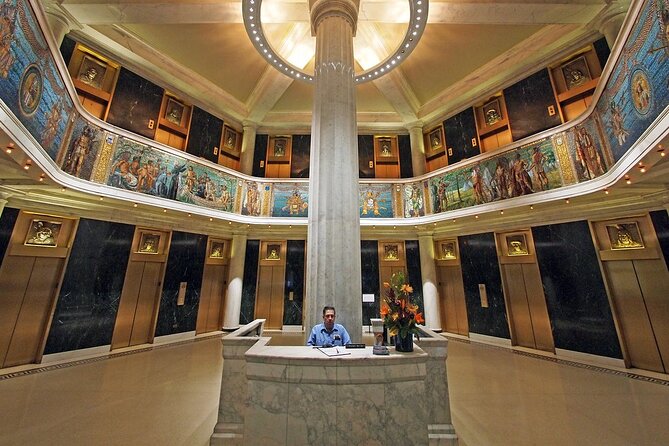
Chicago’s architectural story unfolds indoors as much as outdoors on this private walk. You begin at the Fine Arts Building and follow the Loop’s grand office towers, historic hotels, department stores, and public buildings north to the Wrigley Building. The best part is the range: speculative skyscrapers, ornate lobbies, Tiffany glass, Gothic decoration, and early modern design all fit into one route.
I like the private format, since your guide can adjust the pace and explain details that are easy to miss from the sidewalk. I also like the compact route, which links eight major stops without requiring a bus or train. The main concern is access: you may not enter every building, especially on weekends, and lunch is advertised as included but has been reported as unavailable.
In This Review
- Key points to know
- Why this route tells Chicago’s story well
- Starting at the Marquette Building
- Inside the Rookery Building
- A short stop at the Palmer House lobby
- The Sullivan Center and the department store age
- The Chicago Athletic Association’s grand reinvention
- The Chicago Cultural Center and its Tiffany dome
- Tribune Tower’s Gothic skyline
- Ending at the Wrigley Building
- What the private format adds
- Price, lunch, and the access question
- Who should book this walk?
- Should you book the Private Chicago Architecture Walking Tour?
- FAQ
- How long is the Private Chicago Architecture Walking Tour?
- Where does the tour begin?
- Where does the tour end?
- Is this a private tour?
- What language is the tour offered in?
- What buildings are included on the route?
- Is lunch included?
- Is admission included?
- Can I enter every building?
- Can I cancel for a refund?
Key points to know
- Eight major buildings in about three hours: The route covers the Marquette Building, Rookery, Palmer House, Sullivan Center, Chicago Athletic Association, Cultural Center, Tribune Tower, and Wrigley Building.
- A private English-speaking guide: Only your group takes part, making it easier to ask questions and set a comfortable walking pace.
- Interior access can vary: Several stops list included admission, but building hours and weekend conditions may limit entry.
- A strong mix of architecture: You see Chicago School design, Venetian Gothic ornament, French Renaissance details, and the world’s largest Tiffany stained-glass dome.
- A central start and finish: The walk begins near the Fine Arts Building on South Michigan Avenue and ends at the Wrigley Building on North Michigan Avenue.
- Check the lunch detail before booking: Lunch is listed among the inclusions, yet one booking reported that it was not provided.
Why this route tells Chicago’s story well
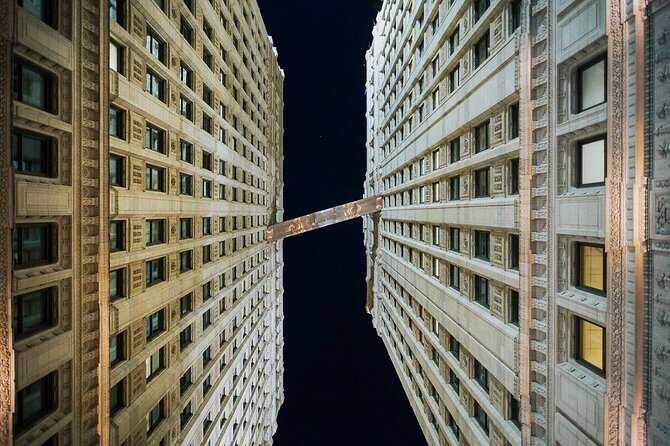
Chicago is often called an architectural museum, and this route shows why without forcing you into a lecture hall. In three hours, you move from the city’s late-19th-century office boom to the polished commercial towers of the 1920s.
The route also has a useful shape. You start near the Fine Arts Building, walk through the Loop, then finish along Michigan Avenue. That means the tour follows a real part of downtown rather than sending you back and forth across the city.
A private walk costs $211 per person, so this is not a casual budget stroll. The value depends on how much you want interpretation and access to historic interiors. If you already know Chicago’s architectural history and only need exterior photographs, the price may feel high. If you want a guide to connect investors, architects, hotels, department stores, clubs, and civic buildings into one story, the private setup makes more sense.
The tour is listed at about three hours. That is enough time to see a lot, but not enough to study every building in detail. You should expect a brisk overview with stops for explanation and, when available, interior visits.
More architecture tours in Chicago:
- Chicago Architecture River Cruise
★ 5.0 · 15,756 reviews - Chicago River 90-Minute Architecture Tour
★ 4.5 · 9,629 reviews - Chicago River: 1.5-Hour Guided Architecture Cruise
★ 4.8 · 8,046 reviews
Starting at the Marquette Building
The Marquette Building is an excellent first stop because it explains the money behind Chicago’s skyscraper boom. It was built as a speculative office project, with investors creating first-class workspaces in the hope that a growing city would fill them.
That practical purpose matters. Chicago’s early tall buildings were not built only as monuments. They were business machines, designed to bring rental income to owners who believed the city would keep expanding.
You have about 20 minutes here, and admission is listed as included. The building gives your guide a chance to explain how commercial ambition shaped Chicago’s architecture. Look for the difference between a building’s public face and its working purpose. The Marquette was meant to attract tenants and make money, yet it also became a respected historic landmark.
This is a useful opening because it gives you a question to carry through the rest of the walk: how did each building balance profit, prestige, and practical use?
Inside the Rookery Building
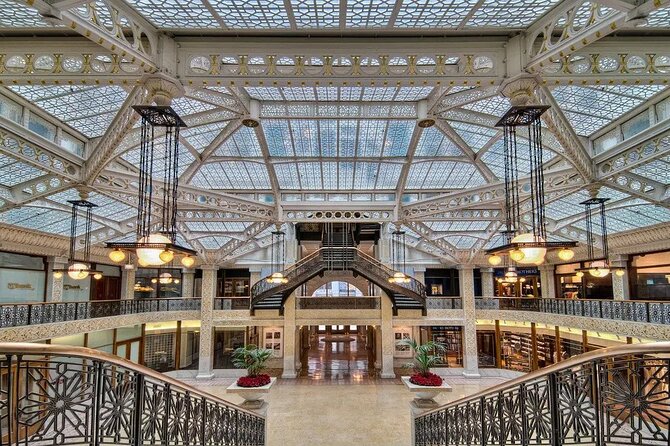
The Rookery follows naturally. When it opened, it was considered the largest and finest office building in the United States. Its location at LaSalle and Adams placed it in the heart of Chicago’s financial corridor, where grand architecture helped project confidence.
You have another 20-minute stop, with admission listed as included. The Rookery is one of the route’s most important interiors, so this is a place where building access has real value. The experience is not simply about seeing a famous facade. It is about understanding how early skyscrapers made office work feel modern, impressive, and respectable.
The Rookery also helps show that Chicago’s first skyscrapers were not plain steel boxes. They combined new structural ideas with carefully planned decoration. Your guide can point out how the building’s public areas were designed to impress clients, tenants, and investors.
If you are especially interested in architecture, ask how the Rookery compares with the Marquette. The two buildings are close enough in age to make that comparison useful, but each expresses commercial success in a different way.
A short stop at the Palmer House lobby
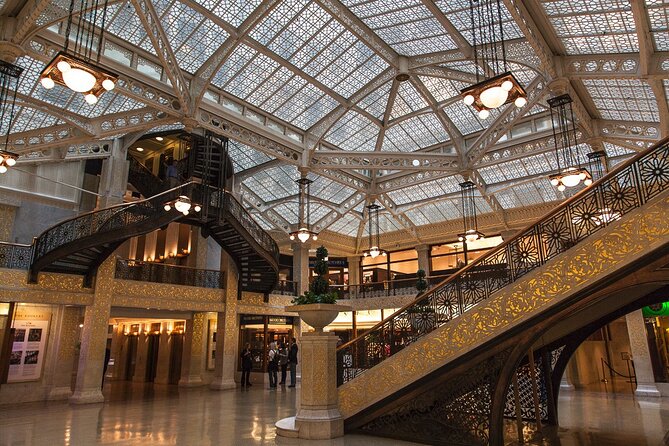
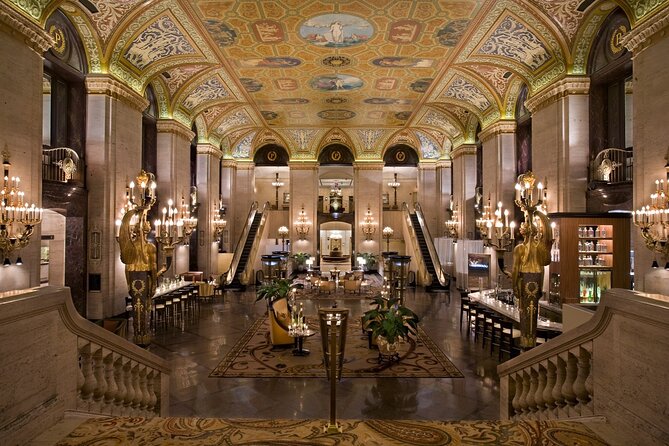
The Palmer House Hilton takes only about 10 minutes, but it adds a different layer to the tour. This is not an office building or department store. It is a hotel tied to the story of modern city life.
The Palmer House is described as the longest continuously operating hotel in North America. It was also the city’s first hotel with elevators, and the first hotel with electric light bulbs and telephones in guest rooms.
Those facts show why hotels mattered in a rapidly growing city. An elevator changed how many floors a hotel could offer. Electric light changed the feel of public rooms and guest spaces. In-room telephones made a hotel room more connected to the city outside.
Admission is free at this stop, and the focus is the historic lobby. Since the visit is brief, treat it as a sharp glimpse rather than a full hotel tour. The Palmer House works best as a reminder that architectural progress was not limited to office towers. It also changed where people slept, worked, met, and conducted business.
More walking tours in Chicago:
- Chicago: Gangsters and Ghosts Walking Tour
★ 5.0 · 7,155 reviews - Chicago Favorites Ultimate Food and Walking Tour
★ 5.0 · 1,962 reviews - Chicago: Gangsters and Ghosts Guided Walking Tour
★ 4.7 · 1,697 reviews - Chicago in a Day: Food, History & Architecture Walking Tour
★ 5.0 · 1,153 reviews
The Sullivan Center and the department store age
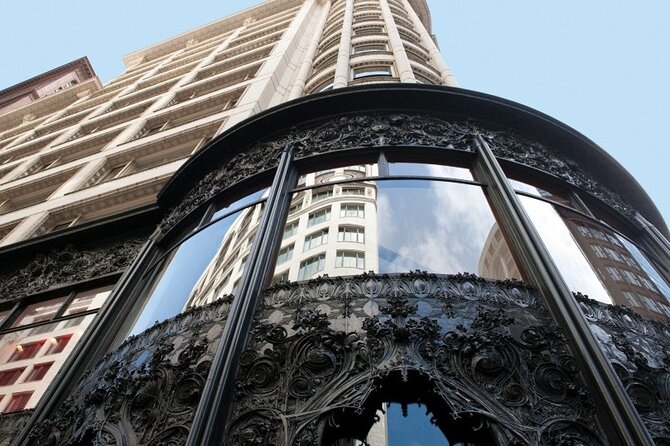
The Sullivan Center, formerly the Carson Pirie Scott store, is one of the route’s strongest stops for understanding the Chicago School. Built between 1899 and 1903, it was designed for retail and remained connected to department-store shopping throughout its life.
You have about 20 minutes here, with admission listed as included. The building is important because it shows how commercial architecture adapted to large crowds and changing patterns of shopping. A department store needed a dramatic corner, open display areas, easy movement, and a facade that could catch the eye.
The Sullivan Center was named a Chicago landmark in 1975. Its importance is not only age. It represents a key stage in the history of tall buildings, when architects were working out how to make large structures useful, attractive, and readable from the street.
This stop is particularly good for visitors who want more than famous towers. It connects architecture to ordinary city life. The building was not made only for bankers and office tenants. It was made for shoppers.
The Chicago Athletic Association’s grand reinvention
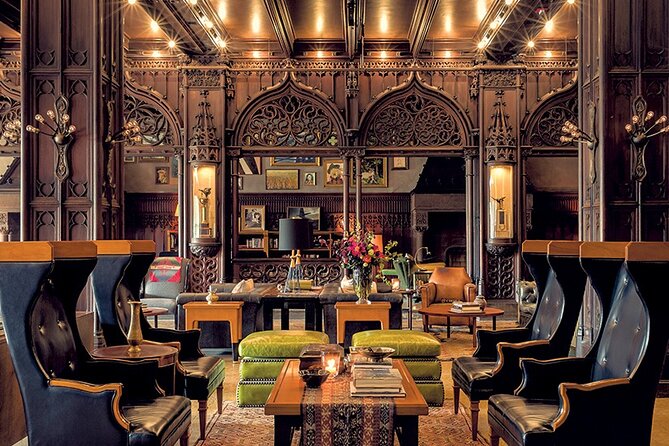
The Chicago Athletic Association offers one of the longest stops, at about 30 minutes, although admission is listed as free. The 11-story Venetian Gothic building was designed by Henry Ives Cobb and completed in 1893.
From its opening until 2007, it served as a private club for wealthy Chicagoans. Its present hotel use preserves much of that earlier character, with ornate paneling, elaborate molding, and detailed trim. The building is across from Millennium Park, and its restaurants, pubs, ballrooms, and lake views add a modern public life to the old club structure.
This is a helpful stop because you can see how historic buildings survive by changing jobs. The Chicago Athletic Association was once exclusive. Now it functions as a hotel and public dining destination, while retaining much of its old interior design.
You should allow time to look up and around. In buildings like this, decoration can disappear if you hurry. The half-hour stop gives your guide room to explain the old club and the later refurbishment.
The tradeoff is that this is not a private look behind every door. You are visiting a working hotel, so access depends on which public areas are open. Still, the building is one of the more characterful stops on the route.
The Chicago Cultural Center and its Tiffany dome
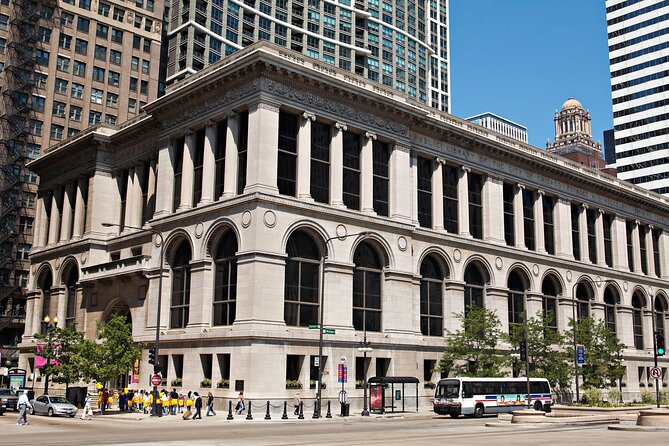
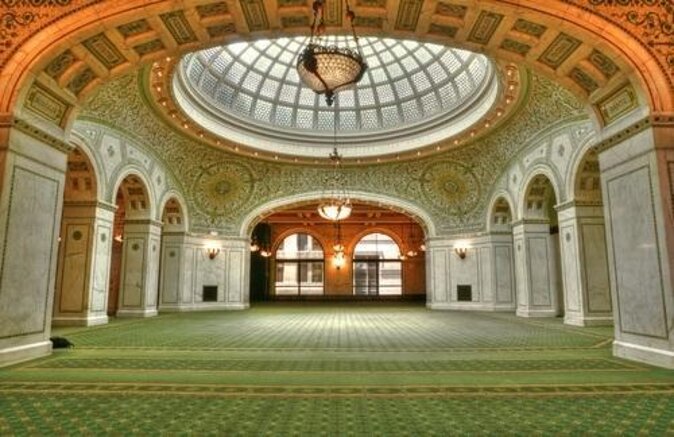
The Chicago Cultural Center receives about 30 minutes, and that time is well spent. The building fills an entire city block and is home to the world’s largest Tiffany stained-glass dome.
It also serves as a major public arts center, presenting more than 700 humanities programs each year, many of them free and open to the public. That gives the building a useful role in the tour: it is not just a preserved monument. It remains part of Chicago’s civic life.
Admission is listed as included. You may spend much of your visit looking upward, but do not ignore the surrounding architectural details. The Cultural Center rewards a slower pace, and this is one place where the schedule gives you enough time for a proper look.
I like this stop because it broadens the route beyond private business. The Marquette, Rookery, and Sullivan Center show commerce. The Cultural Center shows how a grand downtown building can serve residents and the public.
Tribune Tower’s Gothic skyline
The Tribune Tower is a shorter stop at about 15 minutes. Its 36 stories, Gothic spires, and shrine-like lobby have become familiar symbols of Chicago.
The tower’s design makes a clear visual statement. It uses Gothic forms to give a modern skyscraper the feeling of a historic monument. The lobby’s inspirational quotations add to that mood, turning an office entrance into a place with ceremony and symbolism.
Admission is listed as included, but the practical warning about access applies here too. You should not assume that every advertised interior is open at every hour. Weekend tours may have fewer opportunities to enter buildings, so ask your guide at the start what can realistically be visited that day.
Even from outside, Tribune Tower is a strong stop. It gives you a chance to compare Gothic verticality with the Sullivan Center’s commercial design and the Rookery’s earlier office architecture.
Ending at the Wrigley Building
The final stop is the Wrigley Building, at about 15 minutes. Its French Renaissance ornament and tall clock tower make it one of the most recognizable structures on Michigan Avenue.
The clock tower rises to about 425 feet, or 130 meters. That height helps explain the building’s presence, but the decoration is just as important. The Wrigley Building was not content to be tall. It was designed to be memorable.
Ending here works well. The route begins with the investment logic of the Marquette Building and finishes with a 1920s icon made to catch the public eye. You have crossed from early commercial skyscrapers to a polished Michigan Avenue landmark.
The tour ends at 400 to 410 North Michigan Avenue. From there, you are close to the central Michigan Avenue corridor, though the tour does not include onward transportation.
What the private format adds
The private arrangement is the clearest reason to consider this experience at its price. Only your group participates, and the English-speaking guide can respond to your questions instead of following a fixed script for a large crowd.
That matters in architecture tours. You may want to know why a building uses Gothic decoration, how department stores changed downtown, or why an old private club became a hotel. A private guide can spend more time on the subjects that interest you.
The reported rating is 4.8 from six reviews, with praise focused on the personalized planning, detailed explanations, friendly manner, and strong building selection. Those are the areas where this tour appears to deliver its main value.
There is no guide name provided, so I cannot tell you who will lead your particular walk. The experience is offered in English, and bottled water plus fees and taxes are included.
Price, lunch, and the access question
At $211 per person, this is a premium walking tour. You are paying for a private guide, not just a list of addresses. The price can be reasonable for a couple or small group that wants a focused introduction to Chicago’s Loop and prefers not to join a large public tour.
The lunch detail needs care. Lunch is listed as included, but one booking reported that it was not provided, even after separate confirmation. I would verify this directly before paying, and I would not plan your entire day around a promised meal until the operator confirms the arrangement.
Building access is the other important limitation. Several stops list admission as included, but that does not mean every interior is guaranteed. A building may be closed, operating on restricted hours, or unavailable for tour access. Weekend walks are reported to have even fewer interior options.
That does not ruin the experience. Chicago’s major facades are worth seeing from the street, and a good guide can still explain what you are looking at. But the tour description should not lead you to expect a full indoor visit at all eight stops.
Who should book this walk?
I would recommend it most strongly to first-time Chicago visitors who want a clear introduction to architecture without spending a full day in museums. It also suits couples, families, and small groups who value privacy and want to ask plenty of questions.
It is a good fit if you like historic interiors, city planning, commercial architecture, and the connection between buildings and business. The route includes enough variety to keep the walk from becoming a parade of similar office towers.
You should think twice if you dislike walking, want a relaxed meal included without any uncertainty, or expect guaranteed interior access everywhere. The three-hour schedule is active, and the route is built around seeing many sites rather than lingering at one.
Most travelers can participate, service animals are allowed, and the route is near public transportation. Confirmation arrives at booking, and you can cancel for a full refund up to 24 hours before the start time. Cancellations within 24 hours are not refunded.
Should you book the Private Chicago Architecture Walking Tour?
Book it if you want a private, well-planned introduction to Chicago’s most important downtown buildings and you place a high value on a guide’s explanations. The mix of the Rookery, Sullivan Center, Cultural Center, Tribune Tower, and Wrigley Building gives you a strong architectural range in a short time.
Before booking, confirm two things: what lunch actually includes and which interiors can be entered on your date. If those details are clear and the $211 price fits your budget, this is a practical way to read Chicago’s Loop with a local guide at your side. If not, you may get better value from a public architecture walk or a self-guided route focused on exterior views.
FAQ
How long is the Private Chicago Architecture Walking Tour?
The tour lasts approximately three hours.
Where does the tour begin?
It starts at the Fine Arts Building, 410 South Michigan Avenue, Chicago, Illinois 60605.
Where does the tour end?
The tour ends at the Wrigley Building, 400 to 410 North Michigan Avenue, Chicago, Illinois 60611.
Is this a private tour?
Yes. Only your group participates in the activity.
What language is the tour offered in?
The tour is offered in English with an English-speaking guide.
What buildings are included on the route?
The stops are the Marquette Building, Rookery Building, Palmer House Hilton historic lobby, Sullivan Center, Chicago Athletic Association, Chicago Cultural Center, Tribune Tower, and Wrigley Building.
Is lunch included?
Lunch is listed as included, but one booking reported that lunch was not provided. Confirm this detail with the operator before the tour.
Is admission included?
Admission is listed as included at the Marquette Building, Rookery Building, Sullivan Center, Chicago Cultural Center, Tribune Tower, and Wrigley Building. The Palmer House and Chicago Athletic Association stops list admission as free.
Can I enter every building?
No guarantee is provided for access to every building. Building hours and operating conditions can limit entry, and weekend access may be more restricted.
Can I cancel for a refund?
You can cancel at least 24 hours before the start time for a full refund. Cancellations or changes made within 24 hours are not accepted or refunded.
Just added in Chicago
- Chicago: Architecture and Engineering Marvels Walking Tour★ 5.0 · 3 reviews
- Private Downtown Chicago TV and Movie Sites Guided Walking Tour★ 4.5 · 3 reviews
- Black Heritage Tour★ 5.0 · 3 reviews
- Private SUV Transfer from Chicago Downtown to Midway airport★ 5.0 · 3 reviews
- Private Holiday City Tour★ 5.0 · 3 reviews
- BYOB Chicago River Guided History Tour★ 5.0 · 4 reviews
- Chicago 4-Hour Sightseeing Transfer by Luxury SUV★ 4.5 · 3 reviews
- Chicago, Cloud Gate, Grant Park Full-Day City Tour★ 4.0 · 4 reviews
Chicago Architecture Tours, compared.
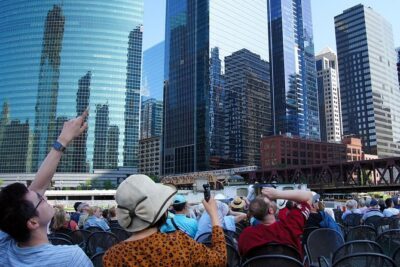
Chicago Architecture Center River Cruise aboard First Lady
Read our review →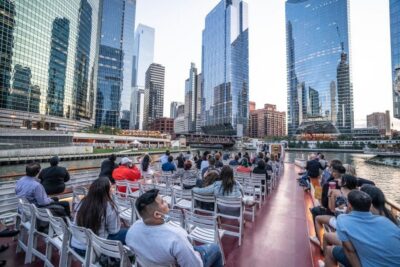
Architecture River Cruise Skip-the-Ticket Line
Read our review →
Chicago River 45-Minute Architecture Tour from Magnificent Mile
Read our review →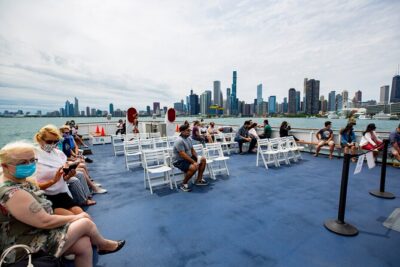
45-Minute Family-Friendly Architecture River Cruise
Read our review →Browse the lists this tour appears in