
Reviewed · CHICAGO ARCHITECTURE TOURS
Walking Tour: Chicago’s Loop – Home of the Modern Skyscraper
Chicago’s first skyscrapers were not just tall buildings. They were bold answers to a city problem: how to fit more offices into a crowded downtown without letting the streets spread forever. This three-and-a-half-hour walking tour puts that story right in front of you, from the Fine Arts Building to the Rookery and the grand interiors of Macy’s and the Chicago Cultural Center.
I like two things here. First, the group is limited to ten people, so you can ask questions and hear your guide without straining. Second, the tour gets you inside buildings you could easily pass without noticing, including a place with manually operated elevators and Macy’s remarkable tiled dome. The main drawback is the walking and stair climbing, plus the fact that your snack stop is not included in the $65 price.
In This Review
- Key points at a glance
- Why Chicago’s Loop is best understood on foot
- Fine Arts Building and the start at 10 a.m.
- Harold Washington Library Center and public architecture
- Monadnock and Marquette: two very different office buildings
- A practical break at Revival Food Hall
- The Rookery Building and Chicago’s early skyscraper story
- Riding the L from Quincy
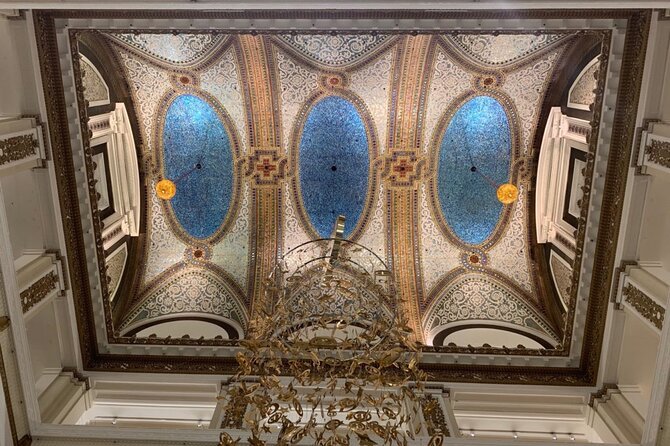
- Macy’s on State Street and the tiled dome
- The Chicago Cultural Center and the Tiffany dome
- Is $65 a fair price?
- Who should book this Loop architecture walk?
- Useful planning details before you go
- Should you book the Chicago Loop skyscraper tour?
- FAQ
- How long is the Chicago Loop walking tour?
- What time does the tour begin?
- Where does the tour start?
- Where does the tour end?
- How many people can join the tour?
- Is the L train fare included?
- Is food included?
- Do I need to be physically fit?
- Are all train stations equipped with elevators?
- Can I cancel for a full refund?
Key points at a glance
- A small group of ten or fewer: You get a more personal walk through the Loop, with room for questions and conversation.
- Chicago architecture from the inside: The tour visits working and historic buildings, not just their street facades.
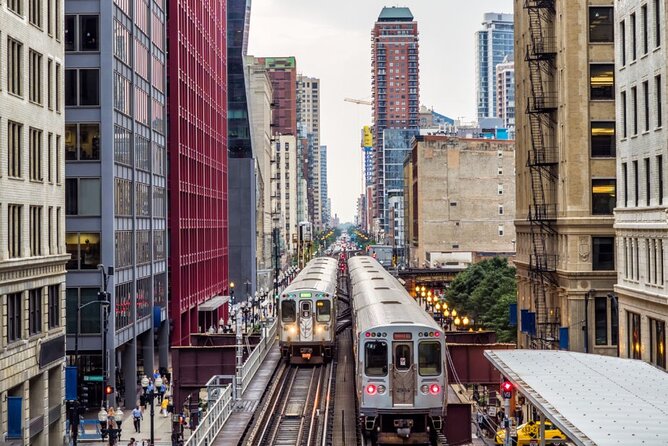
- A short ride on the L: Transit tickets are included, and the train connects the early part of the walk with the final downtown stops.
- A guide who loves Chicago: Tom is named in several positive comments, and the tour is led by a local resident familiar with the city’s buildings and story.
- A strong finish: Macy’s on State Street and the Chicago Cultural Center provide grand interiors, including the world’s largest Tiffany dome.
- Plan for stairs and a snack: You need moderate fitness, and not every train station has an elevator. Food and drinks cost extra.
Why Chicago’s Loop is best understood on foot
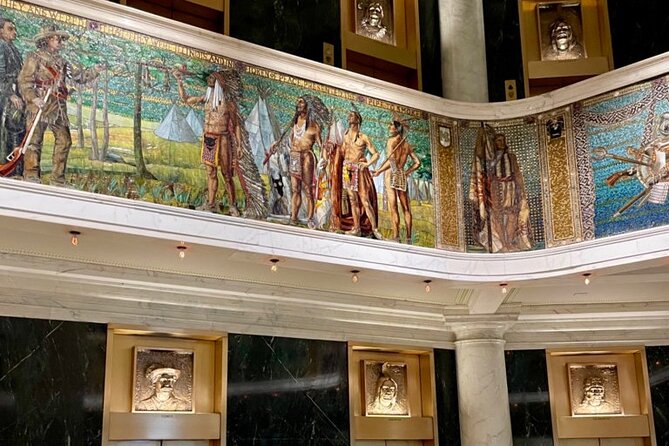
The Loop can feel like a wall of steel and glass when you first arrive. This tour helps you read the details: the age of a building, the way an entrance is framed, and the changes in engineering that allowed Chicago’s early office towers to rise.
The route is also useful because it moves beyond the most famous exterior views. You do not simply stop, take a picture, and move on. You enter several buildings and look at their interiors, decorative work, elevators, and public spaces. That makes the tour a good choice if you want architecture with context rather than a quick list of landmarks.
Your guide is a lifelong Chicago resident, and Tom is specifically named in the feedback supplied for this experience. The strongest praise centers on his warm manner, command of Chicago buildings, and ability to pace the walk so people have time to notice details. Guides can vary, but the format is designed around a local expert rather than a recorded audio track.
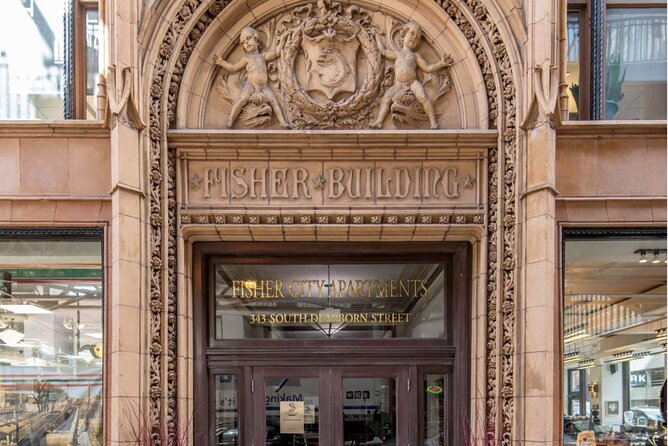
You meet at 10:00 a.m. in the lobby of the Fine Arts Building at 410 South Michigan Avenue. The tour ends at the Chicago Cultural Center, 78 East Washington Street, so you finish in a central part of downtown with easy access to other Loop sights.
More architecture tours in Chicago:
- Chicago Architecture River Cruise
★ 5.0 · 15,756 reviews - Chicago River 90-Minute Architecture Tour
★ 4.5 · 9,629 reviews - Chicago River: 1.5-Hour Guided Architecture Cruise
★ 4.8 · 8,046 reviews
Fine Arts Building and the start at 10 a.m.
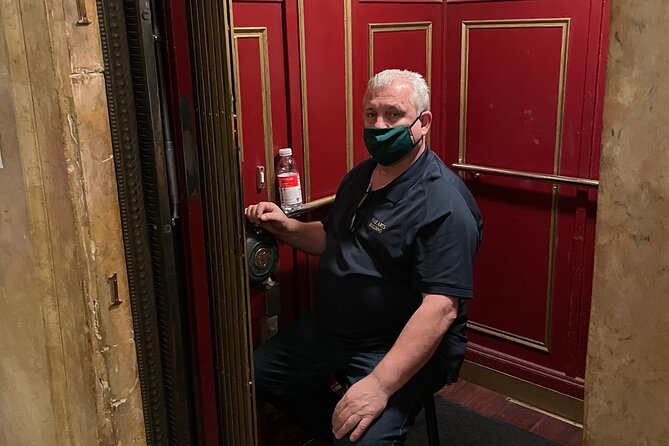
The Fine Arts Building is a fitting place to begin. You meet in its lobby and spend about 30 minutes looking through a building that still has manually operated elevators. That small detail gives the opening stop real character. It is not only about the exterior design. You are seeing an old piece of building operation that has survived into the present.
This stop also sets the tone for the tour. Look closely at the lobby and the elevator area, and listen for the explanation of how Chicago’s office buildings changed as new construction methods made greater height possible. The tour’s focus on early skyscrapers becomes easier to understand when you are standing inside an actual historic building.
The Fine Arts Building is near public transportation, but you should arrive with enough time to find the lobby before the 10:00 start. Since the tour begins indoors, the meeting point is easier to manage than a busy street corner, though you still need to confirm the exact location when booking.
Harold Washington Library Center and public architecture
The next stop is the Harold Washington Library Center, where you spend about 30 minutes looking at exhibits and less obvious features of the building. The stop adds a different kind of architecture to the tour. Instead of focusing only on office towers from the early skyscraper era, it shows how a major public library uses its interior for civic life.
I like this part because libraries are easy to treat as ordinary buildings. A guide can point out design choices that you might miss while walking through on your own. You may also find that the library gives the tour a calmer rhythm after the opening building visit.
The stop is free, as are the other building visits on the route. That matters because the $65 fee is paying for the guide, the small group, and the route design rather than a long list of separate admission charges.
Monadnock and Marquette: two very different office buildings
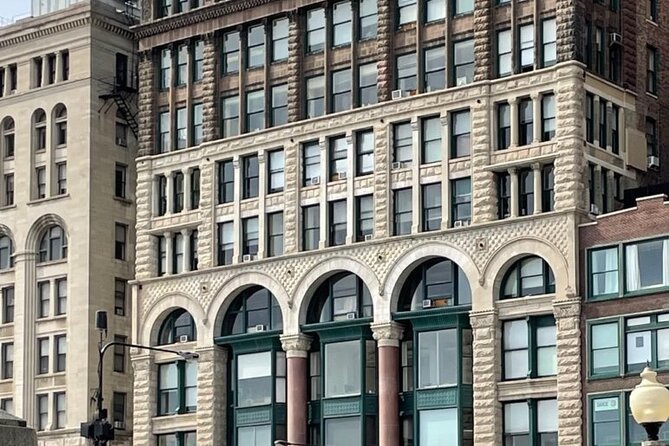
At the Monadnock Building, the tour pauses for about 15 minutes. Once described as the world’s largest office building, it gives you a close look at the scale and ambition of Chicago’s early commercial architecture.
A 15-minute stop is short, so do not expect an extended interior visit or a long period of independent wandering. The value comes from having the building placed in the wider story of early skyscrapers. You can compare what you see here with the other structures along the route and better understand how quickly office design changed.
The Marquette Building follows, also for about 15 minutes. This national landmark adds another important layer to the walk. The tour is not trying to make every stop equally long. Instead, it uses shorter visits for buildings that work best as focused examples, leaving more time for places with larger interiors or more features to see.
This part of the route should appeal to anyone who likes architectural comparison. The buildings are close enough in the city’s development to belong to the same broad story, yet each offers a different look at materials, decoration, and office construction.
More walking tours in Chicago:
- Chicago: Gangsters and Ghosts Walking Tour
★ 5.0 · 7,155 reviews - Chicago Favorites Ultimate Food and Walking Tour
★ 5.0 · 1,962 reviews - Chicago: Gangsters and Ghosts Guided Walking Tour
★ 4.7 · 1,697 reviews - Chicago in a Day: Food, History & Architecture Walking Tour
★ 5.0 · 1,153 reviews
A practical break at Revival Food Hall
About halfway through, you stop at Revival Food Hall for roughly 30 minutes. It is described as one of Chicago’s first food halls, and it gives you time to pause, use the facilities, and buy a snack if you want one.
Food and drinks are not included, so bring a payment method and treat this as a flexible break rather than a provided meal. Thirty minutes is enough for a quick purchase, but it is not a full restaurant stop. If you need a substantial lunch, plan to eat after the tour or make your choice quickly.
This pause is especially useful because the tour lasts around three and a half hours. Walking, standing, and looking upward can tire you out, even when the route is not strenuous in the usual sense. I would use the break for water and a small snack rather than expecting it to replace lunch.
The Rookery Building and Chicago’s early skyscraper story

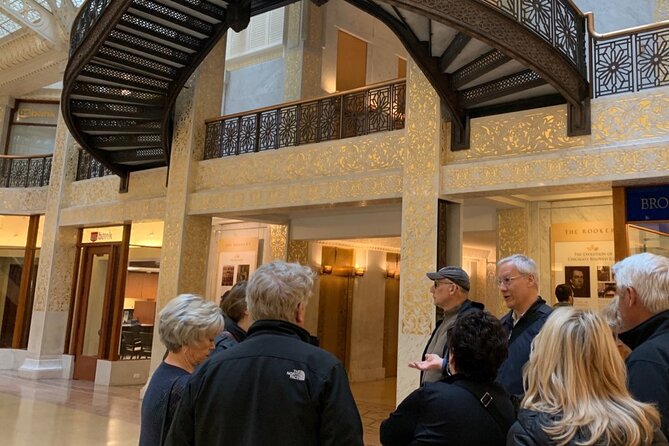
The Rookery Building receives a short visit of about 15 minutes. It is one of Chicago’s most important architectural buildings, and the stop gives you a chance to see why it belongs on a tour about the birth of the skyscraper.
A quick visit means the guide has to focus the explanation. That can be a benefit. Instead of getting lost in a long lecture, you receive a concise look at the building’s design and place in Chicago’s development, then continue through the Loop.
The Rookery is also a good example of why this tour works better than a simple street walk. You are not only looking at a distant facade. You get close enough to study details and hear how the building fits into the city’s architectural story.
Riding the L from Quincy
At Quincy, you board the L for a short ride to the final two destinations. Your transit ticket is included, so you do not need to buy a separate fare for this part of the tour.
The train ride is brief, but it changes the pace and gives you a practical taste of Chicago’s elevated rail system. It also means this is not a pure walking tour. You should be comfortable following your guide through a station and boarding the train as a group.
The operator notes that not all train stations have elevators, and you should be able to climb stairs. That is the most important physical note for booking. You need moderate fitness, comfortable shoes, and enough balance to manage city sidewalks, stairs, and several hours on your feet.
Macy’s on State Street and the tiled dome
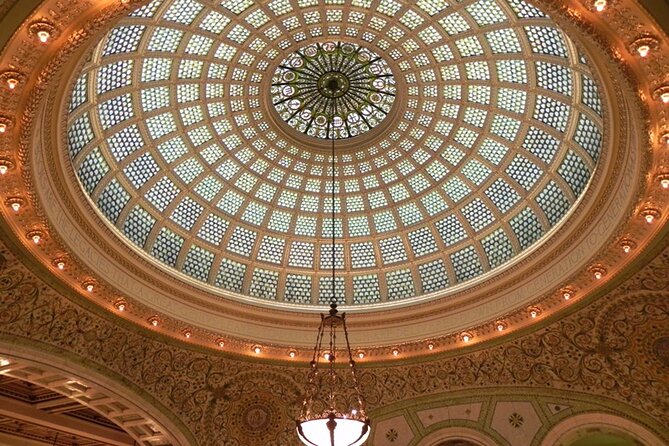
The Macy’s stop lasts about 30 minutes and is one of the tour’s most surprising moments. You visit an iconic department store, but the point is not shopping. The building contains notable architectural details that are easy to miss if you are focused on merchandise and store signs.
Look up. The tiled dome is the detail most likely to pass unnoticed. You can walk through Macy’s and never see it unless someone directs your attention above the normal eye line. This is exactly the sort of detail that gives a guided walk its value: you learn to notice the city’s upper reaches, not just its storefronts.
A department store may sound less historic than a landmark office building, but that contrast is useful. Chicago architecture is not confined to museums. It appears in places people still use for shopping, transit, work, and public services.
You have about half an hour here, enough for a proper look without turning the stop into a shopping trip. If you want to browse or buy something, that would be your own choice and would need to fit within the group’s schedule.
The Chicago Cultural Center and the Tiffany dome
The tour finishes at the Chicago Cultural Center, where you spend about 30 minutes. The main feature is the world’s largest Tiffany dome, a fitting final stop after a morning spent looking at ceilings, facades, elevators, and interior details.
Ending here gives the tour a clear visual payoff. The Cultural Center is close to the heart of the Loop, and the final stop lets you slow down and take in a large decorative interior rather than rushing past it on the sidewalk.
The tour ends at 78 East Washington Street. That is convenient if you want to continue exploring downtown on foot after the guide leaves. The endpoint also makes sense for the route, since the Cultural Center ties together Chicago’s public architecture, art, and civic identity.
Is $65 a fair price?
At $65 per person, this is not the cheapest way to walk around the Loop. But the price is easier to justify when you count the elements included: about three and a half hours, a local guide, a maximum group size of ten, entry to several buildings, and the L train fare.
You could visit some of these places independently at no admission cost. The question is not simply what the buildings charge at the door. The real value is having someone explain what you are seeing and lead you through a carefully arranged route without making you research each stop yourself.
The small group matters, too. A ten-person limit usually makes it easier to ask about a building, stop for a closer look, or hear the guide in a busy downtown setting. If you prefer to move alone and read plaques at your own speed, you may find the price harder to defend. If you want a guided introduction to Chicago architecture, the cost is reasonable.
Bring extra money for the Revival Food Hall. Since refreshments are not part of the tour, your total spending will be higher if you buy food or drinks.
Who should book this Loop architecture walk?
I would recommend this tour to first-time Chicago visitors who want a strong introduction to the Loop. It is also a good fit for people who care about design but do not want a highly technical architecture lecture.
The small group makes the experience suitable for anyone who values questions and conversation. The repeated praise for Tom’s personal manner and clear explanations suggests that the human side of the tour is a major part of its appeal. If your guide is Tom, you can expect a guide who takes pride in Chicago and points out details with care.
You should think twice if you have trouble walking for several hours, climbing stairs, or keeping pace through train stations. The itinerary includes a break, but it is still an active morning. A wheelchair user or anyone needing step-free transit should confirm suitability before booking, since some stations lack elevators.
The tour is also less suited to someone who wants a food-focused outing. Revival Food Hall is only a break, and the tour does not include a meal.
Useful planning details before you go
Your mobile ticket is confirmed at booking, and the tour begins at 10:00 a.m. at the Fine Arts Building. The end point is the Chicago Cultural Center, not the starting location, so plan your transportation accordingly.
Wear shoes that can handle sidewalks and stairs. You will spend much of the morning moving between buildings, standing during explanations, and looking upward. Carry water, especially if the weather is warm.
The tour requires a minimum number of participants. If the operator cancels because that number is not met, you can choose another date or experience, or receive a full refund. You can also cancel for a full refund if you do so at least 24 hours before the start time. Changes or cancellations made inside that 24-hour window are not refunded.
Should you book the Chicago Loop skyscraper tour?
Book it if you want Chicago explained through its buildings, especially if you value access to interiors and a guide who can connect separate landmarks into one story. The Fine Arts Building’s old elevators, the Monadnock and Marquette Buildings, the Rookery, Macy’s tiled dome, and the Tiffany dome give you a varied morning rather than nine versions of the same office tower.
The best reason to choose it is the small group and the chance to notice details you might otherwise miss. Skip it if you want a relaxed, food-heavy day, need guaranteed step-free transportation, or prefer exploring at your own pace. For an active visitor who wants a focused introduction to downtown Chicago, $65 is a fair price for the access, guidance, and structure.
FAQ
How long is the Chicago Loop walking tour?
The tour lasts approximately 3 hours and 30 minutes.
What time does the tour begin?
It starts at 10:00 a.m.
Where does the tour start?
The meeting point is the lobby of the Fine Arts Building at 410 South Michigan Avenue, Chicago, Illinois 60605.
Where does the tour end?
The tour ends at the Chicago Cultural Center at 78 East Washington Street, Chicago, Illinois 60602.
How many people can join the tour?
The group is limited to a maximum of ten people.
Is the L train fare included?
Yes. A transit ticket for the L train portion is included in the tour price.
Is food included?
No. Food and beverages are not included. You have a break at Revival Food Hall where you can purchase a snack.
Do I need to be physically fit?
You should have a moderate level of physical fitness. The tour involves walking and may require climbing stairs.
Are all train stations equipped with elevators?
No. The tour information notes that not all train stations have elevators, so you should be able to climb stairs.
Can I cancel for a full refund?
Yes, if you cancel at least 24 hours before the experience start time. Cancellations made less than 24 hours before the start time are not refunded.
Just added in Chicago
- Chicago: Architecture and Engineering Marvels Walking Tour★ 5.0 · 3 reviews
- Private Downtown Chicago TV and Movie Sites Guided Walking Tour★ 4.5 · 3 reviews
- Black Heritage Tour★ 5.0 · 3 reviews
- Private SUV Transfer from Chicago Downtown to Midway airport★ 5.0 · 3 reviews
- Private Holiday City Tour★ 5.0 · 3 reviews
- BYOB Chicago River Guided History Tour★ 5.0 · 4 reviews
- Chicago 4-Hour Sightseeing Transfer by Luxury SUV★ 4.5 · 3 reviews
- Chicago, Cloud Gate, Grant Park Full-Day City Tour★ 4.0 · 4 reviews
Chicago Architecture Tours, compared.
Chicago Architecture Center River Cruise aboard First Lady
Read our review →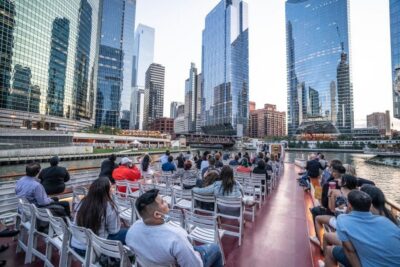
Architecture River Cruise Skip-the-Ticket Line
Read our review →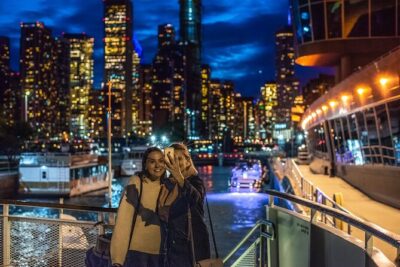
Chicago River 45-Minute Architecture Tour from Magnificent Mile
Read our review →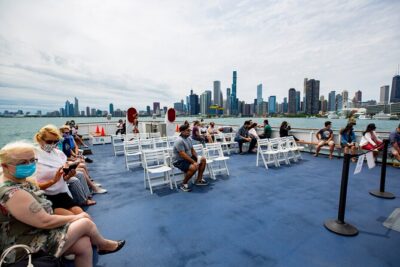
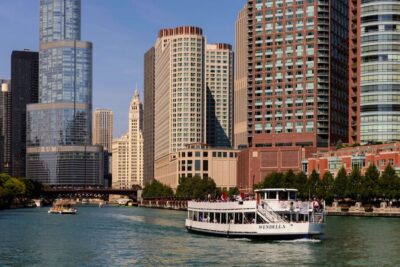
45-Minute Family-Friendly Architecture River Cruise
Read our review →Browse the lists this tour appears in