
Reviewed · CHICAGO NEIGHBORHOOD TOURS
Historic Homes and Cottages of Wicker Park Walking Tour
Wicker Park’s best stories are often told by small houses, not famous monuments. On this walking tour, you’ll see more than 40 workers’ cottages, along with mansions, older commercial buildings, and other properties that reveal how Chicago grew 150 years ago.
I like the small group of eight or fewer, which gives the guide room to explain details instead of shouting over a crowd. I also like the Atlas app, which adds photographs and information about the properties as you walk. The main catch is physical: the full experience is described as a three-mile walk lasting more than two hours, while the booking details list about 90 minutes, so confirm the expected length before you set your evening plans.
In This Review
- Key points to know before you go
- Why Wicker Park’s cottages make a better lesson than a skyline view
- Meeting Ronnie at 6:00 pm on Hoyne Avenue
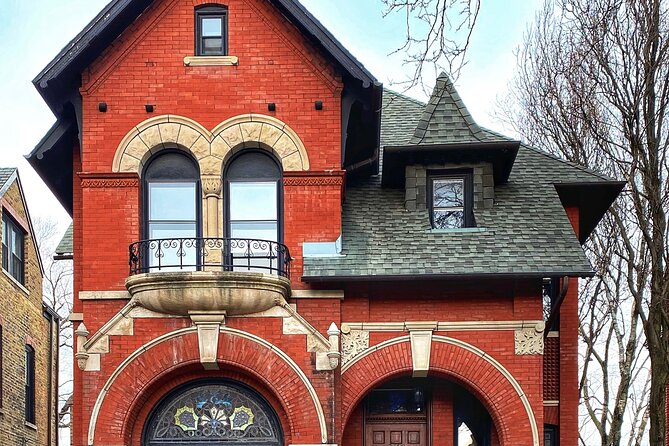
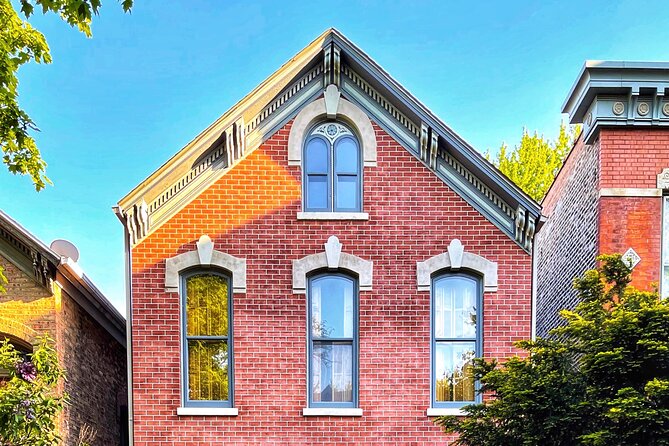
- The workers’ cottages of late-1800s Chicago
- Mansions, landmarks, and the wider Wicker Park story
- The Atlas app adds a second layer to the walk
- How long is the walk really?
- Is $45 a fair price?
- Who will enjoy this Wicker Park walk?
- Weather, group size, and booking timing
- Should you book the Historic Homes and Cottages of Wicker Park tour?
- FAQ
- Where does the tour begin?
- Where does the tour end?
- What time does the tour start?
- How much does the tour cost?
- How long does the tour last?
- How many people can join the tour?
- What language is the tour offered in?
- Is the tour available with a mobile ticket?
- Are service animals allowed?
- What happens if bad weather cancels the tour?
- Can I cancel for a refund?
Key points to know before you go

- More than 40 workers’ cottages: See a Chicago house style built for working families in the late 1800s.
- Small-group format: A maximum of eight people allows for a more personal walk and easier questions.
- Guide Ronnie’s architectural focus: Ronnie brings the homes and streets together with Chicago history and building details.
- Atlas app included: Property photos and additional information help you follow what you are seeing.
- Three-mile route: Plan for steady walking and bring comfortable shoes.
- 6:00 pm start in Wicker Park: The walk begins at 1237 N Hoyne Avenue and ends at 2001 W Division Street.
Why Wicker Park’s cottages make a better lesson than a skyline view
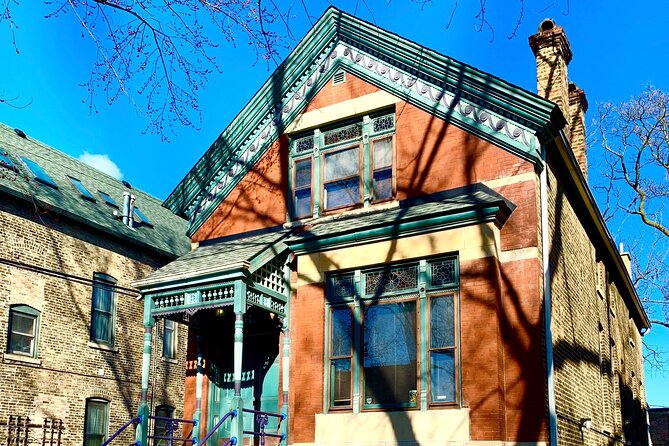
Chicago architecture tours often focus on grand buildings, but Wicker Park offers a different kind of education. Here, the subject is the ordinary city home: the workers’ cottage, the narrow residence, the larger house, and the older building that survived as the neighborhood changed around it.
That makes the tour useful for anyone who wants to understand how Chicago worked, not just how it looked in postcards. The houses show the scale of daily life in the late 1800s. They also give you a way to read the neighborhood street by street, noticing how building styles, size, and placement reflect the people who lived there.
The route includes more than 25 historic homes, mansions, and buildings in addition to the 40-plus workers’ cottages. Some properties are the main attraction, while others help explain how the district developed. You will not simply stop for a quick photograph and move on. The point is to connect architecture with the city’s past.
I especially like this approach for repeat Chicago visitors. If you have already seen the Loop, the river, or the major downtown landmarks, Wicker Park gives you a new way to look at the city. It is also a good fit if you enjoy old houses, neighborhood details, and stories that do not fit neatly into a standard sightseeing route.
More Chicago neighborhoods on foot:
- Chicago’s Chinatown Food and Walking Tour
★ 5.0 · 600 reviews - Chicago: Taste of Chinatown Food and Cultural Walking Tour
★ 4.9 · 97 reviews - Oktoberfest Walking Brewery Tour in Logan Square
★ 5.0 · 10 reviews
Meeting Ronnie at 6:00 pm on Hoyne Avenue
The tour begins at 1237 N Hoyne Avenue, Chicago, Illinois 60622. The scheduled start is 6:00 pm, so you will be walking in the evening rather than during the usual morning sightseeing rush.
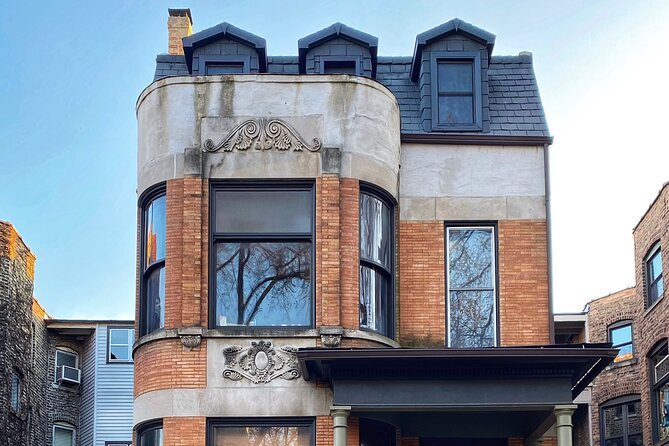
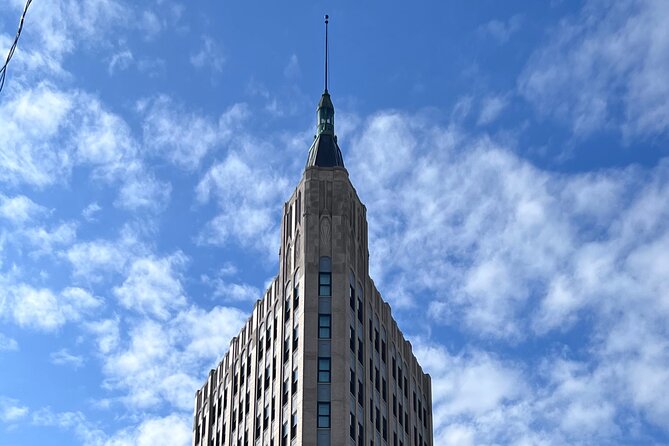
The ending point is 2001 W Division Street, at the corner of West Division Avenue and North Damen Avenue. It is described as a four-story red-brick historic building, which gives you a clear landmark for the finish.
The start and end points are different, so plan to leave extra time for your next activity. The tour is near public transportation, but the available information does not specify a particular train or bus route. I would save both addresses on your phone before arriving, especially since a walking tour is a poor place to stop and sort out directions.
Ronnie is the guide named in the available tour information. The strongest part of his role is the way he ties architectural details to the wider story of Chicago. You will hear about the houses, but also about the city history behind them. That context matters. Without it, a workers’ cottage can look like just another old house. With it, the same building becomes evidence of how Chicago families lived and how neighborhoods changed.
The workers’ cottages of late-1800s Chicago
The central feature is the collection of workers’ cottages. More than 40 appear along the route, showing different styles and approaches to design and construction.
The cottages are especially valuable because they are not all identical. You can compare how the same broad housing type was adapted in different ways. The tour is designed to point out those differences, so you can begin spotting details for yourself as the walk continues.
This is where the experience moves beyond a simple house tour. You are not only looking at pretty facades. You are learning to ask why one home feels more formal, why another seems compact, and how a building’s design reflects its original purpose. The guide’s explanations give you a framework for reading the street.
The route also places these modest homes beside bigger residences and other historic properties. That contrast helps show the range of life in the neighborhood. Workers’ cottages, mansions, and older commercial buildings all become part of one story rather than separate sights.
For me, that is the tour’s main appeal. The cottages are visually pleasing, but their real value is the explanation attached to them. You leave with a better sense of what makes a Chicago neighborhood architecturally distinct.
Mansions, landmarks, and the wider Wicker Park story
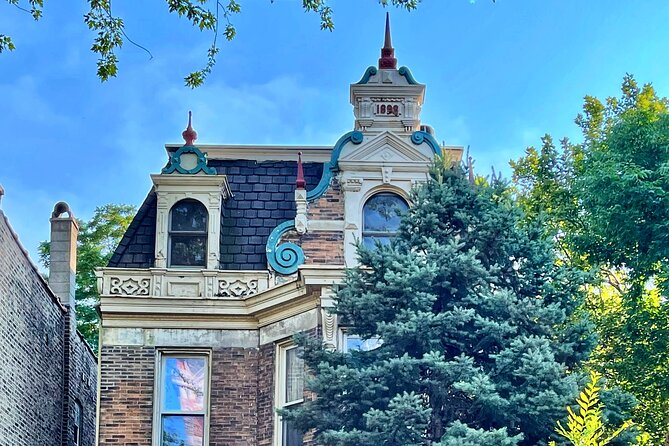
The cottages are not the only buildings on the route. You will also see mansions, historic landmarks, and more than 25 additional homes and buildings with historic interest.
That wider mix prevents the walk from becoming repetitive. A series of small houses can begin to blur together, especially on a longer route. The larger properties and landmarks give your eyes a change of scale and help you compare the neighborhood’s building types.
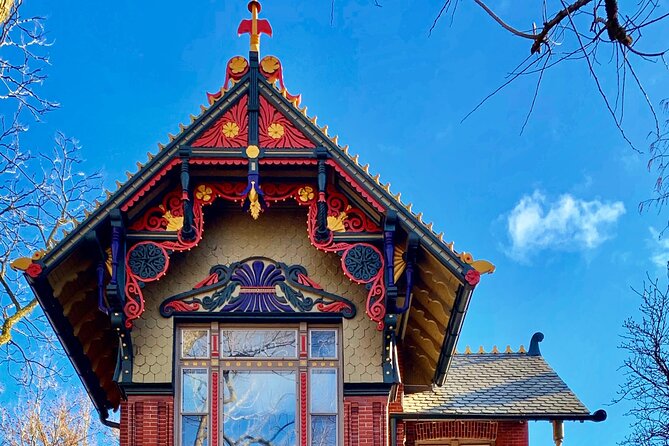
The history stretches back roughly 150 years and beyond. The tour uses the properties as entry points into that past, so the experience is less about memorizing dates and more about understanding what the streets can tell you.
The neighborhood setting also matters. Wicker Park is known as a hip and scenic part of Chicago, but this walk looks past the obvious modern appeal. You will spend time with the older buildings that shaped the area before its current reputation. That makes the route feel more rooted than a quick visit centered only on shops, restaurants, or nightlife.
I would book this tour if you want a neighborhood experience with a clear subject. It has more focus than a general orientation walk, but it still gives you a broad view of Wicker Park’s homes and public buildings.
More walking tours in Chicago:
- Chicago: Gangsters and Ghosts Walking Tour
★ 5.0 · 7,155 reviews - Chicago Favorites Ultimate Food and Walking Tour
★ 5.0 · 1,962 reviews - Chicago: Gangsters and Ghosts Guided Walking Tour
★ 4.7 · 1,697 reviews - Chicago in a Day: Food, History & Architecture Walking Tour
★ 5.0 · 1,153 reviews
The Atlas app adds a second layer to the walk
The tour uses an application called Atlas. It includes the stops, photographs, and additional information about the properties you are viewing.
That is a practical feature. Architectural details can be hard to remember after seeing dozens of homes in a row. Having photographs and written information connected to each stop gives you something to refer back to during the walk and afterward.
The app also suits people who like to keep learning at their own pace. Ronnie provides the live explanation, while the app offers another way to examine the buildings. You can use the visual material to make comparisons that are easy to miss while standing on the sidewalk.
The information supplied does not spell out every technical requirement for using Atlas, so make sure your phone is ready for a mobile-ticket experience. Your confirmation is received at booking, and the tour is offered in English.
How long is the walk really?
This is the most important point to clarify before booking. The main tour details describe an experience lasting approximately one hour and 30 minutes. The route description, however, calls it a two-hour-plus, three-mile walking tour.
That is a meaningful difference. A 90-minute walk may fit neatly before dinner or an evening show. A walk lasting more than two hours requires a larger block of time and more attention to footwear, weather, and energy levels.
The route information also says the activity is not suitable for most children under 13 or adults with health issues. It recommends a moderate level of physical fitness. That advice should be taken seriously. Three miles is manageable for many people, but the route is still a sustained walk with no indication of regular seating or shortened options.
If you have mobility concerns, ask the operator to confirm the current route and duration before paying. Service animals are allowed, but the physical demands remain the same.
Is $45 a fair price?
At $45 per person, this is not the cheapest way to spend an hour in Chicago. Its value depends on what you want from a neighborhood walk.
You are paying for a focused architecture tour, a guide who provides historical context, a small group capped at eight people, and access to the Atlas app with property photographs and information. If you enjoy buildings and prefer a guide who can explain what you are seeing, that package is reasonably targeted.
The small group matters most here. A large crowd would make it harder to examine houses, ask questions, or hear the guide clearly on a residential street. With eight people or fewer, the experience should feel more like a guided conversation than a procession.
The price is less attractive if you only want a quick introduction to Wicker Park or a casual stroll. You are also accepting a strict booking policy: the experience is non-refundable and cannot be changed for any reason. That makes it wise to check your schedule carefully before reserving.
Who will enjoy this Wicker Park walk?
You are likely to get the most from this tour if you enjoy:
- Chicago architecture and old residential buildings
- Neighborhood history rather than only major landmarks
- Walking tours with a specific theme
- Small groups and opportunities to ask questions
- Comparing different house styles
- Using photographs and written notes to remember what you saw
The tour can also work well for repeat visitors who want to see a less familiar side of Chicago. Wicker Park itself is a popular neighborhood, but the route focuses on its historic homes and buildings rather than treating the area as a quick stop between other attractions.
It is not the best choice for young children, anyone seeking a short, low-effort outing, or anyone with health concerns that make a three-mile walk difficult. The duration discrepancy also makes this a poor fit for a tightly packed schedule unless you confirm the timing first.
Weather, group size, and booking timing
The tour requires good weather. If the operator cancels because of poor conditions, you will be offered another date or a full refund. It can also be canceled if the minimum number of participants is not reached, with the same choice of another date or experience, or a full refund.
Your own cancellation is different. The experience is non-refundable, and amendments are not accepted. Since it is booked on average 18 days in advance, it is sensible to reserve ahead if the date matters to you, but do so only after checking your plans.
The maximum group size is eight. That limit is one of the clearest benefits of the experience, especially for a tour built around quiet residential streets and detailed explanations.
Should you book the Historic Homes and Cottages of Wicker Park tour?
Book it if you want to understand Chicago through its houses rather than simply photograph the famous skyline. The mix of more than 40 workers’ cottages, mansions, landmarks, and other historic buildings gives the walk a strong focus, while Ronnie’s explanations and the Atlas app add useful context.
Before booking, confirm the actual duration. The published details describe both a 90-minute tour and a two-hour-plus, three-mile route. If you are comfortable with the longer walk and the strict no-refund policy, this is a thoughtful choice for architecture fans and repeat Chicago visitors.
FAQ
Where does the tour begin?
It begins at 1237 N Hoyne Avenue, Chicago, IL 60622.
Where does the tour end?
It ends at 2001 W Division Street, Chicago, IL 60622, at the corner of West Division Avenue and North Damen Avenue.
What time does the tour start?
The scheduled start time is 6:00 pm.
How much does the tour cost?
The price is $45 per person.
How long does the tour last?
The main tour details list approximately one hour and 30 minutes. The route description calls it a two-hour-plus, three-mile walking tour, so confirm the current duration before booking.
How many people can join the tour?
The maximum group size is eight travelers.
What language is the tour offered in?
The tour is offered in English.
Is the tour available with a mobile ticket?
Yes. A mobile ticket is available, and confirmation is received at the time of booking.
Are service animals allowed?
Yes, service animals are allowed.
What happens if bad weather cancels the tour?
You will be offered a different date or a full refund if the operator cancels because of poor weather.
Can I cancel for a refund?
No. The experience is non-refundable and cannot be changed for any reason.
More History Walks in Chicago
- Chicago: Field Museum of Natural History Ticket or VIP Tour
★ 4.7 · 717 reviews - Field Museum of Natural History Admission Tickets
★ 4.5 · 489 reviews - Chicago Walking Tour: Historic Treasures of Chicago
★ 5.0 · 362 reviews - Historical and Architectural Chicago Fireboat River & Lake Cruise
★ 5.0 · 246 reviews
Just added in Chicago
- Chicago: Architecture and Engineering Marvels Walking Tour★ 5.0 · 3 reviews
- Private Downtown Chicago TV and Movie Sites Guided Walking Tour★ 4.5 · 3 reviews
- Black Heritage Tour★ 5.0 · 3 reviews
- Private SUV Transfer from Chicago Downtown to Midway airport★ 5.0 · 3 reviews
- Private Holiday City Tour★ 5.0 · 3 reviews
- BYOB Chicago River Guided History Tour★ 5.0 · 4 reviews
- Chicago 4-Hour Sightseeing Transfer by Luxury SUV★ 4.5 · 3 reviews
- Chicago, Cloud Gate, Grant Park Full-Day City Tour★ 4.0 · 4 reviews
Chicago Neighborhood Tours, compared.


Taste of Chinatown Food and Cultural Walking Tour
Read our review →
Oktoberfest Walking Brewery Tour in Logan Square
Read our review →
Chinatown Chicago: Dragon Kings Quest Outdoor Escape Game
Read our review →

2-Hour Chicago’s Chinatown History and Culture Tour
Read our review →Browse the lists this tour appears in