
Reviewed · CHICAGO GHOST TOURS
The Devil in the White City: A Haunting History Tour
The most intriguing part of this tour is the way it links two very different sides of Chicago in the 1890s: the grand promise of the World’s Columbian Exposition and the grim crimes tied to H.H. Holmes. You move between Prairie Avenue, Jackson Park, the old stockyard area, and the former Murder Castle site while a guide explains how Victorian Chicago took shape.
I like the comfortable bus format, since the sites are spread across the city, and I like the mix of famous fairground history with less polished stories about crime, labor, ghosts, and Chicago’s old neighborhoods. Guide Tony receives especially strong praise for his humor, warmth, and storytelling. The main thing to consider is the title: this is best understood as a Chicago history tour with H.H. Holmes and ghost stories included, not a nonstop haunted investigation.
In This Review
- Key points to know
- What this Chicago history tour is really about
- Starting at the Congress Plaza Hotel
- Prairie Avenue and the Fort Dearborn story
- The former Murder Castle site at the post office
- Jackson Park’s Japanese Garden and fairground stories
- Jackson Park and the scale of the 1893 fair
- The Union Stockyard Gate and Chicago’s working city
- The Museum of Science and Industry, the fair’s surviving building
- A bus tour with short walks, not a walking tour
- Tony’s role in bringing the stories to life
- Is $64 a fair price?
- Who should book this tour?
- Final call: book it for context, not just scares
- FAQ
- How long is The Devil in the White City tour?
- What time and where does the tour begin?
- Where does the tour end?
- Does the tour use a bus?
- What locations are included?
- How many people can join the tour?
- Can I cancel for a refund?
Key points to know
- The 1893 World’s Fair is the main thread: Jackson Park, Midway Plaisance, and the Museum of Science and Industry help explain the fair’s scale and legacy.
- H.H. Holmes gets a focused stop: You visit the site associated with the former Murder Castle, now occupied by an unassuming post office.
- Guide Tony is a major strength: His lively delivery and command of Chicago history can make the long bus ride feel worthwhile.
- You see more than the standard downtown sights: Prairie Avenue, the Union Stockyard Gate, and Jackson Park add useful context.
- Expect about three hours: The tour combines bus sightseeing with several short walks and stops.
- The $64 price buys convenience: It is most useful if you want several far-flung locations without arranging transport yourself.
What this Chicago history tour is really about
The book-inspired title may suggest a tour centered almost entirely on H.H. Holmes. In practice, the experience covers a broader period of Chicago history, with Holmes as one important thread.
You hear about the 1893 World’s Columbian Exposition, Victorian Chicago, the city’s rapid growth, the social divide between wealthy reformers and working people, and the stories attached to old buildings and public places. The darker material is present, but it shares time with architecture, transport, industry, and the fair’s cultural impact.
That wider approach is a strength if you want context. Holmes did not operate in isolation. His story makes more sense against a city growing at remarkable speed, drawing workers and visitors from across the country, and presenting itself to the world as a modern metropolis.
It can also be a mismatch if you mainly want dramatic details about the murders. One critical assessment found too little about Holmes and too much about millionaires, the fair, and architecture. That is a fair warning. Book this for a mix of history and hauntings, not for three hours of uninterrupted crime lore.
More ghost walks after dark in Chicago:
- Chicago: Gangsters and Ghosts Walking Tour
★ 5.0 · 7,155 reviews - Chicago: Gangsters and Ghosts Guided Walking Tour
★ 4.7 · 1,697 reviews - Medieval Torture Museum Ticket with Audio Guide and Ghost Hunting
★ 5.0 · 962 reviews
Starting at the Congress Plaza Hotel
The tour begins at the Congress Plaza Hotel and Convention Center at 520 South Michigan Avenue at 2:00 p.m. This is a practical meeting point near public transportation and close to several major downtown sights.
The hotel also fits the mood. It dates to the era surrounding the World’s Columbian Exposition and is associated with ghost stories of its own. The opening portion helps place you in the world of late nineteenth-century Chicago before the bus heads farther south.
This start may feel slow if you are eager to hear about Holmes right away. The tour builds its setting first, using Chicago’s broader past to explain why the fair and its surrounding stories matter. Give it a little time before deciding that the subject has been forgotten.
The activity ends back at the same meeting point. That makes afternoon planning easier, especially if you want dinner or another downtown activity afterward.
Prairie Avenue and the Fort Dearborn story
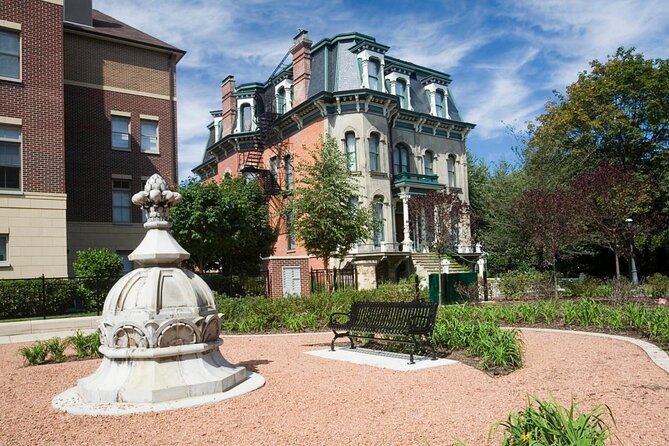
The first scheduled stop is the Prairie Avenue Historic District, where you spend about 30 minutes. This historic Victorian area introduces the social world of Chicago’s wealthy residents and the city’s nineteenth-century character.
The stop also connects with the Fort Dearborn Massacre, an earlier and consequential event in Chicago’s past. That subject is not directly part of Holmes’s story or the 1893 fair, but it shows how the tour uses specific places to build a longer timeline for the city.
I like this kind of opening because it moves beyond the usual downtown view of Chicago. You are not simply collecting crime sites. You are seeing how neighborhoods, wealth, conflict, and urban growth shaped the city before the fair arrived.
Admission is included, with no separate ticket needed. The walking here is guided and limited, but you should still wear comfortable shoes. One positive assessment described the tour as comfortable with only a little walking, while another found more walking than expected, so treat the day as light walking rather than no walking.
The former Murder Castle site at the post office
The stop at the United States Postal Service building lasts about 25 minutes. The building itself is unassuming, which is part of the effect. This is the site associated with the former Murder Castle of H.H. Holmes, and the guide discusses the crimes and ghost stories linked to the location.
You will not be touring a preserved castle. The original structure is gone, and the current post office does not offer a museum-style interior visit as part of the experience. The value is in the location and the explanation, not in a dramatic building tour.
That distinction matters. If you picture original rooms, secret passages, or a theatrical haunted attraction, you may be disappointed. The stop works better as a chance to understand where the story fits into Chicago’s changing streetscape.
The guide’s storytelling matters most here. Tony is repeatedly praised for making Chicago’s past feel immediate and for explaining details with humor and feeling. A strong guide can turn an ordinary modern building into a useful historical marker. A less engaging guide would leave you looking at a post office and waiting for the bus.
More history walks in Chicago:
- Chicago in a Day: Food, History & Architecture Walking Tour
★ 5.0 · 1,153 reviews - Chicago: Field Museum of Natural History Ticket or VIP Tour
★ 4.7 · 717 reviews - Field Museum of Natural History Admission Tickets
★ 4.5 · 489 reviews - Chicago Walking Tour: Historic Treasures of Chicago
★ 5.0 · 362 reviews
Jackson Park’s Japanese Garden and fairground stories
The tour then moves to Jackson Park’s Japanese Garden for about 15 minutes. This is a short photo stop and a quieter change of pace after the darker Holmes material.
Here, the focus turns to ghost stories connected with Jackson Park and the 1893 fair. The garden gives you a scenic place to pause while the guide explains how the park relates to the fairgrounds and the legends that grew around them.
Because the stop is brief, do not expect a long garden visit or a detailed botanical tour. It is mainly a visual break and a place for atmospheric storytelling. The setting helps, but the guide’s account supplies the meaning.
Bring a phone or camera if you enjoy taking pictures. The tour uses a mobile ticket, and a phone is also useful for keeping your booking details handy. No admission charge is listed for this stop.
Jackson Park and the scale of the 1893 fair
The main Jackson Park stop lasts about 30 minutes. This is where the tour spends time with the former grounds of the World’s Columbian Exposition.
The fair helped present Chicago as a major modern city. Its buildings, exhibits, public spectacles, and crowds shaped how people around the country viewed Chicago. Even when the original fair structures are no longer present, the open spaces and surviving references can help you picture the scale of the event.
The tour is useful here because it connects the physical site with the stories told in the book that inspired the experience. You are not just hearing about an event in a classroom. You are visiting the area where the fair unfolded and considering what it meant to the city.
At the same time, the remains are not a complete fairground. You should not expect a preserved nineteenth-century exhibition center. Much of the work is imaginative: the guide explains what occupied the area and helps you picture a temporary city that has largely disappeared.
This is likely the strongest part of the experience for anyone interested in Chicago architecture, urban planning, and the fair itself. It is also where someone seeking only ghost stories may feel the tour has changed subjects.
The Union Stockyard Gate and Chicago’s working city
The Union Stockyard Gate is a short stop of about 10 minutes. It adds a very different note to the tour by shifting attention from fair palaces and wealthy Chicagoans to the city’s industrial and working life.
The site connects with Upton Sinclair’s The Jungle, a groundbreaking work based on the stockyards and the harsh conditions associated with the meatpacking industry. The stop is brief, but it gives the tour social weight. Chicago was not only a place of grand exhibitions and ambitious businessmen. It was also a hard-working industrial city with serious problems.
This is one of the more useful inclusions because it broadens the story beyond the book’s central villain. You get a clearer sense of the forces that made late nineteenth-century Chicago exciting, profitable, crowded, and deeply unequal.
Do not expect a long literary lecture on Sinclair. Ten minutes is enough for a concise explanation and a look at the gate, not a full study of the stockyards. Still, the stop earns its place because it makes the city’s past feel less polished and more real.
The Museum of Science and Industry, the fair’s surviving building
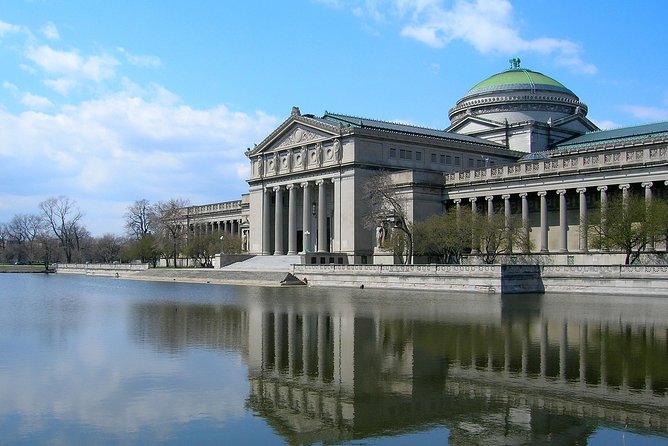
The final scheduled sightseeing stop is the Museum of Science and Industry, with about 15 minutes devoted to its connection with the 1893 fair. The building is identified as the last remaining structure from the World’s Columbian Exposition.
That makes this an important closing point. After seeing former fairgrounds and hearing about buildings that vanished, you get a direct link to the original event. The museum’s present-day use is different from its fair-era role, but the structure helps connect modern Chicago with the exposition.
The stop is focused on ghost stories surrounding the building and its fair history. Again, this is not a full museum visit. The tour does not include a separate museum admission, and the listed stop is short. If you want to explore the Museum of Science and Industry’s exhibits, plan another visit rather than expecting time for that during this tour.
For many people, this final stop ties the afternoon together. The fair began as a temporary showpiece, but parts of its legacy remain in Chicago’s public spaces and buildings.
A bus tour with short walks, not a walking tour
The bus is central to the experience. Chicago’s relevant locations are spread across downtown and the South Side, so covering them independently would take more planning and probably more time. The bus lets you see several places in one afternoon without figuring out each connection yourself.
The tour also includes guided walking at the stops. Most of the listed visits are short, ranging from 10 to 30 minutes. That makes the experience manageable for many people, but it does not mean you can remain seated for the entire three hours.
The stated group limit is 52 people. That is a fairly large group, especially at outdoor stops, and your position near the guide may affect how easily you hear. On the other hand, a larger bus format keeps the cost lower than a private tour and makes it practical for solo visitors, couples, and families.
One poor assessment raised concerns about a bus driver getting lost and about the tour running much longer than expected. That may have been an unusual day, but it points to a real issue: a traffic-heavy city tour can be affected by road conditions and navigation. Allow some flexibility after the advertised three-hour duration rather than scheduling a tight connection.
Tony’s role in bringing the stories to life
The guide can make or break a history tour, and Tony is the name most often praised in the available feedback. His strengths are described as humor, warmth, enthusiasm, and strong command of Chicago’s past.
Those qualities matter more than a list of dates. The fair, Holmes, the stockyards, Prairie Avenue, and Jackson Park cover a lot of ground. You need a guide who can explain why each place matters and keep the story moving between the grand, the grim, and the odd.
Tony’s style appears to suit people who like a lively storyteller rather than a dry lecture. He is also credited with showing parts of Chicago that visitors might not see on their own. That is an important benefit of the bus route.
Still, guide style is personal. If you prefer a tightly edited tour devoted to one subject, the broader presentation may feel scattered. The experience works best when you enjoy connections between crime, city growth, architecture, industry, and legend.
Is $64 a fair price?
At $64 per person, the price is reasonable if you value transport and a guide who can connect several distant sites. You are paying for roughly three hours, bus sightseeing, guided visits on foot, and commentary across multiple neighborhoods.
The value is less clear if you are already comfortable using public transportation and mainly want a short H.H. Holmes talk. Several stops are viewed from outside or involve a brief explanation rather than a major attraction with an admission ticket. There are no separate entry fees to offset the cost.
I would judge the price this way:
- Good value for a first Chicago visit: You see a wide area and get a useful introduction to the city’s nineteenth-century past.
- Good value for book fans: The tour gives physical context to the World’s Fair and Holmes locations.
- Less compelling for repeat visitors: If you know Jackson Park, Prairie Avenue, and the stockyard area already, the commentary becomes the main reason to go.
- Worth it for convenience: The bus saves you from arranging a route across several parts of Chicago.
The experience is booked an average of 24 days ahead, so plan early if your dates are fixed. It has free cancellation up to 24 hours before the 2:00 p.m. start time. If poor weather cancels the tour, you can be offered another date or a full refund.
Who should book this tour?
I would recommend it to readers who enjoyed The Devil in the White City and want to see the Chicago settings without arranging a complicated day of transport. It also suits anyone who likes city history with an eerie edge rather than a pure ghost walk.
The tour is a good fit for:
- First-time visitors who want an overview of Chicago beyond downtown
- Fans of the 1893 World’s Fair
- People curious about H.H. Holmes and the former Murder Castle site
- Visitors who enjoy stories about architecture, industry, and old neighborhoods
- Anyone who prefers a bus with short guided walks over a long walking tour
I would hesitate if your only goal is a detailed Holmes investigation. The tour gives him attention, but it also spends substantial time on the fair, Victorian Chicago, Prairie Avenue, the stockyards, and the museum building.
Final call: book it for context, not just scares
Book this tour if you want the full setting behind the famous stories. You will visit the former Murder Castle site, but you will also see where the fair took place, consider the city’s industrial past, and hear why certain Chicago locations remain linked to ghost stories.
Skip it if you want a tightly focused haunted attraction or a preserved Holmes crime scene. The best reason to go is the combination of far-flung locations and lively explanation, especially with Tony guiding the afternoon. Just allow extra time, wear comfortable shoes, and think of the experience as a Chicago history tour with a dark strand running through it.
FAQ
How long is The Devil in the White City tour?
The tour lasts approximately three hours.
What time and where does the tour begin?
It begins at 2:00 p.m. at the Congress Plaza Hotel and Convention Center, 520 S Michigan Avenue, Chicago.
Where does the tour end?
The activity ends back at the same meeting point.
Does the tour use a bus?
Yes. The experience includes bus sightseeing along with guided visits on foot.
What locations are included?
The route includes the Prairie Avenue Historic District, the United States Postal Service site associated with the former Murder Castle, Jackson Park’s Japanese Garden, Jackson Park, the Union Stockyard Gate, and the Museum of Science and Industry.
How many people can join the tour?
The maximum group size is 52 people.
Can I cancel for a refund?
Yes. You can cancel at least 24 hours before the start time for a full refund. Changes or cancellations made less than 24 hours before the start time are not accepted for a refund. If poor weather causes the tour to be canceled, you will be offered another date or a full refund.
Just added in Chicago
- Chicago: Architecture and Engineering Marvels Walking Tour★ 5.0 · 3 reviews
- Private Downtown Chicago TV and Movie Sites Guided Walking Tour★ 4.5 · 3 reviews
- Black Heritage Tour★ 5.0 · 3 reviews
- Private SUV Transfer from Chicago Downtown to Midway airport★ 5.0 · 3 reviews
- Private Holiday City Tour★ 5.0 · 3 reviews
- BYOB Chicago River Guided History Tour★ 5.0 · 4 reviews
- Chicago 4-Hour Sightseeing Transfer by Luxury SUV★ 4.5 · 3 reviews
- Chicago, Cloud Gate, Grant Park Full-Day City Tour★ 4.0 · 4 reviews
Chicago Ghost Tours, compared.
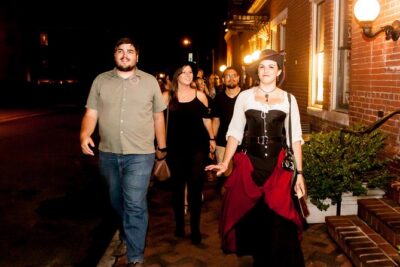
Haunted Chicago Booze and Boos Ghost Walking Tour
Read our review →
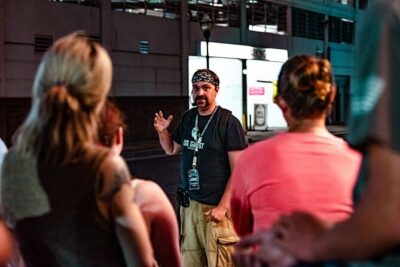
Embers of the Windy City: Chilling Chicago Ghost Tours
Read our review →
Ghosts & Hauntings of the Windy City Walking Tour
Read our review →
Wind and Souls an Adults Only Ghost Tour in Chicago
Read our review →Browse the lists this tour appears in