
Reviewed · WALKING TOURS
Chicago: Best of Attractions Walking Tour +Bike/Kayak Rental
Chicago’s best feature is on full display here: great buildings, public art, river views, and city life all packed into a walkable stretch of the Loop and Magnificent Mile. The Cloud Gate, Chicago Theatre, Wrigley Building, and Water Tower give you a quick but useful introduction to the city’s visual character.
I like the leisurely pace and the bonus rental. You get a guide to explain Chicago’s past and present, then have a separate chance to ride the lakefront or paddle at Ohio Street Beach. The main drawback is that two hours goes quickly, so stops are mainly for views, photos, and explanation rather than long visits inside attractions.
I also like the practical flexibility: the walk runs in rain, snow, or sunshine, and the route can use the underground Pedway during colder months. Just read the rental rules closely, since kayak season is shorter and some peak Saturday rentals are excluded.
In This Review
- Key points to know before booking
- What this two-hour Chicago walk actually gives you
- Palmer House and the Chicago Loop
- The Art Institute from the outside
- Millennium Park and Cloud Gate
- The Chicago Theatre and its famous marquee
- Chicago Riverwalk and the Wrigley Building
- Michigan Avenue and the Magnificent Mile
- Finishing at the Chicago Water Tower
- The free bike rental is the strongest bonus
- Pace, weather, and physical demands
- What the guide adds
- Who should book this Chicago experience
- Is the $44 price fair?
- Should you book it?
- FAQ
- How long is the Chicago attractions walking tour?
- Where does the tour begin?
- Where does the tour finish?
- How early should I arrive?
- What language is the tour conducted in?
- Is the walking tour wheelchair accessible?
- What does the free rental include?
- Where are the bike and kayak rentals located?
- Is kayaking available all year?
- What happens if I do not use the rental?
Key points to know before booking
- A compact city introduction: See nine major downtown sights in two hours, from Palmer House to the Chicago Water Tower.
- The Bean is a planned photo stop: You will have time to see Cloud Gate and Millennium Park, but this is not a long park visit.
- A guide adds the context: An English-speaking local guide explains Chicago architecture, history, and current events.
- The rental adds real value: Use a free two-hour bike or kayak rental within three days of the tour date.
- Seasonal rules matter: Biking is available year-round, while kayaking generally runs from May through September, weather permitting.
- The route works in poor weather: Dress for the forecast, since the walk runs in rain, snow, and cold.
What this two-hour Chicago walk actually gives you
At $44 per person, this is best viewed as a city orientation with a useful outdoor bonus. You are not paying for a full-day tour or a series of long museum visits. You are paying for a guided route through the central sights, with enough time to learn how the Loop, river, park, and Magnificent Mile fit together.
That distinction matters. If you want a slow look at every building or a long stop at the Art Institute, you will need extra time on your own. If you want to get your bearings fast, take photos, and hear the stories that make the streets easier to understand, the format works well.
The tour begins at the S. Wabash Street entrance of Palmer House Hilton. Arrive 15 minutes early for check-in. Your guide wears a Bobby’s Bike Hike polo and carries a branded paddle, so finding the meeting point should be straightforward.
The walk is in English and is described as accessible for wheelchairs. Since the route may use the street level or the underground Pedway, ask the operator about the exact path if you have specific mobility needs.
More kayaking on the river:
- Chicago: Classic Food & Walking Tour with Free Bike or Kayak
★ 4.9 · 145 reviews - Chicago’s Lake Michigan Downtown Kayak Rental at Ohio Street Beach
★ 5.0 · 22 reviews - Chicago: 2-Hour Downtown Kayak Rental
★ 4.5 · 19 reviews
Palmer House and the Chicago Loop
The Palmer House starting point puts you in the middle of Chicago’s Loop, the central business district shaped by elevated train tracks, grand commercial buildings, theaters, hotels, and public spaces. It is a useful place to begin because Chicago’s downtown story is not confined to one landmark. The city makes more sense when you see how its streets, towers, river, and parks connect.
Expect a guided sightseeing stop of about 15 minutes in the Loop. That is enough for a broad introduction and photographs, but not enough for an architectural lecture on every building around you.
I appreciate this kind of opening because it gives the rest of the tour a frame. As you move north, you can connect the older downtown core with the newer public spaces and shopping streets. Your guide also brings in current events, which keeps the tour from feeling like a list of dates and famous names.
The Loop can be noisy and busy. Keep close to the group at crossings, and do not expect a quiet start.
The Art Institute from the outside
The next stop is the Art Institute of Chicago, with about 15 minutes for a visit, guided explanation, sightseeing, and photos. The museum is one of Chicago’s major cultural landmarks, but the provided schedule does not describe a dedicated interior museum visit or an art collection tour.
For you, that means this stop works best as a landmark introduction. You can note the location and plan a separate museum visit if you want the galleries. The short format keeps the walking tour moving, but art lovers should not assume that two hours includes enough time to explore the museum itself.
This is one of the points where expectations matter. The activity covers many sights, so each one receives a brief look. I would treat the Art Institute stop as a convenient orientation rather than a replacement for admission and several hours inside.
Millennium Park and Cloud Gate
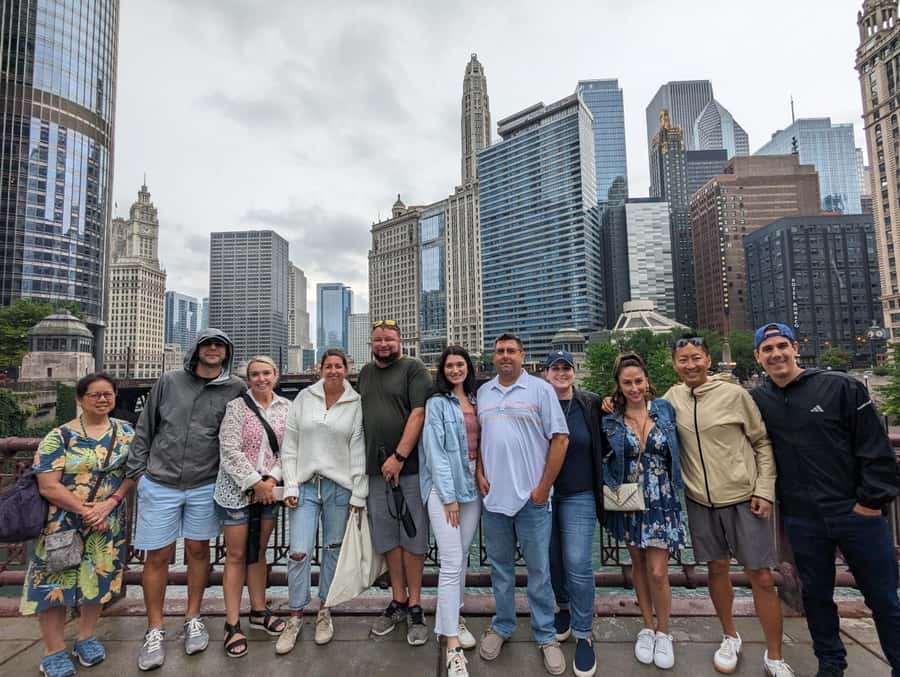
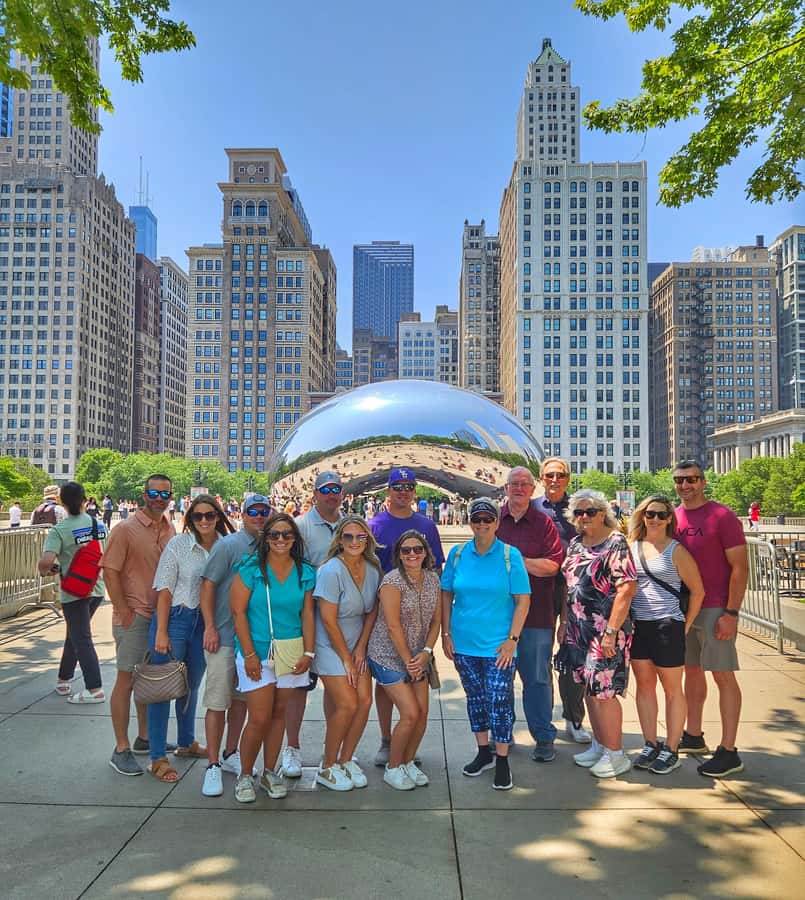
Millennium Park gets a break, a photo stop, and about 15 minutes of sightseeing. This is one of the tour’s most recognizable sections, especially for first-time visitors who want to see Cloud Gate, better known as the Bean.
The park gives the walk a change of rhythm. After city streets and large buildings, you reach an open public space with art, people, and room to pause. Cloud Gate is the obvious photo target, and the reflective surface gives you the familiar distorted view of the skyline and anyone standing nearby.
The scheduled time is enough for a look and a few photographs, but you may want to return later if you hope to linger. Millennium Park is easy to revisit on your own, and the tour helps you understand where it sits in relation to the Loop, the Art Institute, and Michigan Avenue.
The park can be crowded, and your guide cannot control how much room you have around the sculpture. Keep your camera ready, but also listen for the city details around the stop. The value here is not just seeing the Bean. It is seeing how Chicago uses public art as part of everyday downtown life.
More bike days around Chicago:
- Bikes, Bites & Views: Chicago’s Signature Dishes Bike Tour-Adults
★ 5.0 · 732 reviews - Bike Tour of Chicago’s Lakefront Neighborhoods
★ 5.0 · 241 reviews - Chicago’s Ultimate City Bike Tour
★ 5.0 · 233 reviews - Chicago: Bikes, Bites, and Views Biking Tour – Adults
★ 4.9 · 141 reviews
The Chicago Theatre and its famous marquee
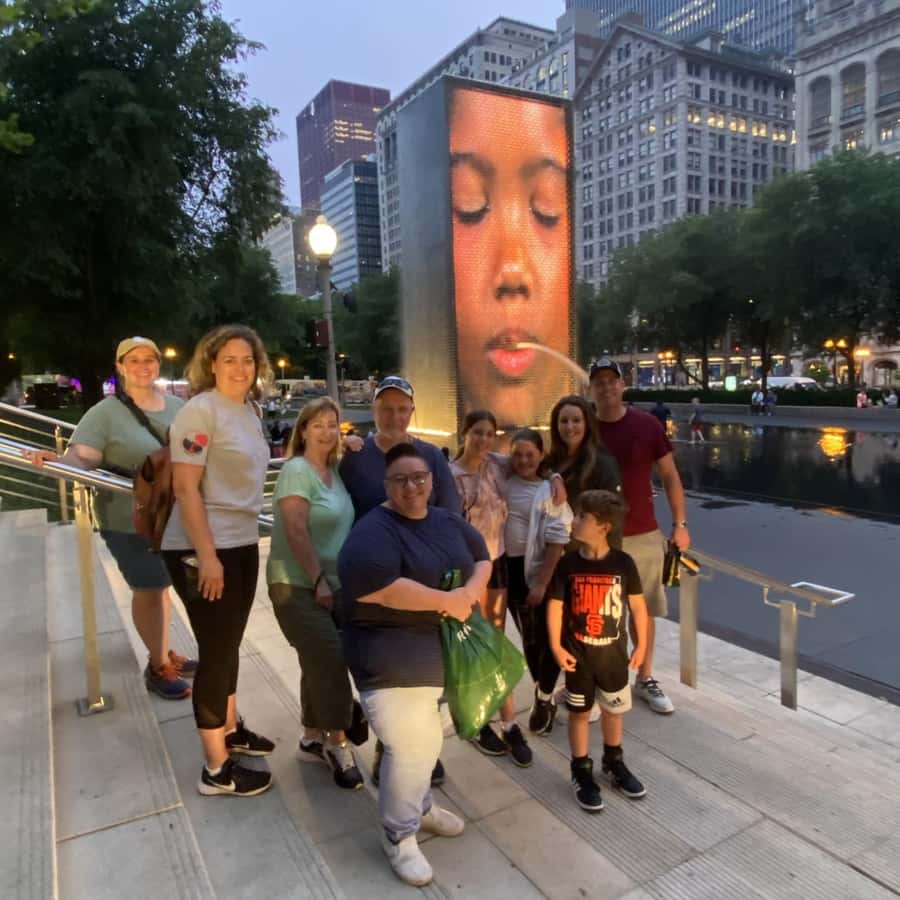
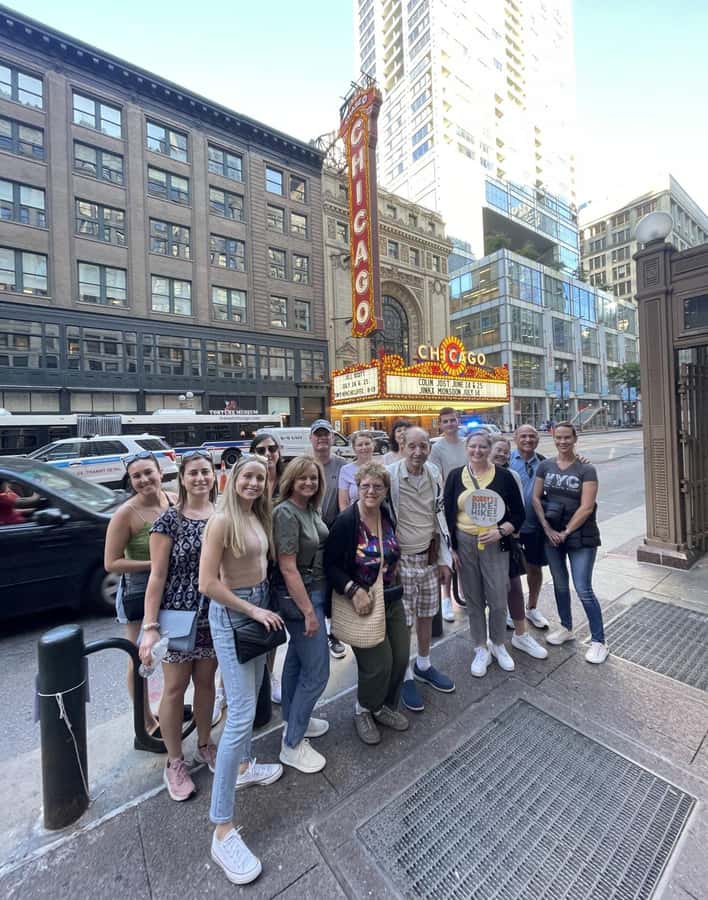
The Chicago Theatre receives another 15-minute stop for photos, sightseeing, and explanation. Its marquee is one of the city’s most familiar signs, and it gives the walk a strong dose of old-school entertainment history.
This is a good stop for visitors who like architecture and city symbols. The theater’s bold facade photographs well, especially when you want a recognizable Chicago image that is different from the Bean or the skyline.
The schedule lists a visit, but it does not promise a performance or an extended backstage look. Think of this as an exterior landmark stop unless your guide tells you otherwise. You will hear about the building and its place in downtown Chicago, then move on.
I like the variety in this section. The park offers modern public art, while the theater brings you back to the city’s grand commercial and entertainment streets.
Chicago Riverwalk and the Wrigley Building
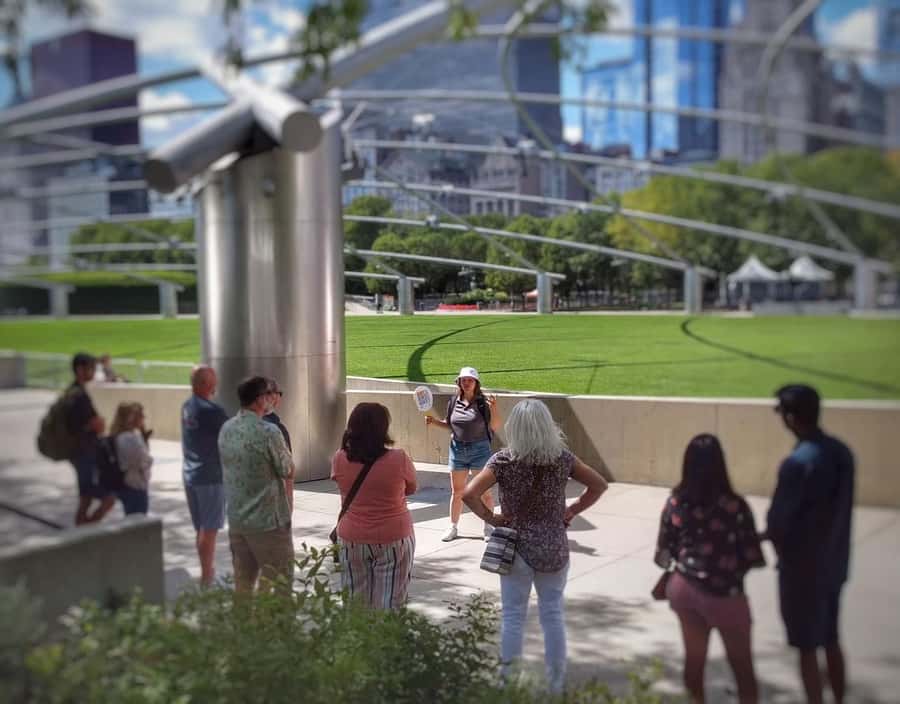
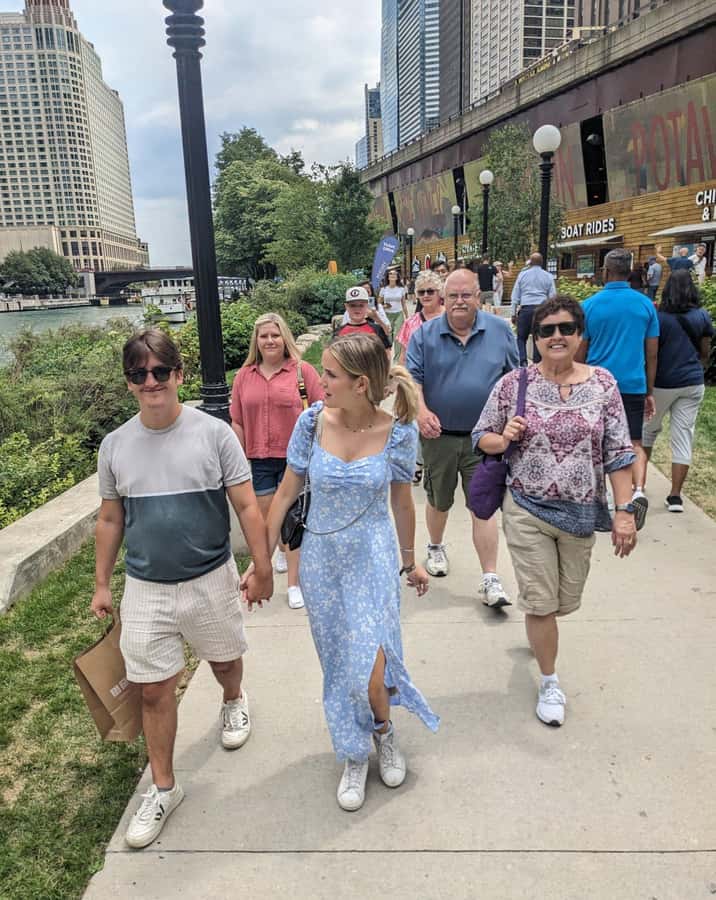
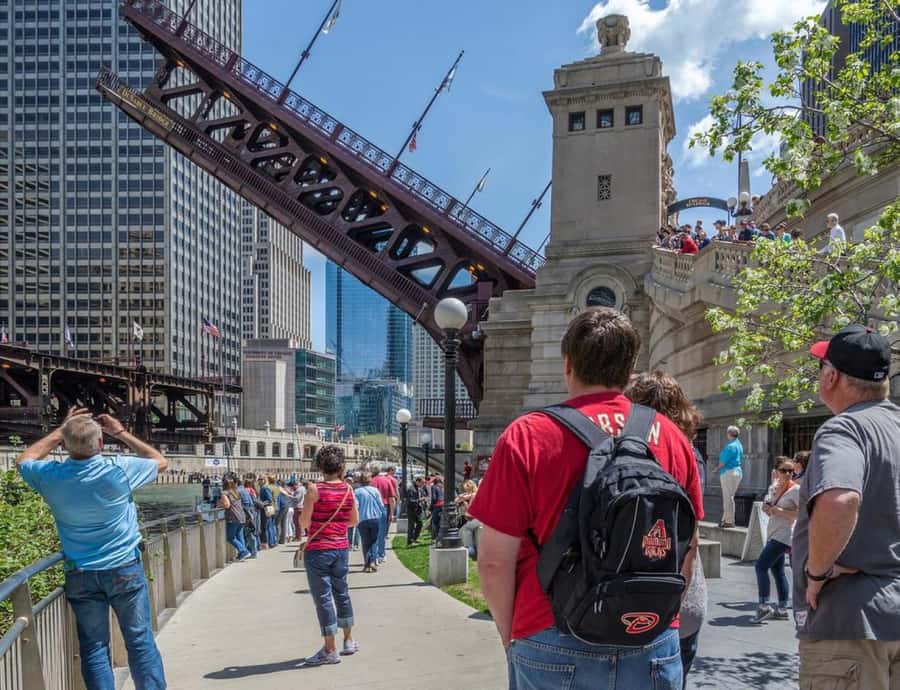
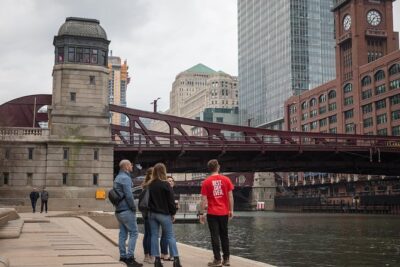
The Chicago Riverwalk is one of the route’s most useful stops because it shows the city from a different level. Instead of looking up at buildings from a sidewalk, you get a closer sense of the river that helped shape Chicago’s growth and city planning.
The stop includes photos, sightseeing, and a guided visit, with roughly 15 minutes allotted. That is not enough for a long walk along the water, but it gives you a taste of the riverfront and a chance to see how downtown buildings meet the water.
The Wrigley Building follows naturally. Its pale exterior and prominent location make it one of the clearest architectural markers along the river and Michigan Avenue area. Your guide can connect the building to the broader story of Chicago’s commercial center, while you get a good view for photographs.
This pairing is especially useful because the river and the building show two sides of the city. One is shaped by water and infrastructure. The other is a highly recognizable piece of commercial architecture. The short timing means you will not study every detail, but you will leave knowing where to return for a longer look.
Michigan Avenue and the Magnificent Mile
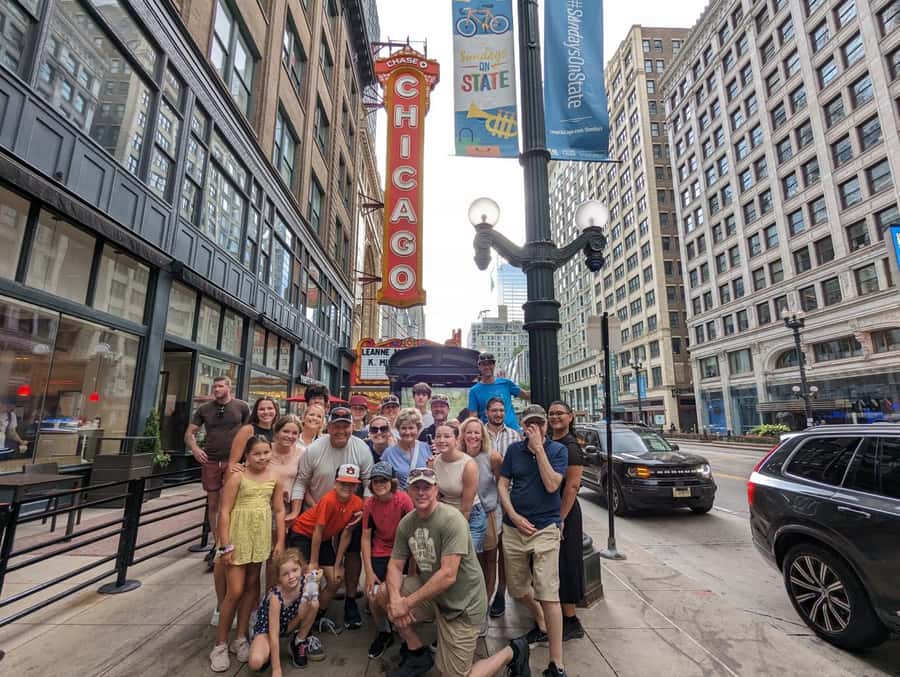
The walk then moves toward Michigan Avenue, known here as the Magnificent Mile. This is Chicago’s major shopping and architectural corridor, with prominent buildings, department stores, hotels, restaurants, and heavy foot traffic.
You should expect sightseeing and explanation rather than a shopping stop. The guide helps you read the avenue as part of Chicago’s city structure, while you take in the scale and variety of the buildings.
This section is also a practical transition to the end of the tour. If you plan to shop, eat, or explore more of the avenue, you will already have a useful starting point. The route does not give you time to browse stores, so save that for later.
The Magnificent Mile can feel less relaxed than Millennium Park or the Riverwalk. Street noise, traffic, and crowds are part of the experience. I see that as a fair trade for covering so much central Chicago in one outing, but visitors seeking a quiet architectural walk may prefer an early start or a private tour.
Finishing at the Chicago Water Tower
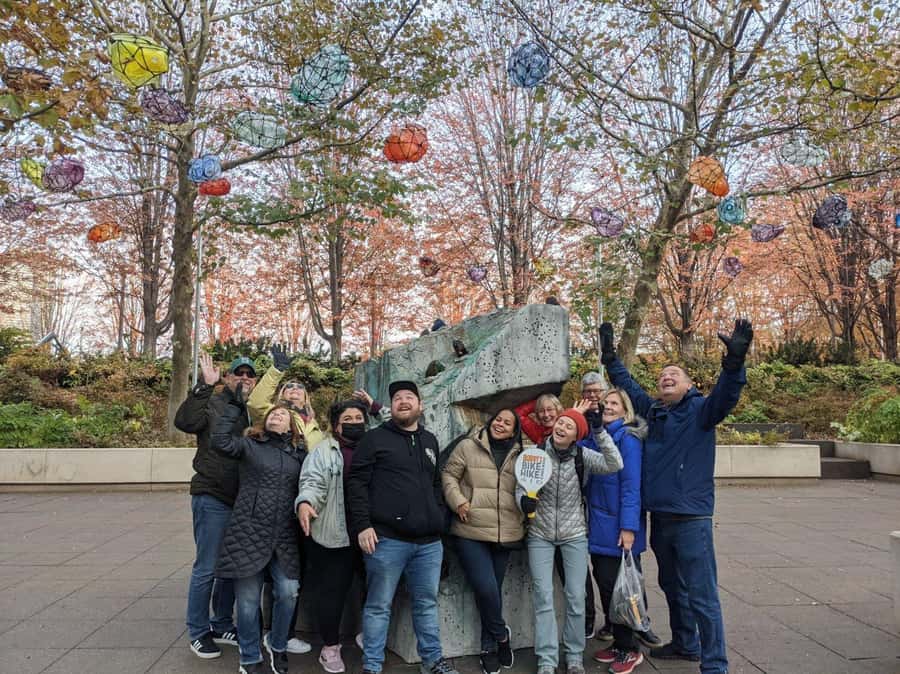
The tour ends at the Chicago Water Tower. This is a sensible finish because you have moved from the Loop toward the Magnificent Mile and the northern end of the route.
The Water Tower gives you one last major landmark and leaves you in an area with plenty more to do. You can continue along Michigan Avenue, return toward the river, or make your own plans after the guide says goodbye.
Because the experience ends away from the starting point, plan your next move before the walk begins. The tour is only two hours, but the central location makes it easy to add lunch, shopping, museum time, or another downtown attraction afterward.
The free bike rental is the strongest bonus
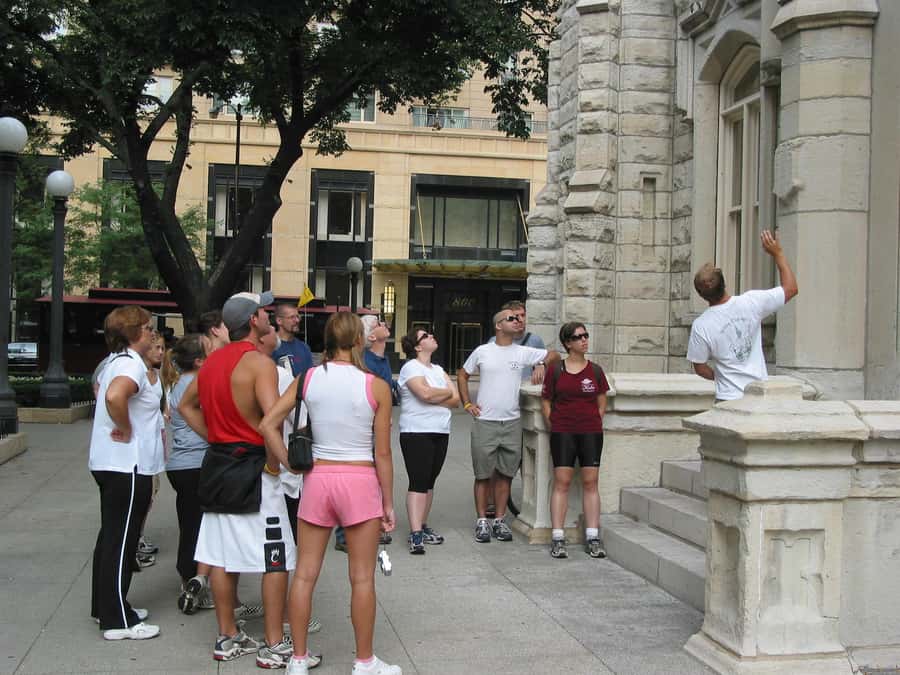
The included rental can make the $44 price easier to justify. You receive two free hours on a bike or kayak, but the rental is a separate activity and must be used within three days of your tour booking.
Bike rentals take place at Bobby’s Bike Hike World Headquarters, 540 N. Lake Shore Drive. The bike shop is open year-round except Thanksgiving and Christmas. The offer describes hybrid bikes and points you toward Chicago’s 20-mile Lakefront Bike Trail, so this can give you a longer, more active look at the city after the walking tour.
That bonus is most useful if you already want to ride. You can use it to see the lakefront at your own pace instead of staying with a guided group. It also spreads your sightseeing over several days, which is helpful if you are staying downtown.
Kayak rentals take place at Ohio Street Beach, 550 E. Grand Avenue. Kayaking is generally available from June through September, with the shop open from mid-May to mid-October depending on weather. You paddle on Lake Michigan from a downtown beach setting, which offers a very different view from the sidewalks and riverfront.
Pay attention to the restrictions. The offer excludes Saturday bike and kayak rentals between Memorial Day weekend and Labor Day weekend. Kayaking is weather dependent, and there is no discount if you do not use the rental or if weather prevents it.
For that reason, I would not book this tour solely for the kayak. Treat the rental as a worthwhile extra when conditions and your schedule cooperate. The bike option is more dependable because it is available throughout the year, though it still depends on the stated rental terms.
Pace, weather, and physical demands
The walk is described as leisurely and suitable for all fitness levels. You should still expect two hours on city sidewalks, with frequent stops and enough standing to listen, take photos, and move between sights.
The tour runs rain, shine, or snow. In warm weather, bring a reusable water bottle and wear comfortable shoes. In cold months, dress for wind and precipitation. The route may use Chicago’s underground Pedway system for warmth, which is a practical feature when outdoor conditions are unpleasant.
The Pedway itself can be confusing if you explore it alone. A guide-led passage gives you a chance to see how Chicago links parts of downtown below street level, but the exact route may depend on weather and conditions.
Bring a camera, since nearly every stop offers a recognizable view. A small water bottle is also sensible, especially if you plan to use the bike rental on another day.
What the guide adds
The central benefit of a guided walk is not simply getting from one landmark to the next. It is having someone explain why the buildings, river, parks, and streets matter together.
The guide covers Chicago’s history and current events in English. That combination is useful because the route includes both older landmarks, such as the Chicago Theatre and Water Tower, and newer public spaces, such as Millennium Park.
The provider has also used guides such as James on its related Chicago food and walking tours. A verified July 2024 booking praised his energy, explanations, and entertaining approach. That comment comes from a different tour, so I would not assume James will lead this walk, but it gives you a reasonable idea of the guide-led style the company aims for.
A 15 to 20 percent gratuity is suggested. It is not included in the $44 price, so budget for it if your guide keeps the pace clear, answers questions, and adds useful local detail.
Who should book this Chicago experience
I would recommend this walk to a first-time Chicago visitor who wants a clear introduction without spending half a day on one museum or neighborhood. It also suits families and mixed-ability groups because the pace is easy and the route focuses on major sights rather than strenuous activity.
The tour is a good match if you enjoy architecture, public art, city history, and short photo stops. It is less suitable if you want long indoor visits, extensive museum time, or a quiet walk away from crowds.
The rental makes the booking more appealing for people staying in Chicago for at least two or three days. You can take the walk early in your visit, then use the bike or kayak option on another day after you know what parts of downtown you want to see more closely.
Is the $44 price fair?
The price is fair if you use the guide and rental. A two-hour guided route through the Loop, Millennium Park, Riverwalk, Michigan Avenue, and the Water Tower covers a lot of ground without requiring complicated planning. The free two-hour bike or kayak rental can add several more hours of activity, although the seasonal and weekend restrictions reduce its value for some schedules.
The value is weaker if you cannot use the rental. There is no discount for skipping it, and weather may prevent kayaking. You are still paying for the walking tour, but the bonus should not be treated as guaranteed.
Free cancellation is available up to 24 hours before the activity for a full refund, and you can reserve now and pay later. Those terms help if your Chicago plans are still changing, but you should still confirm the available start time before booking.
Should you book it?
Book this experience if you want a practical first look at central Chicago, prefer an easy walking pace, and can make use of the bike or kayak rental within three days. The route covers the city’s biggest visual hits, and the guide gives you context that you will not get from simply following a map.
Skip it if your main goal is an in-depth Art Institute visit, interior access to every landmark, or a full lakefront adventure. For most first-time visitors, though, $44 is a reasonable way to connect the Loop, the Bean, Riverwalk, Magnificent Mile, and Water Tower in one compact outing. Just plan the rental carefully, dress for the weather, and leave room in your schedule for the sights you want to explore at greater length.
FAQ
How long is the Chicago attractions walking tour?
The guided walking tour lasts two hours.
Where does the tour begin?
Meet at the S. Wabash Street entrance of the Palmer House Hilton in Chicago.
Where does the tour finish?
The tour finishes at the Chicago Water Tower.
How early should I arrive?
Arrive 15 minutes before the tour for check-in. The guide wears a Bobby’s Bike Hike branded polo shirt and carries a branded paddle.
What language is the tour conducted in?
The live tour guide speaks English.
Is the walking tour wheelchair accessible?
Yes. The activity is listed as wheelchair accessible.
What does the free rental include?
The booking includes a free two-hour bike or kayak rental, to be used within three days of the tour booking and subject to weather and rental restrictions.
Where are the bike and kayak rentals located?
Bike rentals take place at Bobby’s Bike Hike, 540 N. Lake Shore Drive. Kayak rentals take place at Ohio Street Beach, Bobby’s Kayak, 550 E. Grand Avenue.
Is kayaking available all year?
No. Kayaking is generally available from June through September and depends on weather. Bike rentals are available year-round except Thanksgiving and Christmas.
What happens if I do not use the rental?
There is no discount for not using the free bike or kayak rental.
More Walking Tours in Chicago
- Chicago: Gangsters and Ghosts Walking Tour
★ 5.0 · 7,155 reviews - Chicago Favorites Ultimate Food and Walking Tour
★ 5.0 · 1,962 reviews - Chicago: Gangsters and Ghosts Guided Walking Tour
★ 4.7 · 1,697 reviews - Chicago in a Day: Food, History & Architecture Walking Tour
★ 5.0 · 1,153 reviews
Just added in Chicago
- Chicago: Architecture and Engineering Marvels Walking Tour★ 5.0 · 3 reviews
- Private Downtown Chicago TV and Movie Sites Guided Walking Tour★ 4.5 · 3 reviews
- Private SUV Transfer from Chicago Downtown to Midway airport★ 5.0 · 3 reviews
- Private Holiday City Tour★ 5.0 · 3 reviews
- Black Heritage Tour★ 5.0 · 3 reviews
- BYOB Chicago River Guided History Tour★ 5.0 · 4 reviews
- Chicago 4-Hour Sightseeing Transfer by Luxury SUV★ 4.5 · 3 reviews
- Chicago, Cloud Gate, Grant Park Full-Day City Tour★ 4.0 · 4 reviews
Walking Tours, compared.

Chicago Favorites Ultimate Food and Walking Tour
Read our review →
Chicago in a Day: Food, History & Architecture Walking Tour
Read our review →
Chicago’s Secret Interiors Architectural Walking Tour
Read our review →

Browse the lists this tour appears in