
Reviewed · WALKING TOURS
Chicago: Treasures of the Golden Age Walking Tour
Chicago’s Golden Age is written across the Loop in stone, terra-cotta, glass, and iron. This two-hour walk connects the grand buildings of Michigan Avenue and State Street with the city’s drive to become a cultural capital after the 1893 World’s Columbian Exposition. The Tiffany dome inside the Chicago Cultural Center is an early highlight, but the real pleasure is learning how department stores, hotels, concert halls, and skyscrapers fit into one ambitious city story.
I like the Chicago Architecture Center connection, since your guide is trained by the city’s leading architecture authority. I also like the way the tour gets inside several buildings, rather than leaving you on the sidewalk to admire façades from a distance. The main drawback is simple: two hours goes quickly, and you will be on your feet for much of it. Cold, rain, or heat can change the feel of the walk, and there are no weather refunds.
In This Review
- Key points to know before you go
- Why Chicago’s Golden Age matters
- Starting inside the Chicago Architecture Center
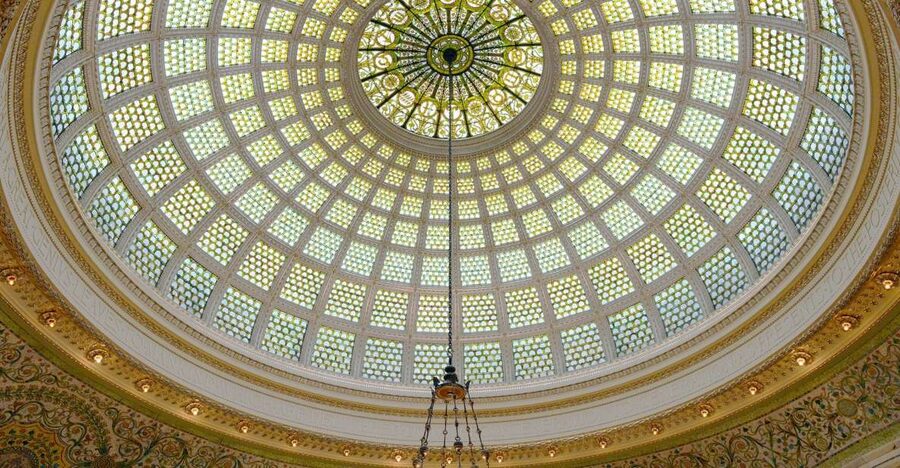
- The Chicago Cultural Center and its Tiffany dome
- State Street, Macy’s, and the department store city
- Palmer House and the hotel as urban theater
- Burnham, Sullivan, and Holabird and Roche
- What the guide adds to the walk
- The pace, walking, and weather
- Is $35 a good value?
- Who will enjoy this Chicago walking tour?
- Should you book the Treasures of the Golden Age tour?
- FAQ
- How long is the Chicago Treasures of the Golden Age Walking Tour?
- Where does the tour meet?
- What language is the tour offered in?
- What buildings are included?
- Is admission to the Chicago Architecture Center included?
- Can I bring luggage, a stroller, or a pet?
- Can I cancel the tour or change my plans?
Key points to know before you go
- The Chicago Cultural Center’s Tiffany dome: Look up at one of the tour’s most memorable interiors, a vast stained-glass feature that gives the old building real drama.
- A focused Golden Age route: The walk centers on late 19th and early 20th century buildings along Michigan Avenue, State Street, and the Loop.
- Architecture with a human story: You hear about Daniel Burnham, Louis Sullivan, Holabird and Roche, and the people who pushed Chicago toward cultural greatness.
- More than exterior sightseeing: The route may take you inside beloved buildings such as the Cultural Center, Macy’s on State, and Palmer House.
- Guides who bring local experience: Past guides have included Doug, Ron, Maureen, Paul S, John, Ingrid, Tony, and others, with strong praise for their clear storytelling and personal Chicago knowledge.
- A nonprofit purpose: Your ticket supports Chicago Architecture Center programs, including youth education, design competitions, and free community events.
Why Chicago’s Golden Age matters
Chicago’s architecture is often presented as a race to build higher. That is only part of the story. This tour looks at the years when the city wanted more than offices and warehouses. After the World’s Columbian Exposition of 1893, Chicago was determined to be seen as a serious cultural metropolis, not simply a fast-growing commercial center.
That ambition appears in the buildings along this route. Museums, department stores, hotels, concert halls, and civic buildings were designed to impress. Many used Beaux Arts, neo-Georgian, and neo-Gothic forms, styles that reached back to European and American traditions while using modern construction methods.
You get a useful contrast here. Chicago was a young city with new structural ideas, yet its most prestigious buildings often wore historical clothing. That tension makes the walk more interesting. A building could have steel behind its walls and classical columns at its entrance. It could feel old-fashioned from the street while representing a very modern idea of urban life.
Your guide’s job is to connect those pieces. Instead of giving you a list of architects and dates, the tour explains why a building was commissioned, what its design was trying to say, and how it helped shape Chicago’s public identity.
More walking tours in Chicago:
- Chicago: Gangsters and Ghosts Walking Tour
★ 5.0 · 7,155 reviews - Chicago Favorites Ultimate Food and Walking Tour
★ 5.0 · 1,962 reviews - Chicago: Gangsters and Ghosts Guided Walking Tour
★ 4.7 · 1,697 reviews
Starting inside the Chicago Architecture Center
You check in inside the Chicago Architecture Center at 111 East Wacker Drive. This location gives the tour a useful opening point because the Center is devoted to explaining Chicago’s buildings and urban development.
Admission to the Center’s exhibits is included with the tour. If you have time, this is worth treating as part of the experience rather than a minor extra. The exhibits can help you understand the city’s growth before you walk into the Loop, particularly if Chicago architecture is new to you.
The meeting point is indoors, which is helpful in poor weather. From there, your certified guide introduces the route and the period covered. The tour is offered in English, and the guide leads the group on foot through central Chicago.
The exact starting time depends on availability. Leave room in your schedule around the two-hour tour, since the walk is more rewarding when you do not need to rush away at the finish.
The Chicago Cultural Center and its Tiffany dome
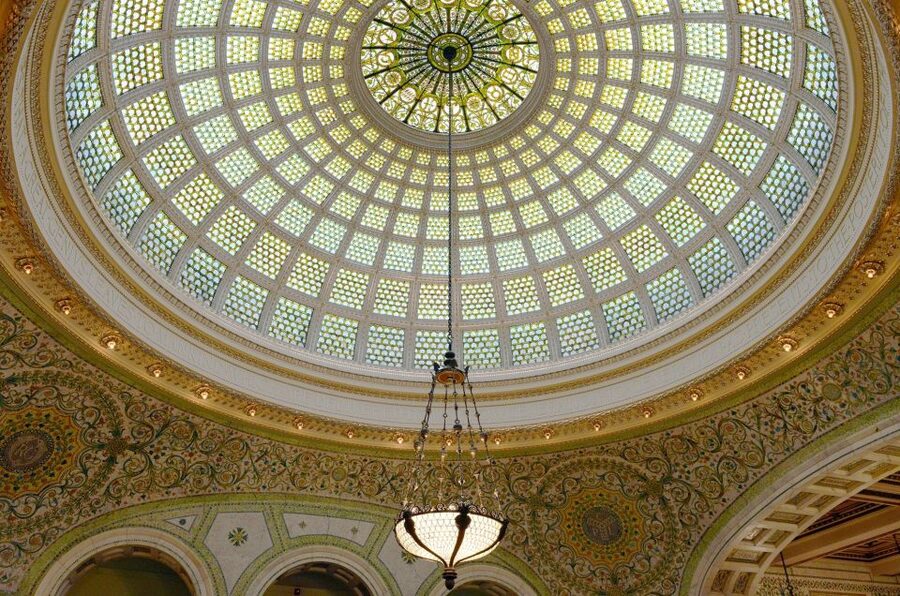
The Chicago Cultural Center is one of the strongest stops because it rewards a look inside. From the outside, its historic design sets the tone for the tour. Inside, the Tiffany glass dome gives you a direct sense of the care and expense that went into Chicago’s civic buildings.
The dome is often described as the world’s largest Tiffany dome, and it is the kind of feature that can change your understanding of the building. You are not simply looking at a grand room. You are seeing how decorative art, architecture, and civic pride were joined together.
This is also where a guide can add value that a plaque cannot. The details are easier to remember when someone explains what the building was meant to communicate and how its design relates to the period’s wider cultural ambitions.
Bring your eyes upward. Many people naturally look at doorways, columns, and floor patterns first, then miss the ceiling. The dome is a good reminder to pause and scan the full room.
State Street, Macy’s, and the department store city
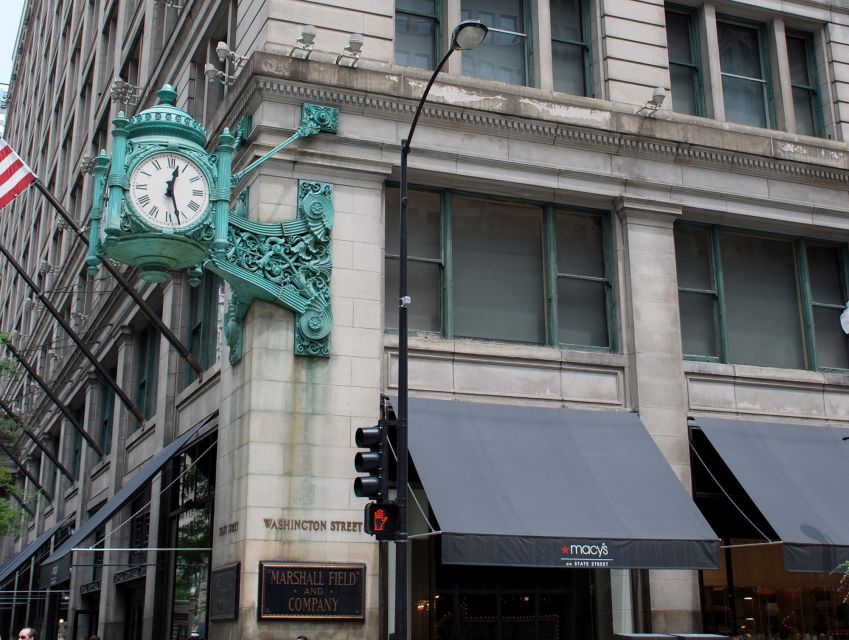
The route includes the former Marshall Field’s department store, now Macy’s on State. This stop shifts the story from civic architecture to commercial architecture, but the building belongs in the same Golden Age narrative.
A major department store was not merely a place to buy clothing or household goods. It was part of the city’s public life. Its design had to attract shoppers, express confidence, and make the act of shopping feel special. The scale and decoration helped turn State Street into a destination.
Inside, you might find details that are easy to pass without a guide. The tour helps you read those details as part of a larger plan. You learn to look at the building not only as a store, but as a statement about commerce and Chicago’s growing middle and upper classes.
This stop also gives you a useful comparison with the Cultural Center. One building represents public culture. The other represents private business and consumer culture. Both use grand design to tell you that Chicago had arrived.
A different way to spend an afternoon in Chicago:
- Chicago Architecture River Cruise
★ 5.0 · 15,756 reviews - Chicago River 90-Minute Architecture Tour
★ 4.5 · 9,629 reviews - Chicago River: 1.5-Hour Guided Architecture Cruise
★ 4.8 · 8,046 reviews - Chicago Architecture Center River Cruise aboard First Lady
★ 5.0 · 5,536 reviews
Palmer House and the hotel as urban theater
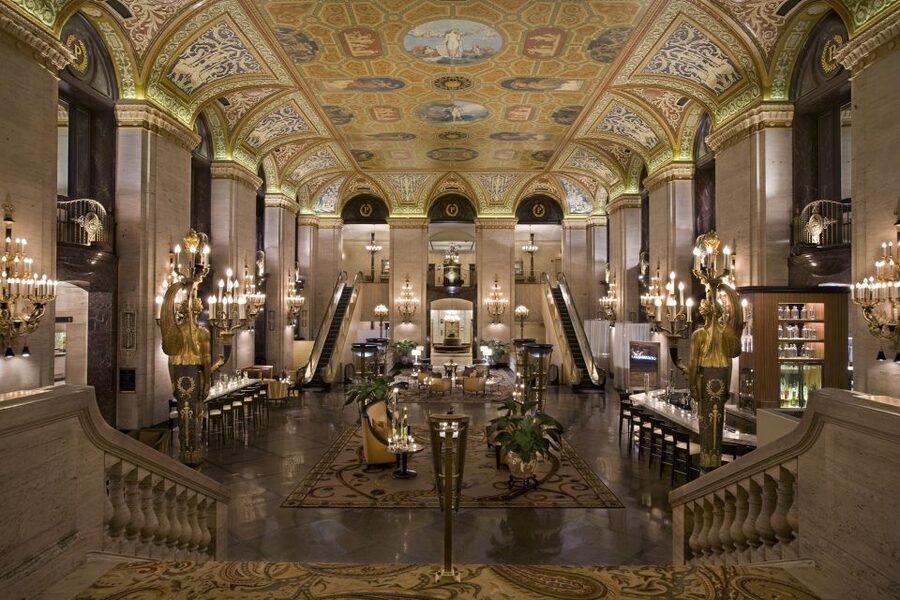
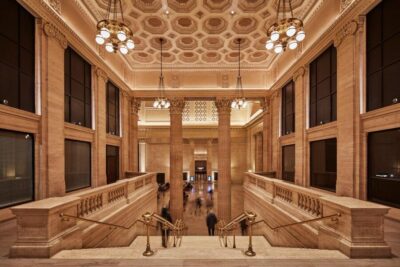
Palmer House adds another piece to the city’s Golden Age story. This beautifully restored hotel from the 1920s represents the era when a major hotel was part residence, part social club, and part public performance.
Look for the difference in mood. Civic buildings often aim for dignity. Department stores aim for energy and display. Hotels have to do both, welcoming people while making them feel that they have entered a special world.
Palmer House is especially useful for understanding preservation. Restoration allows you to see how a historic interior can continue to function rather than become a frozen museum piece. The building remains part of city life, which gives the architecture more meaning.
One practical note: interior access can vary by the day and by building conditions. The tour description specifically promises a glimpse inside some beloved buildings, and past walks have included interior visits, but you should not assume every room will be open on every departure.
Burnham, Sullivan, and Holabird and Roche
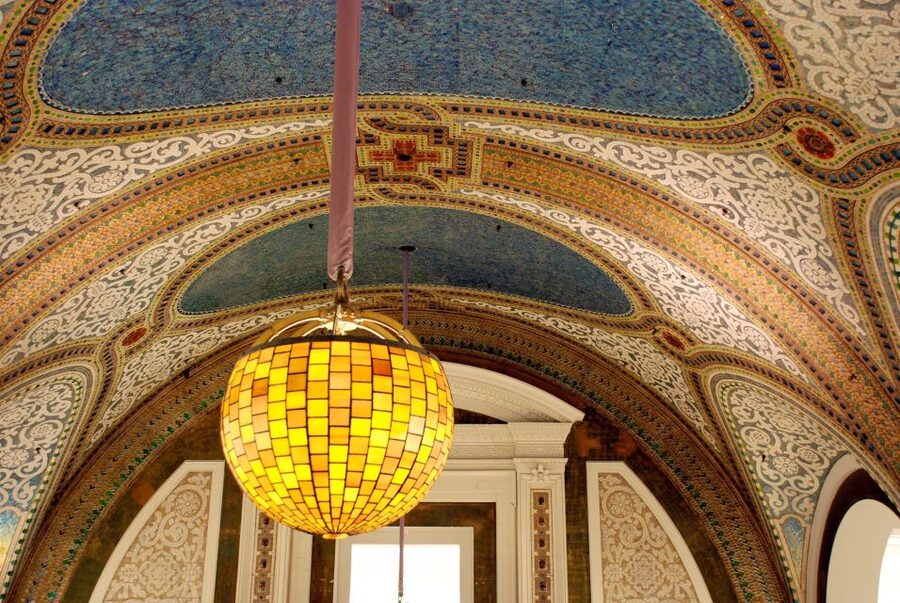
The tour introduces major names in Chicago architecture, including Daniel Burnham, Louis Sullivan, and Holabird and Roche. You do not need a background in architecture to follow the stories. The guide explains enough of each designer’s approach to help you see differences as you move through the Loop.
Daniel Burnham is closely tied to Chicago’s plan for a more ordered and monumental city. His work and influence fit the larger post-1893 desire for civic beauty and cultural status.
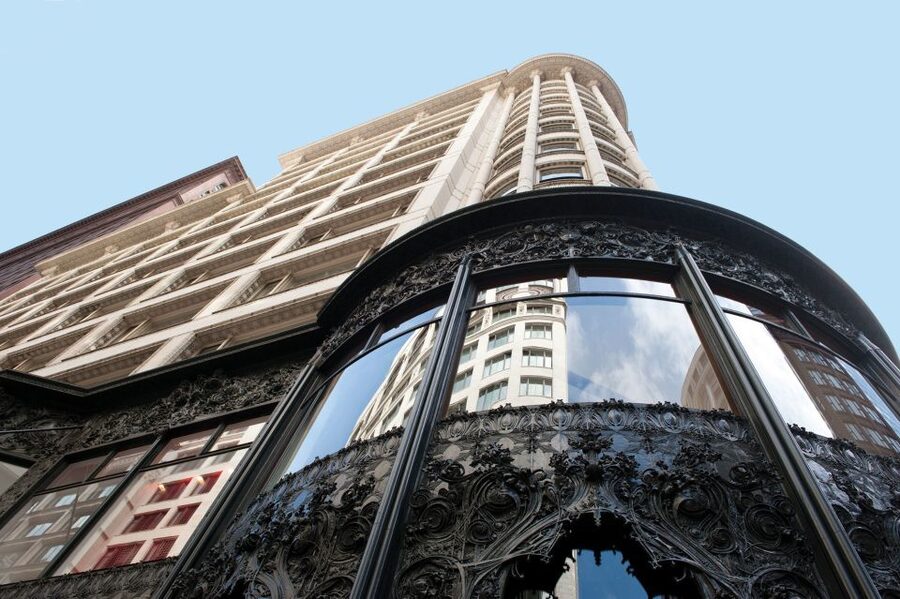
Louis Sullivan represents a different force in Chicago architecture. His buildings help you consider the relationship between structure and decoration, and the question of how a modern building should look. His name often appears in discussions of Chicago’s distinctive architectural development.
Holabird and Roche broaden the picture. Their work shows that Chicago’s architectural story was not created by one famous figure. Many firms, clients, builders, shop owners, civic leaders, and artists shaped the city together.
A good guide makes these names easier to remember by tying them to buildings and stories. The strongest guides also show enthusiasm without turning the walk into a lecture. Past guides such as Ron, Doug, Maureen, and Paul S were praised for mixing historical facts with personal anecdotes and approachable conversation.
What the guide adds to the walk
The guide is the difference between a pleasant stroll and a useful architecture tour. You can photograph a façade on your own, but it is harder to understand why it looks the way it does without context.
This tour’s guides are trained by the Chicago Architecture Center. That matters because the Center has a clear focus on Chicago’s buildings, planning, and design. It also helps explain why the tour appeals even to people who have already taken a river cruise or visited Chicago several times.
The walking route and a river cruise show different sides of the city. From a boat, you get long views of the skyline and a strong sense of scale. On foot, you can stop at doorways, study materials, enter selected interiors, and notice details at eye level.
The best guide moments may be small. Ingrid was praised for speaking naturally and pausing for questions. John used a microphone system so the group could look around while still hearing the explanation. Tony adjusted the route in very cold weather to find chances to go indoors. Those details matter because they make the walk easier to follow.
Guides have also led the tour in snow, cold, and less-than-ideal conditions. Still, do not mistake that for a reason to ignore the forecast. Rain or shine means you need suitable clothing and shoes.
The pace, walking, and weather
The tour lasts two hours, but it is an active two hours. You move through the Loop, stop at buildings, listen to explanations, and continue on. Wear comfortable shoes. That advice came up more than once, and it is the most useful packing tip for this experience.
The pace appears to suit a sightseeing walk rather than a workout. A past guide was praised for keeping a good walking and speaking pace, while another used pauses to allow questions. Even so, you will be outside for part of the experience and on hard city surfaces.
The tour is listed as wheelchair accessible, but it is also marked as not suitable for people with mobility impairments. That is an important contradiction to clarify before booking. Ask the operator about the specific departure, route, walking distance, and interior access if you use a wheelchair or have trouble walking.
Pets are not allowed, although service animals are welcome. Large bags, luggage, and strollers are not allowed, and the Center cannot provide secure storage for them. Plan to arrive without those items.
You also need a passport or ID card. The weather policy is firm: tours depart rain or shine, and bad weather does not qualify for a refund.
Is $35 a good value?
The listed price is $35 for a group of up to one person, so check the booking details carefully before you pay. The unusual wording makes it especially important to confirm how the price applies to your party.
The value is strongest if you want interpretation rather than simple access to buildings. You are paying for a two-hour guided route, a Chicago Architecture Center certified guide, and admission to the Center’s exhibits. You also support the Center’s local education and community work.
That nonprofit connection gives the ticket a useful extra purpose. Chicago Architecture Center ticket income helps fund programs such as Girls Build!, Teen Fellows, and the Newhouse Architecture + Design Competition. It also supports efforts to keep events such as Open House Chicago free.
For someone already interested in architecture, the price is reasonable if the guide adds new layers to buildings you have seen before. One repeat Chicago visitor still learned new information after taking other architecture tours. If you prefer to wander alone, the cost may feel less attractive, but you will miss the connections between the buildings.
You can cancel up to 24 hours ahead for a full refund, and the reserve now, pay later option keeps your plans flexible. Those policies help, though they do not cover weather cancellations because the tour runs in all conditions.
Who will enjoy this Chicago walking tour?
I would recommend it to first-time Chicago visitors who want a clear introduction to Loop architecture without committing to a longer river cruise. It also works well for repeat visitors who want to explore interiors and hear stories beyond the usual skyline view.
History fans, design students, photographers, and curious city walkers should find plenty to hold their attention. The tour is also a good choice for solo visitors who enjoy the easy company of a group while still having a structured activity.
It may be less suitable if you dislike walking, need guaranteed indoor shelter, or want a narrowly focused tour of one architect. The route covers many buildings and styles, so the experience favors breadth and connections over a detailed study of every single stop.
Give yourself time to look. Take photographs when the group pauses, but do not spend the whole tour behind your phone. The most useful part is learning where to look next time you walk State Street on your own.
Should you book the Treasures of the Golden Age tour?
Book this tour if you want Chicago’s Loop to make more sense. The Cultural Center’s Tiffany dome, Macy’s on State, Palmer House, and the work linked to Burnham, Sullivan, and Holabird and Roche give you a strong set of landmarks. The guide then ties them to Chicago’s push for cultural importance after 1893.
I especially recommend it if you have already seen the skyline from a boat and want a street-level view. You will walk more, see selected interiors, and hear the kind of local stories that can turn familiar buildings into places worth revisiting.
Skip it only if two hours of walking sounds tiring or if rain, cold, and outdoor time would spoil your day. For everyone else, this is a focused, useful introduction to the city’s Golden Age, with the added benefit of supporting a local nonprofit.
FAQ
How long is the Chicago Treasures of the Golden Age Walking Tour?
The walking tour lasts two hours.
Where does the tour meet?
Check in inside the Chicago Architecture Center at 111 East Wacker Drive, Chicago, Illinois 60601.
What language is the tour offered in?
The live tour is offered in English.
What buildings are included?
Highlights include the Chicago Cultural Center and its Tiffany dome, the former Marshall Field’s department store, now Macy’s on State, and Palmer House. The route also covers other historic architectural landmarks in the Loop.
Is admission to the Chicago Architecture Center included?
Yes. Admission to the Chicago Architecture Center exhibits is included with the walking tour.
Can I bring luggage, a stroller, or a pet?
No. Luggage, large bags, and strollers are not allowed, and secure storage is not available. Pets are not allowed, but service animals are welcome.
Can I cancel the tour or change my plans?
You can cancel up to 24 hours in advance for a full refund. The reserve now, pay later option lets you book without paying immediately. Tours depart rain or shine, and weather does not qualify for a refund.
Just added in Chicago
- Chicago: Architecture and Engineering Marvels Walking Tour★ 5.0 · 3 reviews
- Private Downtown Chicago TV and Movie Sites Guided Walking Tour★ 4.5 · 3 reviews
- Black Heritage Tour★ 5.0 · 3 reviews
- Private SUV Transfer from Chicago Downtown to Midway airport★ 5.0 · 3 reviews
- Private Holiday City Tour★ 5.0 · 3 reviews
- BYOB Chicago River Guided History Tour★ 5.0 · 4 reviews
- Chicago 4-Hour Sightseeing Transfer by Luxury SUV★ 4.5 · 3 reviews
- Chicago, Cloud Gate, Grant Park Full-Day City Tour★ 4.0 · 4 reviews
Walking Tours, compared.


Chicago Favorites Ultimate Food and Walking Tour
Read our review →
Chicago in a Day: Food, History & Architecture Walking Tour
Read our review →
Chicago’s Secret Interiors Architectural Walking Tour
Read our review →

Browse the lists this tour appears in