
Reviewed · WALKING TOURS
Workers Cottages of Oldtown Triangle Walking Tour
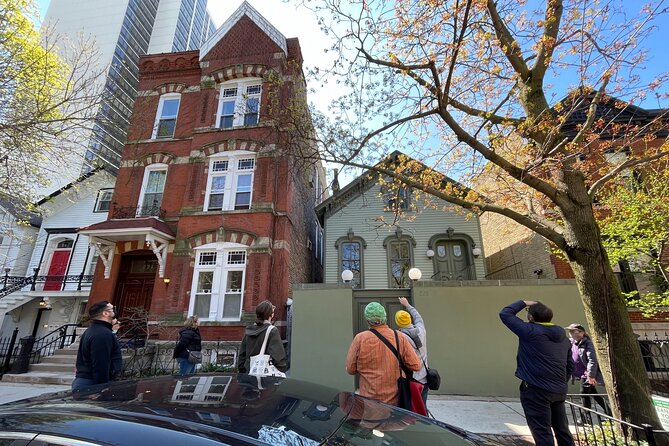
Chicago’s Old Town Triangle preserves something rare: a readable slice of the city before the Great Chicago Fire. On this walk, you’ll see 40 to 50 workers’ cottages from the mid-1800s, along with grand rowhouses, old churches, and homes tied to major Chicago figures. I like that the tour focuses on ordinary houses as much as famous buildings. That makes the city’s past feel close and human.
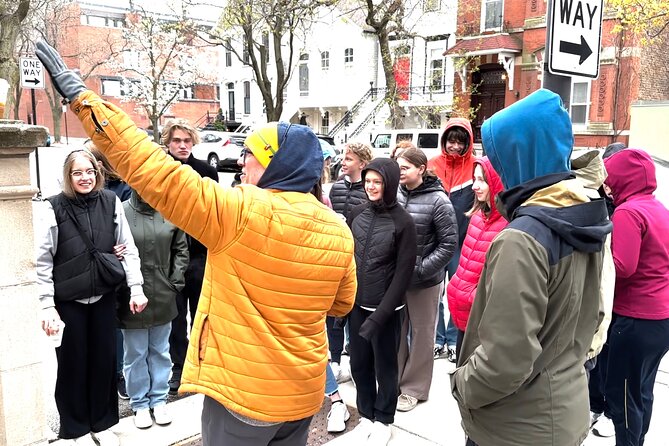
I also like the small group of no more than eight people. A guide such as Ronnie can point out small details and answer questions without trying to manage a crowd. The main consideration is pace: this is nearly two hours on foot, and the tour needs good weather. At $45 per person, the value depends on how much you enjoy architecture and neighborhood history.
In This Review
- Key details before you book
- Why Old Town’s workers’ cottages matter
- Starting on West Eugenie Street
- North Crilly Court and the people behind the addresses
- St. Michael Church, once the tallest building in America
- Twin Anchors and a taste of old Chicago celebrity
- The Wacker homes and the city’s early design
- A young Louis Sullivan in Old Town
- The last farmhouse in the old farming district
- What the $45 price gets you
- Pace, weather, and practical planning
- Who will enjoy this Old Town walk
- Should you book the Workers Cottages of Oldtown Triangle tour?
- FAQ
- Where does the tour begin?
- Where does the tour end?
- How long does the walking tour last?
- How many people can join the tour?
- What buildings and sites will I see?
- What happens if bad weather cancels the tour?
Key details before you book
- 40 to 50 workers’ cottages: See the modest homes built for Chicago’s working families before and around the era of the Great Fire.
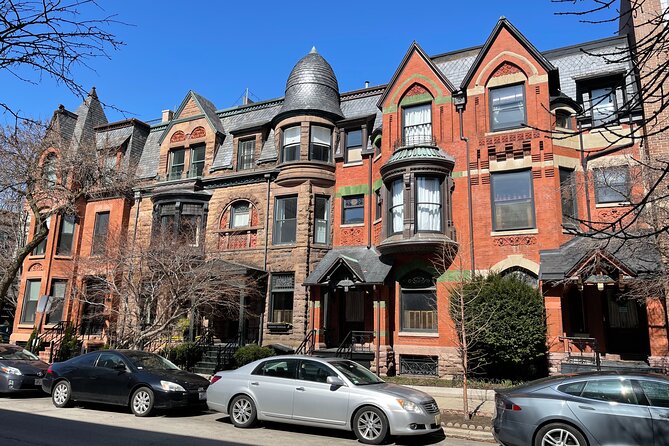
- Rare Queen Anne and Second Empire rowhouses: West Eugenie Street has a striking row of five houses built in 1886.
- Small-group format: The maximum group size is eight, which allows for a more personal walk.
- St. Michael Church: Learn why this 1866 to 1869 church was once the tallest building in the United States.
- Louis Sullivan connection: See the Ann Halsted rowhouses, designed by Sullivan early in his career.
- Frank Sinatra’s old haunt: Pass Twin Anchors Restaurant, founded in 1932 and known for baby-back ribs.
Why Old Town’s workers’ cottages matter
The most unusual part of this experience is not a famous skyscraper. It is the humble cottage.
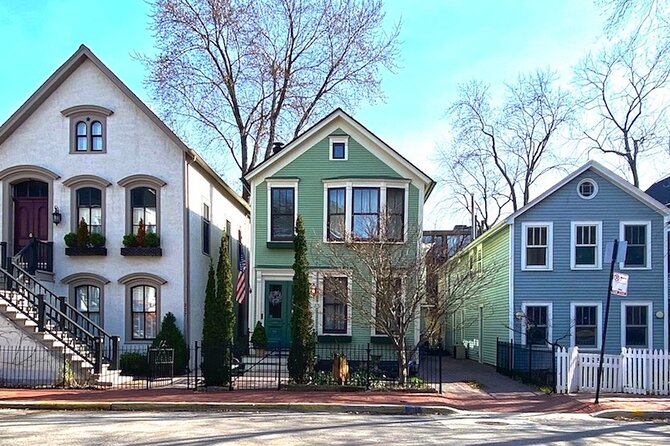
Chicago is often presented through its downtown towers, grand museums, and bold modern architecture. Old Town offers a different view. Before the city spread far beyond its original core, workers and small business owners lived in compact cottages near the edge of town. Many were later altered, enlarged, or surrounded by newer homes, but enough remain to show how the neighborhood looked in the late 1800s.
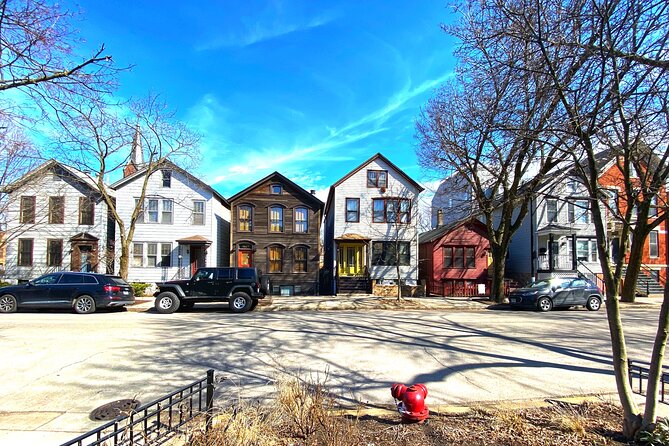
You’ll see several styles and arrangements rather than one repeated house design. In some places, cottages appear in groups. One especially unusual stretch has an entire block of cottages on both sides of the street. That kind of continuity helps you picture the area as it was before Chicago’s rapid rebuilding and expansion.
I find this focus useful because it keeps architectural history from becoming a parade of wealthy mansions. These houses tell you about the people who helped build the city, not only the people who financed it. Look closely at the scale, setbacks, and changes made over time. The guide’s explanation is what turns a pleasant walk past old homes into a lesson in how Chicago grew.
More walking tours in Chicago:
- Chicago: Gangsters and Ghosts Walking Tour
★ 5.0 · 7,155 reviews - Chicago Favorites Ultimate Food and Walking Tour
★ 5.0 · 1,962 reviews - Chicago: Gangsters and Ghosts Guided Walking Tour
★ 4.7 · 1,697 reviews
Starting on West Eugenie Street
The meeting point is 164 West Eugenie Street, on a picturesque residential block in the Old Town Triangle. The location is easy to reach by public transportation, and the tour begins at 11 a.m. Since the walk starts outdoors, arrive ready to move rather than expecting an indoor orientation or visitor center.
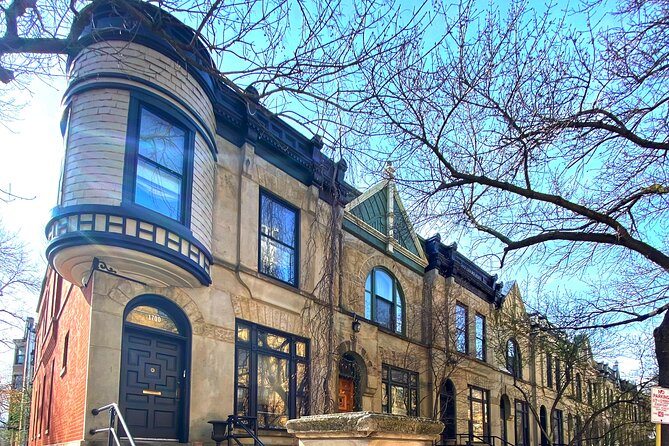
West Eugenie Street provides an excellent first lesson. Here you’ll see a row of five opulent houses built in 1886 by architect Harald Hansen. Their Queen Anne and Second Empire details make them far grander than the simple cottages nearby, and the fact that five survive together gives the street unusual visual force.
This is a good place to pay attention to the contrast between architectural ambition and neighborhood scale. The houses are decorative, but they still belong to a residential street rather than a formal civic avenue. Your guide also uses the block to explain the early development of Chicago, much of which took place in and around this part of Old Town.
The scheduled stop is about 10 minutes, though the walking portion around the Triangle makes the overall experience much longer. Wear shoes that are comfortable on pavement. You are not covering a huge distance at speed, but you will be standing and walking for most of the outing.
North Crilly Court and the people behind the addresses
North Crilly Court adds a more personal layer to the tour. The stop covers the people who lived on the court, including well-known figures, and includes a property recognized as a National Landmark.
That combination is useful. You get the polished version of Old Town’s architecture, but also the stories that explain why certain addresses matter. A house becomes more memorable when you know who lived there, what role the property played, or how it fits into the city’s changing fortunes.
The court is scheduled for about 15 minutes. Since the tour is limited to eight people, this should be one of the easier places to ask questions or request a closer look at a feature. The guide’s storytelling is important here, since the value lies less in simply seeing a row of buildings and more in understanding their connections.
St. Michael Church, once the tallest building in America
St. Michael Church is the tour’s biggest architectural landmark. Built from 1866 to 1869, the Roman Catholic church was once the tallest building in the United States, holding that distinction for 16 years.
That fact gives the neighborhood a surprising scale. Today, Chicago is famous for towers that make almost any older building look small. In the late 1800s, however, a church rising above Old Town would have been a powerful marker on the city skyline.
The stop is listed at about 20 minutes, making it the longest single point on the walk. You’ll hear about the church and its place in Old Town’s story. The supplied details do not promise an interior visit, so plan on viewing and discussing the building from the tour route rather than assuming you will go inside.
This is also a reminder that Old Town’s survival is not limited to private houses. Religious buildings, restaurants, courtyards, and civic landmarks all help explain how the neighborhood functioned. The church gives the cottages a broader setting.
A different way to spend an afternoon in Chicago:
- Chicago Architecture River Cruise
★ 5.0 · 15,756 reviews - Chicago River 90-Minute Architecture Tour
★ 4.5 · 9,629 reviews - Chicago River: 1.5-Hour Guided Architecture Cruise
★ 4.8 · 8,046 reviews - Chicago Architecture Center River Cruise aboard First Lady
★ 5.0 · 5,536 reviews
Twin Anchors and a taste of old Chicago celebrity
Twin Anchors Restaurant & Tavern offers a quick stop with a different flavor. Founded in 1932, it is one of Chicago’s oldest restaurants and is known for tender barbecued baby-back ribs. Frank Sinatra was a longtime fan, giving the small neighborhood tavern a place in Chicago’s entertainment lore.
The scheduled visit lasts only about five minutes, so this is not a meal stop. You should not book the walking tour expecting a table, food tasting, or a chance to linger over lunch. Think of it as a useful neighborhood marker and a quick story about how Old Town continued to attract people long after its workers’ cottages were built.
If you want to eat at Twin Anchors afterward, arrange that separately. The tour itself does not include admission, food, or a reservation. Ending or pausing your day around a local restaurant can work well, but keep the walk’s short timing in mind.
The Wacker homes and the city’s early design
Later, the route points out the homes of Charles and Frederick Wacker, father and son. Charles Wacker and Frederick Wacker were important to Chicago’s early planning and design, and the family connection gives the tour another way to link private homes with the city beyond the block.
This stop is brief, listed at about five minutes, but the subject is broad. The Wacker name is familiar from Wacker Drive, yet it can be easy to know the street name without knowing the people behind it. Here, the guide connects the family to Chicago’s physical growth.
That kind of short stop works best as part of the larger sequence. You are not visiting a museum devoted to the Wackers. Instead, you are seeing where they lived and hearing why their names matter while remaining in the neighborhood that shaped early Chicago.
A young Louis Sullivan in Old Town
The Ann Halsted rowhouses bring in one of America’s best-known architects at an early stage of his career. Louis Sullivan designed these houses when he was still in his early 20s, before he became widely known.
This detail is valuable because it shows that famous architects do not begin with a fully formed public reputation. The rowhouses let you compare Sullivan’s early work with the other buildings along the route and think about how an architect’s ideas develop.
The stop is also brief, about five minutes. You’ll get the key connection rather than a long lecture on Sullivan’s complete career. If architecture is your main reason for booking, this is one of the places where you may want to ask a focused question about the design, materials, or how the houses differ from later Sullivan buildings. Specific details beyond the supplied description depend on the guide.
The last farmhouse in the old farming district
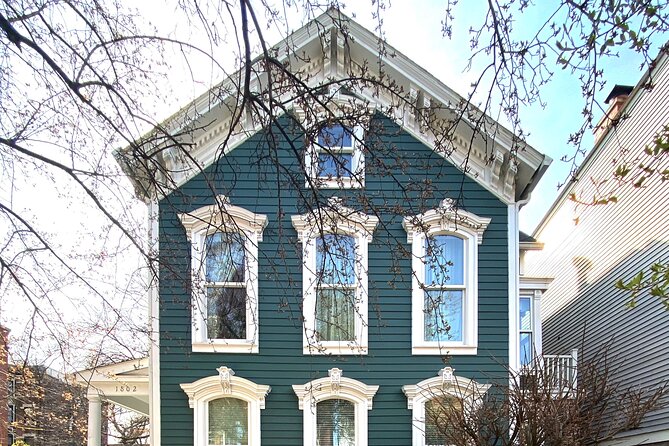
The final stop is at 216 West Menomonee Street, where the walk ends at the last remaining farmhouse from the period when Old Town was still farmland outside the city limits.
It is a fitting finish. The route begins with workers’ cottages and ends with an even earlier reminder that this land was once rural. In a few city blocks, you move from farmland to working-class housing, grand rowhouses, religious architecture, famous residents, and twentieth-century neighborhood life.
The ending is practical, too. It is only a few short blocks from the starting point, so you will not be left far away from where you began. The guide describes this farmhouse as the first workers’ cottage-like building that sparked the interest behind the tour, which gives the ending a personal touch when that guide is leading the walk.
What the $45 price gets you
The tour costs $45 per person. There is no separate admission charge for the stops, so you are paying for the guide’s time, route planning, interpretation, and the small-group setting.
I think the price is reasonable for the right audience. You are getting close to two hours of focused neighborhood history, not a quick pass by a few photo stops. A maximum of eight people is a real advantage here. Architecture walks lose some of their appeal when you are standing behind a large group or waiting for a guide to repeat every point.
The value is less clear if you mainly want famous Chicago attractions or a general introduction to the city. This is a narrow subject, and that is its strength. You are paying for Old Town’s cottages, streets, and local stories rather than a broad city highlights tour.
The experience is booked, on average, about 20 days ahead. That suggests you should reserve before your Chicago visit if the date matters, especially because the group is small. The ticket is mobile, which keeps the arrival process simple.
Pace, weather, and practical planning
The stated duration is about 1 hour 45 minutes, while the stop schedule can amount to close to two hours. Plan for roughly two hours outdoors so you are not rushing to your next activity.
The route requires a moderate level of physical fitness. The information does not describe steep climbs or difficult terrain, but you should expect regular walking and standing on city streets. Comfortable footwear is more important than dressing for a formal sightseeing outing.
The tour requires good weather. If poor weather cancels it, you can choose another date or receive a full refund. It can also be canceled if the minimum number of participants is not reached, with a different date or experience, or a full refund, offered in that case.
The standard cancellation policy is strict: the booking is non-refundable and cannot be changed for personal reasons. Check your plans carefully before reserving. Service animals are allowed, and the meeting point is near public transportation.
Who will enjoy this Old Town walk
I would choose this tour if you like older residential districts, architectural details, and city stories that reach beyond the usual postcard sights. It suits someone who would rather study a row of preserved cottages than hurry between major attractions.
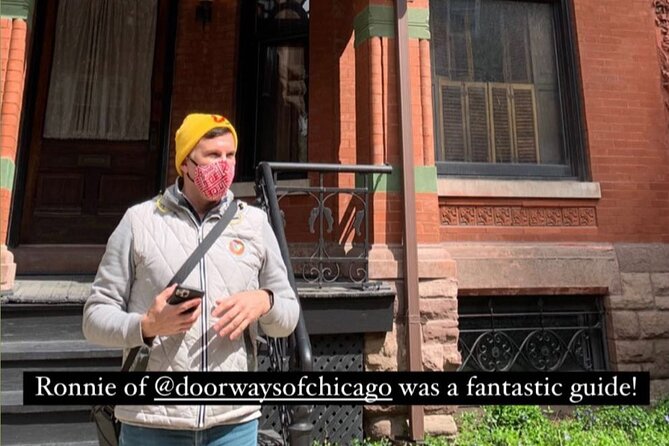
It is also a good choice for Chicago residents who pass these streets every day but have never learned why the buildings look the way they do. Ronnie is the named guide associated with the tour, and his presentation is described as informative, passionate, and professional. If he is leading your date, you can expect a guide who takes the subject personally and knows how to make familiar homes worth a closer look.
Families with older children may enjoy it if the children can manage nearly two hours of walking and listening. The content is about architecture and history, not hands-on activities, so very young children may find the pace slow.
I would skip it if your top priority is entering famous buildings, seeing skyline views, or eating during the tour. Several stops are quick exterior points, and the experience depends on the guide’s storytelling. You should also reconsider if rain or cold would spoil your day, since the route is weather dependent.
Should you book the Workers Cottages of Oldtown Triangle tour?
Book it if you want a close look at the Chicago that came before the modern skyline. The strongest reasons are the unusual run of 40 to 50 workers’ cottages, the five-house Eugenie Street row, St. Michael Church, and the small group size.
At $45, it is best viewed as a specialist walking tour rather than a general sightseeing bargain. You’ll get the most from it if you enjoy noticing architectural details, asking questions, and letting one neighborhood explain a large part of Chicago’s past. If that sounds like your kind of afternoon, reserve ahead and allow about two hours at an easy city-walking pace.
FAQ
Where does the tour begin?
It begins at 164 W Eugenie St, Chicago, Illinois 60614, at 11 a.m.
Where does the tour end?
It ends at 216 W Menomonee St in the Old Town Triangle, a few short blocks from the starting point.
How long does the walking tour last?
The stated duration is approximately 1 hour 45 minutes. The scheduled stops can bring the overall outing close to two hours, so plan accordingly.
How many people can join the tour?
The maximum group size is eight people.
What buildings and sites will I see?
You’ll see 40 to 50 workers’ cottages, the five Queen Anne and Second Empire rowhouses on West Eugenie Street, North Crilly Court, St. Michael Church, Twin Anchors Restaurant, the Wacker homes, the Ann Halsted rowhouses designed by Louis Sullivan, and the remaining farmhouse from Old Town’s rural period.
What happens if bad weather cancels the tour?
You’ll be offered a different date or a full refund if poor weather causes the cancellation. A different date or experience, or a full refund, is also offered if the minimum number of participants is not reached.
Just added in Chicago
- Chicago: Architecture and Engineering Marvels Walking Tour★ 5.0 · 3 reviews
- Private Downtown Chicago TV and Movie Sites Guided Walking Tour★ 4.5 · 3 reviews
- Black Heritage Tour★ 5.0 · 3 reviews
- Private SUV Transfer from Chicago Downtown to Midway airport★ 5.0 · 3 reviews
- Private Holiday City Tour★ 5.0 · 3 reviews
- BYOB Chicago River Guided History Tour★ 5.0 · 4 reviews
- Chicago 4-Hour Sightseeing Transfer by Luxury SUV★ 4.5 · 3 reviews
- Chicago, Cloud Gate, Grant Park Full-Day City Tour★ 4.0 · 4 reviews
Walking Tours, compared.

Chicago Favorites Ultimate Food and Walking Tour
Read our review →
Chicago in a Day: Food, History & Architecture Walking Tour
Read our review →
Chicago’s Secret Interiors Architectural Walking Tour
Read our review →

Browse the lists this tour appears in