
Reviewed · CHICAGO RIVER CRUISES
Chicago Riverwalk Self-Guided Walking Tour
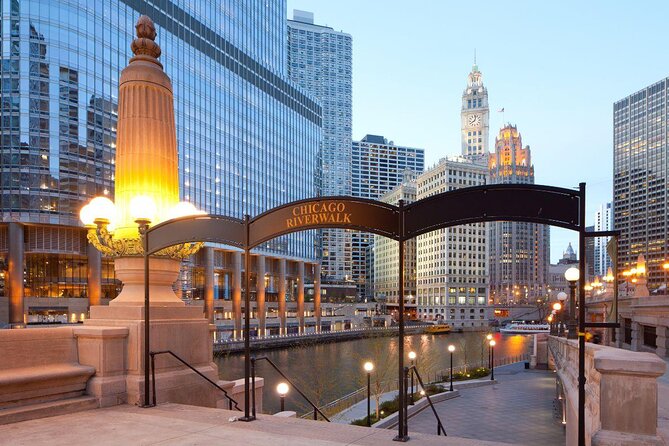
Chicago’s Riverwalk turns Chicago architecture into an open-air storybook, and this self-guided audio tour gives you the plot as you walk. For $14.99, you follow 12 stops from the Wrigley Building toward the River Esplanade, with stories triggered by your location rather than a guide gathering a group.
I like the lifetime access most. You can use the tour on another Chicago visit, pause for lunch, or split the route over several days without buying it again. I also like the offline GPS maps and hands-free narration, which let you keep your eyes on the river and buildings instead of a phone screen.
The main drawback is simple: there is no live guide to answer questions or adjust the route. The app also needs to be downloaded in strong Wi-Fi or cellular service before you begin, so last-minute setup at the Riverwalk can cause trouble.
In This Review
- Key points to know before you walk
- A self-guided walk through Chicago’s architectural story
- Starting at the Wrigley Building and DuSable Bridge
- The glass tower at 401 North Wabash
- A quiet pause at the Vietnam Veterans Memorial
- Marina Towers and the idea of a city within a city
- The Dearborn Street Bridge and a lesson in public opinion
- 325 North LaSalle and an older Chicago chapter
- Merchandise Mart, built on an enormous scale
- The McCormick Bridgehouse and Chicago River Museum
- Tribune Tower and a contest for beauty
- William P. Fahey Bridge and Chicago’s changing technology
- NBC Tower and an Art Deco finale
- What $14.99 buys you
- How the Action Tour Guide app works
- Who should choose this Riverwalk tour?
- Should you book it?
- FAQ
- How much does the Chicago Riverwalk Self-Guided Walking Tour cost?
- How long does the walking tour take?
- Is this a guided group tour?
- What language is the tour offered in?
- Where does the tour start and finish?
- Do I need cellular service during the walk?
- How does the audio begin?
- Are attraction tickets included?
- Can I cancel for a full refund?
Key points to know before you walk
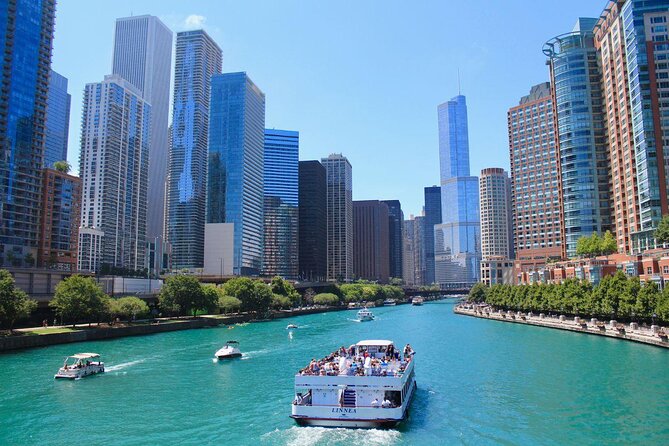
- Twelve architectural and historic stops: See the Wrigley Building, DuSable Bridge, Marina Towers, Merchandise Mart, Tribune Tower, NBC Tower, and more.
- One payment, lifetime use: The $14.99 price covers repeated use with no expiry.
- Automatic audio cues: Stories begin as you reach each location, provided you follow the route and keep the app active.
- Offline navigation: Download the tour before arriving, then use the maps without Wi-Fi or cellular data.
- Flexible 1 to 2 hour route: Stop for photos, snacks, or side trips, then resume when ready.
- Private by design: Only your group takes part, with no meeting time or guide to find.
A self-guided walk through Chicago’s architectural story

This tour works best as an introduction to the Chicago Riverwalk and the buildings around it. You are not simply ticking off sights. The route links bridges, memorials, towers, and older commercial buildings, showing how Chicago changed from an early skyscraper city into a modern architectural showcase.
The planned walking time is about one to two hours. Each of the 12 stops is allotted roughly five minutes, but that does not include walking between them, taking pictures, waiting for traffic, or visiting an attraction. Give yourself extra time if you like architecture or want to stop inside places along the route.
The tour begins at 99 Chicago Riverwalk, Chicago, Illinois 60601, and ends at the River Esplanade near 60611. The Riverwalk is open for this experience from 6:00 a.m. to 9:00 p.m., Monday through Sunday, during the stated operating period. Since you receive no physical ticket and no person meets you, this is closer to a flexible audio guide than a traditional excursion.
More cruises along the Chicago River:
- Chicago Architecture River Cruise
★ 5.0 · 15,756 reviews - Chicago River 90-Minute Architecture Tour
★ 4.5 · 9,629 reviews - Chicago River: 1.5-Hour Guided Architecture Cruise
★ 4.8 · 8,046 reviews
Starting at the Wrigley Building and DuSable Bridge
The Wrigley Building is a good opening act. Its terra-cotta exterior, large clock tower, and decorative details are easy to appreciate from the river, and the audio explains the connection to William Wrigley Jr., whose chewing gum fortune paid for the landmark.
You also hear about the Hotel Intercontinental nearby, including the unusual observatory hidden inside it. That detail gives you a reason to look beyond the famous facade. The stop is free, and you can take as long as you like for photographs before moving on.
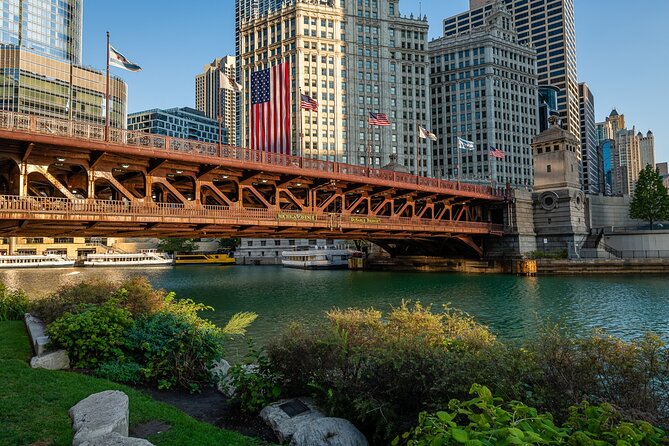
Next comes the Michigan Avenue Bridge, now also called the DuSable Bridge. It is attractive in its own right, but the flags and their history give the stop extra interest. This is the sort of detail that can slip past you on an ordinary city walk, especially if you are focused on traffic or the river views.
The opening section is particularly useful for first-time visitors because it connects familiar Chicago symbols with smaller details. You get the broad architectural picture, then a reason to look again.
The glass tower at 401 North Wabash
At 401 North Wabash Avenue, the scale changes dramatically. The glass tower rises 1,399 feet over 98 stories, making it one of the tallest buildings in the United States.
The audio points out that the tower uses the same basic building technique as Dubai’s Burj Khalifa, currently the world’s tallest building. You do not need to enter the tower to understand its importance. From the river level, the contrast between the older bridges and this huge modern structure is the point.
This is a short stop, but it helps explain why Chicago remains such a useful place to study tall-building design. The route keeps shifting between old and new, so the city feels like an ongoing experiment rather than a collection of unrelated sights.
A quiet pause at the Vietnam Veterans Memorial
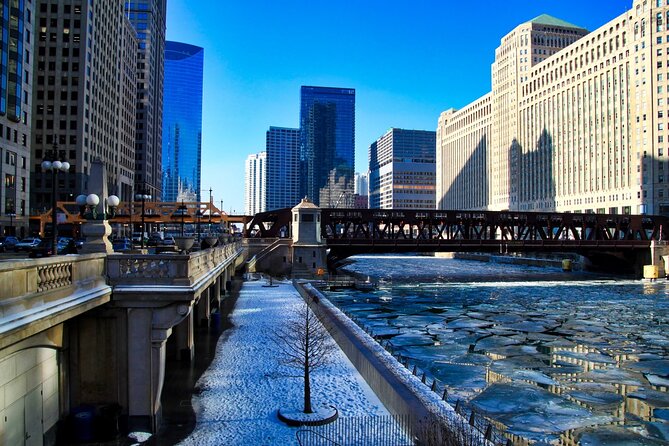
The Vietnam Veterans Memorial provides a change of mood. Its sunken rectangular pool and fountain honor Illinois residents who died in the Vietnam War.
After several large commercial buildings, the memorial asks for a slower pace. The setting is modest and quiet, and the audio treats it as a serious place rather than just another photo stop. I recommend pausing the tour for a moment here if you want time to reflect.
This is also a practical reminder that the Riverwalk is not only about office towers and engineering. Public art, memory, and civic spaces are part of the route too.
More walking tours in Chicago:
- Chicago: Gangsters and Ghosts Walking Tour
★ 5.0 · 7,155 reviews - Chicago Favorites Ultimate Food and Walking Tour
★ 5.0 · 1,962 reviews - Chicago: Gangsters and Ghosts Guided Walking Tour
★ 4.7 · 1,697 reviews - Chicago in a Day: Food, History & Architecture Walking Tour
★ 5.0 · 1,153 reviews
Marina Towers and the idea of a city within a city
Marina Towers are among the most recognizable buildings on the walk. Their rounded forms are often compared to giant corn cobs, and the comparison is easy to understand when you see the twin towers from below.
The more interesting point is how much was planned within the complex. Marina Towers include a theater, gym, pool, ice rink, bowling alley, roof deck, and marina. The concept was a city within a city, with daily needs handled inside one residential development.
You will want to look upward here, but also study the lower sections and the riverfront relationship. The towers are not merely unusual shapes. They show a particular answer to urban living, one that tried to put homes, recreation, and transportation close together.
The Dearborn Street Bridge and a lesson in public opinion
The Dearborn Street Bridge, built in 1962, brings the tour back to infrastructure. Chicago is famous for its bridges, and this stop adds a human story to the engineering.
The bridge replaced an earlier design that residents strongly disliked. The audio explains what went wrong and how local opposition helped force a change. That makes the bridge more than a piece of steel and concrete. It becomes an example of how city projects can be reshaped by the people who use them.
The stop is useful if you like urban planning, but it may feel brief if you are mainly interested in dramatic building facades. The route keeps the explanation short, so you get the essential story without being trapped in a lecture.
325 North LaSalle and an older Chicago chapter
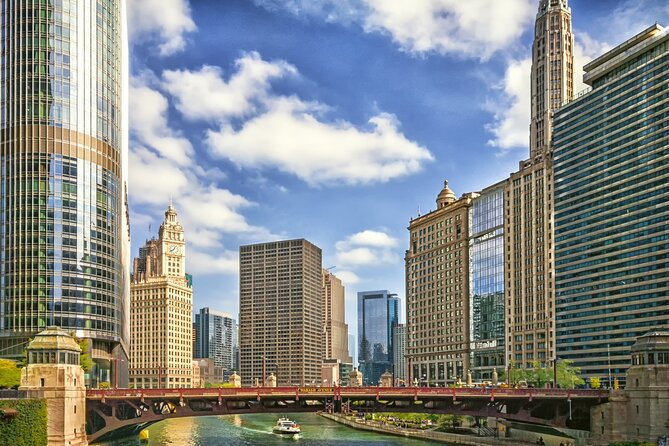
At 325 North LaSalle Drive, the architecture becomes less imposing beside the newer towers. Built in 1914, the building now houses the Encyclopedia Britannica headquarters.
Do not skip it just because it looks smaller. The stop offers a glimpse of the city before glass towers dominated the river corridor. Chicago’s past is easier to understand when you compare a modest early twentieth-century office building with the much taller structures around it.
This is one of the tour’s better habits: it does not reserve attention only for the biggest or most famous buildings. You get reminders that cities are built in layers, and older structures can explain the newer ones.
Merchandise Mart, built on an enormous scale
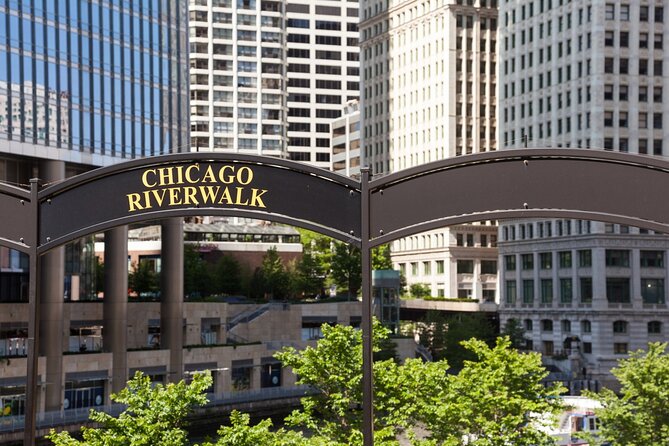
The Merchandise Mart is hard to grasp from a single glance. The Art Deco building covers about four million square feet and is so large that it has its own ZIP code.
That fact gives the stop an immediate hook, but the scale matters more than the novelty. The Mart reflects the power of Chicago as a center for trade, design, and business. Its size was intended to serve commercial activity on a grand scale.
You can take a moment here to compare the building’s broad mass with the slender towers elsewhere on the route. It is a useful contrast between an enormous horizontal building and the vertical city surrounding it.
The McCormick Bridgehouse and Chicago River Museum
The McCormick Bridgehouse and Chicago River Museum is the most direct stop for understanding the river itself. The museum covers the river’s importance to Chicago and includes bird’s-eye views from its top floor.
Admission is not included in the $14.99 tour price, and the experience does not provide attraction tickets or reservations. If the museum is open and you want to go inside, treat it as an optional add-on rather than part of the paid audio route.
This stop can easily take longer than five minutes if you enter. The app gives you the surrounding context, while the museum offers exhibits and a higher viewpoint. Check current entry arrangements separately before building your schedule around it.
Tribune Tower and a contest for beauty
Tribune Tower is one of the route’s most memorable buildings. Its Neo-Gothic design came from a competition held for the Chicago Tribune’s 75th anniversary.
The newspaper wanted its new headquarters to be the most beautiful and distinctive office building in the world. The result is a skyscraper with a strong medieval flavor, an intentional contrast to the more restrained modern towers nearby.
This is a fine stop for photographs, but the story is what makes it useful. A building competition tells you that architecture in Chicago was not treated as a purely practical matter. Civic pride, newspaper influence, and public image all helped shape the skyline.
William P. Fahey Bridge and Chicago’s changing technology
The William P. Fahey Bridge, also known as the Columbus Drive Bridge, is Chicago’s newest river-spanning bridge on this route. Here, the emphasis shifts from the past to newer construction methods and changing ideas about how the city should function.
After seeing older bridges and historic buildings, this stop gives you a modern reference point. It also reinforces one of the tour’s main themes: Chicago is best understood by comparison. Each bridge reflects the era that produced it.
The bridge is not presented as a museum piece. Instead, it shows that the city’s building story is still continuing.
NBC Tower and an Art Deco finale
The NBC Tower closes the route with another polished example of Art Deco design. It was modeled after 30 Rockefeller Center in New York City, giving you a useful comparison between two major American cities.
The building also has a link to television history. It was once the recording location for the Jerry Springer Show and the Steve Harvey Show. Those references add a bit of pop-culture humor after so much architectural detail.
Ending here gives the tour a broad finish. You have seen early twentieth-century offices, immense commercial buildings, memorial space, bridges, modern glass construction, and carefully styled skyscrapers. The final stop leaves you near the River Esplanade, where you can continue exploring on your own.
What $14.99 buys you
At $14.99 per person, the price is reasonable if you want structure without a scheduled group. A conventional guided walk may offer more conversation and local interaction, but this tour gives you unlimited access for a single payment.
The value improves if you use it more than once. You can repeat the route on another Chicago trip, let different companions listen on separate devices, or return to particular stops after learning more about them. Couples may be able to share one tour by splitting headphones, though the stated access arrangement allows the same password on as many devices as travelers booked.
There are no entry tickets or reservations included. That keeps the purchase simple, but you should budget separately if you want to visit the McCormick Bridgehouse and Chicago River Museum or any other attraction along the way.
How the Action Tour Guide app works
After booking, you receive setup instructions and a password by email and text. Search for audio tour in your messages if you do not see them immediately.
Download the separate Action Tour Guide app before you arrive. The tour must be downloaded while you have strong Wi-Fi or cellular service. Once it is on your phone, the route and audio work offline.
At the start point, open the app and choose the tour version with your planned starting point and direction if more than one option appears. Enter the first story point, and the narration begins automatically. As you walk, the next story plays when you reach its location.
Bring headphones or earbuds. Hands-free audio makes it easier to look at buildings, watch your footing, and take pictures. An iPhone running iOS 15 or later, an Android device running version 9 or later, or an iPad or tablet with GPS and cellular capability is recommended.
Keep to the route and suggested walking speed for the smoothest automatic playback. You can pause, skip a stop, explore a side street, or return later, but the location-triggered system works best when you stay reasonably close to the planned path.
Who should choose this Riverwalk tour?
I would recommend it to independent visitors who like architecture, city history, and the freedom to set their own pace. It also works well for people who dislike joining a large group or who want to start early, stop for food, and continue later.
Families and mixed-interest groups may appreciate the ability to skip stories or replay the ones that catch their attention. The private format means only your group participates, but it also means you must manage the technology yourself.
Choose a live guide instead if you want questions answered on the spot, personal recommendations, or a changing route based on weather and group interest. The audio narrator is not named in the supplied information, and no live guide is provided.
The published score is 4.2 from six ratings, with particular praise for the enjoyable walk and its architecture and Chicago history. That matches the tour’s strongest feature: it gives you a useful framework for seeing the river corridor without turning the outing into a rigid schedule.
Should you book it?
Book this tour if you want a low-cost, flexible introduction to Chicago’s Riverwalk and expect to use your own phone comfortably. The lifetime access makes $14.99 especially appealing for repeat visits, and the route covers a broad mix of buildings, bridges, memorials, and river views.
Skip it if you need a person to guide you, if you do not want to arrange app downloads, or if you are looking for admission to the attractions along the way. Download the route before leaving reliable service, bring earbuds, and allow more than two hours if you plan to enter the museum or stop often for photos.
FAQ
How much does the Chicago Riverwalk Self-Guided Walking Tour cost?
The tour costs $14.99 per person. The price includes lifetime access with no expiry.
How long does the walking tour take?
The route takes approximately one to two hours. Stops are listed at about five minutes each, not including walking time, photographs, breaks, or optional attraction visits.
Is this a guided group tour?
No. It is a private, self-guided activity, and no guide meets you at the starting point.
What language is the tour offered in?
The audio tour is offered in English.
Where does the tour start and finish?
It starts at 99 Chicago Riverwalk, Chicago, Illinois 60601, and ends at the River Esplanade in Chicago, Illinois 60611.
Do I need cellular service during the walk?
You need strong Wi-Fi or cellular service to download the tour before starting. After downloading, the app works offline.
How does the audio begin?
Open the Action Tour Guide app at the starting point and enter the first story location. The audio begins automatically, with later stories triggered by your location as you follow the route.
Are attraction tickets included?
No. Attraction passes, entry tickets, and reservations are not included.
Can I cancel for a full refund?
Yes, if you cancel at least 24 hours before the experience start time. Cancellations or changes made within 24 hours are not refunded or accepted.
More Self-Guided Tours in Chicago
- Medieval Torture Museum Ticket with Audio Guide and Ghost Hunting
★ 5.0 · 962 reviews - Eastside Chicago The Heist Exploration Game and Tour
★ 4.0 · 10 reviews - Chicago Self-Guided Audio Tour
★ 4.0 · 9 reviews - Chicago’s Gold Coast Hidden History: A Self-Guided Audio Walk
★ 4.5 · 7 reviews
Just added in Chicago
- Chicago: Architecture and Engineering Marvels Walking Tour★ 5.0 · 3 reviews
- Private Downtown Chicago TV and Movie Sites Guided Walking Tour★ 4.5 · 3 reviews
- Black Heritage Tour★ 5.0 · 3 reviews
- Private SUV Transfer from Chicago Downtown to Midway airport★ 5.0 · 3 reviews
- Private Holiday City Tour★ 5.0 · 3 reviews
- BYOB Chicago River Guided History Tour★ 5.0 · 4 reviews
- Chicago 4-Hour Sightseeing Transfer by Luxury SUV★ 4.5 · 3 reviews
- Chicago, Cloud Gate, Grant Park Full-Day City Tour★ 4.0 · 4 reviews
Chicago River Cruises, compared.
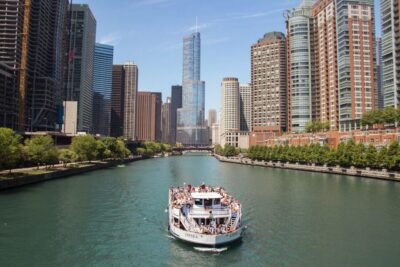
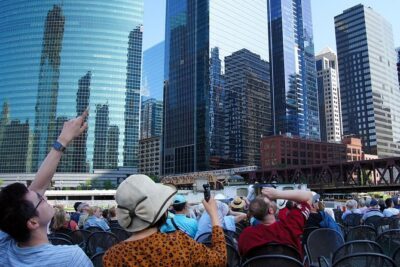
Chicago Architecture Center River Cruise aboard First Lady
Read our review →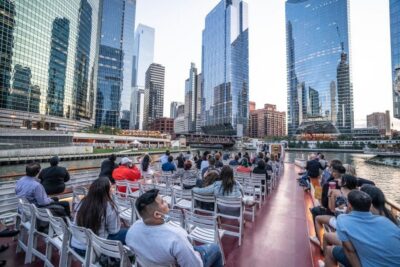
Architecture River Cruise Skip-the-Ticket Line
Read our review →
Chicago River 45-Minute Architecture Tour from Magnificent Mile
Read our review →
45-Minute Family-Friendly Architecture River Cruise
Read our review →Browse the lists this tour appears in