
Reviewed · HISTORICAL TOURS
Chicago’s Gold Coast Hidden History: A Self-Guided Audio Walk
Chicago’s Gold Coast is more than grand houses and polished shops. This self-guided walk links the city’s early public graveyard, the Couch Mausoleum, wood-plank street experiments, a mansion filled with medical oddities, and a piano lounge that has operated since 1929. You finish at Zebra Lounge after tracing how Chicago’s elite and institutions shaped this lakefront neighborhood.
I like the $7.99 price and the freedom to stop whenever you want. I also like the offline GPS maps and lifetime access, which let you revisit the walk or split it around a museum visit. The main drawback is the app: GPS tracking has lost its place for some users, and the tour can take longer than the suggested 50 minutes once you pause at the sights.
In This Review
- Key points to know
- Starting beside Lincoln Park at the Chicago History Museum
- Following the Gold Coast’s older streets and private fortunes
- Entering the International Museum of Surgical Science
- Three Arts Building and a useful break at Restoration Hardware
- Ending at Zebra Lounge on State Parkway
- How the VoiceMap format works in practice
- What $7.99 really buys you
- Who will get the most from this Gold Coast walk
- Should you book Chicago’s Gold Coast Hidden History?
- FAQ
- Where does the tour begin?
- Where does the tour end?
- How long does the walk take?
- What language is offered?
- Is this a guided group tour?
- Is a smartphone included?
- Can I use the maps without mobile data?
- Are museum admission fees included?
- Can I use the tour more than once?
- Is the tour refundable if I cancel?
Key points to know
- Chicago History Museum start: Begin with major city artifacts, including restored dioramas, the South Side Elevated Railroad, and Abraham Lincoln’s deathbed.
- Medical history with a chill factor: The International Museum of Surgical Science occupies a 1917 mansion modeled after the Petit Trianon at Versailles.
- Gold Coast stories: Hear about the Couch Mausoleum, Astor Street’s wood-plank pavement experiment, and the people who built Chicago’s fortunes.
- Flexible format: The VoiceMap app supplies audio, maps, and geodata offline, with lifetime access.
- A memorable finish: The route ends at Zebra Lounge, a vintage piano bar open seven nights a week since 1929.
- Allow extra time: The walk itself is about 50 minutes, but 90 minutes is a better plan if you enter museums or pause at notable buildings.
Starting beside Lincoln Park at the Chicago History Museum

The walk begins at the Chicago History Museum, 1601 North Clark Street. Even if you only use the museum as your starting point, it gives you a useful first look at the city’s transformation from frontier outpost to major American city.
The newly restored dioramas are a good place to get your bearings. They show Chicago’s growth in a compact, visual way, which helps put the Gold Coast in context. You are not simply walking past expensive homes. You are seeing one small neighborhood within a city shaped by railroads, commerce, immigration, fire, and enormous private fortunes.
The museum also displays the South Side Elevated Railroad, the first elevated rapid transit line in Chicago. It once carried fairgoers to the World’s Columbian Exposition, an event that helped announce Chicago as a modern city. The structure gives the tour a concrete link to transportation and urban change, rather than leaving you with only stories about old mansions.
Another unusual sight is Abraham Lincoln’s deathbed. It is a solemn object, and its presence adds weight to the opening stop. You can make the museum a full first visit, but remember that admission is not included in the $7.99 tour price.
The audio walk itself is designed to begin outside and guide you from point to point. The app uses GPS to trigger narration and show your position. Downloading the audio, maps, and geodata before you start is wise, since the offline feature is one of the tour’s best practical tools.
More walking tours in Chicago:
- Chicago: Gangsters and Ghosts Walking Tour
★ 5.0 · 7,155 reviews - Chicago Favorites Ultimate Food and Walking Tour
★ 5.0 · 1,962 reviews - Chicago: Gangsters and Ghosts Guided Walking Tour
★ 4.7 · 1,697 reviews
Following the Gold Coast’s older streets and private fortunes
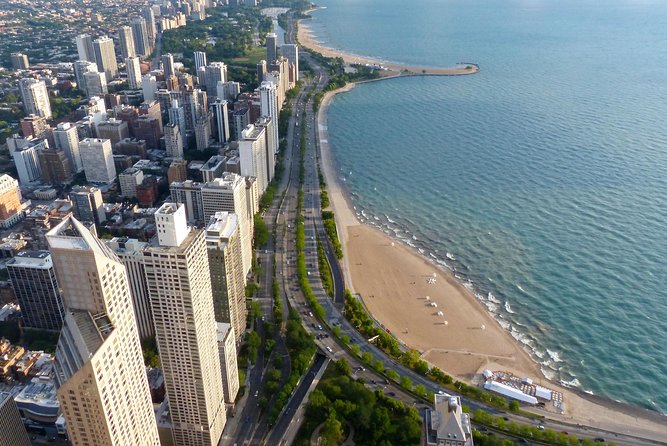
From the museum, the route moves toward the Gold Coast, an area known for historic residences and the people who helped build Chicago in the 19th and 20th centuries. The appeal here is not just architectural. The narration connects buildings and street details with the city’s social and financial history.
One especially unusual subject is Chicago’s former public graveyard and the Couch Mausoleum. The mausoleum survived the Great Chicago Fire, making it a tangible reminder that the city’s older layers were not all erased by the disaster. You get a more personal sense of the past here than you would from a general account of the fire.
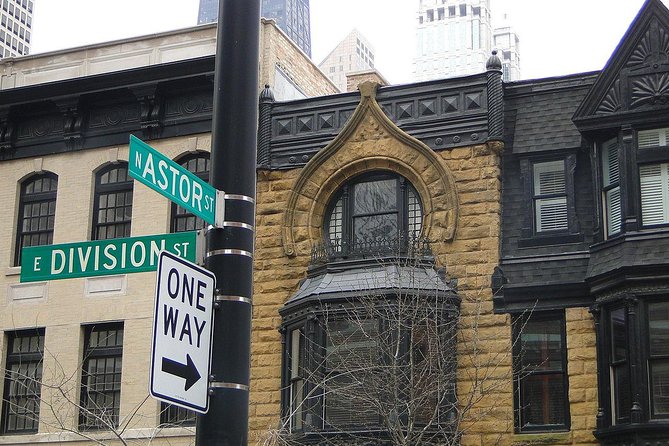
Astor Street adds another practical detail. The tour discusses an experiment involving wood-plank paving, an early attempt to deal with city streets before modern road surfaces became standard. This is the sort of small story I value on a walking tour. It explains how a place functioned, not just who lived in the largest house.
The route also points out the Three Arts Building, a former home for women studying art, music, and drama. The building now relates to the Restoration Hardware store and its Three Arts Cafe. A stop at the cafe can give you a place to sit and look around, though food and drinks are your responsibility.
The Gold Coast portion works best if you keep your eyes up and your pace relaxed. The audio provides the story, while the street gives you the details: old facades, apartment buildings, mansions, and the contrast between historic residences and present-day retail. The tour does not require a large group or a scheduled meeting with a guide, so you can pause for photographs without holding anyone up.
Entering the International Museum of Surgical Science
The International Museum of Surgical Science is the most distinctive stop on the route. It occupies a 1917 mansion designed as a Chicago interpretation of the Petit Trianon at Versailles. That setting alone makes the visit unusual. Inside, the subject turns from architecture to the history of Eastern and Western medicine.
This is not a light museum stop. Exhibits cover surgical and medical practice, and some displays can send a chill up your spine. If you enjoy medical history, the museum may become the main reason to extend the walk. If medical instruments and past surgical methods make you uneasy, you may prefer to listen to the exterior commentary and keep your visit brief.
Admission is not part of the audio tour, so check the museum’s current arrangements before building your day around it. The tour information confirms that the museum was open during at least one recent visit, but opening conditions can change. Treat it as an optional stop rather than a guaranteed part of the included walk.
The museum is also a good example of the tour’s wider appeal. You are not being shown only the most familiar Chicago sights. Instead, the route pairs a respected museum with a neighborhood street, an old mausoleum, a department-store interior, and a piano bar. That mixture gives the walk more character than a simple parade of historic houses.
Three Arts Building and a useful break at Restoration Hardware
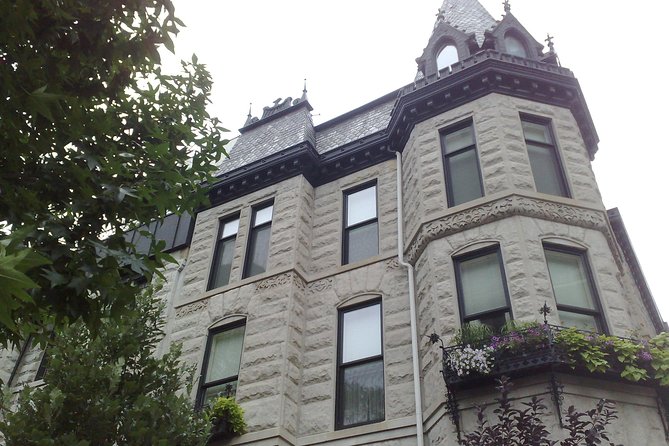
The Three Arts Building gives you another chance to see how old Gold Coast spaces have found new uses. The building is tied to art, music, and drama, while the current Restoration Hardware setting is described as feeling more like a museum than a standard shop.
You can use this stop as a natural break. The Three Arts Cafe offers a place for food or a drink, but those purchases are not included. If you are trying to keep the outing close to $7.99, simply look around the building and continue. If you want to turn the walk into a longer neighborhood afternoon, this is one of the easiest places to add time.
I would not race through this part of the route. The self-guided format makes it easy to pause the narration, study a facade, or step inside a public space. That flexibility is more valuable than a strict 50-minute finish if your goal is to notice the neighborhood rather than just complete the route.
The route’s information also helps you see the Gold Coast as a place where old and new sit side by side. A historic building may now house a retail business. A former social or artistic institution may be encountered through a modern commercial setting. The walk keeps drawing your attention to those changes.
More history walks in Chicago:
- Chicago in a Day: Food, History & Architecture Walking Tour
★ 5.0 · 1,153 reviews - Chicago: Field Museum of Natural History Ticket or VIP Tour
★ 4.7 · 717 reviews - Field Museum of Natural History Admission Tickets
★ 4.5 · 489 reviews - Chicago Walking Tour: Historic Treasures of Chicago
★ 5.0 · 362 reviews
Ending at Zebra Lounge on State Parkway
The final stop is Zebra Lounge, located in the lobby of Canterbury Court Apartments at 1220 North State Parkway. This is a wonderfully specific ending. It is not a grand public monument, but a small, long-running piano lounge in a vintage apartment building.
Zebra Lounge has featured live piano players seven nights a week since 1929. The tour frames it as the sort of place where you can sit beside the piano, order a Lemondrop, and sing along with the piano player into the early hours. Food and drinks are not included, and you should not assume the lounge will be open on the day you go. One recent outing found it closed, with outdoor dining available nearby instead.
That uncertainty is worth planning for. The lounge is an atmospheric finish when operating, but the walk still works if you end outside. You can treat Zebra Lounge as an optional nightcap rather than the only reason to book the tour.
The ending also gives the route a pleasant change of tone. It begins with civic history and Lincoln, passes through medicine and old wealth, and closes with Chicago nightlife. This is a smarter structure than ending at another museum entrance.
How the VoiceMap format works in practice
You need your own smartphone. The tour includes the VoiceMap application, audio, offline maps, and geodata, but not transportation, meals, drinks, museum tickets, or entrance fees.
The audio is narrated by a local historian, although no narrator’s name is provided in the tour details. You are not joining a live guide, so there is no chance to ask questions. In exchange, you do not need to match a group’s pace or arrive for a fixed departure time.
The GPS system is meant to guide you along the route and start the proper commentary as you reach each point. It generally offers the convenience you want from a self-guided walk, but it is not flawless. The tracking has lost its position more than once during the route for some users. When that happens, zoom in on the offline map, retrace your steps if needed, and let the track reconnect.
That small bit of preparation matters. Download everything before leaving a reliable Wi-Fi connection, charge your phone, and keep the map visible when moving through less familiar streets. The tour is advertised as about 50 minutes, but I would allow at least 90 minutes if you plan to visit the museums, look inside buildings, take photographs, or stop for refreshments.
The maximum group size is 10, though the format remains self-guided. Most people can participate, and service animals are allowed. The route is near public transportation, which makes the start and finish easier to reach without arranging a car.
What $7.99 really buys you
At $7.99 per person, this is one of the cheaper ways to get a structured introduction to the Gold Coast. The value comes from the combination of narration, route planning, offline maps, and lifetime access. You can use the tour more than once, pause it, or return to a section you skipped.
The price is especially fair if you already plan to visit the Chicago History Museum or the International Museum of Surgical Science. The audio gives you a route that connects those places with outdoor sights, so the walk can serve as the thread between separate visits.
The price is less attractive if you expect a polished app with perfect GPS performance or a live guide who answers questions. A technical hiccup can interrupt the flow, and museum admission costs extra. Still, the low cost limits the risk, provided you download the tour before setting out.
There is also no refund if you cancel or request a change. Since the experience is non-refundable, check your schedule and confirm that you have a compatible smartphone before purchasing.
Who will get the most from this Gold Coast walk
I would choose this tour if you prefer to explore alone, dislike fixed group schedules, or want historical context without paying for a private guide. It suits a first visit to the Gold Coast, but it also works for anyone who has walked the area before and wants a better reason to look closely at its streets.
It is a good fit for museum fans, architecture lovers, and people who enjoy odd details such as old medical displays, a surviving mausoleum, or a piano bar in an apartment lobby. It also works well for a flexible afternoon because you can pause the audio and add your own stops.
You may want another option if you need a fully guided walk, guaranteed indoor access, or a route with no technical fuss. The experience is offered only in English, and the audio cannot replace conversation with a local guide.
Should you book Chicago’s Gold Coast Hidden History?
Book it if you want a low-cost, independent walk with unusual stops and enough freedom to set your own pace. The strongest parts are the range of subjects, the offline access, and the way the route connects the Chicago History Museum with the surgical museum, Gold Coast streets, Three Arts Building, and Zebra Lounge.
Plan for 90 minutes rather than 50, download the map in advance, and keep museum admission and refreshments outside your budget for the tour itself. If a GPS glitch will frustrate you or you want a guide beside you, skip it. If you like finding the story behind a street, building, or lounge, $7.99 buys a useful and memorable introduction to one of Chicago’s most distinctive neighborhoods.
FAQ
Where does the tour begin?
It begins at the Chicago History Museum, 1601 North Clark Street, Chicago, Illinois 60614.
Where does the tour end?
It ends at Zebra Lounge in Canterbury Court Apartments, 1220 North State Parkway, Chicago, Illinois 60610.
How long does the walk take?
The stated duration is about 50 minutes. Allow about 1.5 hours if you plan to stop at museums, buildings, cafes, or other sights.
What language is offered?
The tour is offered in English.
Is this a guided group tour?
No. It is a self-guided smartphone audio walk using the VoiceMap application.
Is a smartphone included?
No. You must provide your own smartphone.
Can I use the maps without mobile data?
Yes. The tour includes offline access to the audio, maps, and geodata.
Are museum admission fees included?
No. Tickets and entrance fees for museums or other attractions along the route are not included.
Can I use the tour more than once?
Yes. The tour includes lifetime access, so you can use it as often as you like.
Is the tour refundable if I cancel?
No. The experience is non-refundable and cannot be changed for any reason.
More Audio Tours in Chicago
- Chicago’s Storied Neighborhood: An Audio Tour
★ 3.0 · 4 reviews
More Self-Guided Tours in Chicago
- Medieval Torture Museum Ticket with Audio Guide and Ghost Hunting
★ 5.0 · 962 reviews - Eastside Chicago The Heist Exploration Game and Tour
★ 4.0 · 10 reviews - Chicago Self-Guided Audio Tour
★ 4.0 · 9 reviews - Chicago Riverwalk Self-Guided Walking Tour
★ 4.0 · 6 reviews
Just added in Chicago
- Chicago: Architecture and Engineering Marvels Walking Tour★ 5.0 · 3 reviews
- Private Downtown Chicago TV and Movie Sites Guided Walking Tour★ 4.5 · 3 reviews
- Black Heritage Tour★ 5.0 · 3 reviews
- Private SUV Transfer from Chicago Downtown to Midway airport★ 5.0 · 3 reviews
- Private Holiday City Tour★ 5.0 · 3 reviews
- BYOB Chicago River Guided History Tour★ 5.0 · 4 reviews
- Chicago 4-Hour Sightseeing Transfer by Luxury SUV★ 4.5 · 3 reviews
- Chicago, Cloud Gate, Grant Park Full-Day City Tour★ 4.0 · 4 reviews
Historical Tours, compared.
Chicago in a Day: Food, History & Architecture Walking Tour
Read our review →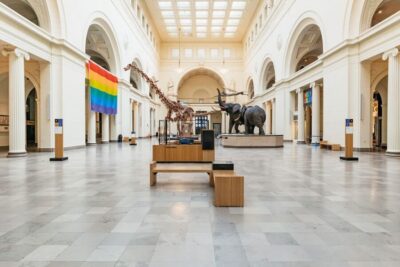
Field Museum of Natural History Ticket or VIP Tour
Read our review →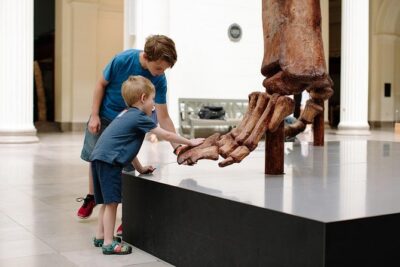
Field Museum of Natural History Admission Tickets
Read our review →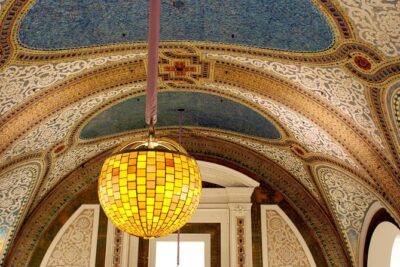
Chicago Walking Tour: Historic Treasures of Chicago
Read our review →
Historical and Architectural Chicago Fireboat River & Lake Cruise
Read our review →
Walkin’ with Colin: Chicago History-Mystery-Comedy-Tragedy Tour
Read our review →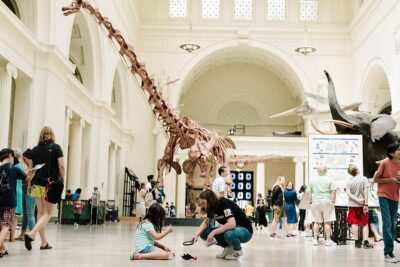
Field Museum of Natural History All-Access Pass
Read our review →
Browse the lists this tour appears in