
Reviewed · SELF-GUIDED TOURS
Chicago Self-Guided Audio Tour
Chicago is unusually well suited to a self-guided tour because its best sights are scattered across several distinct areas. This $6 audio experience connects grand Union Station, Millennium Park, the lakefront, Lincoln Park, and major museums with one simple map and playlist. You choose the order, the pace, and how much of the city you want to cover.
I like the very low price and the freedom to skip costly attractions or enter only the ones that matter to you. I also like the practical delivery: one SoundCloud playlist for the narration and one Google My Maps link for finding the stops. The catch is important: the audio is brief, and some stops may offer only a minute or so of spoken material.
- Fifteen major stops: Cover landmarks from the Field Museum to Navy Pier, with no fixed meeting point.
- Short audio segments: Use the narration as a prompt for exploring, not as a full museum tour.
- Flexible timing: Visit everything in three to nine hours, or spread the stops across as many as six days.
- Three paid attractions: Entry is extra at the Field Museum, Art Institute of Chicago, Richard H. Driehaus Museum, 360 Chicago, Chicago History Museum, and Griffin Museum of Science and Industry.
- Phone-based format: You need headphones, a fully charged smartphone, and internet access.
- Private experience: Only your own group uses the tour, with no live guide or shared departure time.
In This Review
- A $6 Introduction to Chicago’s Big Ideas
- Union Station and Chicago’s Beaux-Arts Beginning
- Museum Campus: Field Museum and Buckingham Fountain
- Art Institute, Millennium Park, and Cloud Gate
- Chicago Cultural Center and the Riverwalk
- Navy Pier and the Lakefront
- A Gilded Age House and a View from 360 Chicago
- Lincoln Park Zoo and the Chicago History Museum
- Newberry Library and the Museum of Science and Industry
- How to Plan the Route Without Rushing
- What the Audio Format Gets Right
- Where Expectations Need Careful Handling
- Is This Chicago Audio Tour Worth $6?
- FAQ
- How much does the Chicago Self-Guided Audio Tour cost?
- How long does the tour take?
- How many attractions are included?
- Is this a live guided tour?
- What language is available?
- What do I need to bring?
- Are attraction entry fees included?
- Can I start and finish anywhere?
A $6 Introduction to Chicago’s Big Ideas
This is best understood as a city orientation tool. It points you toward fifteen places and supplies short narration about why each one matters. You still need to walk between stops, pay admission at selected museums, and decide how long to stay.
The advertised duration is roughly three to nine hours. That range makes sense only if you count sightseeing, walking, meals, museum visits, and pauses. The spoken content itself is much shorter. One disappointed customer found that the audio across all fifteen stops added up to less than thirty minutes, with several segments lasting about a minute.
That criticism is useful. If you want a serious museum audio guide, this product will feel thin. If you want a cheap set of stories to play as you arrive at landmarks, the format is more suitable.
The English narration is presented through SoundCloud. You do not need to create an account. Open the private link in a browser, choose a stop, and play the clip. The map works through Google My Maps, also in a web browser rather than the Google Maps app.
Union Station and Chicago’s Beaux-Arts Beginning

Begin at Union Station if you want a strong architectural opening. The Great Hall gives you soaring ceilings, marble, and a grand skylight that make a daily commute feel like a ceremonial event.
The audio focuses on the station’s Beaux-Arts design, famous film appearances such as The Untouchables and Public Enemies, and its wartime role. It also points to stories about hidden tunnels and notable passengers.
Admission to the station is free. Allow more than the suggested twenty minutes if you want to sit in the Great Hall, watch commuters, and inspect the details. The drawback is distance. Union Station is not beside every other stop, so you will need to use public transportation or plan a long walk.
A few more Chicago tours worth a look before you decide
- Medieval Torture Museum Ticket with Audio Guide and Ghost Hunting
★ 5.0 · 962 reviews - Eastside Chicago The Heist Exploration Game and Tour
★ 4.0 · 10 reviews - Chicago’s Gold Coast Hidden History: A Self-Guided Audio Walk
★ 4.5 · 7 reviews
Museum Campus: Field Museum and Buckingham Fountain
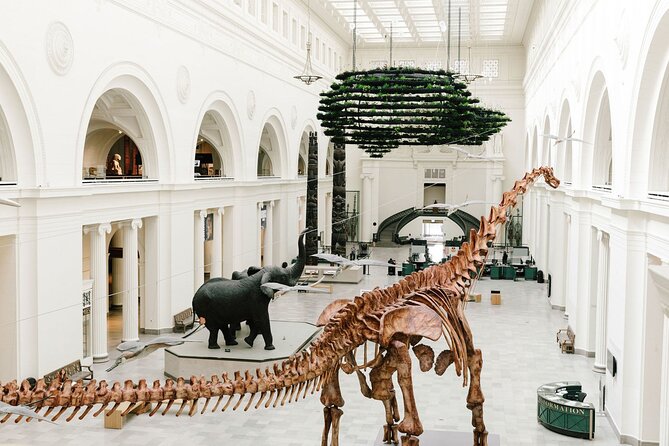
The Field Museum is one of the tour’s major paid stops. Its collections reach far beyond the famous T-Rex, and the narration directs you toward Ancient Americas displays, Egyptian mummies, and research work carried out behind the public galleries.
The audio also connects the museum to the 1893 World’s Columbian Exposition. That context matters because Chicago’s museums grew from the city’s ambition to present itself as a modern cultural center. You will need a separate admission ticket, and twenty minutes is only enough for a quick introduction, not a proper museum visit.
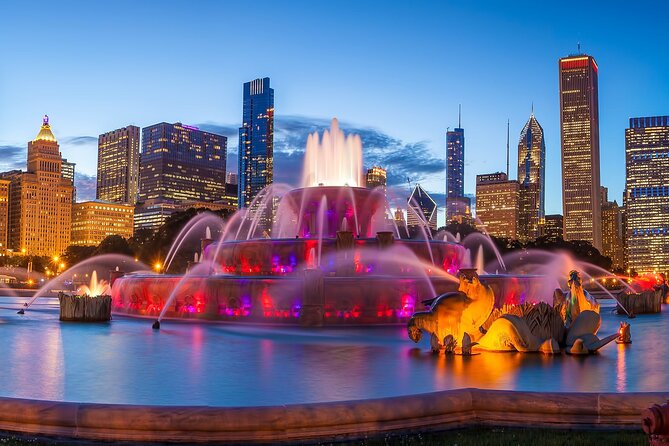
From the Museum Campus, make your way toward Clarence F. Buckingham Fountain in Grant Park. The fountain is free to see, and the audio explains its family connection, Great Lakes symbolism, large-scale engineering, restoration, and nighttime lighting history.
This is a good outdoor pause between indoor attractions. Fountain operations are seasonal, so do not assume the water display will look the same at every time of year. Use the suggested twenty minutes as a minimum, especially if you want photographs or a quiet break.
Art Institute, Millennium Park, and Cloud Gate
The Art Institute of Chicago deserves serious time and a separate entry fee. The audio introduces the museum’s famous works, including Grant Wood’s American Gothic, while tying the collection to Chicago’s industrial growth and wealthy patrons.
I like the way this stop can help you look past the postcard paintings. The story is also about collecting, donors, competition with European institutions, and the decisions that shaped the museum. Still, the brief clip cannot replace gallery interpretation or a full museum guide. Plan your own visit around the art you most want to see.
Next door, Millennium Park offers free outdoor sightseeing with plenty to examine. The narration covers the park’s change from industrial land to a major public space, along with political disputes, engineering challenges, Crown Fountain, the Lurie Garden, and the park’s international artwork.
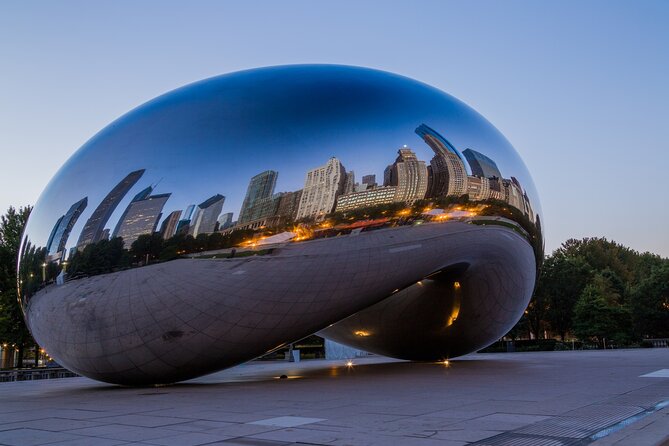
Cloud Gate is the obvious centerpiece. The audio treats the Bean as more than a shiny photo stop, explaining its seamless surface, difficult construction, mathematical qualities, maintenance, and ideas about reflection and shared city life.
The two stops overlap physically, so they are easy to combine. At Cloud Gate, walk around the sculpture rather than taking one quick photograph. Its appearance changes with the weather, crowds, and angle, and the reflections are the main event.
Chicago Cultural Center and the Riverwalk
The Chicago Cultural Center is one of the best free interiors on this route. It was built as the city’s first central library and later became a public cultural center. Its Tiffany glass domes, mosaics, galleries, and performance rooms reward a slower visit.
The narration explains the building’s original purpose, its rescue from demolition, and the craftsmen behind its decorative work. You might find this stop more satisfying than its short audio suggests because the building itself supplies much of the experience.
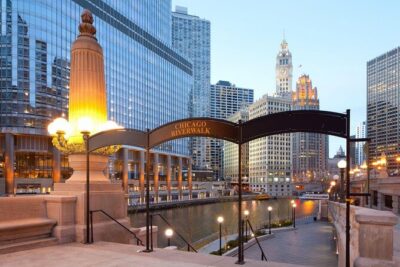
The Chicago Riverwalk shifts the focus from architecture to engineering and urban change. The audio covers the river’s role in Chicago’s founding, the remarkable reversal of its flow, and the city’s effort to reclaim the waterfront for public use.
From river level, you can inspect buildings and infrastructure from a viewpoint that streets often hide. The Riverwalk is free, but its long route can make the overall tour more tiring than the advertised stop times suggest. Treat it as a stroll, not just another item to tick off.
A different way to spend an afternoon in Chicago:
- Chicago Architecture River Cruise
★ 5.0 · 15,756 reviews - Chicago River 90-Minute Architecture Tour
★ 4.5 · 9,629 reviews - Chicago River: 1.5-Hour Guided Architecture Cruise
★ 4.8 · 8,046 reviews - Chicago: Gangsters and Ghosts Walking Tour
★ 5.0 · 7,155 reviews
Navy Pier and the Lakefront
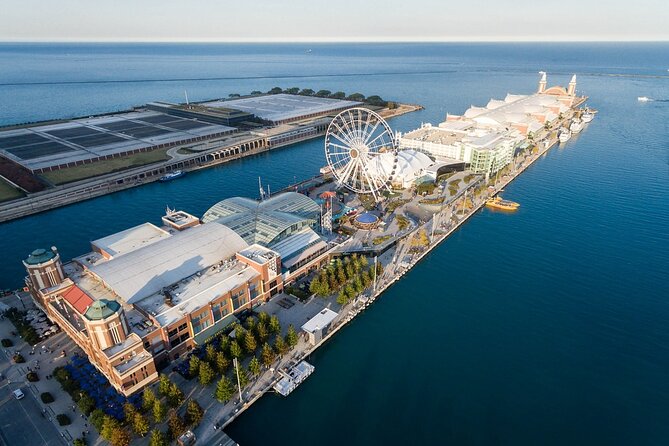
Navy Pier is Chicago’s most entertainment-focused stop. The audio adds useful background by explaining its military training role, near-demolition, rescue, and later conversion into a major lakefront attraction.
You can explore the pier without paying admission, although individual attractions and food cost extra. The tour also touches on engineering beneath the boardwalk, environmental work, and the challenge of balancing local use with heavy tourism.
This stop works well late in the day because you can adjust the length of your visit. If you want a quieter experience, do not treat the pier as a quick twenty-minute stop. Its size and attractions can easily stretch your schedule.
A Gilded Age House and a View from 360 Chicago
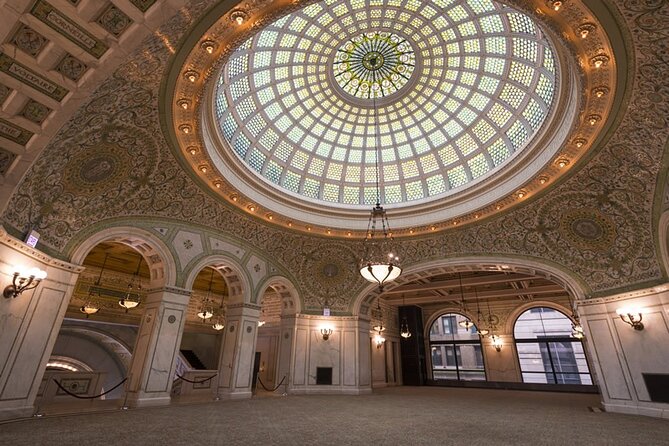
The Richard H. Driehaus Museum offers a very different Chicago. This former mansion presents decorative arts, Tiffany windows, hand-painted ceilings, period furnishings, and the polished world of Gilded Age society.
The audio gives you the house’s family story, restoration work, craftsmanship, and social customs. Admission is extra, and the museum is most useful for people who enjoy interiors and design rather than only famous paintings.
At 360 Chicago, you trade old-world decoration for a high view across the city. The narration explains Chicago’s skyscraper development, architecture, neighborhoods, urban planning, and the forces that continue to shape the skyline.
Entry is extra, and the observation deck needs more time than the audio segment. The value depends on your interest in city views and whether you want to add another admission charge. The narration helps you identify what you see, but weather will affect the payoff.
Lincoln Park Zoo and the Chicago History Museum
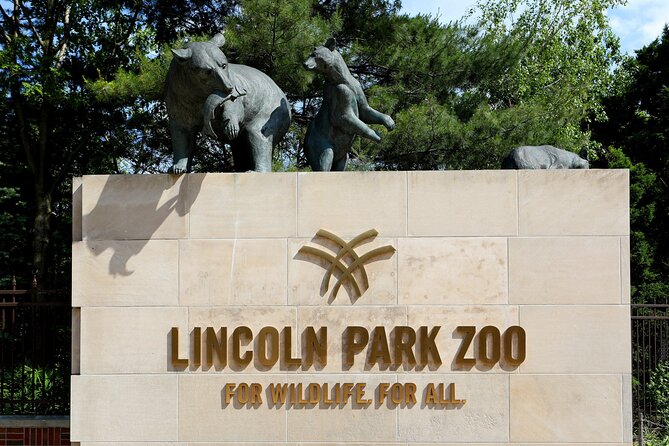
Lincoln Park Zoo is the route’s strongest no-cost family stop. It is presented as America’s last free major zoo, with attention to conservation programs, captive breeding, animal care, habitat design, and research.
You can use the short audio to understand the zoo’s shift from a small collection of animals to a major conservation institution. Then spend your time where your interests lead. Because the zoo is free, it is an easy stop to include even on a budget.
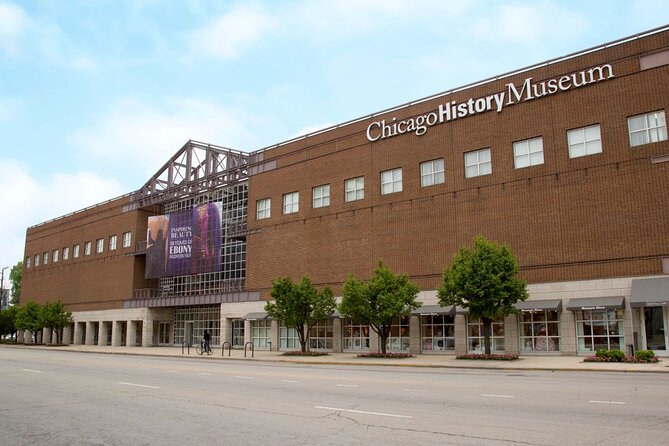
The Chicago History Museum provides a broader account of how Chicago grew from a trading post into a major city. Topics include the Great Fire, the World’s Fair, cultural movements, ordinary residents, and the city’s continuing struggles and achievements.
Admission is extra. This is another place where twenty minutes will not be enough for more than a preview. If local history is your priority, make this a dedicated stop rather than trying to squeeze it between the zoo and downtown.
Newberry Library and the Museum of Science and Industry
The Newberry Library offers a quieter look at Chicago’s intellectual life. Its collections include rare manuscripts, historic maps, and literary material, while the narration explains the institution’s founding and role in research and public programs.
The building and reading rooms are part of the appeal, but remember that this is a research library, not a conventional museum. The free admission makes it an appealing addition for readers, history fans, and anyone interested in rare books.
The Griffin Museum of Science and Industry is one of the tour’s largest commitments. It occupies the last remaining building from the 1893 World’s Columbian Exposition and includes major exhibits such as a captured German U-boat and the Pioneer Zephyr train.
The audio introduces the museum’s origin and its links to Chicago’s industrial and scientific development. Admission is extra, and you should allow several hours if you want to do justice to the hands-on displays. Its location in Hyde Park also makes it a separate outing from the downtown cluster.
How to Plan the Route Without Rushing
You cannot sensibly walk the entire fifteen-stop route in a short morning. The attractions stretch from Union Station and the Loop to Hyde Park, Lincoln Park, and Navy Pier.
A practical plan is to divide the tour into areas:
- Loop and central Chicago: Union Station, Art Institute, Millennium Park, Cloud Gate, Cultural Center, and Riverwalk.
- Grant Park and Museum Campus: Buckingham Fountain and the Field Museum.
- Near North Side: Driehaus Museum, 360 Chicago, Navy Pier, Newberry Library, and Lincoln Park Zoo.
- Hyde Park: Griffin Museum of Science and Industry.
- Lincoln Park area: Chicago History Museum and Lincoln Park Zoo.
You can follow the suggested order or create your own. The map uses headphone icons for the attractions, and each location links to its matching audio clip. The links remain active for up to six days, so splitting the route is not just allowed, it is the sensible choice.
Public transportation is nearby, but transportation is not included. You arrange your own travel between areas. That keeps the price low, but you must take responsibility for timing and route planning.
What the Audio Format Gets Right
The strongest feature is control. You are not tied to a meeting point, departure time, or group pace. You can stop for lunch, enter a museum, skip an attraction, or return another day.
The second strength is the focus of the stories. The material includes architecture, engineering, art collecting, conservation, wartime use, public funding, and urban renewal. These subjects give you useful questions to consider while you look around.
The narration is also described as clear and loud enough to follow. That matters when you are walking outdoors or sharing the experience with a small group. You should still bring your own headphones because earphones, audio devices, food, drinks, and internet service are not supplied.
Where Expectations Need Careful Handling
Do not buy this expecting a live guide. There is no person walking with you, answering questions, changing the route, or pointing out a detail in real time.
Do not buy it expecting hours of spoken material. Several clips may be very short, and the total audio can be under thirty minutes. The tour’s real content comes from combining those prompts with your own time at the attractions.
There is also no admission bundled into the $6 price. The Field Museum, Art Institute, Driehaus Museum, 360 Chicago, Chicago History Museum, and Griffin Museum of Science and Industry require separate tickets. The free stops make the base price attractive, but a full museum-heavy day will cost much more.
Access is provided on your selected date through private links sent before your start time. Check both links in advance. Use a browser for Google My Maps, not the Google Maps app, and make sure your phone is charged before setting out.
Is This Chicago Audio Tour Worth $6?
I would book this if you want a cheap introduction, like making your own route, and already plan to spend time at Chicago’s major sights. It is especially useful for couples, families, and small private groups who dislike fixed tours.
I would skip it if you want detailed museum commentary, a personal guide, or a tightly narrated walking tour. For the best value, use the audio to choose priorities, visit the free outdoor and architectural stops, and treat paid museums as separate experiences.
At $6, the risk is small, but your expectations must be modest. Think of it as a flexible audio companion and city checklist, not a full guided tour.
FAQ
How much does the Chicago Self-Guided Audio Tour cost?
The listed price is $6 per person.
How long does the tour take?
The experience is described as lasting approximately three to nine hours. You can also split it across multiple days, with the private links valid for up to six days.
How many attractions are included?
The audio playlist and itinerary map cover 15 Chicago attractions.
Is this a live guided tour?
No. It is a private, self-guided activity with audio links and an interactive map. There is no live guide, fixed meeting time, or required route.
What language is available?
The tour is offered in English.
What do I need to bring?
Bring headphones or earphones, a fully charged smartphone, and internet access.
Are attraction entry fees included?
No. Admission is not included wherever a fee is required. Transportation, food, drinks, audio devices, headphones, and internet service are also excluded.
Can I start and finish anywhere?
Yes. Since this is self-guided, you choose your starting point, ending point, order of stops, and schedule.
Just added in Chicago
- Chicago: Architecture and Engineering Marvels Walking Tour★ 5.0 · 3 reviews
- Private Downtown Chicago TV and Movie Sites Guided Walking Tour★ 4.5 · 3 reviews
- Black Heritage Tour★ 5.0 · 3 reviews
- Private SUV Transfer from Chicago Downtown to Midway airport★ 5.0 · 3 reviews
- Private Holiday City Tour★ 5.0 · 3 reviews
- BYOB Chicago River Guided History Tour★ 5.0 · 4 reviews
- Chicago 4-Hour Sightseeing Transfer by Luxury SUV★ 4.5 · 3 reviews
- Chicago, Cloud Gate, Grant Park Full-Day City Tour★ 4.0 · 4 reviews
Self-Guided Tours, compared.
Eastside Chicago The Heist Exploration Game and Tour
Read our review →
Chicago’s Gold Coast Hidden History: A Self-Guided Audio Walk
Read our review →


Browse the lists this tour appears in