
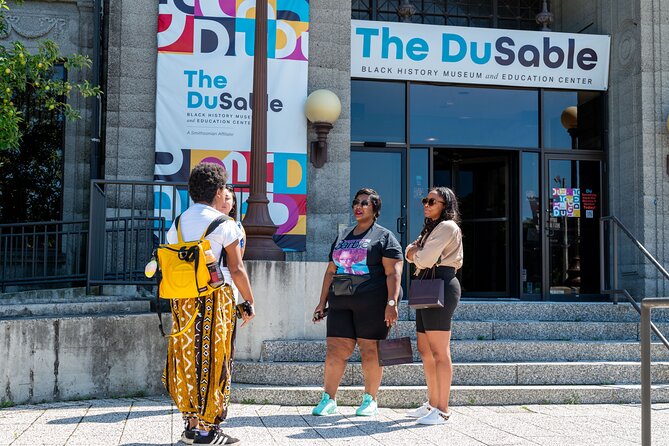
Reviewed · HISTORICAL TOURS
Explore Black History on the Southside of Chicago
Chicago’s South Side tells its story through homes, parks, murals, churches, libraries, and the people who fought to shape the city. This walking tour connects those places with the personal perspective of Gillian, a fifth-generation South Sider, taking you from the DuSable Museum through Bronzeville and Kenwood.
I like the $5 price, which makes this an easy way to add local context to a Chicago trip. I also like the focus on people such as Barack Obama, Muhammad Ali, Dr. Martin Luther King Jr., and Rev. Jesse Jackson, rather than only pointing out buildings.
The main consideration is the pace and distance. You’ll walk for about 2 to 3 hours, with a moderate fitness level needed, and a group can include as many as 50 people. The DuSable Museum is only the meeting point, so museum admission costs extra.
In This Review
- Key details before you book
- Why this South Side walk matters
- Starting at the DuSable Museum
- Washington Park and the first layer of history
- Kenwood and Barack Obama’s Chicago home
- Operation Rainbow PUSH and Dr. King’s Chicago work
- Muhammad Ali’s former Chicago home
- Murals, street art, and the spaces between stops
- Ending at the Blackstone Library
- What the price really offers
- Timing, weather, and what to bring
- Who will get the most from this walk
- Should you book Explore Black History on the Southside of Chicago?
- FAQ
- Where does the tour begin?
- Where does the tour end?
- Is admission to the DuSable Museum included?
- How long does the tour last?
- Who leads the tour?
- Is the tour suitable for people with limited mobility?
- Can I cancel for a refund?
Key details before you book
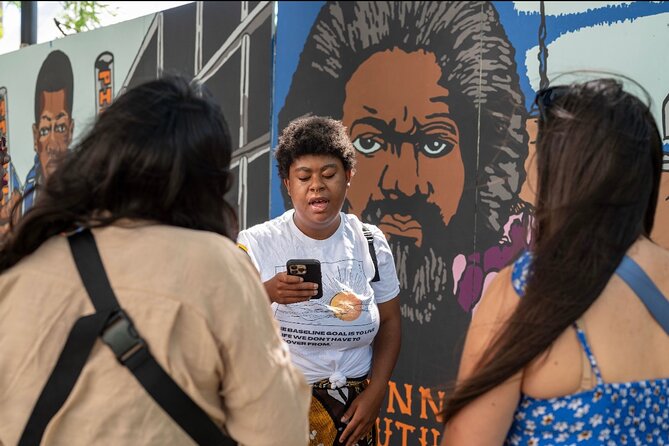
- Meet a fifth-generation South Sider: Gillian brings a personal connection to the neighborhoods and invites you to come with questions.
- See major Black history landmarks: The route includes Obama’s Chicago home, Muhammad Ali’s former home, Operation Rainbow PUSH headquarters, and the DuSable Museum.
- Walk through Bronzeville and Kenwood: You’ll see grand early twentieth-century homes, public spaces, murals, and architectural landmarks.
- The DuSable Museum is not included: You meet outside the museum, but you can arrive early and visit on your own.
- Expect a 2.5-hour outdoor experience: Wear comfortable shoes, bring your phone or camera, and keep the weather in mind.
- Pay only $5 per person: The low price offers strong value, especially if you want local interpretation without paying for a long museum program.
Why this South Side walk matters
Chicago’s Black history is not confined to one gallery or monument. It is written into Bronzeville’s streets and Kenwood’s houses, into public institutions and places tied to major civil rights campaigns.
That is what makes this route useful. You are not simply moving from one photo stop to another. You are seeing how culture, politics, faith, education, music, sport, and neighborhood life connect across the South Side.
The tour begins at the DuSable Black History Museum and Education Center, named for Jean Baptiste Point du Sable, the first non-native person to settle in Chicago. The museum has long focused on preserving and documenting Black history and culture in the city and beyond.
You do not enter the museum as part of the walk. I would arrive early if your schedule allows, because the museum can give you a useful foundation before Gillian connects that broader story to specific South Side places.
At $5, the tour is priced more like a neighborhood introduction than a full museum program. That is a major strength. You can pair it with your own museum visit and still spend very little on a guided experience.
More history walks in Chicago:
- Chicago in a Day: Food, History & Architecture Walking Tour
★ 5.0 · 1,153 reviews - Chicago: Field Museum of Natural History Ticket or VIP Tour
★ 4.7 · 717 reviews - Field Museum of Natural History Admission Tickets
★ 4.5 · 489 reviews
Starting at the DuSable Museum
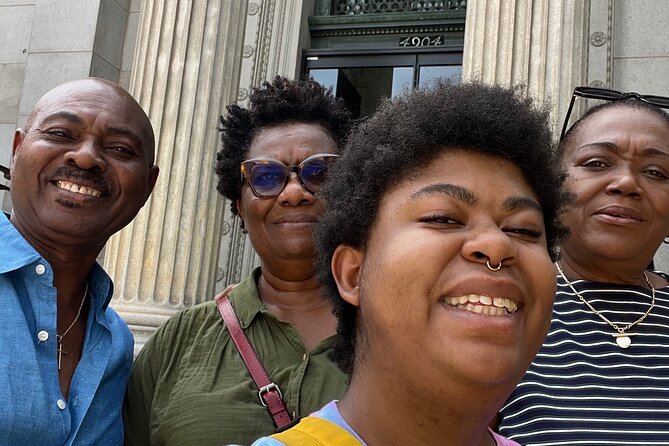
The meeting point is outside the DuSable Museum at 740 E 56th Pl. This is a practical start because the museum immediately places the tour within the story it explores.
The first portion lasts about 20 minutes. Gillian introduces the museum and its importance, then sets up the walk through the surrounding area.
If you want to visit the museum before the group meets, plan for a separate admission and enough extra time. The tour does not include an indoor museum visit, so do not arrive expecting to spend the first part of the experience inside.
This opening should suit you if you like a tour that begins with context instead of rushing straight to a famous address. It also gives you a chance to ask questions at the start. Gillian specifically encourages questions and offers what she knows from her connection to the South Side.
Washington Park and the first layer of history
Washington Park is the next major stop. The park sits in front of the museum and includes statues and sculptures, along with a story that reaches back to the 1800s.
The stop lasts around 20 minutes and is free. You’ll have space to look around and consider how public parks can serve many roles: recreation, gathering place, civic setting, and part of a neighborhood’s long memory.
This is also a gentler beginning to the walking route. You are outdoors from the start, so the park gives the group room to spread out before the route reaches private homes and more concentrated historic sites.
Do not expect a long formal garden tour or a visit to a paid attraction here. Washington Park is valuable because it helps you see the setting around the museum and understand that the South Side story is tied to public spaces as much as individual figures.
Bring a camera or phone. The tour specifically encourages photography, and the park’s sculptures and open views give you an early chance to take pictures without the crowding you might find at a more famous downtown sight.
Kenwood and Barack Obama’s Chicago home
One of the most recognizable stops is Barack Obama’s Chicago home in Kenwood. The group stops outside for photographs and discussion of Obama’s historic election as the nation’s first Black president.
The stop takes about 25 minutes. That is enough time for the address to serve as more than a quick picture. Gillian can place the home within Obama’s Chicago years and explain why this part of the city mattered to his public life.
The neighborhood itself is a strong part of the stop. Kenwood is known for grand brown and gray stone homes that have been preserved for more than a century. The architecture gives you a different view of the South Side, one that may surprise anyone who arrives with a narrow picture of Chicago.
I like that the tour pairs a modern political landmark with older residential architecture. You get both the personal story of a president and the larger story of a neighborhood that has kept its visual character over many decades.
Keep in mind that this is an exterior stop. The experience does not include entry into Obama’s home, and you should treat the area as a residential neighborhood. Expect to take pictures from the public area and listen to the discussion rather than tour the property itself.
A different way to spend an afternoon in Chicago:
- Chicago Architecture River Cruise
★ 5.0 · 15,756 reviews - Chicago River 90-Minute Architecture Tour
★ 4.5 · 9,629 reviews - Chicago River: 1.5-Hour Guided Architecture Cruise
★ 4.8 · 8,046 reviews - Chicago: Gangsters and Ghosts Walking Tour
★ 5.0 · 7,155 reviews
Operation Rainbow PUSH and Dr. King’s Chicago work
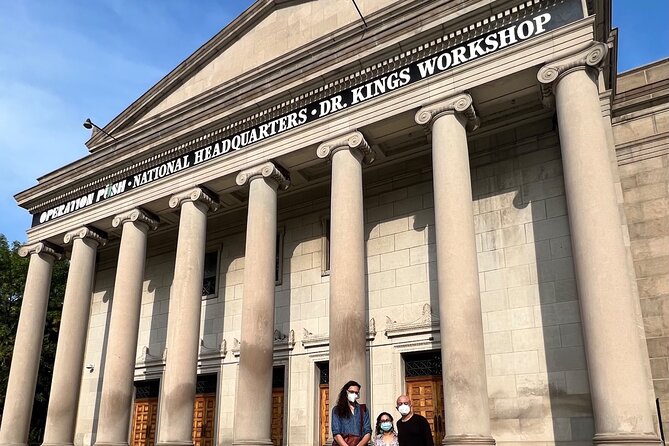
At 930 E 50th St, the tour visits the Operation Rainbow PUSH National Headquarters. The organization was founded by Rev. Jesse Jackson and is known for civil rights activism and advocacy dating from the 1960s to the present.
The stop lasts about 20 minutes and costs nothing to visit from the outside. It adds political weight to the route. After seeing Obama’s home, you move into a place tied more directly to organized civil rights work and public action.
The site is also connected with Dr. Martin Luther King Jr.’s Chicago efforts. It is identified as Dr. King’s workshop, linking the address to the work that helped shape the city’s civil rights movement.
This stop will appeal to you if you want the tour to explain how national events grew from local organizing. It is not just a name on a sign. It represents campaigns, advocacy, and a continuing effort to influence public life.
You should keep your expectations practical. The stop is listed as a 20-minute visit, not an indoor headquarters tour. The value comes from Gillian’s explanation and the chance to see the place in its neighborhood setting.
Muhammad Ali’s former Chicago home
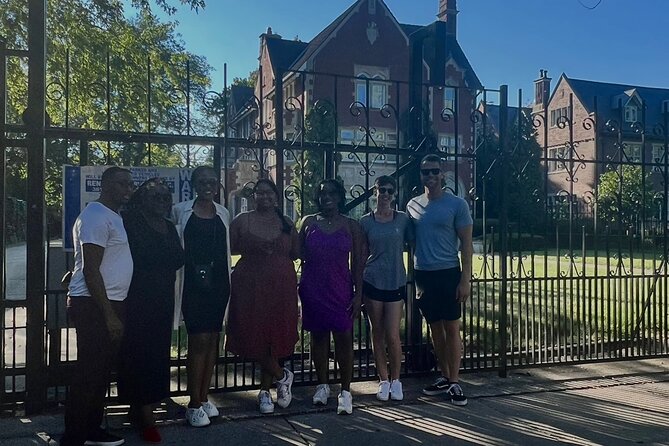
The stop at 4944 S Woodlawn Ave brings a different kind of story. Muhammad Ali once owned the home and bought it in Chicago to be closer to his spiritual mentor, Elijah Muhammad, after Ali refused military service on religious grounds.
That detail gives the address real importance. Ali’s story is often told through boxing, but this stop connects his public career with faith, conscience, and the choices that shaped his life outside the ring.
The visit lasts around 20 minutes. You can take in the house from the outside and hear why Ali’s time in Chicago mattered. The address also adds a personal scale to a major historical figure. A former home can say something about relationships, decisions, and daily life that a sports biography often leaves out.
This is another residential stop, so photography should be respectful and limited to what can be seen from a public place. The experience does not promise entry inside the property.
I find this one of the more distinctive parts of the route because it links Black history, religion, sports, and political conviction in one place. If you are mainly interested in boxing, you will get a meaningful Ali connection. If you care more about civil rights and faith, the stop still fits the wider story.
Murals, street art, and the spaces between stops
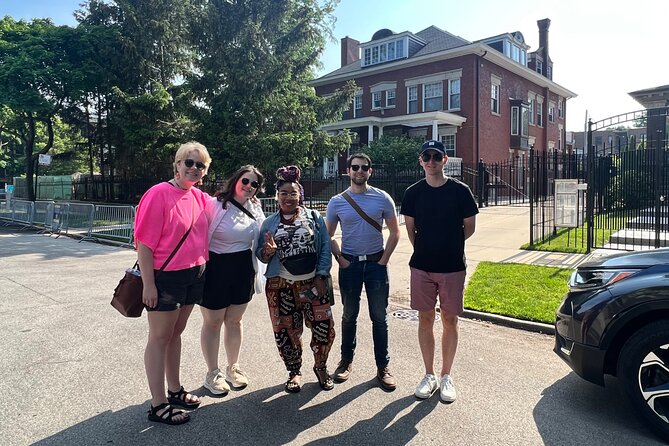
Local murals and street art are included among the tour’s highlights. They help connect the historic figures to the South Side as it exists now.
The supplied details do not identify specific mural names or exact addresses, so you should not expect a fixed list of artworks. Instead, think of the art as part of the walking experience, something you may see along the route while moving between the main stops.
That is a useful feature for anyone who wants more than polished landmarks. Public art can show how a neighborhood remembers its leaders, expresses pride, and speaks to present concerns.
Keep your phone or camera ready. The tour encourages photos, and street art is often best enjoyed in the moment rather than treated like a formal museum exhibit.
Ending at the Blackstone Library
The final destination is the Blackstone Branch of the Chicago Public Library. It is described as Chicago’s oldest public library branch and is known for Greco-Roman architecture.
After several stops tied to political leaders and civil rights figures, the library gives the tour a quieter finish. It points to education and public access, two subjects that belong in any account of community development.
The building’s architecture also makes a good final photo stop. You end with a civic structure rather than another private residence, and the change in setting helps round out the walk.
The tour ends at a different location from where it begins. That matters when planning your day. You will need to arrange your next stop from the Blackstone Library rather than returning automatically to the DuSable Museum.
The final stop lasts about 20 minutes. Admission is free, and there is no separate ticket requirement listed for the visit.
What the price really offers
At $5 per person, this is an unusually inexpensive guided walk. Even if you visit the DuSable Museum separately, the combined cost can remain modest compared with many Chicago sightseeing tours.
The low price does mean you should judge the experience by what it promises. You are paying for a local guide, a planned route, historical interpretation, and access to a set of outdoor landmarks. You are not paying for museum admission, private-home access, transportation, meals, or a polished indoor presentation.
Drinks are mentioned among the tour highlights, but the supplied details do not explain what is provided, where it happens, or whether it is included in the $5 price. I would confirm that point before booking if it matters to you.
The price is especially good for a first-time South Side visit, a student, a budget-conscious couple, or anyone who wants a short introduction before exploring on their own. A group of up to 50 people is allowed, so the price may come with a larger gathering. If you prefer a quiet, highly personal walk, that is the main point to consider.
Timing, weather, and what to bring
The walk lasts about 2 to 3 hours, with the listed stops adding up to roughly 125 minutes. The extra time accounts for movement between locations, discussion, and the practical pace of a neighborhood walk.
You need a moderate level of physical fitness. Comfortable walking shoes are more important than dressy clothes, and you should be prepared to spend the experience outdoors.
The tour requires good weather. If poor weather forces a cancellation, you are offered another date or a full refund. The same applies if the minimum number of participants is not reached.
A mobile ticket is provided, which keeps the booking simple. Confirmation is sent within 48 hours, subject to availability. The experience is near public transportation, but no specific route or parking arrangement is supplied, so check your own connection to the starting point before the day of the tour.
Bring:
- A phone or camera for photos
- Comfortable shoes
- Questions about Chicago’s Black history
- Weather-appropriate clothing
- Enough time to reach the DuSable Museum before the start
You can cancel for a full refund up to 24 hours before the start time. Changes or cancellations within 24 hours are not accepted for a refund.
Who will get the most from this walk
I would choose this tour if you want personal local context and major South Side landmarks without spending much. It suits first-time visitors who want to get beyond downtown, as well as Chicago residents who want a guided introduction to Bronzeville and Kenwood.
It is a good match for people interested in:
- Black American history
- Civil rights and activism
- Barack Obama’s Chicago years
- Muhammad Ali and Elijah Muhammad
- Architecture and historic homes
- Public art
- Libraries, museums, and civic institutions
Families may also find the route useful because it gives children recognizable names and places to connect with larger subjects. The walking time and outdoor format may be less suitable for anyone who has trouble walking for several hours.
You should also consider your preferred group size. The maximum is 50 people, which is fairly large for a walking tour. Ask questions early and stay close enough to hear Gillian clearly if the group is full.
Should you book Explore Black History on the Southside of Chicago?
Book it if you want an affordable, outdoor introduction led by someone with deep family ties to the area. The strongest parts are the personal guide perspective, the mix of famous figures and neighborhood architecture, and the chance to see places that are easy to miss on a standard downtown itinerary.
I would pair it with a separate visit to the DuSable Museum, arriving early if possible. That combination gives you both an indoor collection and a street-level look at the people and places connected to Chicago’s Black history.
Skip it if you need a small private group, indoor attractions, or guaranteed access inside historic homes and institutions. For $5, though, the tour offers a practical way to put names, addresses, and neighborhoods together. Bring good shoes, charge your phone, and come ready with questions.
FAQ
Where does the tour begin?
The tour begins in front of the DuSable Black History Museum and Education Center at 740 E 56th Pl, Chicago, Illinois 60637.
Where does the tour end?
The tour ends at a different location from the starting point, at the Blackstone Branch of the Chicago Public Library.
Is admission to the DuSable Museum included?
No. The tour starts outside the museum and does not include admission. You are encouraged to visit the museum separately before the walk.
How long does the tour last?
The tour lasts approximately 2 to 3 hours, with the overall walking experience described as about 2.5 hours.
Who leads the tour?
The experience is provided by Gillian, a fifth-generation South Sider.
Is the tour suitable for people with limited mobility?
The tour requires a moderate level of physical fitness and involves walking for about 2 to 3 hours. Service animals are allowed.
Can I cancel for a refund?
Yes. You can cancel at least 24 hours before the start time for a full refund. Cancellations or changes made less than 24 hours before the start time are not refunded or accepted.
Just added in Chicago
- Chicago: Architecture and Engineering Marvels Walking Tour★ 5.0 · 3 reviews
- Private Downtown Chicago TV and Movie Sites Guided Walking Tour★ 4.5 · 3 reviews
- Black Heritage Tour★ 5.0 · 3 reviews
- Private SUV Transfer from Chicago Downtown to Midway airport★ 5.0 · 3 reviews
- Private Holiday City Tour★ 5.0 · 3 reviews
- BYOB Chicago River Guided History Tour★ 5.0 · 4 reviews
- Chicago 4-Hour Sightseeing Transfer by Luxury SUV★ 4.5 · 3 reviews
- Chicago, Cloud Gate, Grant Park Full-Day City Tour★ 4.0 · 4 reviews
Historical Tours, compared.
Chicago in a Day: Food, History & Architecture Walking Tour
Read our review →
Field Museum of Natural History Ticket or VIP Tour
Read our review →
Field Museum of Natural History Admission Tickets
Read our review →
Chicago Walking Tour: Historic Treasures of Chicago
Read our review →
Historical and Architectural Chicago Fireboat River & Lake Cruise
Read our review →
Walkin’ with Colin: Chicago History-Mystery-Comedy-Tragedy Tour
Read our review →
Field Museum of Natural History All-Access Pass
Read our review →
Browse the lists this tour appears in