
Reviewed · HISTORICAL TOURS
Explore the Historic Old Post Office in Chicago
Chicago’s Old Post Office is far more than a handsome old building. The 3.5-acre rooftop meadow is the surprise here, turning a vast mail-processing building into a modern workplace with open-air space above the city. Inside, the grand lobby and carefully saved details show how a neglected landmark can work again without losing its character.
I like the way the tour connects architecture with Chicago’s mail system, rather than treating the building as a pretty shell. I also like the small details, including the vent covers, old maps, photographs, zig-zag wall, and postcard wall. The main drawback is practical: photography is not allowed, and the building remains an active commercial office space, so management can change the route without notice.
In This Review
- Key points
- Chicago’s Old Post Office Gets a Second Life
- The Main Lobby Sets the Tone
- Maps, Photographs, and Chicago Mail
- The Zig-Zag Wall and Postcard Wall
- The Rooftop Meadow Is the Big Surprise
- What Adaptive Reuse Means in Real Terms
- Ninety Minutes and a Group of 21
- Photography Rules and Other Practical Limits
- Is the $15 Price a Good Value?
- Who Will Enjoy This Tour Most?
- Should You Book the Old Post Office Tour?
- FAQ
- Where does the Old Post Office tour begin?
- What time does the tour start?
- How long does the experience last?
- What will I see during the tour?
- Is photography allowed?
- Can I cancel for a refund?
Key points
- A 1934 post office with a new purpose: See how a 2.8 million-square-foot building became modern office and event space.
- The rooftop meadow: Visit a 3.5-acre urban rooftop park, one of the tour’s most unexpected highlights.
- Historic details up close: Look for the main lobby, zig-zag wall, postcard wall, vent covers, and saved architectural features.
- A small, guided experience: The group is limited to 21 people and led by a certified Chicago Architecture Center docent.
- A useful lesson in adaptive reuse: Learn why reusing old buildings can preserve character while meeting current needs.
- Simple downtown access: Meet at 433 W Van Buren Street at 11 a.m., near public transportation.
Chicago’s Old Post Office Gets a Second Life
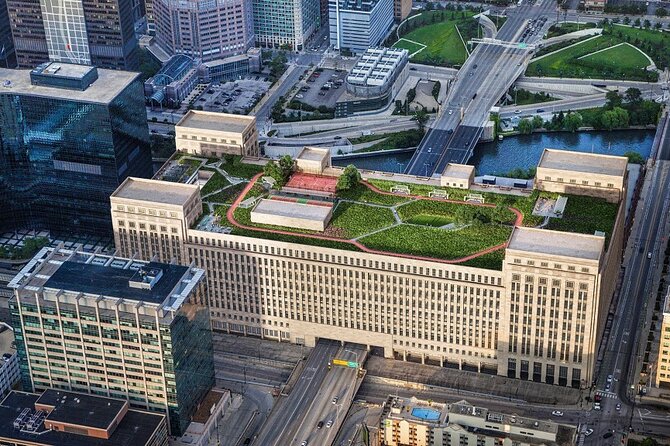
The Old Post Office occupies a huge stretch of Van Buren Street, just southwest of Chicago’s Loop. Completed in 1934, the building covers roughly 2.8 million square feet. For nearly two decades, it sat vacant, leaving its grand interiors at risk of fading away.
The building now serves as modern office and event space. That change is the heart of the experience. You are not simply walking through a preserved monument. You are seeing an old civic building adapted for present-day work, with its scale, structure, and decorative details still visible.
I find that idea more interesting than a standard look-but-don’t-touch historic tour. The building had to function again. That meant adding the practical features expected in a modern Class A office building while keeping enough of the original fabric to make the place recognizable.
Your docent explains how that balance was handled. You learn what adaptive reuse means, why it matters, and why saving an old building sometimes requires changing how it is used. The lesson is especially clear here because the Old Post Office was not a small structure with a simple new tenant. It was a massive building that needed a new role.
More history walks in Chicago:
- Chicago in a Day: Food, History & Architecture Walking Tour
★ 5.0 · 1,153 reviews - Chicago: Field Museum of Natural History Ticket or VIP Tour
★ 4.7 · 717 reviews - Field Museum of Natural History Admission Tickets
★ 4.5 · 489 reviews
The Main Lobby Sets the Tone
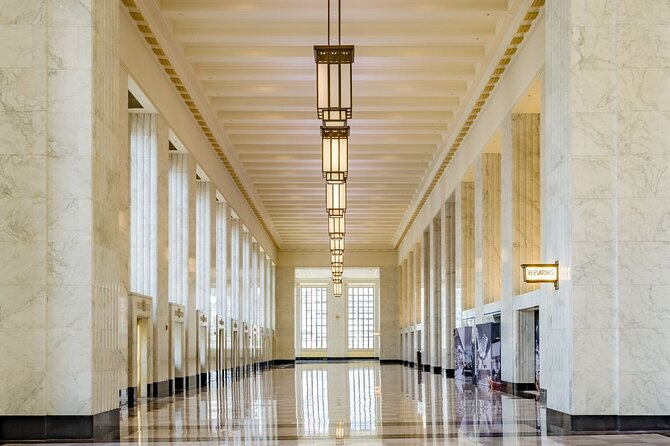
The tour begins inside the Old Post Office at 433 W Van Buren Street. The main lobby is the first major stop, and it gives you a quick sense of the building’s size and ambition.
This is the part I would not rush. The lobby’s scale and ornament are hard to appreciate from a description alone. You can look upward, across the walls, and at the details around you while the docent explains what the space was built to do. One past guide noted for this tour, Alice, has been praised for explaining the building’s origin, changing purpose, architecture, and restoration in a clear, engaging way.
The lobby also shows why a building like this matters to Chicago’s architectural story. It was designed to handle the work of a major postal operation, not just to impress people entering through the front doors. Its size reflects the importance of mail in the early 20th century, when letters and parcels were central to business and daily life.
The tour gives you time to connect the decoration with the building’s original job. That is a useful difference from simply admiring an ornate interior. You begin to see the lobby as part of a working system.
Maps, Photographs, and Chicago Mail
The history becomes easier to follow when the docent brings out visual material. Maps and old photographs have been used on the tour to show how the building fit into Chicago and how its postal operations changed over time.
I like this approach because the Old Post Office is so large that dates and facts alone could blur together. A map gives you a sense of the building’s place in the city. A photograph helps you compare the earlier interior or exterior with what you see today.
The story also reaches beyond the building itself. You learn about Chicago’s mail system and the role the post office played in the city. That context gives the architecture a purpose. The walls were not decorated in isolation, and the vast rooms were not empty halls. They supported a major public service.
The docent is a major part of the experience. Guides named Alice, Lorie, and John have led tours described as clear, informed, and personable. Your assigned guide may be different, but the format depends on a live Chicago Architecture Center docent who can point out details and answer questions as the group moves through the building.
The Zig-Zag Wall and Postcard Wall
Two named features help break up the tour and give you specific things to look for: the zig-zag wall and the postcard wall.
The zig-zag wall is a good example of how a strong architectural idea can become a visual marker within a very large building. Your docent explains its role and design, giving you something concrete to examine rather than asking you to absorb the building as one enormous space.
The postcard wall adds another layer to the building’s public identity. The Old Post Office was connected to communication, movement, and the flow of information. A feature built around postcards fits naturally into that story and helps link the building’s former purpose with its visual design.
Small details matter here. One tour guide drew special attention to the vent covers, which can be easy to ignore in a building this large. I recommend looking at the functional pieces as carefully as the decorative ones. They show how much thought went into areas that most people would normally pass without a glance.
A different way to spend an afternoon in Chicago:
- Chicago Architecture River Cruise
★ 5.0 · 15,756 reviews - Chicago River 90-Minute Architecture Tour
★ 4.5 · 9,629 reviews - Chicago River: 1.5-Hour Guided Architecture Cruise
★ 4.8 · 8,046 reviews - Chicago: Gangsters and Ghosts Walking Tour
★ 5.0 · 7,155 reviews
The Rooftop Meadow Is the Big Surprise
The roof is the tour’s most unexpected stop. A 3.5-acre urban rooftop park, known as the meadow, now sits above the building.
That change is striking because the Old Post Office was built as a giant piece of postal infrastructure. The roof once represented the top of a massive working building. Now it offers planted open space in the middle of Chicago, while the offices below continue to function.
The meadow also makes the adaptive reuse lesson easier to understand. Reusing an old building does not mean freezing every surface in place. It can mean adding something new that gives the building a useful role in modern city life.
Your experience on the roof will depend on the day and on building conditions, but the rooftop is especially appealing in good weather. One past tour with Alice highlighted the meadow as the best part of the visit. That makes sense: after looking at the dense interior, the open roof provides a welcome change in scale and air.
Do not treat the rooftop as a guaranteed long outdoor break. The entire activity lasts about 90 minutes, and the tour follows a set route through an active commercial building. Still, this is the feature that gives the Old Post Office tour its special shape. You get both a close look at historic interiors and a glimpse of how a city can add useful green space without demolishing an old structure.
What Adaptive Reuse Means in Real Terms
Adaptive reuse can sound like a planning term, but this tour gives it a physical form.
The Old Post Office was vacant for almost 20 years. Leaving a building empty can put its finishes, systems, and public value at risk. Demolishing it would erase a major part of Chicago’s built history. The renovation took a third path: keep the building, repair and reuse its notable features, and fit it with spaces that support current offices and events.
The result is not a museum. You are walking through a working commercial property. That has benefits and limits. You see how an old building operates as part of the present city, but you may not have access to every room or every floor.
The route can also change at the discretion of building management. This matters because the Old Post Office is not reserved entirely for sightseeing. Meetings, office activity, safety needs, or other building concerns may affect what you see on a particular morning.
I consider that a fair trade. The working setting gives the tour a sense of purpose, but you should arrive ready for a guided architectural visit rather than a fully controlled museum experience.
Ninety Minutes and a Group of 21
The tour begins at 11 a.m. and lasts about one hour and 30 minutes. That is enough time to see the main features and hear the building’s story without turning the experience into an all-day commitment.
The maximum group size is 21 people. That is small enough for a docent to point out details and keep the presentation focused, though the experience will still feel like a group tour rather than a private walk.
I would place this neatly into a morning in the Loop. You could make it a focused architecture stop, then continue to another downtown attraction afterward. The set meeting point and return to that same point make the plan simple.
The building is near public transportation, so you do not need to arrange a special transfer. Confirmation arrives when you book. Most people can take part, and service animals are allowed. Pets are not permitted.
There is no coat check or storage for luggage and strollers. That is worth planning around. Bring only what you can keep with you, especially since the tour moves through an office building and includes interior and rooftop areas.
Photography Rules and Other Practical Limits
Photography is not allowed during the tour. This is the most important restriction to know before you arrive.
The rule may disappoint anyone hoping to record the lobby or rooftop, but it also keeps the group focused and respects the building’s active office use. I would study the architectural details while you are there and rely on your own memory afterward.
The building’s commercial purpose also explains why the route may change without notice. You may not see every feature on every visit, and the rooftop or another area could be affected by management decisions. The tour description specifically identifies the main lobby, zig-zag wall, postcard wall, and rooftop meadow, but access remains subject to the building’s operation.
For weather, the rooftop is the part most likely to affect comfort. The interior portion offers the main architectural content, while the meadow adds the outdoor element. Dress for the season and bring only items you can carry easily.
The experience includes the docent-led tour. Food and drinks are not included, so plan those separately before or after the visit.
Is the $15 Price a Good Value?
At $15 per person, I see this as a strong value for anyone interested in architecture, Chicago history, or the practical question of how old buildings survive.
You are paying for a 90-minute guided look inside a building that is not normally presented as a general public museum. The price also includes access to non-public areas along the route, which makes the experience more useful than simply walking past the exterior.
The value depends on your interests. If you only want postcard views of Chicago, this is not the right pick. The appeal is the building itself: the scale, the saved features, the postal story, and the rooftop conversion.
The guided format adds real value. Without context, you might notice a grand lobby or unusual wall but miss why it exists. A docent can connect the building’s original design to its current use and explain the choices made during renovation.
The tour is also a good budget choice for a morning activity. It is short, fairly priced, near public transportation, and focused on a single place. You do not spend much money or half a day to learn something substantial about Chicago’s architecture.
Free cancellation is available if you cancel at least 24 hours before the 11 a.m. start time. Changes or cancellations made less than 24 hours in advance are not refunded.
Who Will Enjoy This Tour Most?
I would recommend the Old Post Office tour to anyone who likes architecture with a clear human and civic story. It suits visitors who want to understand how Chicago buildings worked, not just how they look.
It is also a good choice for people curious about preservation. The building offers a direct example of how a vacant historic structure can return to daily use. You can see both the old details and the new office purpose in the same visit.
Families and first-time Chicago visitors can benefit from the clear route and short duration, though the no-photography rule may frustrate children or anyone who wants constant pictures. Architecture students, design fans, and visitors interested in city planning will likely get the most from the adaptive reuse discussion.
I would be less enthusiastic if you need a fully predictable sightseeing route or guaranteed access to every feature. The building is active, and management can alter the itinerary. I would also skip it if your main goal is food, shopping, or a traditional museum collection.
Should You Book the Old Post Office Tour?
Book it if you want a compact, affordable look at one of Chicago’s most unusual building conversions. The main lobby, saved details, and rooftop meadow give the 90-minute tour enough variety to keep it from feeling like a single-room architecture talk.
Book it especially if you enjoy the stories behind buildings. The Old Post Office explains Chicago’s mail system, the demands of a huge 1930s structure, and the choices involved in bringing an abandoned place back to work.
Before booking, accept three limits: photography is prohibited, luggage and stroller storage are unavailable, and the route can change because the building remains in commercial use. If those conditions suit you, the $15 price makes this an easy addition to a Chicago morning.
FAQ
Where does the Old Post Office tour begin?
The tour begins at The Old Post Office, 433 W Van Buren Street, Chicago, Illinois 60607.
What time does the tour start?
The scheduled start time is 11 a.m.
How long does the experience last?
The tour lasts approximately one hour and 30 minutes.
What will I see during the tour?
You will tour the interior, learn about the building’s history and renovation, and see the main lobby, zig-zag wall, postcard wall, and rooftop meadow.
Is photography allowed?
No. Photography is not allowed during the tour.
Can I cancel for a refund?
Yes. You can cancel at least 24 hours before the experience start time for a full refund. Cancellations or changes made less than 24 hours in advance are not accepted for a refund.
Just added in Chicago
- Chicago: Architecture and Engineering Marvels Walking Tour★ 5.0 · 3 reviews
- Private Downtown Chicago TV and Movie Sites Guided Walking Tour★ 4.5 · 3 reviews
- Black Heritage Tour★ 5.0 · 3 reviews
- Private SUV Transfer from Chicago Downtown to Midway airport★ 5.0 · 3 reviews
- Private Holiday City Tour★ 5.0 · 3 reviews
- BYOB Chicago River Guided History Tour★ 5.0 · 4 reviews
- Chicago 4-Hour Sightseeing Transfer by Luxury SUV★ 4.5 · 3 reviews
- Chicago, Cloud Gate, Grant Park Full-Day City Tour★ 4.0 · 4 reviews
Historical Tours, compared.
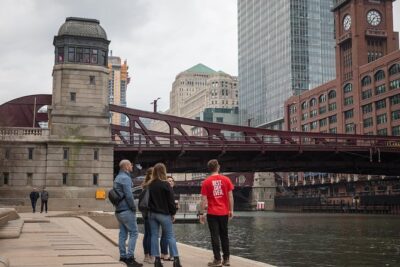
Chicago in a Day: Food, History & Architecture Walking Tour
Read our review →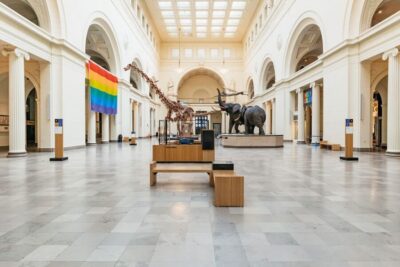
Field Museum of Natural History Ticket or VIP Tour
Read our review →
Field Museum of Natural History Admission Tickets
Read our review →
Chicago Walking Tour: Historic Treasures of Chicago
Read our review →
Historical and Architectural Chicago Fireboat River & Lake Cruise
Read our review →
Walkin’ with Colin: Chicago History-Mystery-Comedy-Tragedy Tour
Read our review →
Field Museum of Natural History All-Access Pass
Read our review →
Browse the lists this tour appears in